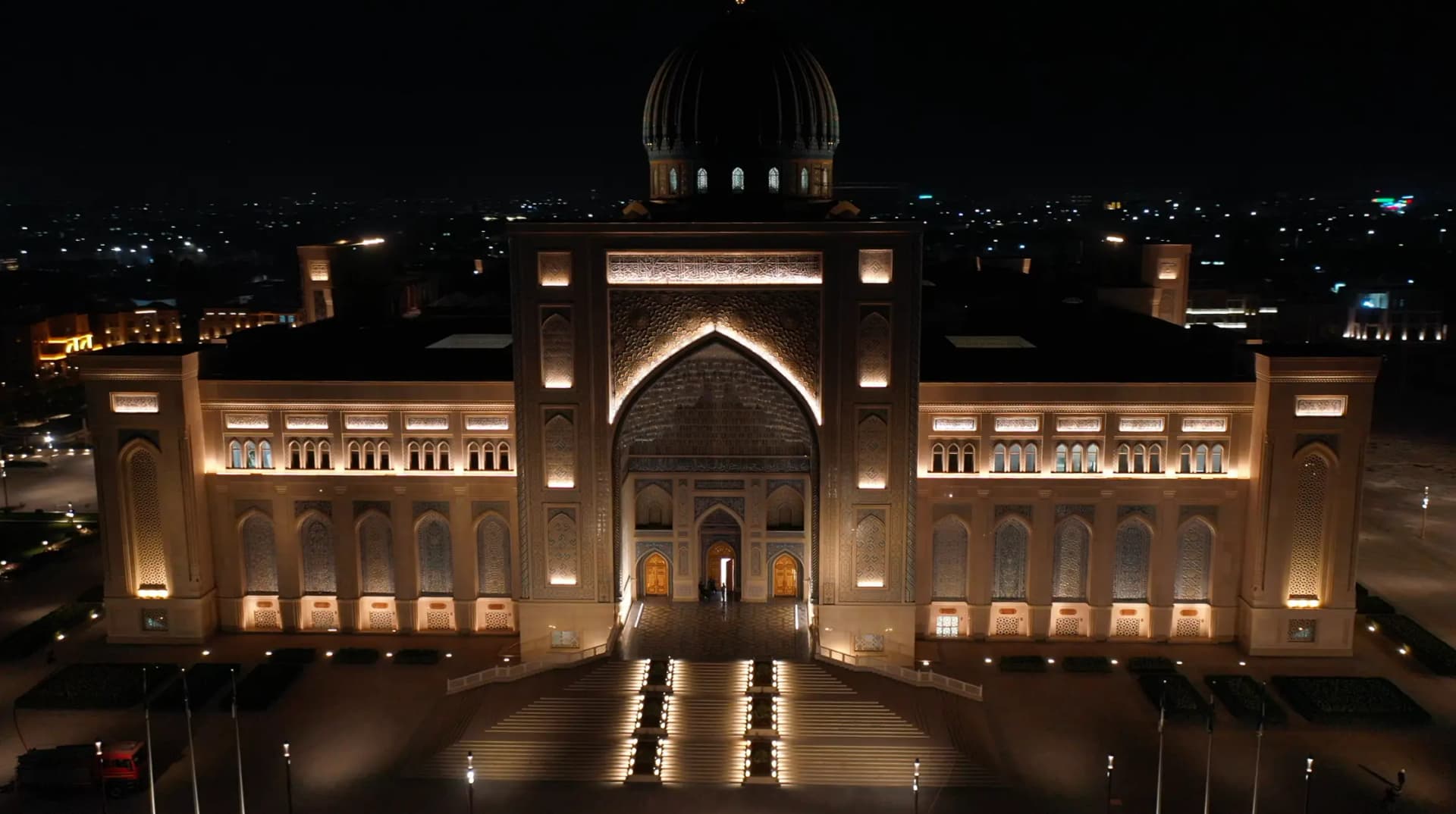
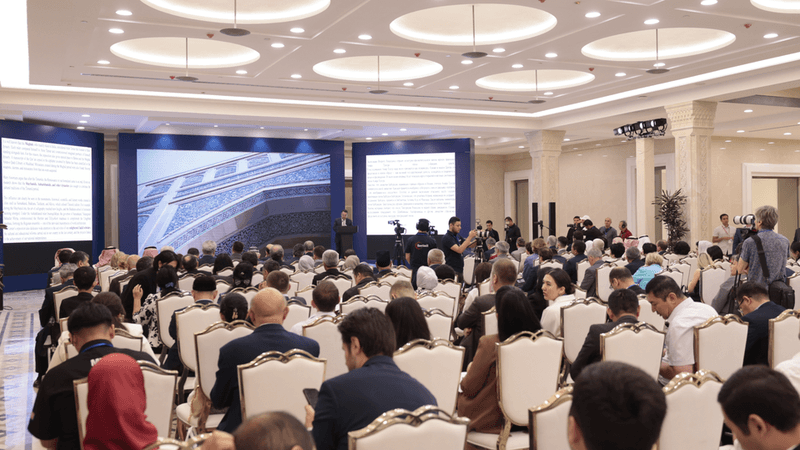
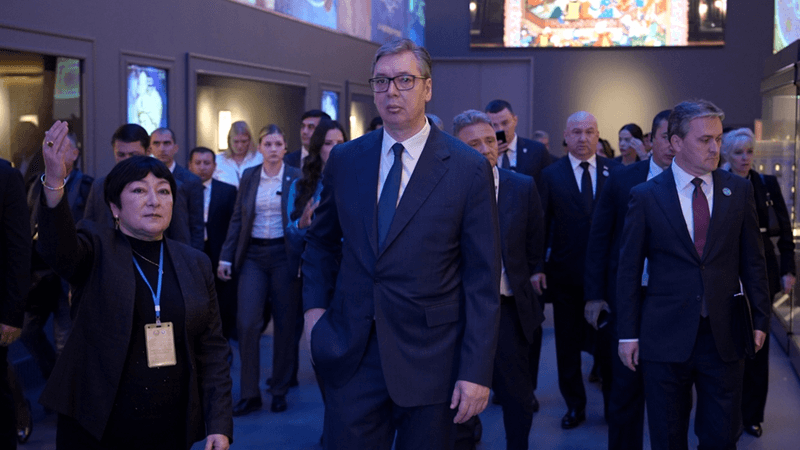
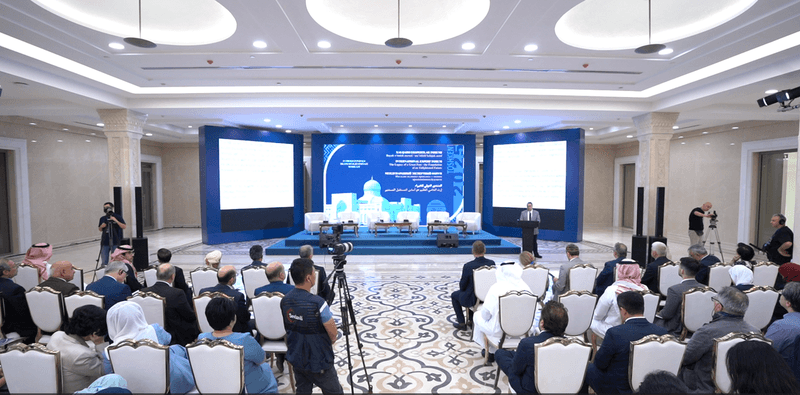
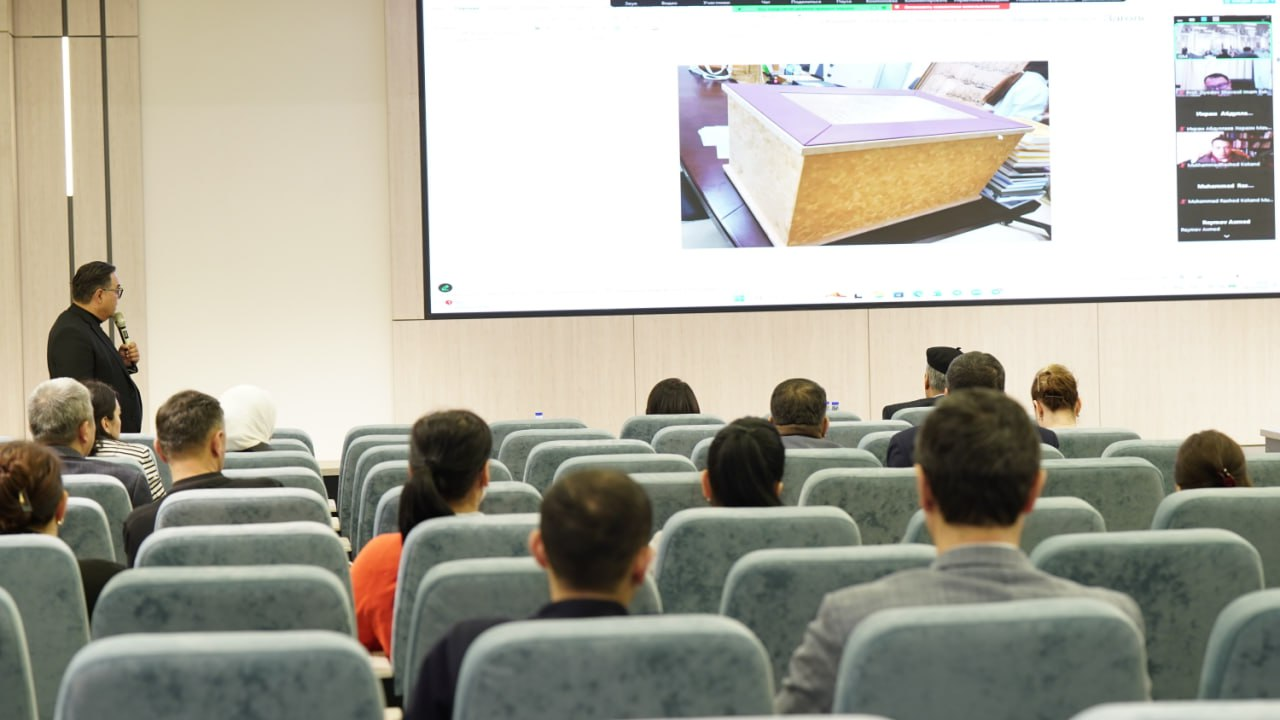
 The second meeting of the Expanded Scientific Council was held at the Islamic Civilization Center in Uzbekistan. The meeting, chaired by the Chairman of the Scientific Council and Director of the Center, Firdavs Abdukhalikov, was attended by Vice President of the Academy of Sciences of Uzbekistan Bahrom Abduhalimov, Chairman of the Khorezm Mamun Academy Ikrom Abdullayev, a number of other members of the Scientific Council, leading scholars, experts, as well as employees of the Center.
At the meeting, priority tasks and measures to be implemented to organize the preparation process for the opening of the Islamic Civilization Center at a high level were discussed.
One of the main issues of the meeting was ensuring the implementation of the priority tasks set out in the Decree of the President of the Republic of Uzbekistan dated February 5, 2026, “On the wide celebration of the 690th anniversary of the birth of the great statesman and military commander Sahibqiron Amir Temur.”
As noted, this decree is the first historical document of the New Uzbekistan era aimed at the broader promotion of the personality and scholarly legacy of Amir Temur and their popularization on the international stage.
The decree also approved a “roadmap” extending until 2030. According to the roadmap, holding an international scientific conference on April 9–10 of the current year at the Islamic Civilization Center in Uzbekistan, in cooperation with the Academy of Sciences of Uzbekistan, was defined as a priority task.
The Chairman of the Scientific Council and Director of the Center, F. Abdukhalikov, emphasized that developing relevant measures to organize this major international forum at a high level, forming working groups, holding negotiations with local and foreign Temurid scholars, and bringing to light new sources related to the personality and scholarly legacy of Amir Temur through discussions and presentations at the conference are important objectives.
“Our most important task is to hold the international scientific conference dedicated to the 690th anniversary of the birth of the great statesman and military commander Sahibqiron Amir Temur at a high level on April 9–10, as stipulated in the decree adopted by our President. This conference will be organized in cooperation with the Academy of Sciences of Uzbekistan and will take place at the Islamic Civilization Center. It is planned that a total of 250–300 participants will attend the conference, including around 200 foreign partners as well as local scholars and specialists. At present, issues related to the implementation of the Presidential decree are being consistently discussed within the framework of the Scientific Council. The decree defines a clear roadmap that envisages a number of important scientific projects. A priority task is to thoroughly consider the mechanisms for implementing these projects, in accordance with the Presidential decree, within the framework of the first major international conference to be organized to widely promote the personality and scholarly legacy of Sahibqiron Amir Temur in our country and abroad, with the participation of invited local and foreign Temurid scholars.”
In this process, separate presentations will be prepared, in particular developing specific directions aimed at widely promoting the legacy of Amir Temur and the Timurids in foreign countries.
On the initiative of our President, the introduction of the term “Great Timurids” into scholarly and cultural circulation has been an extremely important and timely step. Henceforth, our important task is to apply this concept consistently, enrich it with clear scholarly content, and promote it at the international level.
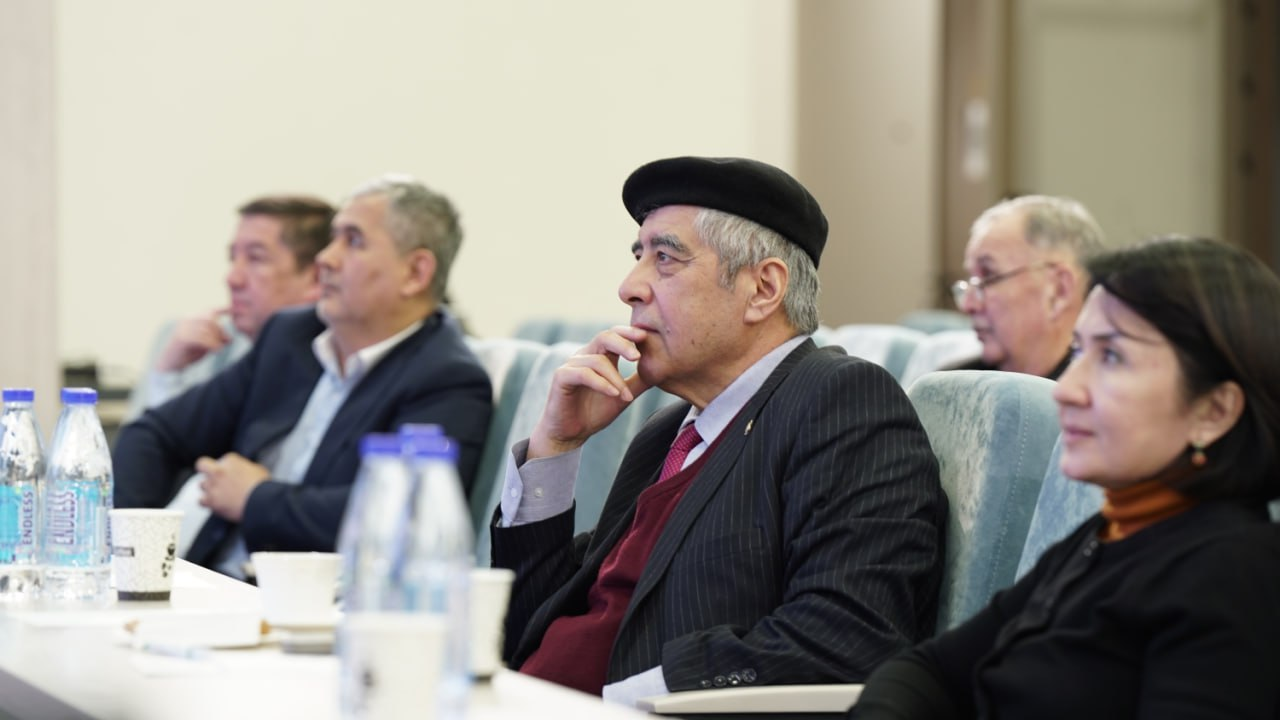
Academician and Director of the Institute of Astronomy Shuhrat Egamberdiyev emphasized at the meeting that special attention should be paid to scholarly rigor in ensuring the implementation of the tasks set out in the Presidential decree. In this regard, he noted the expediency of engaging local and foreign Temurid scholars who have conducted research precisely in this field and produced concrete scholarly innovations.
The engaged scholars should be able to offer effective proposals based on the presentations organized and scholarly findings presented at this conference. This, in turn, will form the basis for achieving effective results in implementing the Presidential decree, said Academician Sh. Egamberdiyev.
Vice President of the Academy of Sciences of Uzbekistan Bahrom Abduhalimov emphasized the need to fully engage existing and potential specialists in ensuring the implementation of the decree and to form a list of specific experts in the field of Temurid studies.
Last year, a number of projects in the fields of the Second Renaissance and Temurid studies were planned in shaping the exhibition of the Islamic Civilization Center in Uzbekistan — some of them were implemented, while others were not realized for various reasons. Now it is necessary to review, analyze, and select these projects.
At the same time, the Presidential decree defines new works and directions, the implementation of which is planned through 2030. Therefore, it is necessary to promptly form a working group. Unfortunately, the number of Temurid scholars at the international level is decreasing year by year. In addition, attitudes toward the figure of Amir Temur are interpreted differently in different countries. For this reason, it is essential to approach this issue exclusively on a scholarly basis, relying on primary sources.
In particular, it is important to rely on reliable sources that directly illuminate the life and activities of Amir Temur. These include Sharafiddin Ali Yazdi’s “Zafarnama” and other key historical works related to the Timurid period.
It was especially emphasized that the Presidential decree places great emphasis on the “Temur Tuzuklari,” setting the task of translating this work into nearly ten languages. Previously produced English and some Western-language translations will also be used on a scholarly basis.
At the same time, the “Temur Tuzuklari” is not only important for its own era but is also a significant and universal work from the perspective of contemporary public administration. Its ideas of justice, power, and responsibility remain relevant today. The idea of governing the state on the basis of justice is an important and acceptable principle for any society.
The most important aspect of implementing the decree is ensuring its execution with quality and on a solid scholarly foundation.
For example, translations and commentaries on the “Zafarnama” were produced over several decades. Scholars such as Habibullo Karamatov worked for many years on the “Temur Tuzuklari” as well. Therefore, when setting deadlines, criteria of scholarly quality must certainly be taken into account.
Another important issue is the availability of sufficient specialists to carry out these tasks. There are disciples and young specialists who continue the scholarly schools of our leading scholars. It is necessary to pay special attention to widely involving young people in Temurid studies and supporting them.
In this regard, the Academy of Sciences of Uzbekistan and the Islamic Civilization Center should work in close cooperation. At the same time, it is expedient to widely involve specialists with sufficient scholarly experience who operate outside these systems as well. This approach will ensure the scholarly depth and quality of the work being carried out.
Representatives of the Islamic Civilization Center and the Academy of Sciences will jointly develop comprehensive measures covering the full implementation of the decree. Experienced specialists who participated in projects of the Second Renaissance period section of the Center’s museum exhibition and who managed major scientific projects will also be involved in this process. Clear implementation and monitoring mechanisms will be developed for each item.
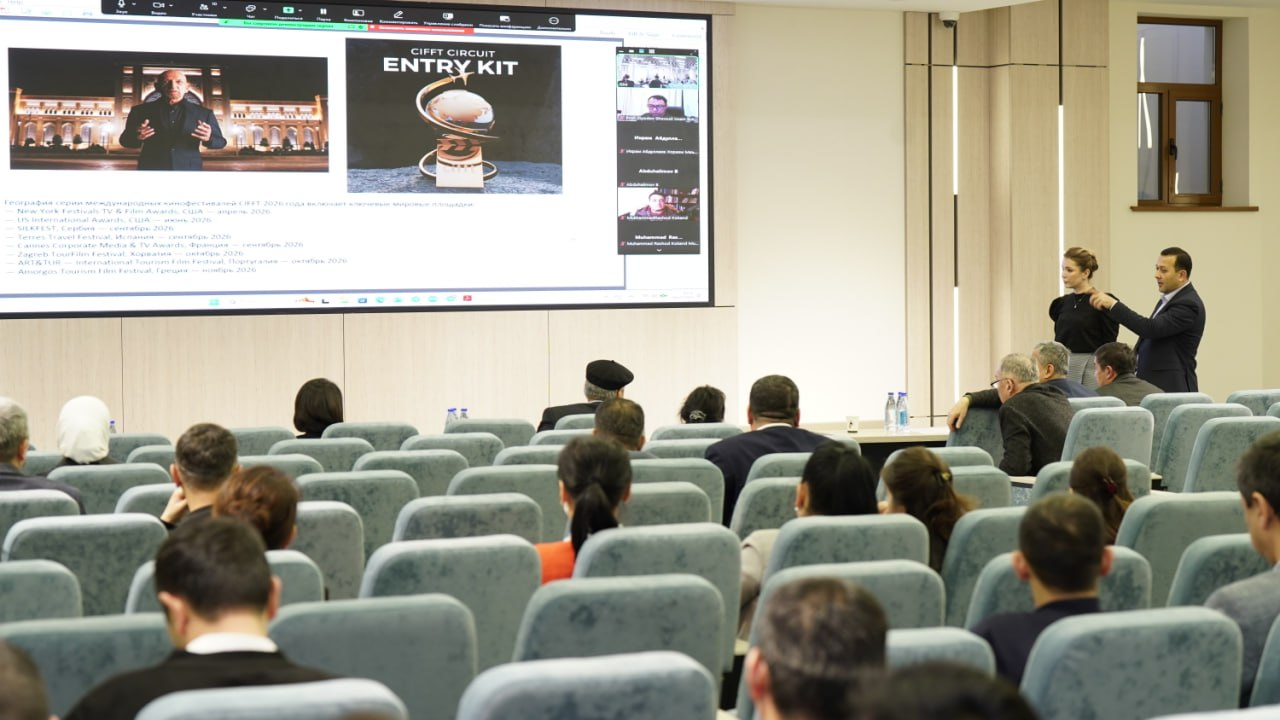
At the meeting of the Scientific Council, around ten issues related to enriching and improving the Center’s content were also reviewed.
In addition, special attention at the meeting was given to the issue of international recognition of the Islamic Civilization Center in Uzbekistan. Director F. Abdukhalikov announced that the official publication of the renowned Smithsonian Institution in the United States — Smithsonian Magazine — has included the museum of the Islamic Civilization Center among the ten major museums worldwide expected to open in 2026 with the greatest public interest. This high recognition demonstrates the Center’s scholarly and cultural potential in widely promoting Islamic civilization, Central Asia, and particularly Uzbekistan’s rich historical and cultural heritage at the international level. At the same time, it was emphasized that this prestigious recognition is the result of the labor and efforts invested in organizing the Center and preparing its exhibits, exhibitions, and scientific projects in accordance with international standards.