



A centuries-long trend: women who were builders of knowledge and civilization at the center of attention
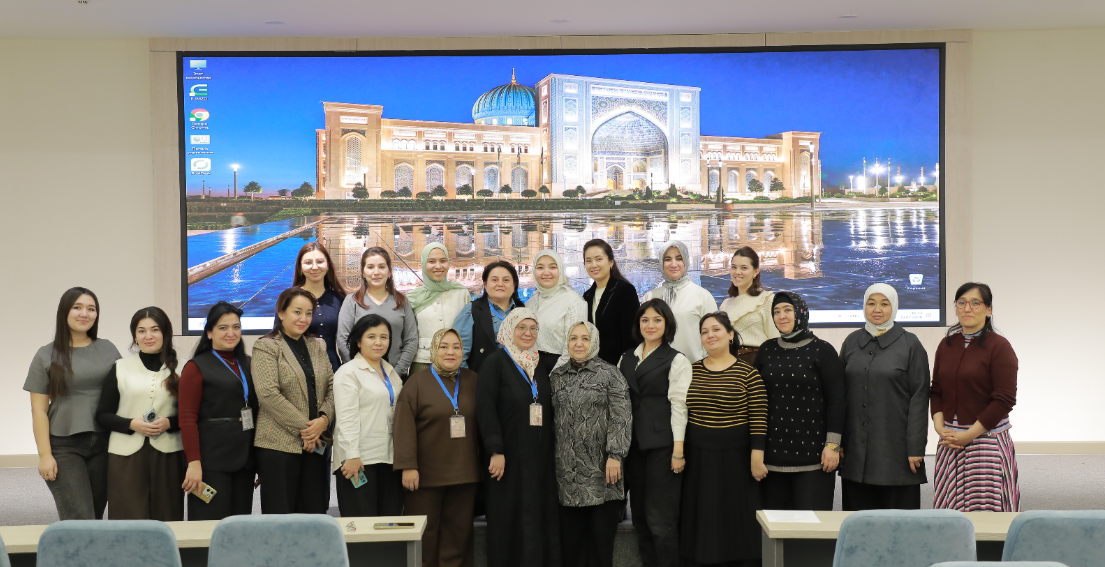 On the occasion of the International Day of Women and Girls in Science, historical truths were once again recalled. Women are not only the foundation of the family, but also builders of science and civilization. At the Islamic Civilization Center in Uzbekistan, this truth was revealed through historical examples during a special meeting.
A scientific and educational gathering was organized at the Islamic Civilization Center in Uzbekistan in honor of the International Day of Women and Girls in Science. The event was attended by the Center’s researchers, scholars, and specialists.
It is known that in accordance with the resolution adopted by the United Nations General Assembly on December 22, 2015, February 11 is celebrated annually worldwide as the International Day of Women and Girls in Science. This date is aimed at creating equal opportunities for women and girls in scientific and innovative fields, expanding their participation in research activities, and strengthening their role in achieving sustainable development.
In our country, this date is also widely celebrated each year. This year as well, in connection with the occasion, the Cabinet of Ministers approved a statement on January 26, 2026, entitled “An Educated Woman — Towards a Sustainable Society,” regarding the organization of a week dedicated to February 11, the International Day of Women and Girls in Science. According to this document, a number of initiatives are planned within the framework of the week to promote women’s achievements in science, encourage young girls to engage in research activities, ensure gender equality, and increase the share of women in scientific fields.
 The main objective of the event was to broadly highlight the role and contribution of women in the development of national and world civilization, to study historical heritage, and to encourage women actively working in the fields of science and education today. The meeting was held in harmony with state policy and presidential initiatives aimed at expanding women’s rights and opportunities and enhancing their status in society.
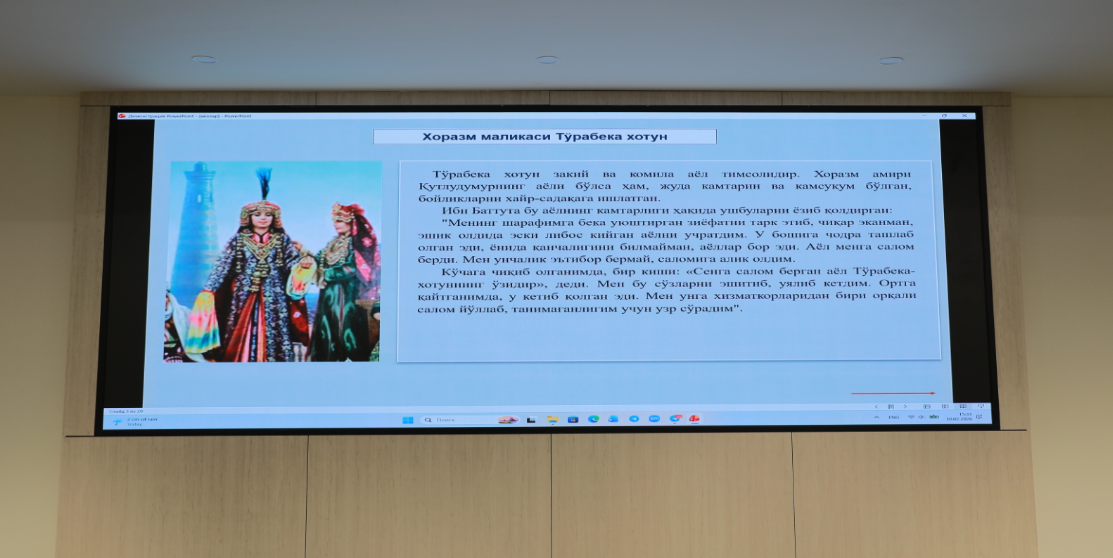
During the gathering, the Center’s researcher Matluba Rahmonqulova delivered a speech, emphasizing the invaluable role of women in the development of science, culture, and education during the Second Renaissance period, as reflected in the Center’s exposition. She particularly highlighted patrons of knowledge and enlightenment such as Saroymulk Khanum and Gawharshad Begim, as well as scholar and creative figures like Zeb-un-Nisa and Gulbadan Begim. It was noted that these individuals made significant contributions to the spiritual life of society by establishing madrasas, mosques, and scientific centers, as well as by creating literary and scholarly works.
The lecture also cited examples from the Baburid era, noting that Gulbadan Begim’s work “Humayun-nama” demonstrated women’s participation in historiography, while Zeb-un-Nisa’s writings on Sufism and theology contributed to the advancement of knowledge.
Participants of the event also discussed the literary heritage of Uzbek women poets who lived between the 16th and 19th centuries — Dilshod Otin, Anbar Otin, Zinnat, and Mahzuna — highlighting their active role in social and cultural life.
It was emphasized during the meeting that these historical facts clearly demonstrate that women’s position and contribution in science and society have not emerged only recently, but have reached high levels several centuries ago. These truths were noted as being significant for educating the younger generation in the spirit of respect for national heritage, strengthening historical memory, and further supporting women’s scientific potential.
At the same time, it was underlined that comprehensive reforms aimed at ensuring women’s active participation in education, science, and public administration are consistently continuing within the framework of presidential initiatives. This is also clearly reflected in the exposition of the Center’s section “New Uzbekistan — The Foundation of a New Renaissance.”
At the conclusion of the event, participants expressed their views and proposals on further studying the historical heritage of women, expanding this direction within the Center’s expositions and scientific projects, and strengthening women’s participation in science and education. It was particularly emphasized that such meetings serve to systematically research the legacy of women in the history of Islamic civilization, present it to the wider public, and enrich the modern scientific and educational environment.