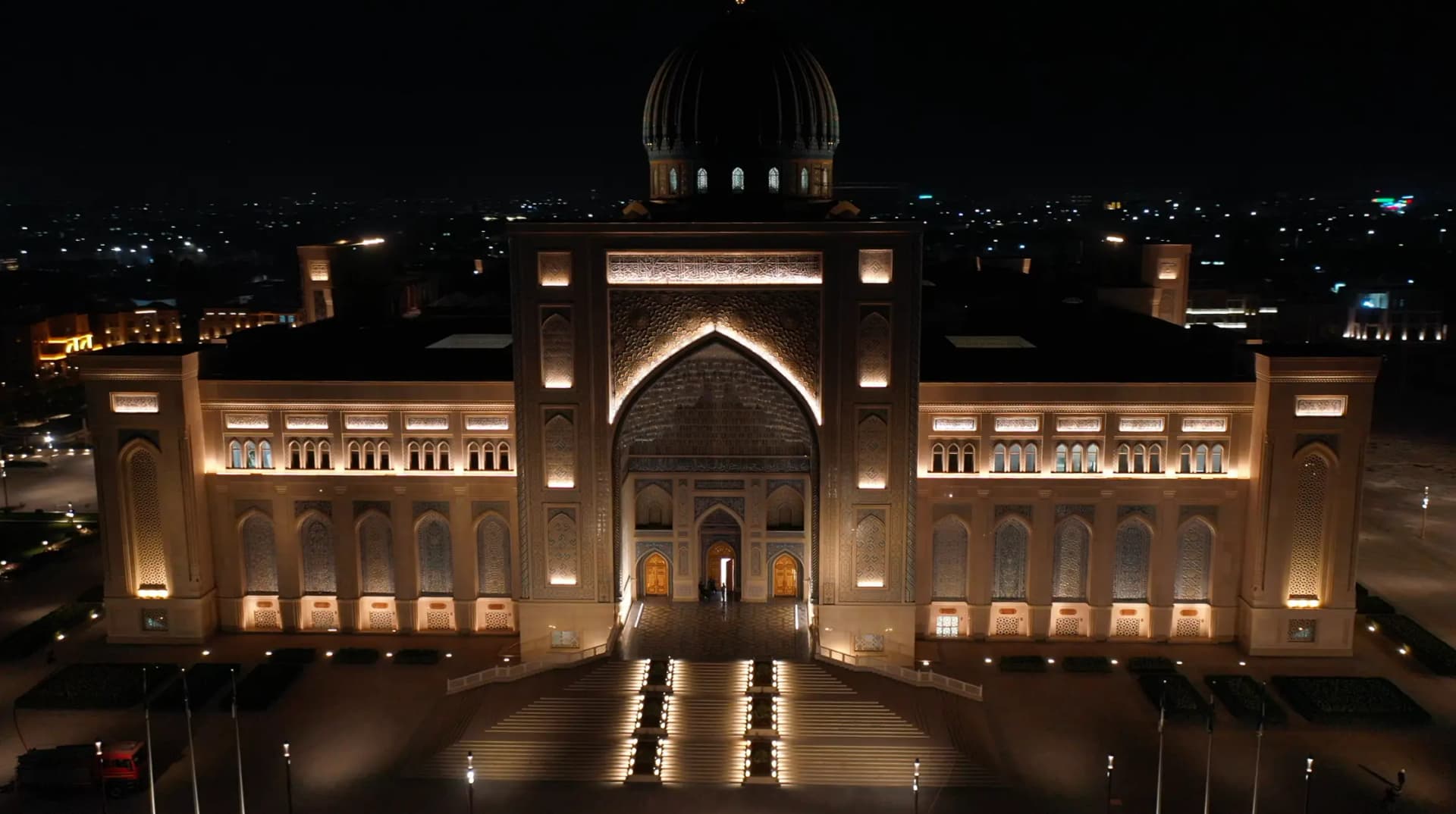
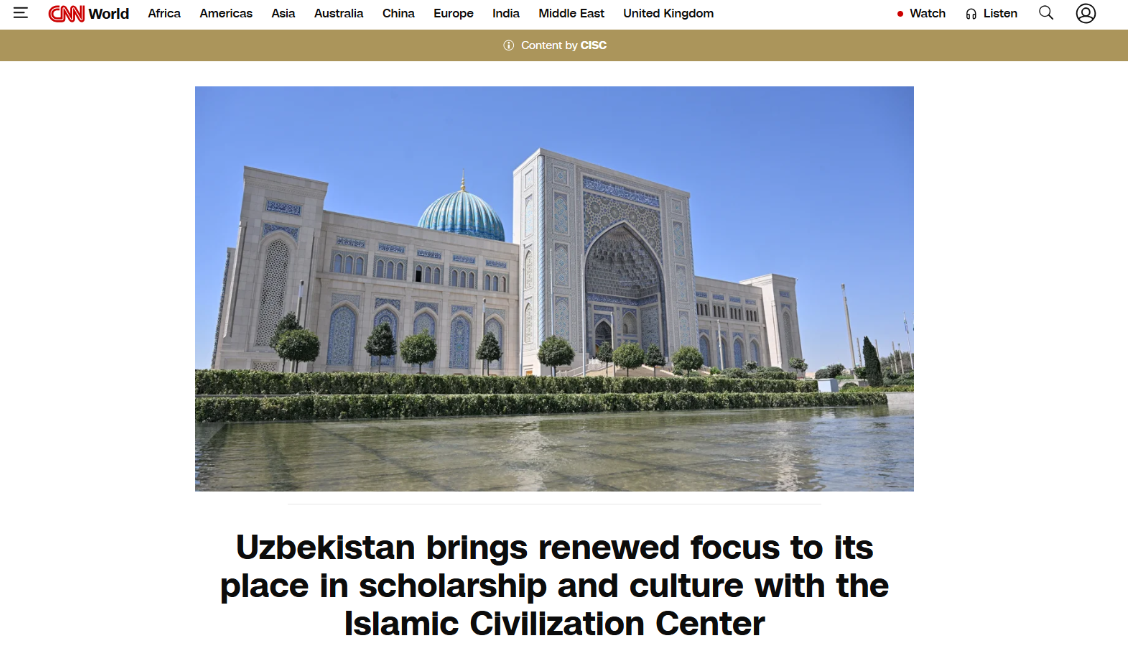
 A special article published by CNN World extensively highlighted how Uzbekistan is drawing renewed attention to its historical role in science and culture through the Center for Islamic Civilization. The piece emphasizes that the Center presents the rich heritage of Central Asia — shaped at the crossroads of trade routes, religions, and scholarly traditions — in a modern scientific and innovative format. It also underscores the return of nearly two thousand rare manuscripts and artifacts to the homeland through international cooperation, the involvement of thousands of scholars and specialists in developing the exhibitions, and the Center’s growing role as a platform for global dialogue and cooperation between civilizations.
Nearly a decade in the making, the Central Asian nation is set to highlight its far-reaching influence on religion, cultural exchange, and scholarly traditions.
The world is experiencing significant shifts, as rapid technological change and global challenges — from geopolitical conflicts to concerns over cultural identity — highlight the need for constructive dialogue. Through its focus on intellectual exchange across borders, the Islamic Civilization Center in Uzbekistan builds on the long-standing traditions of a region historically shaped by intersecting trade routes, religions, scholarly traditions, and cultures.
A culture of exchange
The intellectual and scholarly foundation of the Islamic Civilization Center situates Islam within the historical development of civilizations in which scientific advances occurred, universities and academies were established, libraries expanded, and laboratory experimentation developed. From Al-Khwarizmi’s work in mathematics to Ibn Sina’s contributions to medicine, scholars from the territory of present-day Uzbekistan left lasting contributions to medicine, philosophy, art, and scientific inquiry that extended across regions and generations.
To understand a nation, one must know its history. [In Uzbekistan], it is exceptionally rich.
President of the Republic of Paraguay, Santiago Peña
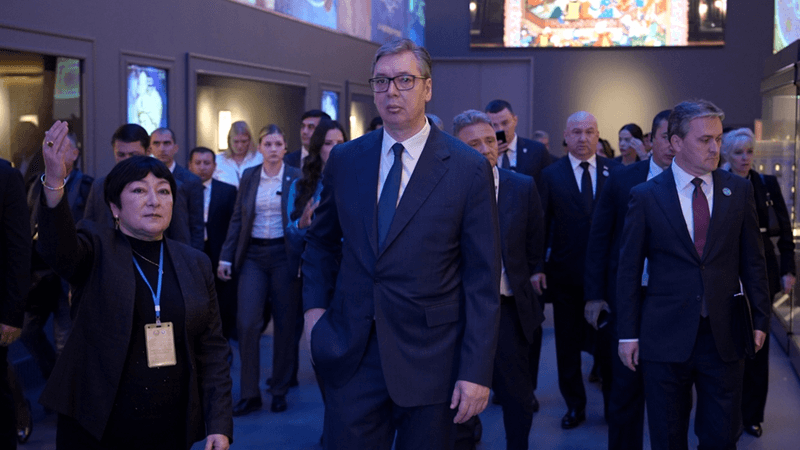
On a recent visit to the Islamic Civilization Center, the President of the Republic of Paraguay, Santiago Peña, said, “many scientific and cultural achievements that have made an enormous contribution to the development of human civilization originated on this land.”
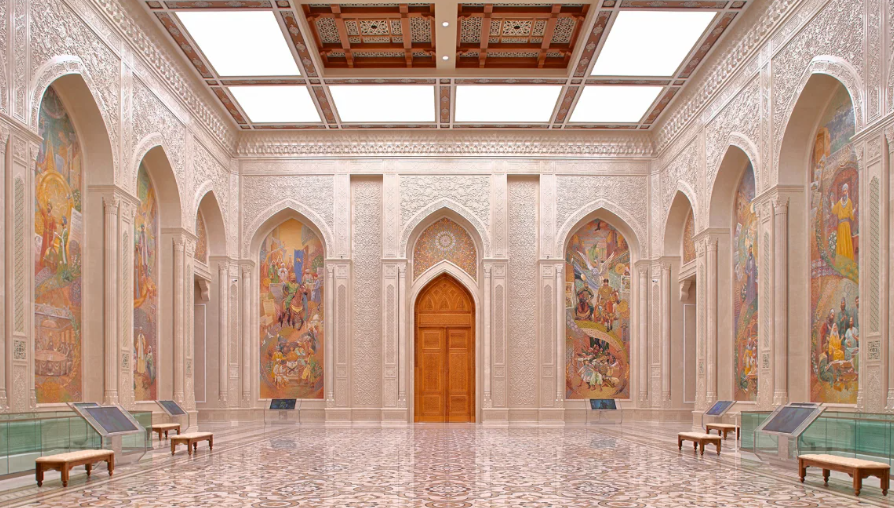
Scholars from present-day Uzbekistan left lasting contributions to science
This legacy of scholarly exchange mirrors the emphasis on knowledge and enlightenment articulated by Shavkat Mirziyoyev, President of the Republic of Uzbekistan, since the initiative for the Center was first announced nearly a decade ago. While at the Center, United Nations Secretary-General António Guterres publicly commended President Mirziyoyev for promoting international dialogue, enlightenment, and mutual respect.
The curation of the Center’s content involved approximately 2,000 scholars, experts, and designers and has been informed by continuous research since 2017, reflecting the exchange and dialogue at the core of the project.
Restoring heritage
According to official statements, one of the Center’s stated objectives is to highlight Uzbekistan’s contribution to global culture through the repatriation of artifacts. This effort has involved cooperation with international auction houses, including Sotheby’s and Christie’s, as well as with museums, universities, and private collectors.
Through these initiatives, nearly 2,000 artifacts and manuscripts have been returned to Uzbekistan, including manuscripts attributed to Ibn Sina, works associated with al-Biruni, Timurid-era miniatures, and other examples of Islamic art previously held abroad.
Among the items presented in the museum’s exhibition hall are the Uthman Qur’an, considered one of the oldest surviving copies of the Qur’an, and a fragment of the Kiswah, the cloth that covers the Kaaba in Mecca.
Designed to provide context for the role of Islamic culture within broader religious, cultural, and educational traditions, exhibitions at the Islamic Civilization Center follow a cohesive narrative that links different historical periods as interconnected developments.
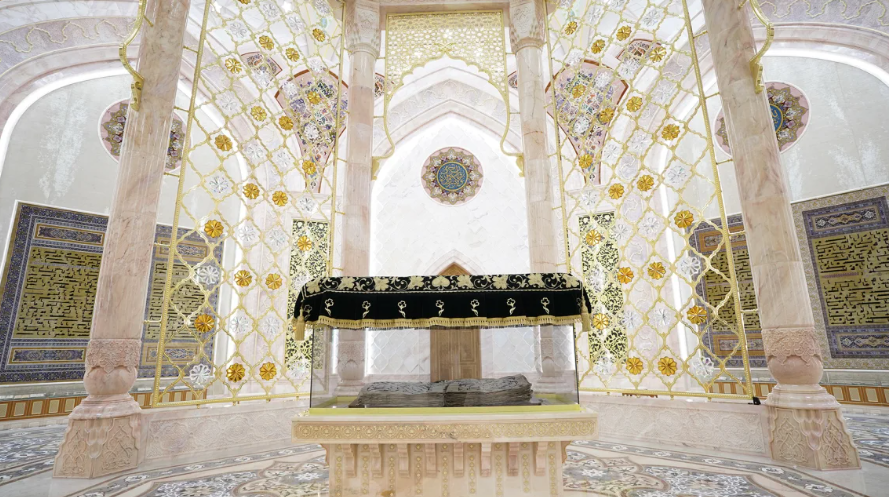
The Islamic Civilization Center houses one of the oldest surviving copies of the Qur’an
Continuation of knowledge
The Islamic Civilization Center was designed as an institution intended to evolve over time, incorporating developments in Islamic studies, museum practice, and cultural exchange. In addition to exhibition spaces, the complex includes research facilities, libraries, restoration and digitization laboratories, and archival storage to support ongoing study and public engagement.
Educational initiatives include programs aimed at engaging the younger generation with historical material and encouraging interest in research and scientific inquiry. These include interdisciplinary projects that examine Qur’anic texts through academic approaches drawing on mathematics, technology, and the natural sciences.
This Center has not only revived the heritage of past centuries, but has also become a source of inspiration for future generations.
President of the Republic of Finland, Alexander Stubb
As a contemporary intellectual institution, the Center draws reference from historical centers of learning such as the House of Wisdom in Baghdad, the Khorezm Ma’mun Academy, and the Ulugh Beg Madrasah in Samarkand. Unlike earlier scholarly centers, which disseminated ideas primarily through manuscripts over extended periods, the Islamic Civilization Center in Uzbekistan has been conceived as a museum-research hybrid with an international educational focus supporting cultural and scholarly dialogue.
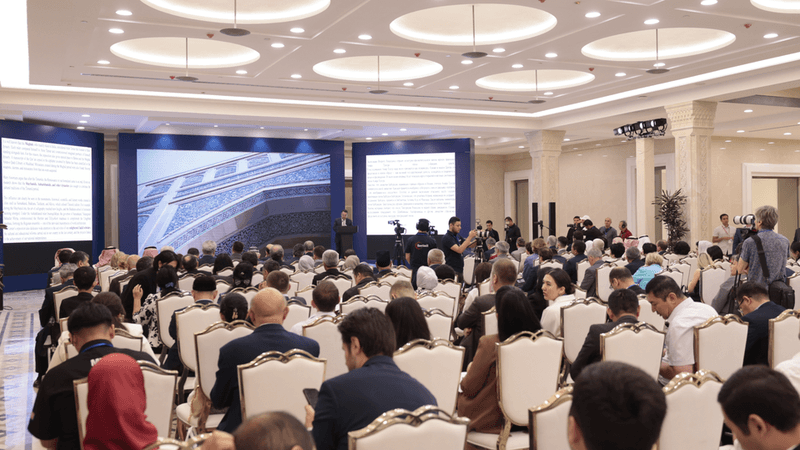
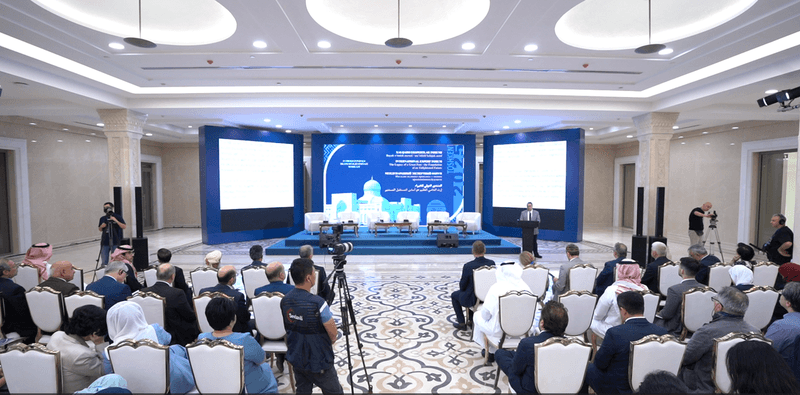
At the 11th Global Forum of the United Nations Alliance of Civilizations (UNAOC), held in December 2025, the Islamic Civilization Center and UNAOC signed a Memorandum of Understanding, laying a solid foundation for long-term cooperation. “The agreement covers collaboration in the fields of culture, science, and education, including the implementation of joint research and educational initiatives, shared cultural and media projects, as well as coordinated efforts to promote the values of tolerance, mutual respect, and intercivilizational understanding,” noted Dr. Firdavs Abdukhalikov, Director of the Islamic Civilization Center in Uzbekistan and Chairman of WOSCU.
By combining exhibitions, research, and digital access, the Islamic Civilization Center, scheduled to open to the public in March 2026, presents Uzbekistan’s national heritage within an international and academic framework that supports its study and preservation for future generations.