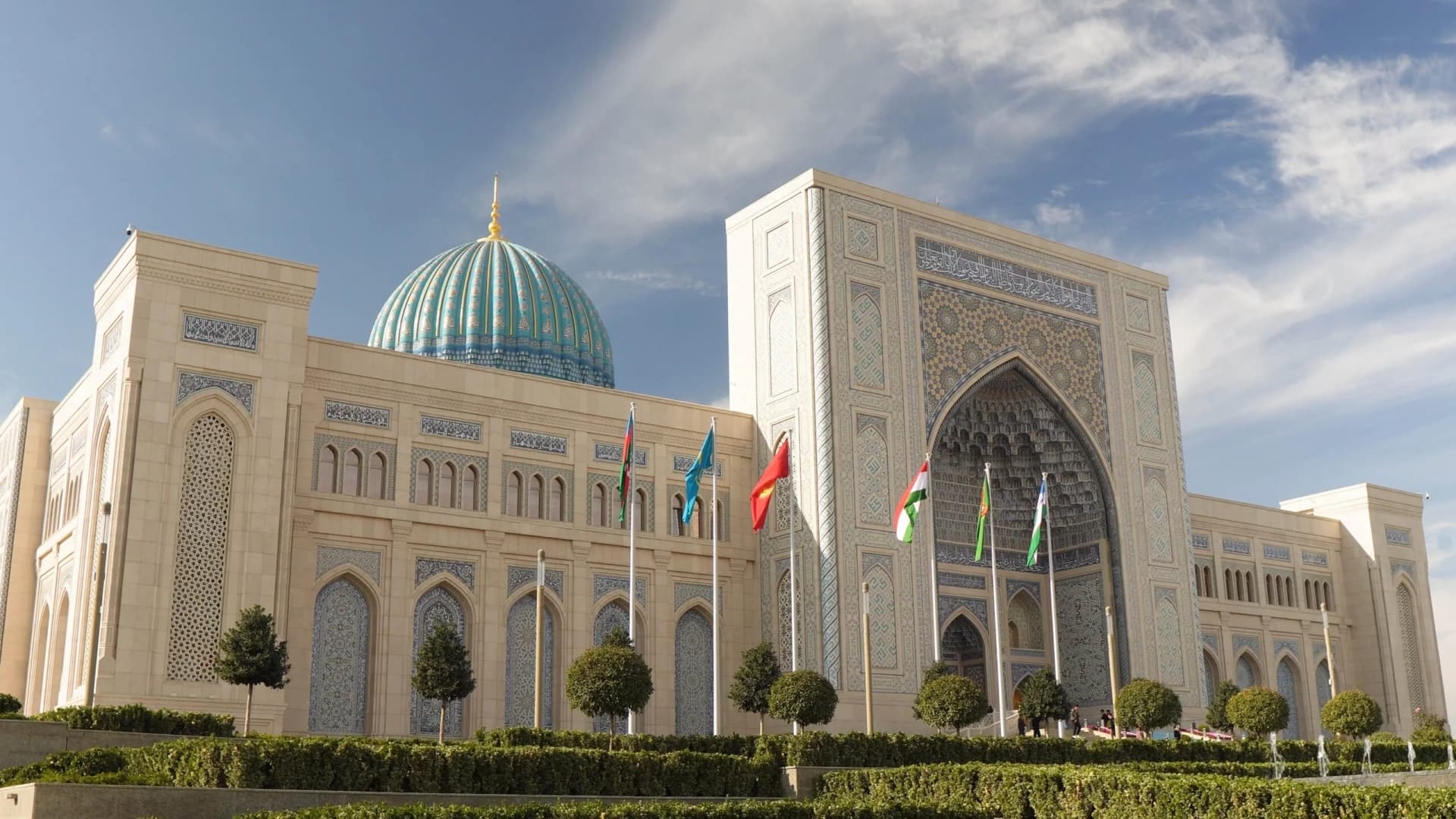

Eurasia Today: “A new cultural and scientific hub of the region — the Islamic Civilization Center — has opened in Tashkent”
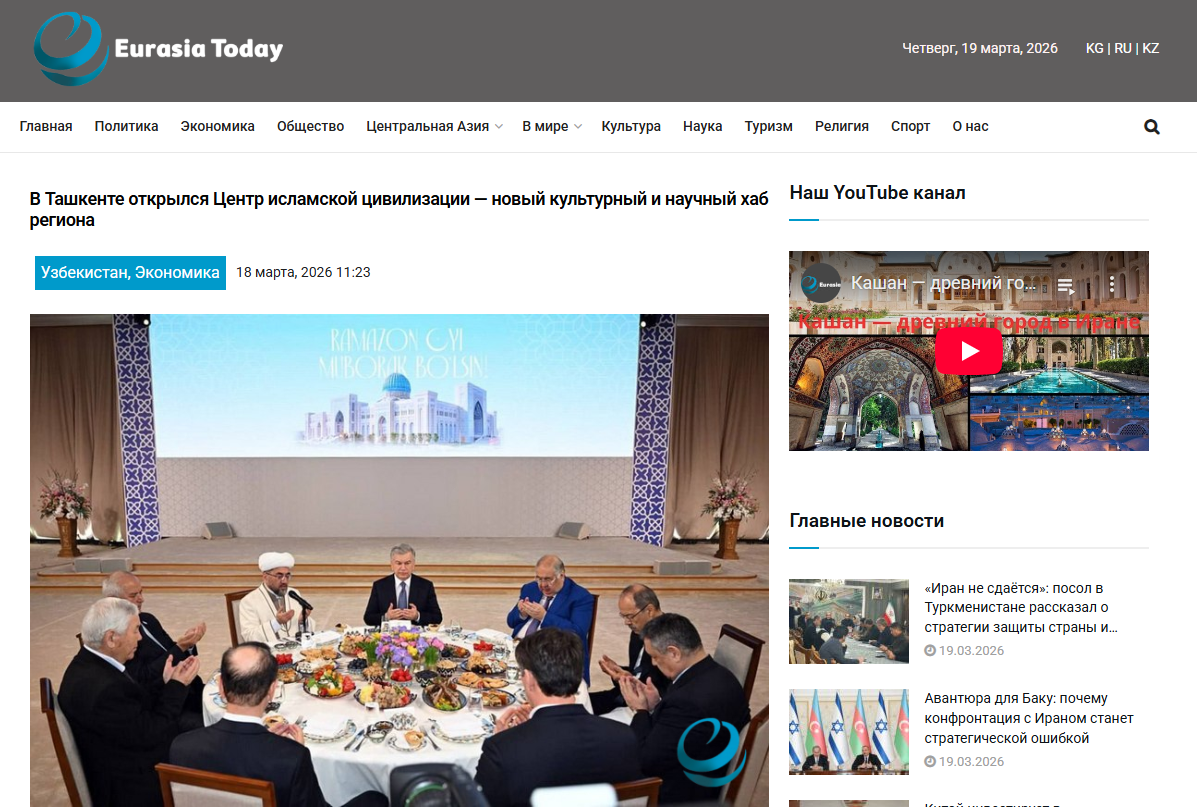 In an article published by the reputable analytical outlet Eurasia Today, the opening of the Islamic Civilization Center in Uzbekistan is interpreted as a significant manifestation of the emergence of a new cultural and scientific hub at the regional level. The piece academically substantiates that this project, implemented at the initiative of President Shavkat Mirziyoyev, is not merely a museum complex, but a strategic platform that stimulates intellectual development while integrating scientific research and international dialogue.
One of the largest cultural and scientific projects in recent years — the Islamic Civilization Center — was officially inaugurated in the capital of Uzbekistan. This was reported by the official website of the President of Uzbekistan.
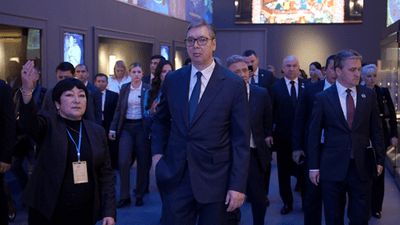
President Shavkat Mirziyoyev attended the ceremony and emphasized that the new complex should evolve not only as a museum, but as a powerful intellectual platform contributing to societal development.
According to him, the Center will serve to inspire young people and create conditions for nurturing great scholars and thinkers such as Al-Khwarizmi, Abu Rayhan Beruni, Ulugbek, Ahmad al-Farghani, Ibn Sina, Imam al-Bukhari, and Imam al-Tirmidhi.
The establishment of the Center is part of a comprehensive state strategy aimed at reviving Uzbekistan’s historical and spiritual heritage, as well as strengthening its position as one of the key centers of Islamic culture and scholarship.
The complex includes museum spaces, research laboratories, archives of rare manuscripts, educational zones, and multimedia exhibitions.
Particular attention has been given to the preservation and digitization of numerous rare manuscripts that were previously kept in closed collections.
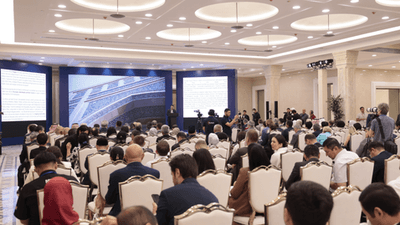
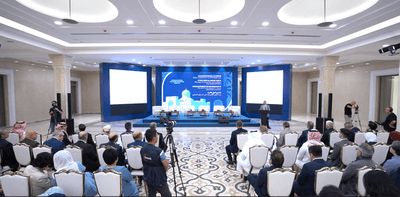
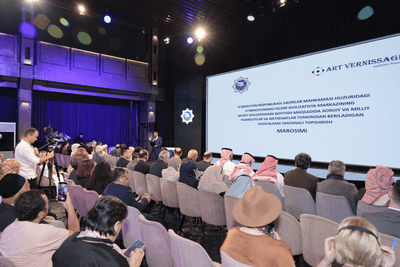
The Center is also oriented toward international cooperation, with expectations that researchers, theologians, and historians from around the world will participate, alongside the organization of forums, exhibitions, and scientific conferences.
In essence, this is not merely about a cultural facility, but about a geopolitical and humanitarian project that enhances Uzbekistan’s “soft power.”
Against the backdrop of global discussions on the role of religion in modern society, Tashkent is promoting an enlightened and scholarly approach to Islamic heritage, presenting it as an alternative to radical interpretations.
The government hopes that in the future the Center will become a platform for dialogue between civilizations, a tool of cultural diplomacy, and an attractive destination for tourists, researchers, and students from around the world.