
El Mundo Financiero: “The Third Renaissance — the role of the Islamic Civilization Center in the spiritual and intellectual development of New Uzbekistan”
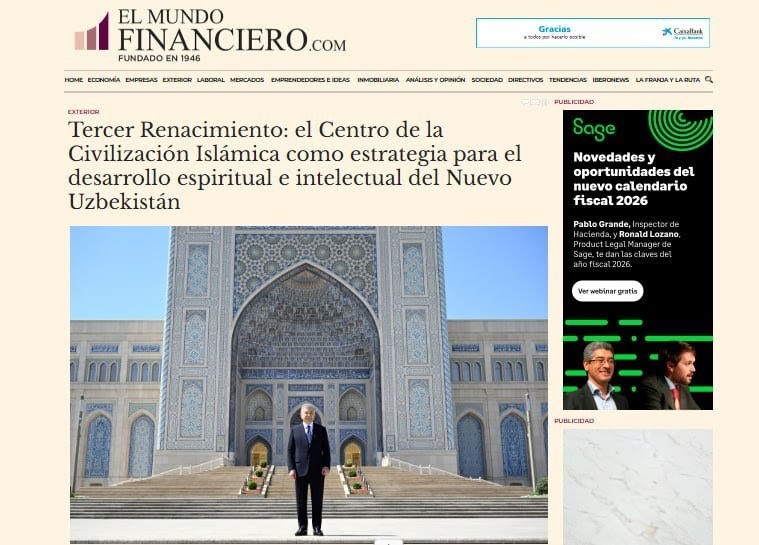 According to an article published by the Spanish outlet El Mundo Financiero, the Islamic Civilization Center in Tashkent is regarded as a strategic cultural and intellectual project within the framework of the “Third Renaissance” concept of New Uzbekistan. By integrating historical heritage, modern technologies, and scientific research potential, it is emerging as a global platform that facilitates dialogue and knowledge exchange among civilizations.
Today, a project originating from the heart of Central Asia is attracting global attention with its scale and significance: the Islamic Civilization Center is not merely an architectural landmark, but an intellectual bridge linking the past, present, and future of the region.
The complex, whose opening was planned for March 2026, has already drawn the attention of leading international publications and organizations and is recognized as one of the most important cultural projects of New Uzbekistan.
The foundation of the project was laid in 2017. That year, President Shavkat Mirziyoyev presented this initiative at the 72nd session of the United Nations General Assembly. In his speech, he emphasized the need to convey the true humanistic essence of Islam — its ideas of enlightenment, peace, and creativity — to the international community. This was not only a political statement, but also a program of returning to the roots of a land that has long been a cradle of science and culture.
The emergence of this large-scale project coincided with a growing global need for spiritual renewal. At a time when Islamophobia and radicalism are spreading, Uzbekistan has proposed a model of responding to these challenges through knowledge and education.
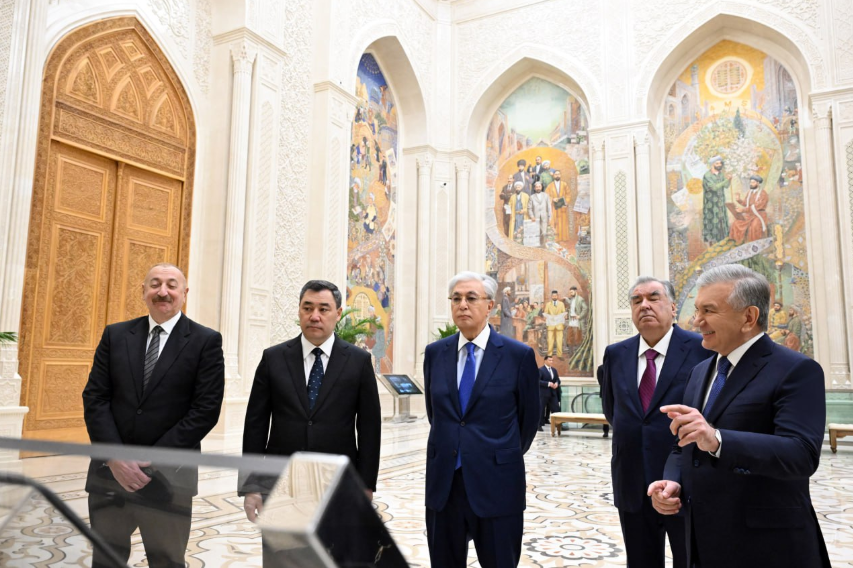
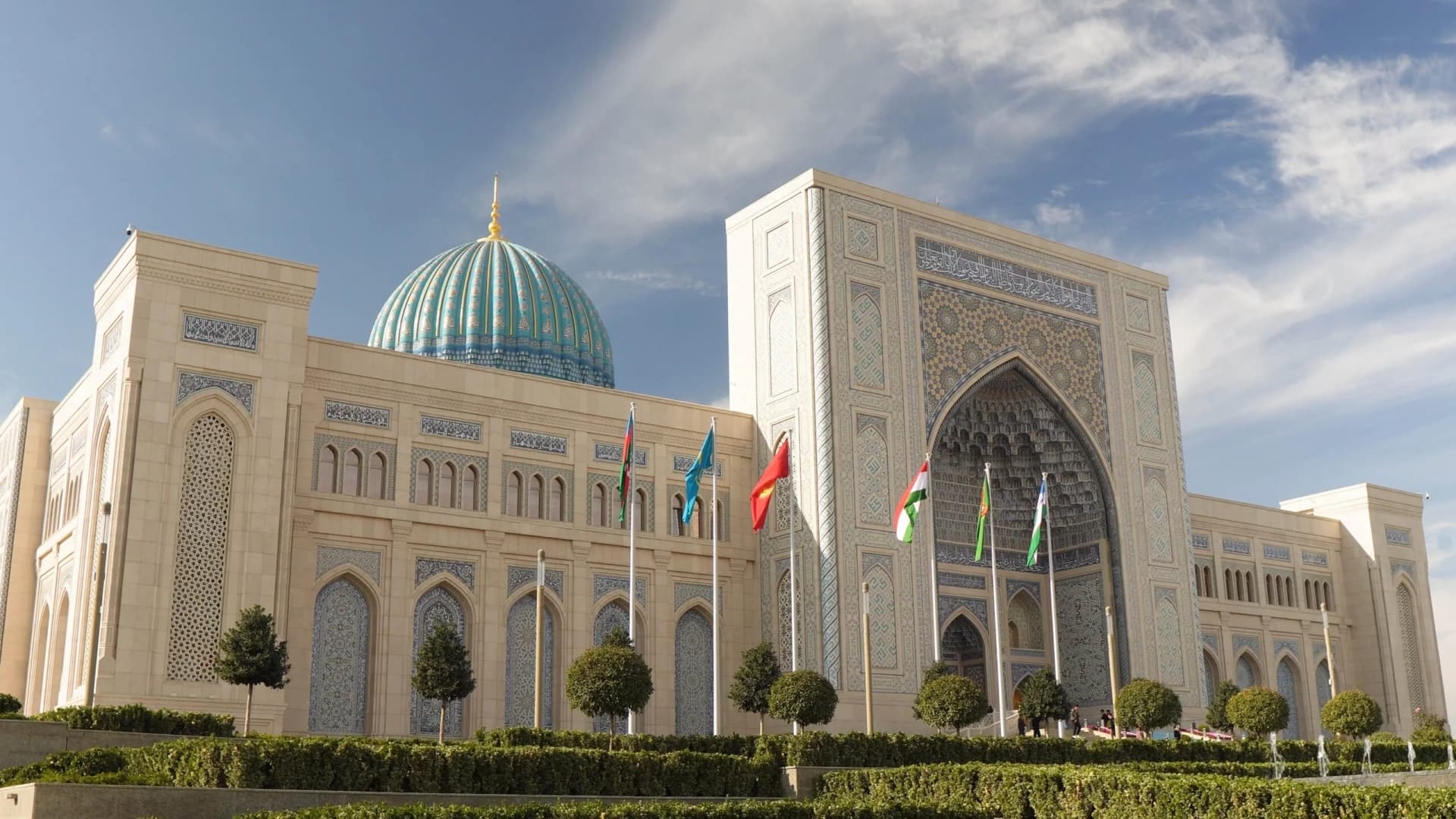
Today, this idea has taken shape in a majestic complex located in the historic center of Tashkent, covering an area of 10 hectares. Its 65-meter blue dome and four grand entrances symbolize the unity of all regions of Uzbekistan. The architecture harmoniously combines Timurid traditions with modern technologies.
The Center embodies a balance between religion and science. Its main structural element is inspired by the architectural traditions of the Mirzo Ulugbek madrasa, featuring the first verse of the Qur’an — “Iqra” (“Read”) — rendered in calligraphy. This reflects the pursuit of knowledge as the highest spiritual duty of every individual.
The central exhibit of the exposition is the Uthman Qur’an from the 7th century, a unique sacred relic included in UNESCO’s “Memory of the World” register.
The architectural concept of the complex stands out not only for its scale, but also for its full alignment with modern urban planning and environmental sustainability requirements. Every part of the project has been created with deep respect for historical heritage, while the surrounding green areas transform it into not only a scientific center, but also a broad cultural and educational space.
The Center’s exhibition differs fundamentally from traditional museums. Organized according to the principle “Civilization – Personalities – Discoveries,” proposed by Shavkat Mirziyoyev, it immerses visitors in a dynamic intellectual environment. It follows a chronological structure covering the pre-Islamic period, the First and Second Renaissances, and the era of New Uzbekistan.
One of the Center’s distinctive features is the “Wall of Civilizations and Discoveries,” which presents the development of human thought as a continuous process. It demonstrates the connection between the achievements of scholars such as Al-Khwarizmi, Al-Fergani, Ibn Sina, Al-Biruni, and Mirzo Ulugbek and modern technologies.
Extensive use of virtual and augmented reality (VR and AR), holograms, and artificial intelligence allows the Center to “bring to life” 9th-century manuscripts and digitally reconstruct ancient observatories.
This digital integration transforms the Center into a museum of the future. Visitors not only receive information, but can also virtually “interact” with great scholars and participate in their experiments. The “1001 Inventions Laboratory” designed for children fosters an early interest in science.
President Shavkat Mirziyoyev has repeatedly emphasized that the true strength of a nation lies in its history and cultural roots. Accordingly, the task has been set to enrich museum exhibitions with national heritage and to repatriate rare artifacts preserved abroad.
To achieve this, a delegation led by the Center’s Director, Firdavs Abdukhalikov, conducted extensive research. As a result, more than a thousand manuscripts and rare artifacts were returned to Uzbekistan.
The Center also functions as a scientific and educational platform. It includes a library with over 200,000 volumes, restoration laboratories, a calligraphy school, and digital archives. In addition, prestigious organizations such as ICESCO, IRCICA, and the Oxford Centre for Islamic Studies operate within the complex.
More than 1,500 specialists from over 40 countries participated in the project. International experts describe the Center as a unique complex that combines a new-generation museum, scientific infrastructure, and a global cooperation platform.
President of Finland Alexander Stubb described the Center as an intellectual hub of the modern world, comparing it to historical centers of knowledge such as Bayt al-Hikma and the Mirzo Ulugbek madrasa.
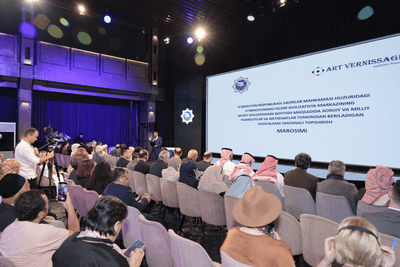
In February 2026, the Prix Versailles international committee in Paris included the Center in its list of “the world’s most beautiful museums.” It has also been recognized by publications such as Smithsonian Magazine, BBC, and National Geographic.
This recognition further enhances the Center’s scientific and tourism potential, elevating it to a significant global destination.
The opening of the Center during the month of Ramadan also carries symbolic meaning, as its foundation was laid in the same month in 2018. Now, eight years later, it opens its doors as a symbol of preserving and advancing Islamic cultural heritage for future generations.