

Diplomatic Watch: “New Uzbekistan: A Decade of Reform Under Shavkat Mirziyoyev”
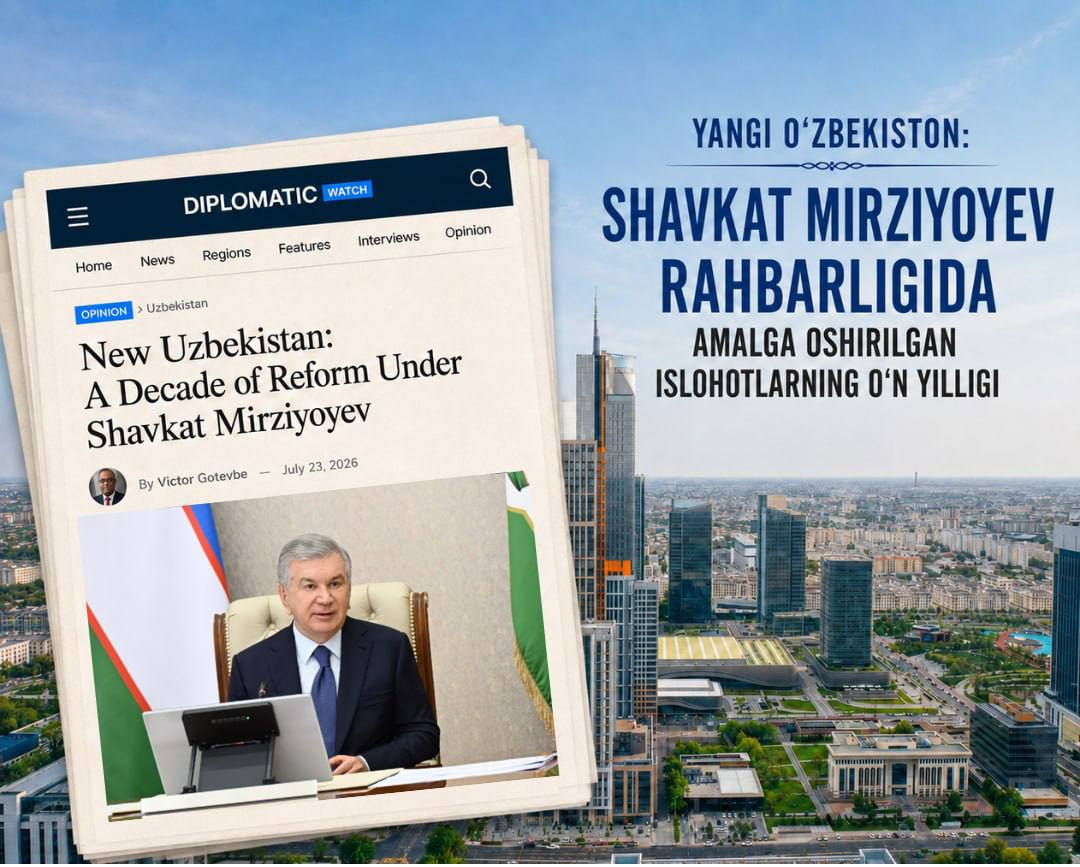 The prestigious U.S.-based international journal Diplomatic Watch has published an analytical article titled “New Uzbekistan: A Decade of Reform Under Shavkat Mirziyoyev.” The article provides a comprehensive analysis of the outcomes of the wide-ranging reforms implemented over the past decade under the leadership of President Shavkat Mirziyoyev, as viewed by international experts.
In 2016, Uzbekistan entered a new stage of development under the leadership of its new President. The guiding principle was clear: the state must serve the people. Ten years later, this vision has taken shape in the comprehensive reform agenda known as “New Uzbekistan.” Through tangible achievements in economic policy, social development, public administration, and foreign affairs, the program has fundamentally transformed the country’s landscape.
The transformation began with the economy. In 2017, the government liberalized the exchange rate and introduced the free convertibility of foreign currencies, removing one of the most significant barriers to trade and investment that had existed for many years. This marked the beginning of a new phase of economic development. Over the past decade, Uzbekistan’s gross domestic product has more than doubled, surpassing $145 billion, and is projected to reach $167 billion by 2026. The country’s open economic policy has also attracted substantial foreign investment. In recent years, total foreign direct investment has reached $43.1 billion. In the first quarter of 2026 alone, investment increased by 45.7 percent, totaling $8.84 billion. International credit rating agencies have likewise upgraded Uzbekistan’s sovereign credit rating, reflecting growing confidence in the country’s financial governance and market stability.
Economic growth has been accompanied by far-reaching structural reforms. The privatization of state-owned enterprises has reduced the government’s share in the economy while expanding the role of the private sector. Exports have reached $33.4 billion, with the majority now consisting of higher value-added products rather than raw materials. These developments demonstrate Uzbekistan’s gradual transition from a centralized economic model to a more competitive and diversified economy.
Economic reforms have been reinforced by social policies aimed at improving living standards. As a result of targeted, community-based programs implemented at the mahalla level, more than 8.5 million people have been lifted out of poverty. By 2026, the national poverty rate had declined to 5 percent.
The education sector has also undergone comprehensive reforms. According to the National Statistics Committee of Uzbekistan, the gross enrollment rate in higher education among young people aged 18–23 reached 47.7 percent at the beginning of the 2024–2025 academic year, representing a significant increase compared to the period before the reforms began. During the same period, the number of preschool institutions in the country tripled, while access to early childhood education expanded substantially.
One of the most significant achievements was the complete eradication of forced labor in the cotton harvest. Through systematic monitoring and decisive measures, the practice was eliminated within four years. This enabled Uzbekistan to reintegrate into global supply chains with improved labor standards. Progress has also been made in promoting gender equality, with women now holding 38 percent of the seats in the national parliament. At the same time, the expansion of maternal and child healthcare services has contributed to notable improvements in public health indicators.
Institutional reforms have focused on modernizing the system of public administration. The Concept of Administrative Reform introduced measures aimed at enhancing transparency, efficiency, and accountability in the civil service. Powers have been gradually devolved to Parliament and local government authorities. Among the key reforms was the introduction of the direct election of regional governors. Judicial reforms have likewise been designed to strengthen the independence of the judiciary and simplify legal procedures, thereby expanding citizens’ access to justice.
The next stage of the country’s development is focused on modernization. Under the Uzbekistan–2030 Strategy, comprehensive plans have been outlined to expand infrastructure, strengthen energy security, and accelerate technological advancement. Beginning in 2026, a new railway development program will see the construction of 500 kilometers of high-speed rail lines, improving domestic connectivity and expanding regional trade opportunities. Electricity generation has reached 85 billion kilowatt-hours, while investment in solar energy continues to grow. Government subsidies for households installing solar panels reflect the country’s transition toward a more sustainable and decentralized energy system. At the same time, Uzbekistan aims to become a regional technology hub by 2030 and rank among the world’s top 60 countries in global innovation.
Uzbekistan’s foreign policy has also undergone a fundamental transformation. By adopting the principle of “Central Asia First,” the country has made cooperation with its neighboring states a strategic priority. Border issues have been resolved through dialogue and negotiations, while the development of new trade corridors has strengthened regional economic integration. These changes have enhanced Uzbekistan’s role in regional affairs and positioned the country as a key bridge between Central Asia and global markets.
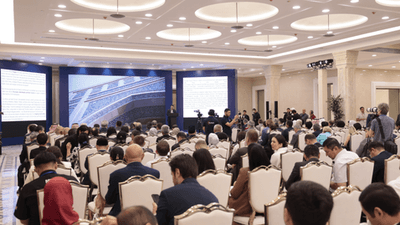
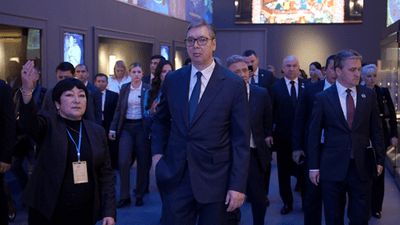
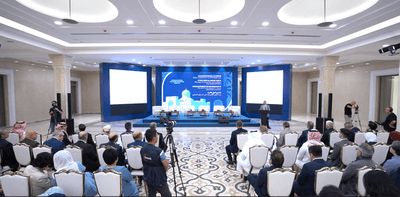
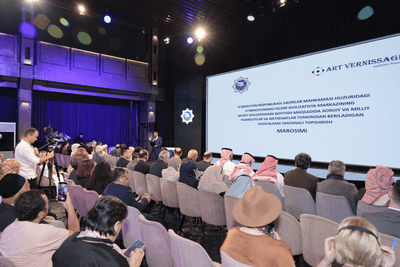
Uzbekistan’s reform agenda has also gained increasing attention in Washington. At the presentation of the book “New Uzbekistan: The Path of Shavkat Mirziyoyev,” organized by the Embassy of Uzbekistan in September 2025, First Deputy Chairperson of the Senate Sodiq Safoyev and First Deputy Secretary of the Security Council Eldor Aripov exchanged views with U.S. policymakers, analysts, and business leaders on the country’s ongoing reforms. The discussions focused on economic liberalization, the elimination of forced labor, infrastructure modernization, regional cooperation, and Uzbekistan’s path toward becoming a more competitive player on the international stage.
The discussions, which were based on field research and verified statistical data, emphasized that the reform agenda is no longer merely a set of plans but a process delivering tangible results. Particular attention was given to achievements in economic liberalization, labor standards, and regional cooperation. These exchanges also reflected the emergence of a new perception of Uzbekistan in Washington.
The country’s reform agenda has been implemented on the basis of continuity and consistency. The 2017–2021 Action Strategy laid the initial foundations for modernization by defining its key priorities. The New Uzbekistan Strategy for 2022–2026 further deepened institutional and economic reforms. The current Uzbekistan–2030 Strategy sets long-term objectives focused on sustainable development, effective governance, and inclusive economic growth.
A decade after the launch of the New Uzbekistan reform program, the country stands as a compelling example of sustained transformation. Economic indicators reflect robust growth and diversification, while social indicators demonstrate tangible improvements in the quality of life. Institutional reforms are redefining the relationship between the state and its citizens. Today, Uzbekistan has evolved from a closed system into an open, competitive, and regionally integrated state, steadily advancing along a reform path driven by measurable results.