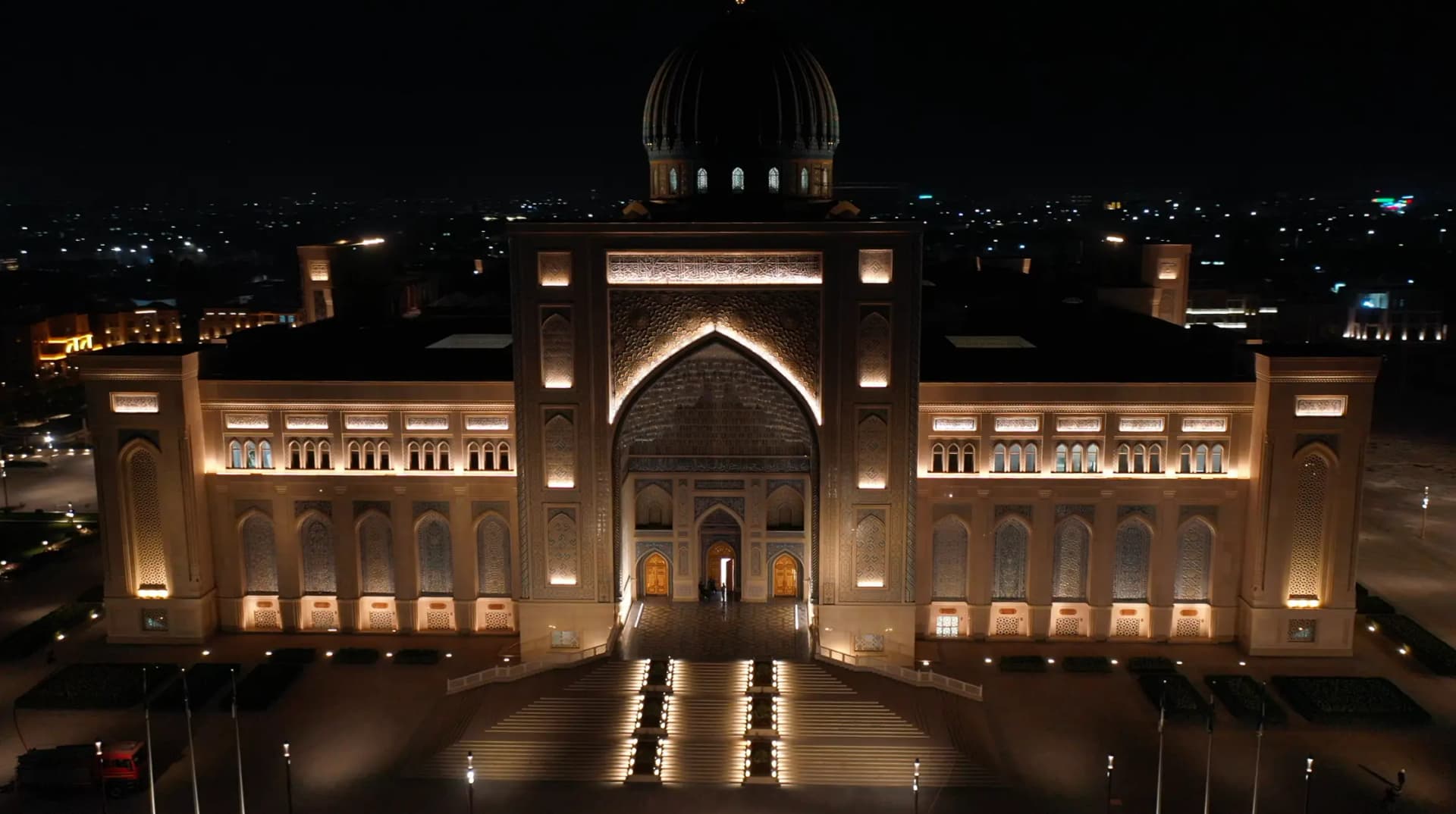
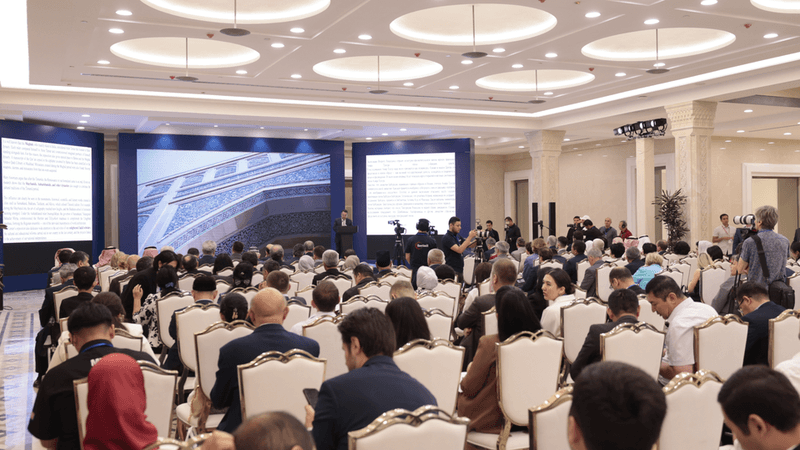
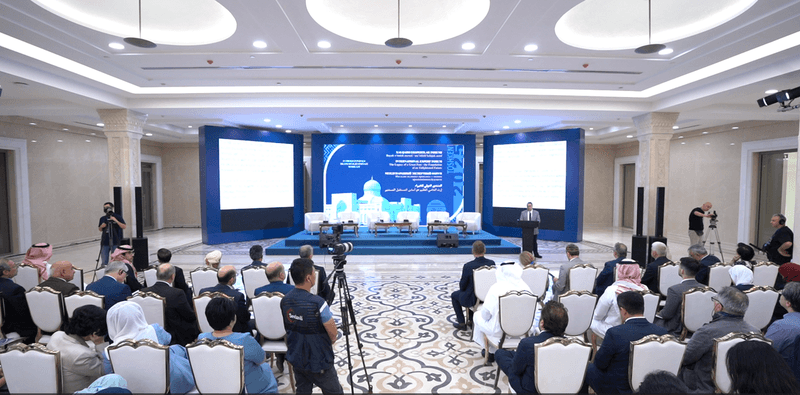
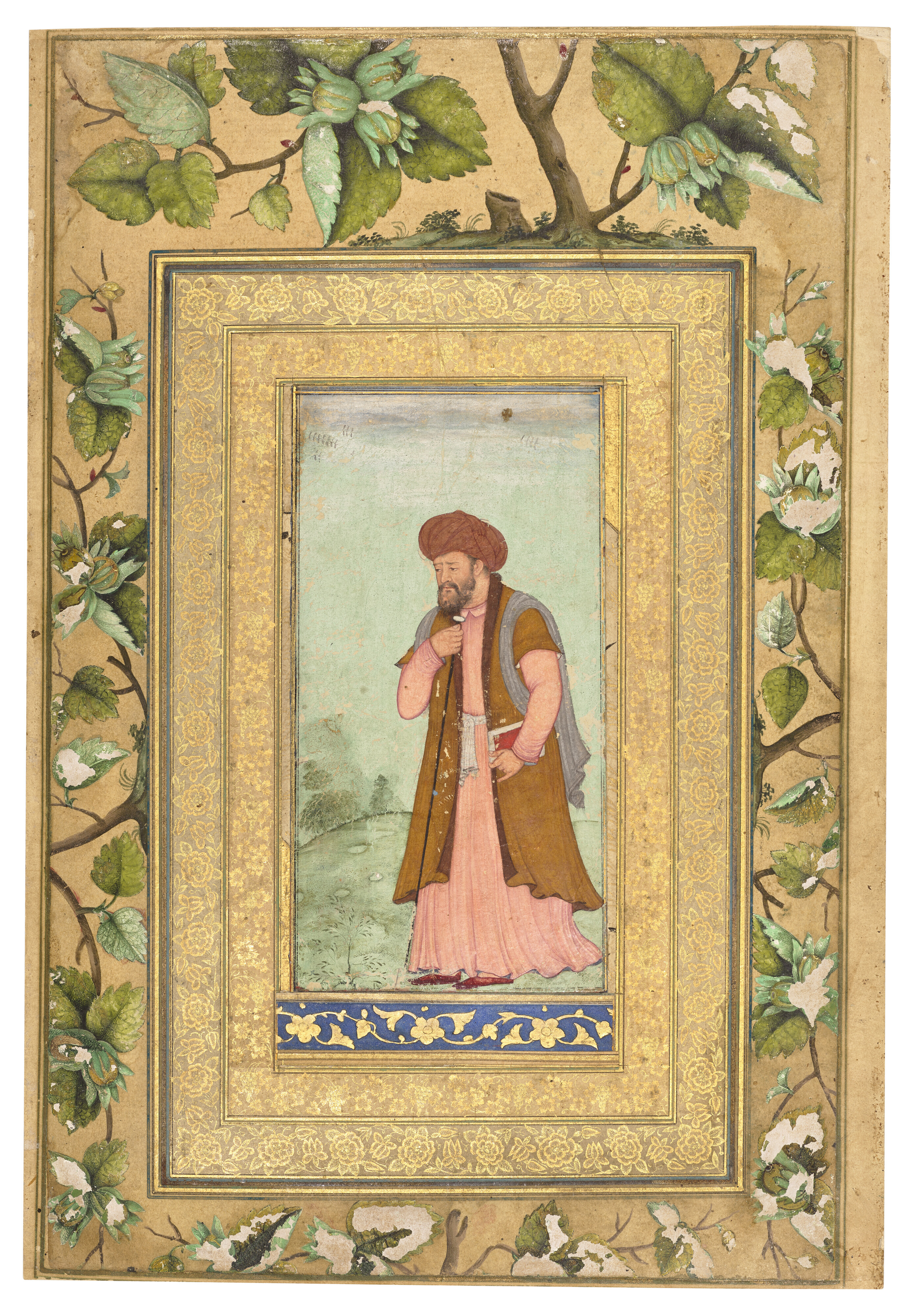
 A rare portrait of the great poet and thinker Abdurahman Jami is on display in the exhibition of the Islamic Civilization Center in Uzbekistan.
The main part of the artwork was created in India during the Baburids period, around 1610, either in the final years of Emperor Akbar’s reign or the early years of Jahangir’s reign. The portrait depicts Jami in full profile, with a beard and turban, wearing a long pink robe. The outer garment draped over his shoulders, the book in his hand, and his composed expression convey the image of a distinguished thinker.
The decorative elements surrounding the portrait are also particularly noteworthy. The wide borders framing the work feature delicate floral designs composed of flowers, leaves, and branches. These decorations were added later than the portrait itself — in the mid-18th century in Iran, within the artistic circles of Isfahan or Shiraz, in the style of Muhammad Baqir.
Thus, the artwork brings together traces of two different periods and two distinct cultural environments: while the portrait itself was created in India in the early 17th century, its decorative borders were produced in Iran in the 18th century.
Jami was one of the greatest poets and thinkers of the Timurid era. His works were widely circulated far beyond Central Asia and Khorasan, reaching regions from Istanbul to India. Jami’s literary legacy also attracted considerable interest during the Baburids period. For example, his “Baharistan” was copied in 1595 at Emperor Akbar’s court as an exquisitely illuminated manuscript. Sufis in India also devoted significant attention to Jami’s legacy, writing works about his life and literary contributions and translating examples of his writings.
For this reason, the portrait can be viewed not merely as an artistic depiction, but as a visual expression of how Jami’s legacy spread from Central Asia to India and how his image endured for centuries in the cultural memory of the East.