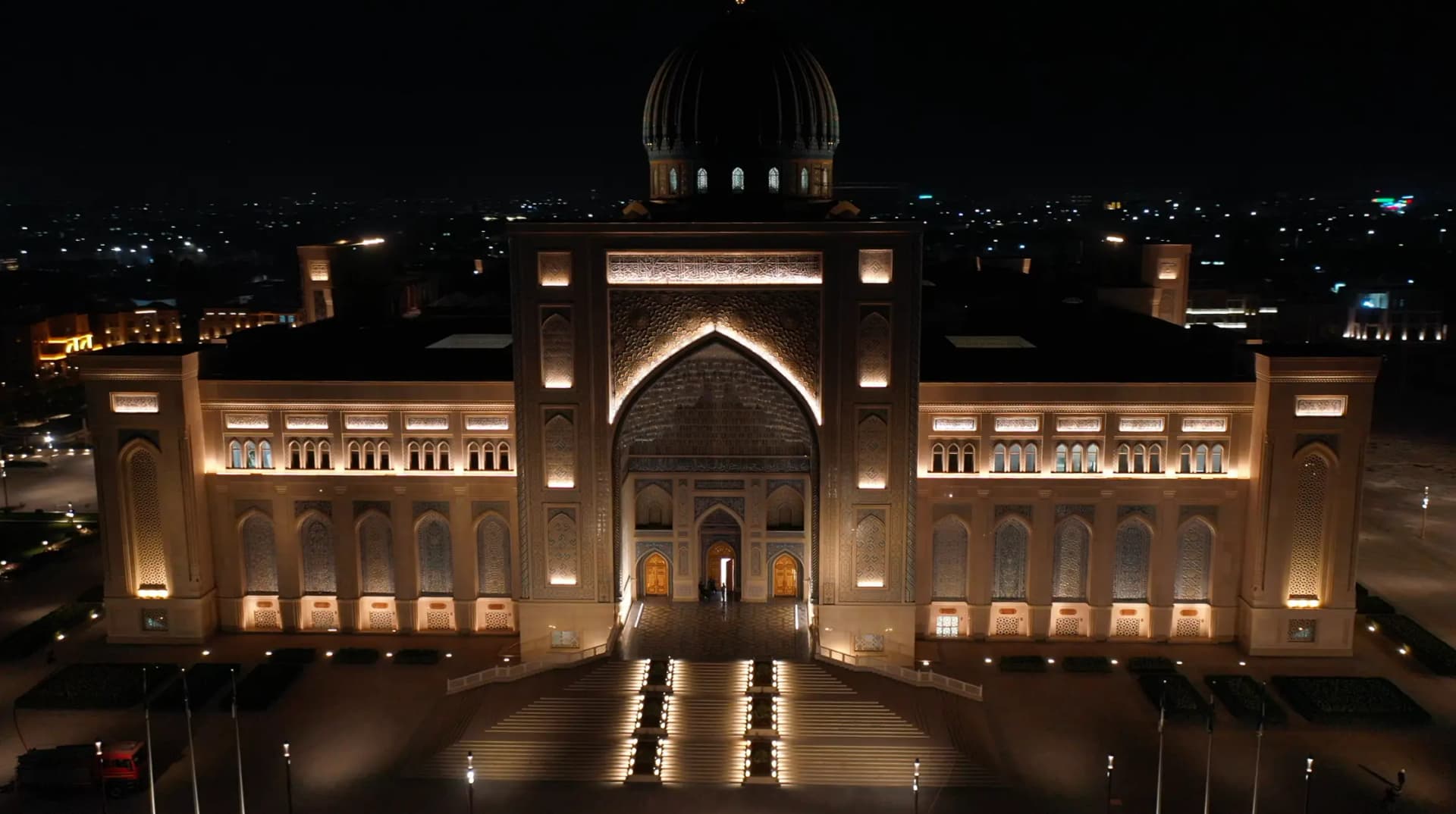
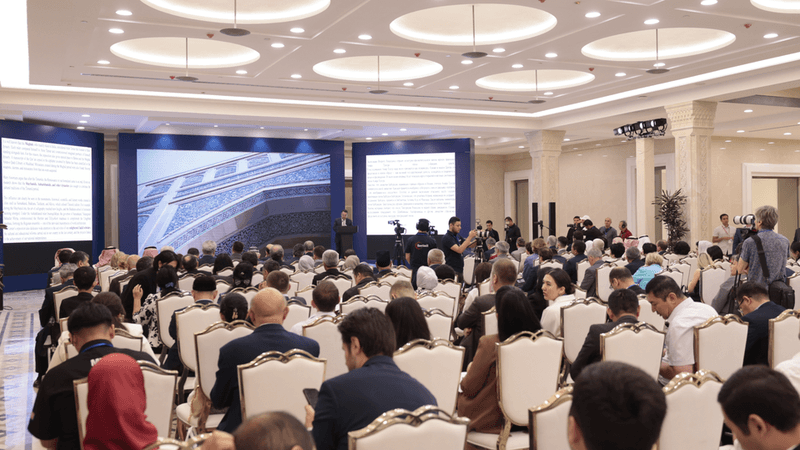
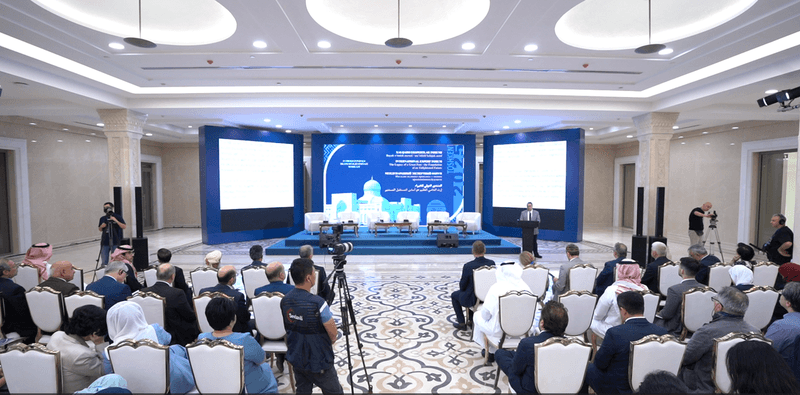
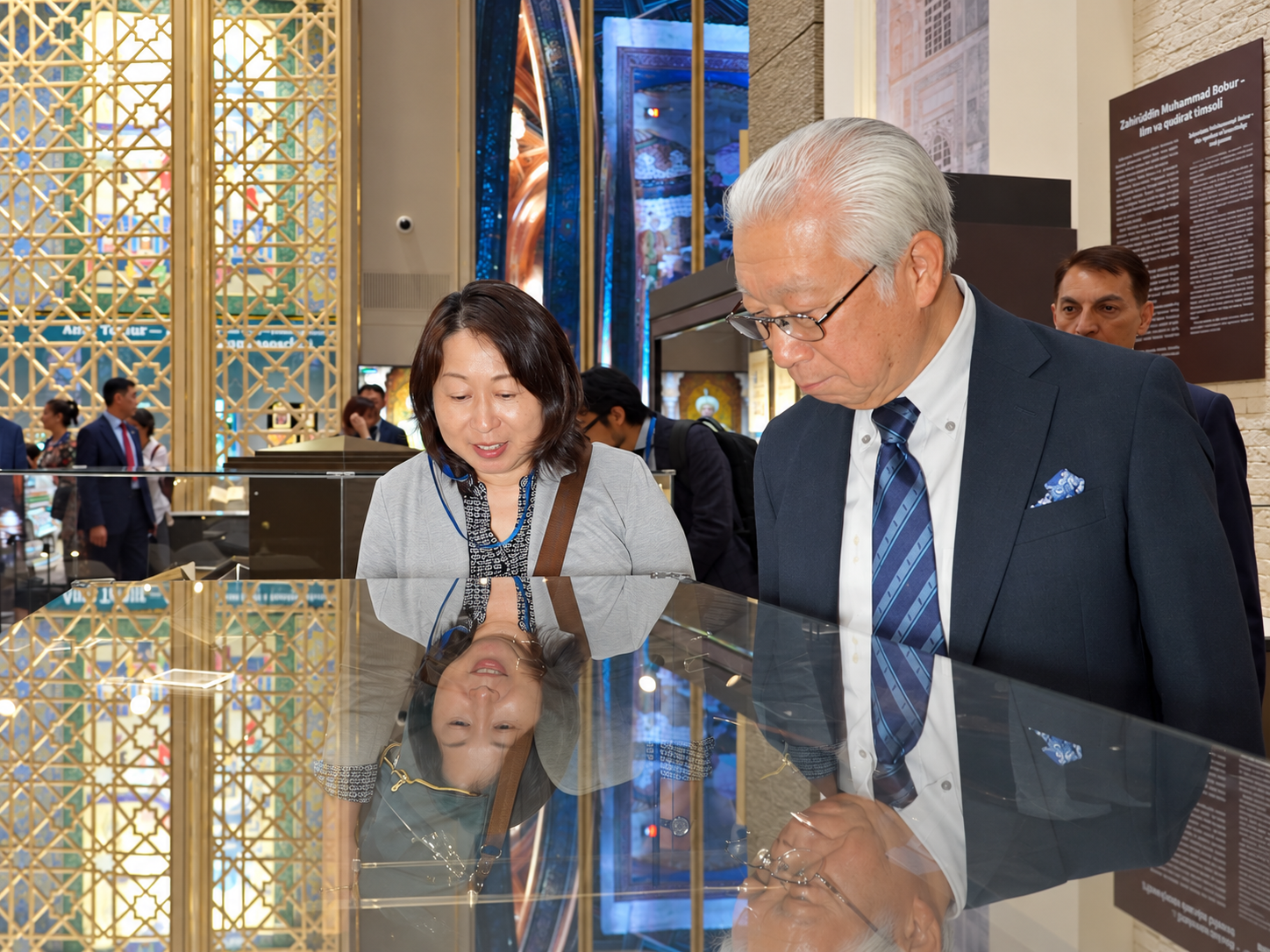
 As part of the inaugural “Central Asia–Japan” think tanks forum, Japanese experts and representatives of academic circles visiting Uzbekistan familiarized themselves with the activities of the Islamic Civilization Center in Uzbekistan.
The guests were briefed on the Center’s research and educational activities, including its work on studying manuscripts and historical sources, systematizing scholarly heritage, and making it accessible to the wider public.
Attention was also drawn to the Center’s capabilities in studying history, culture, and civilizations, promoting scholarly dialogue, and presenting historical processes to a broad audience through modern technologies.
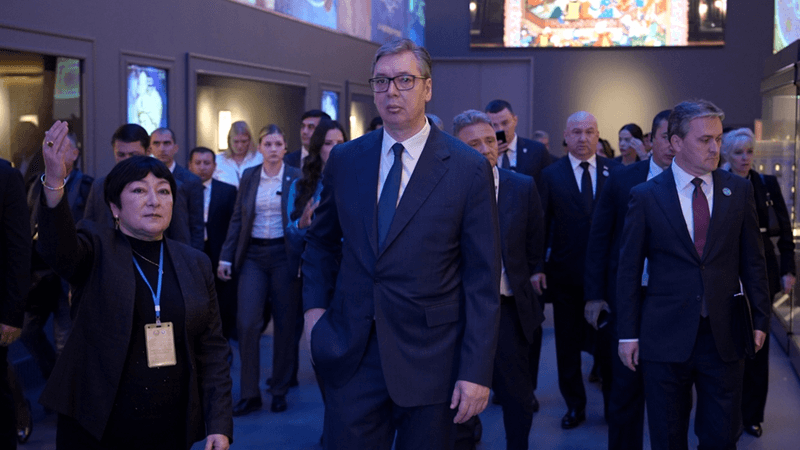
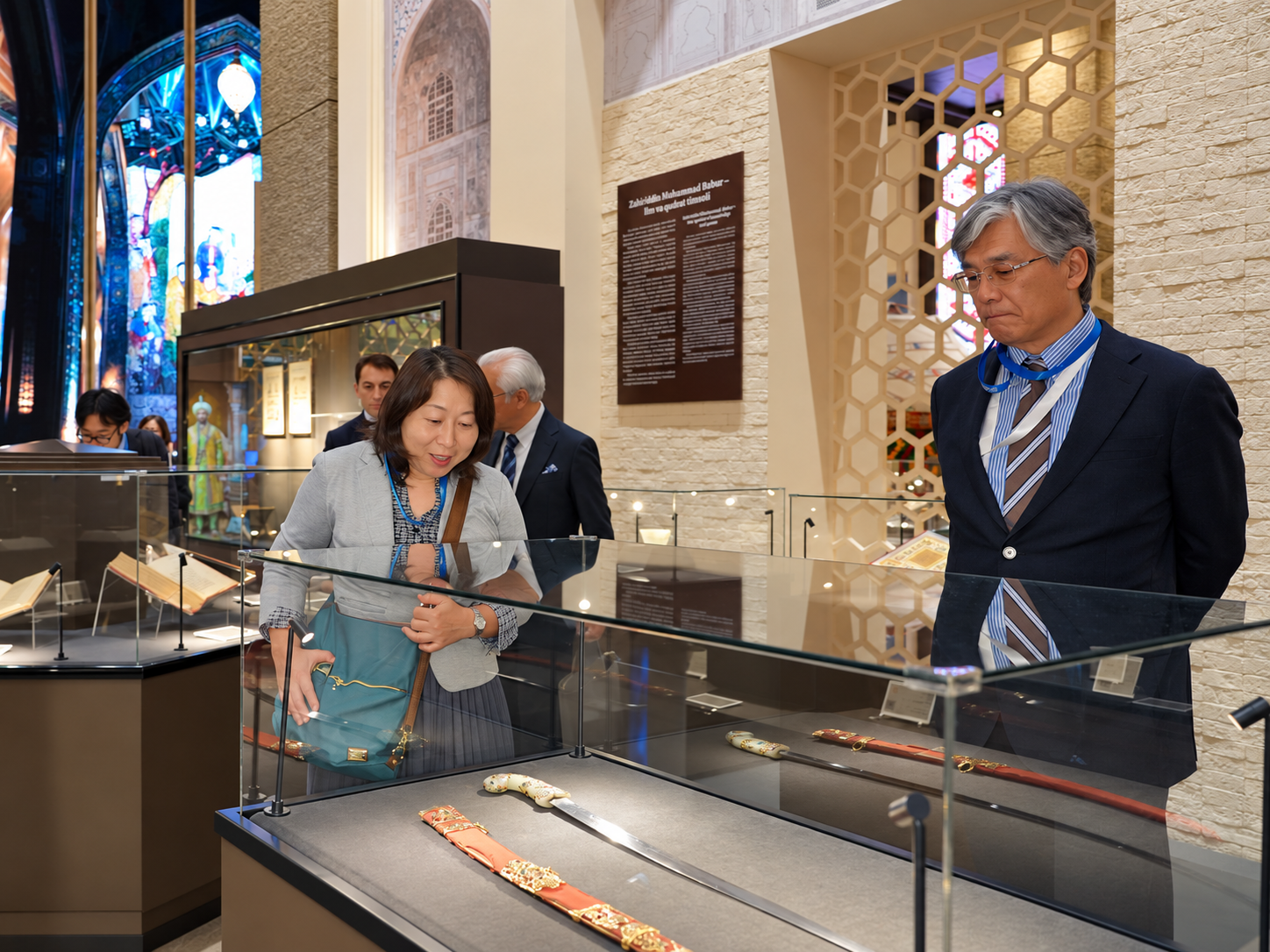 During the visit, the guests explored the Center’s exhibitions and modern technological solutions. In particular, they were introduced to approaches aimed at explaining historical processes through digital tools, systematizing information from different periods, and presenting scholarly heritage to younger generations in an accessible form.
Japanese expert Shigeto Sonoda highly praised the way the Center’s exhibitions present history as a continuous process from the pre-Islamic period to the present day, as well as the particular attention given to cultural interactions among different peoples and civilizations.
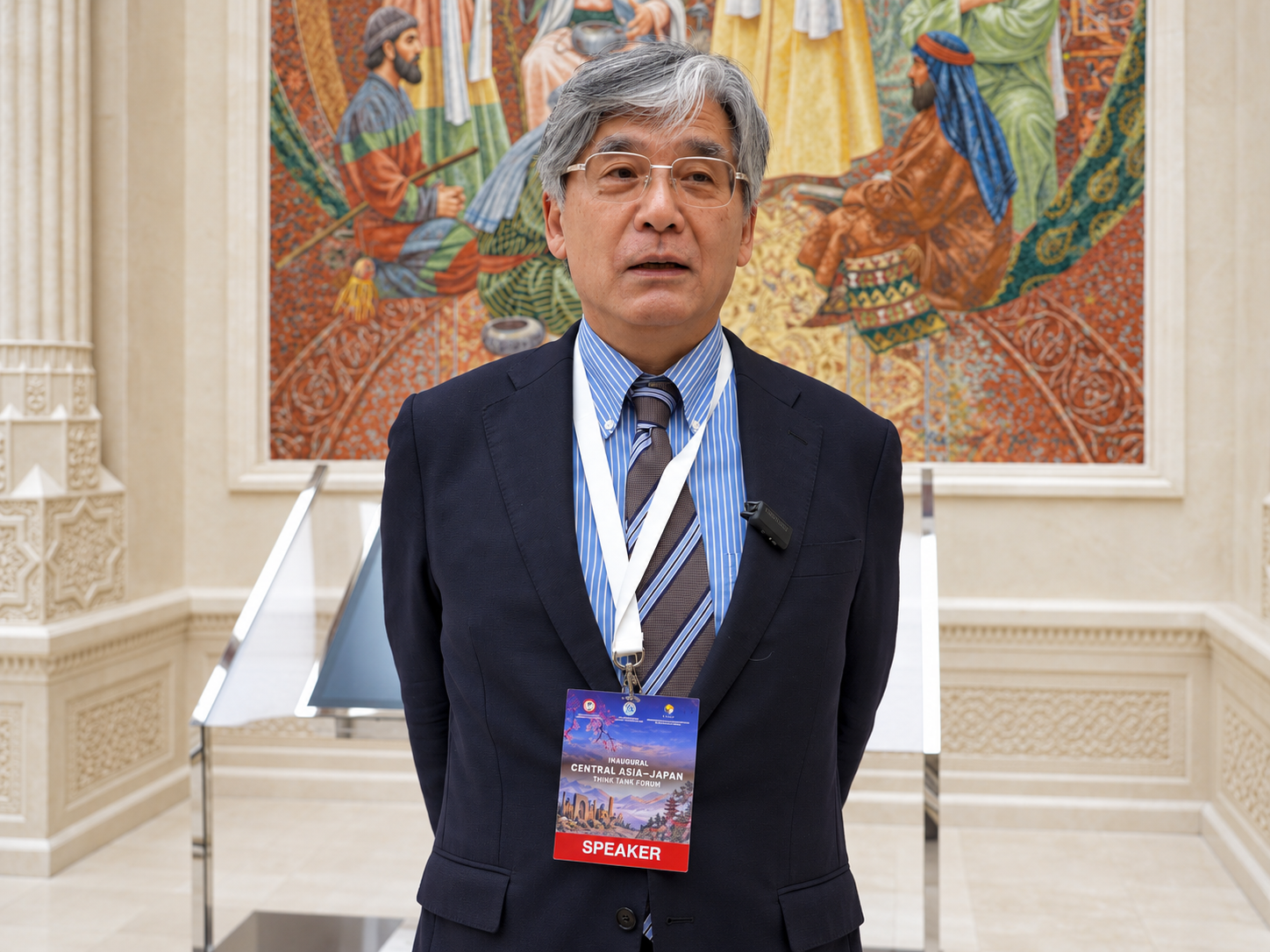
«There are two aspects of the Center that impressed me most. First, the history of the pre-Islamic period is presented here in a broad and coherent manner. The exhibition is not limited to the Islamic period; rather, historical and cultural processes from ancient times to the present day are shown in their interconnected development.
The second aspect is that history is presented not only as the history of a particular state or statehood, but also from the perspective of cultural interactions among peoples and civilizations. At first, I thought the Center would mainly tell the history of Uzbek statehood. However, I discovered a much broader picture here — one that demonstrates the connections among different peoples, cultures, and civilizations.
I was particularly struck by the way the development and transformation of writing across different historical periods is presented, as well as the special emphasis placed on the role of writing in the progress of civilization. Here, history can be understood not merely by reading or listening, but by seeing its different stages as part of a continuous process.
Most importantly, historical processes are presented through authentic objects and sources. Seeing them firsthand makes it possible to gain a deeper understanding of theoretical knowledge. In this respect, the Center is an important scholarly and educational institution not only for young people, but for people of all generations interested in history.
Knowing history is not simply about remembering the past. It helps us better understand today’s world and the connections among peoples and cultures. In my view, this is precisely one of the most important aspects of the Center», — says Japanese guest Shigeto Sonoda.