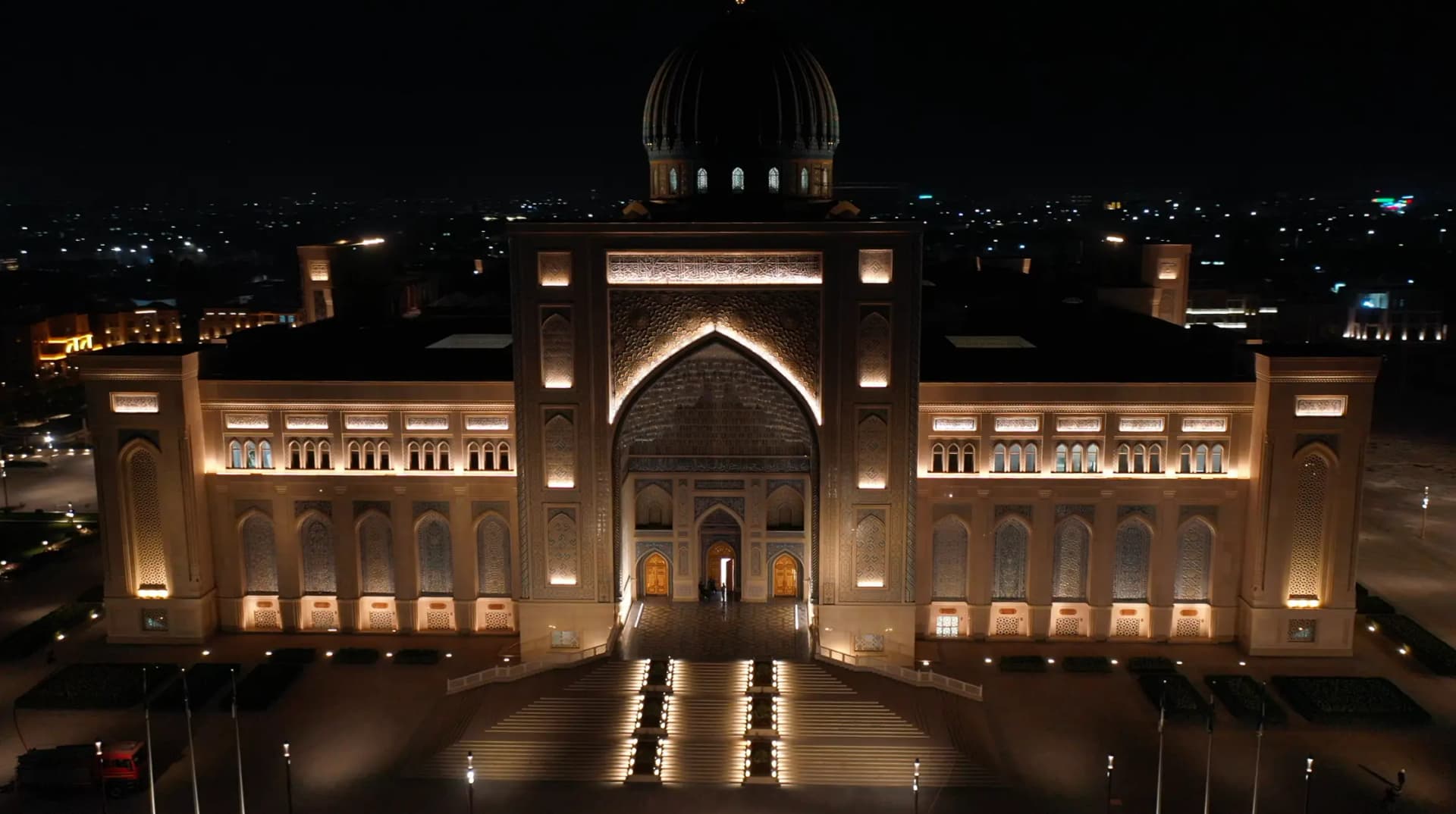
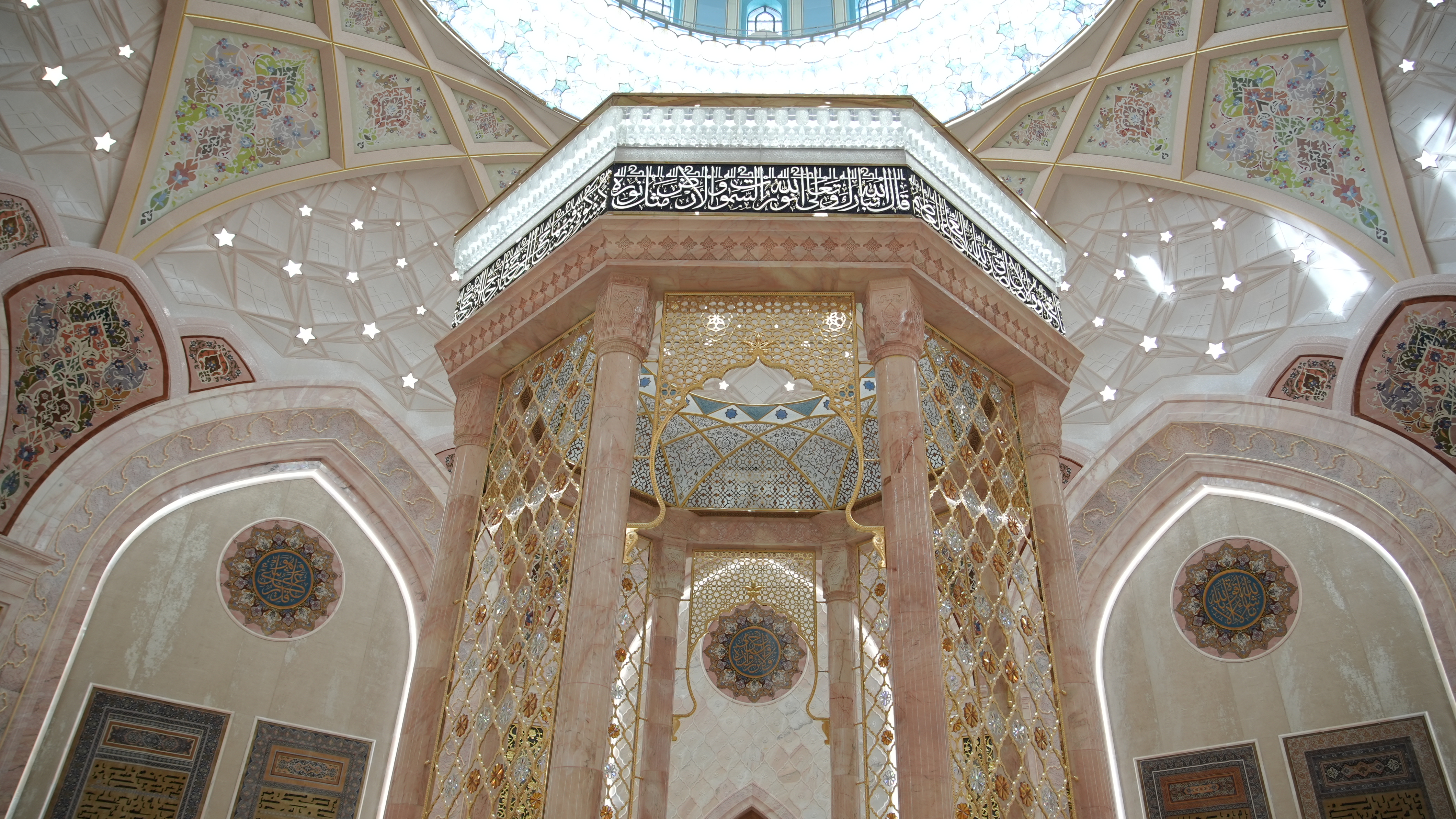
 The Islamic Civilization Center in Uzbekistan is implementing a number of major research projects focused on the study of Islamic history, manuscript heritage, source studies, digitization, and cultural monuments through modern scholarly methods. What unites these projects is an approach that goes beyond merely preserving or displaying historical heritage: they seek to re-examine it as primary source material, identify scholarly connections among materials dispersed across different collections, and formulate new research questions. The “114 Qur’ans” project being carried out at the Center is one of the most distinctive and methodologically significant examples of this approach.
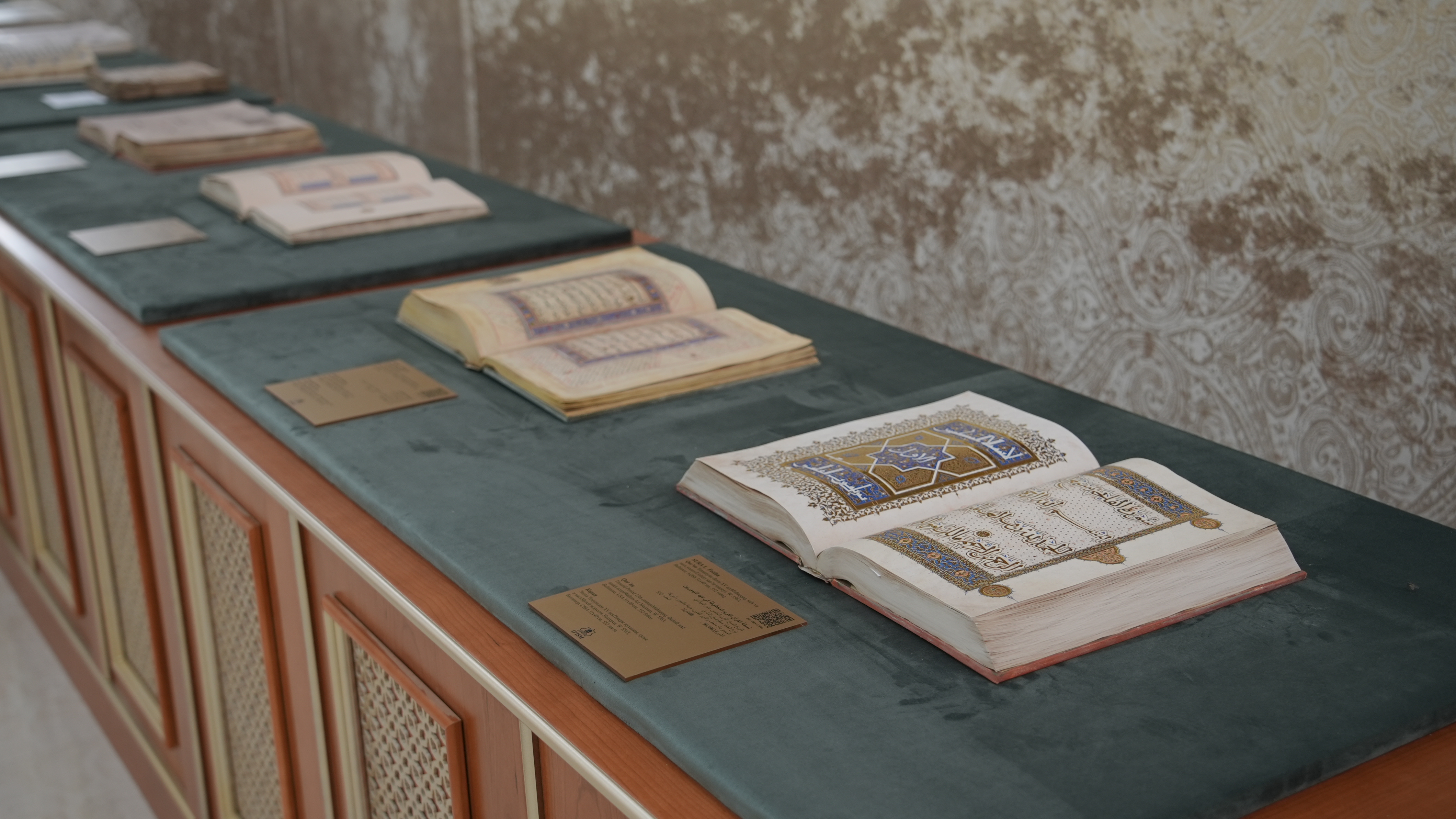 The project’s innovation is not limited to bringing together 114 rare Qur’an manuscripts in a single location. Its core scholarly concept is based on presenting and comparatively studying the 114 surahs of the Holy Qur’an within a unified framework through 114 historical copies originating from different centuries, regions, and manuscript traditions. This makes it possible to trace how the same sacred text assumed different book forms across diverse cultural environments over nearly fourteen centuries, and how calligraphic styles, systems of ornamentation, materials, book-production technologies, and translation traditions evolved over time.
By comparing within a single corpus sources ranging from the earliest Qur’anic manuscript traditions to those produced during the periods of the Samanids, Qarakhanids, Seljuks, Khwarazmshahs, Golden Horde, Timurids, Baburids, Safavids, and the khanates of Turkestan, the project goes far beyond the scope of a conventional catalogue or exhibition.
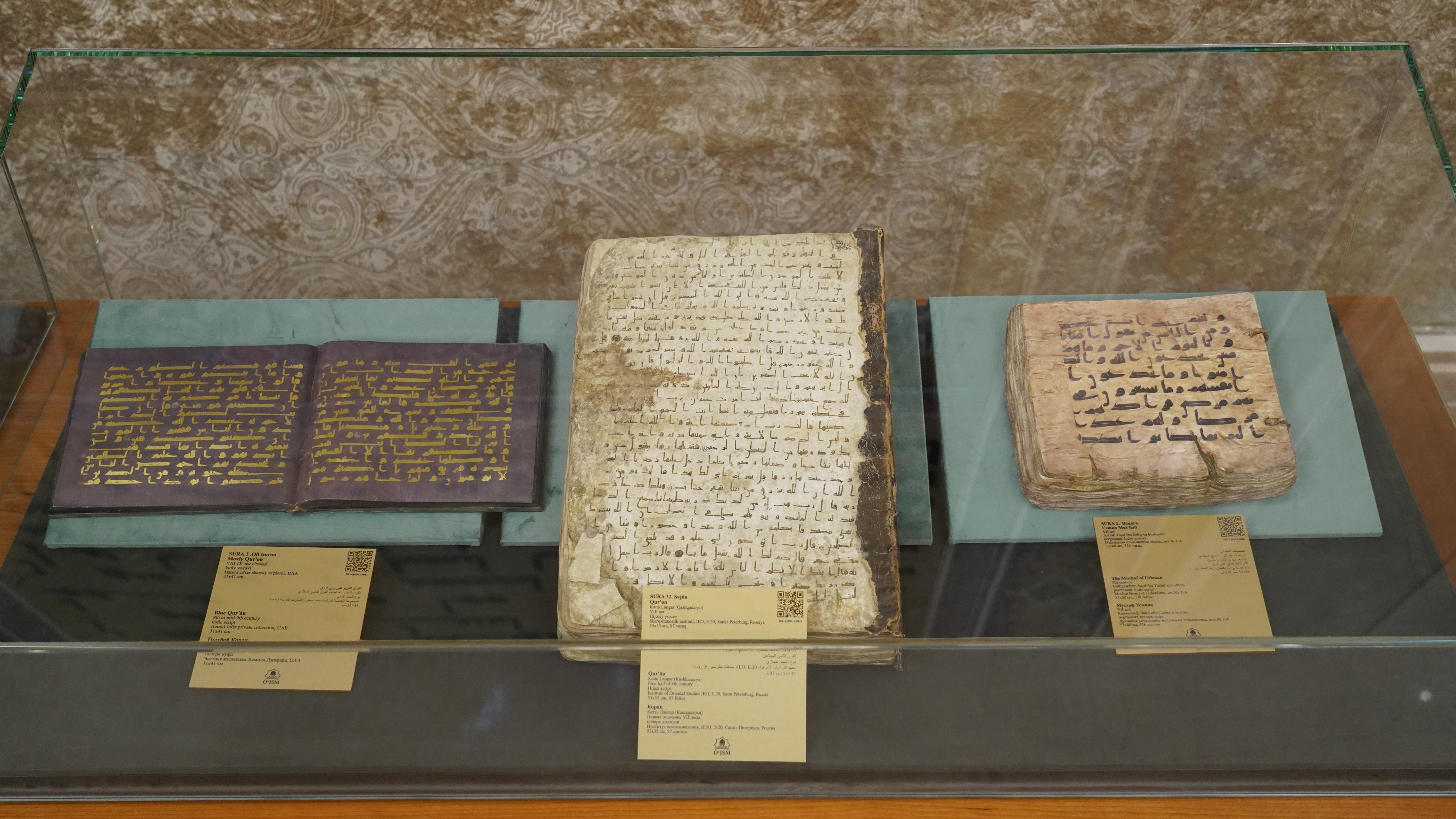 Within the framework of the “114 Qur’ans” project, each manuscript is studied as an independent historical and scholarly source. Paleography makes it possible to examine its script characteristics and the development of writing styles; codicology allows for the study of the manuscript’s paper or parchment, dimensions, binding, and book structure; art-historical analysis explores schools of illumination, ornamentation, and composition; while historical linguistics examines layers of translation and lexical features.
Colophons, dedications, ownership notes, and other markings help reconstruct the manuscript’s original context, identify its calligrapher and patron, and trace its subsequent history of transmission and movement. In this respect, the mushaf in this project is not treated merely as a religious artifact, but as a multilayered source for the simultaneous study of history, language, art, bookmaking technology, and cultural exchange.
One of the project’s particularly significant areas of research is the study of Qur’an manuscripts with interlinear translations into Turkic and Persian. In particular, translated copies associated with the Qarakhanid and Khwarazmian cultural milieu provide important evidence not only for Qur’anic studies but also for historical linguistics. The vocabulary, grammatical forms, and translation techniques preserved in these manuscripts make it possible to explore the early stages of the Turkic written language, the ways in which Islamic concepts entered the local linguistic environment, and subsequent processes of linguistic development.
This dimension demonstrates that the “114 Qur’ans” project is not merely a study of manuscript history, but a broad scholarly platform for examining the interaction of religious thought, language, and book culture in Central Asia.
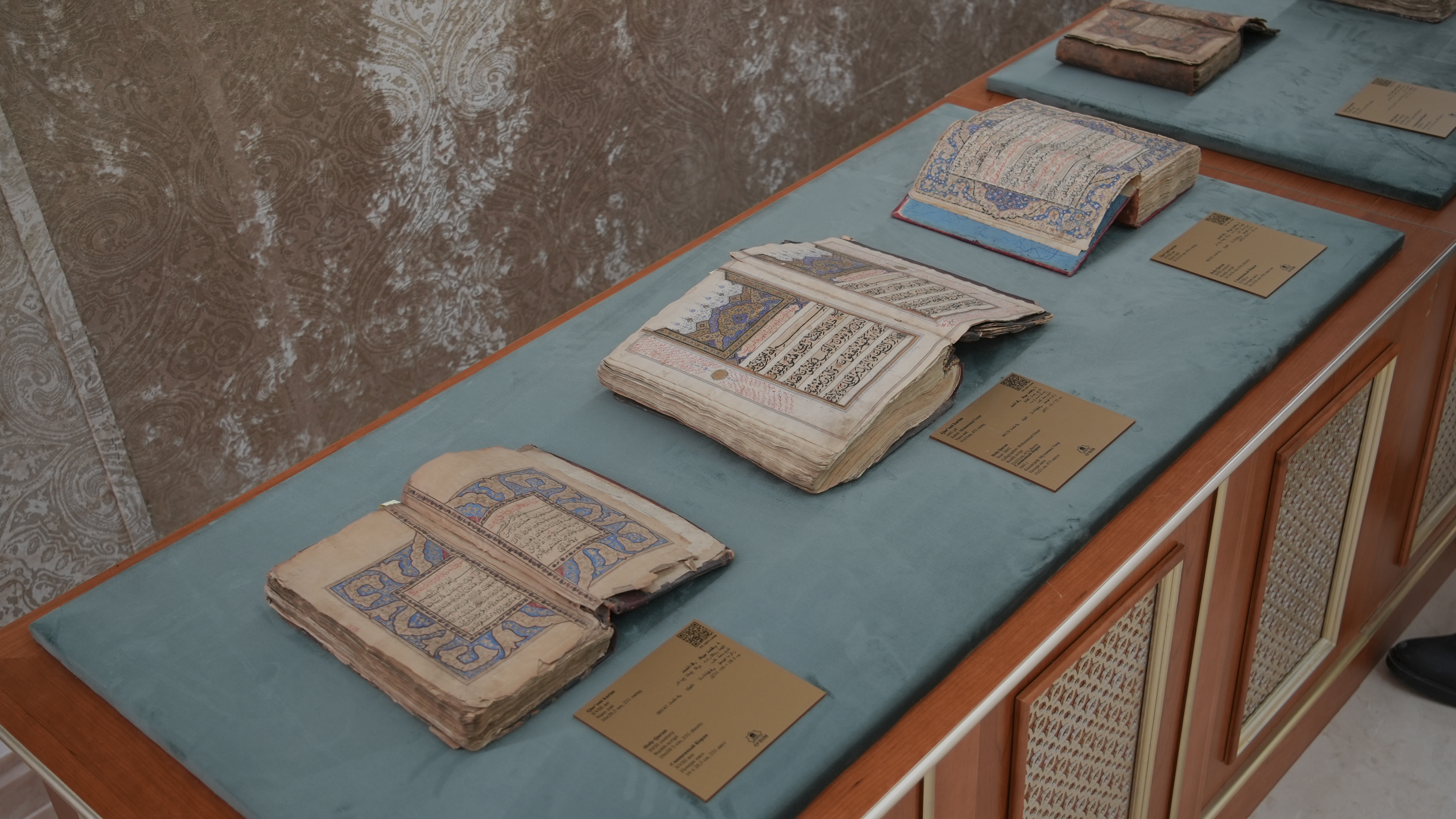 Another important feature of the research is its engagement with an international geography of sources. Many rare Qur’an manuscripts connected with Uzbekistan and historical Transoxiana are today preserved in the collections of major museums and libraries in Istanbul, Paris, London, Dublin, Mashhad, New York, and other cities. For this reason, the project gives priority not to a manuscript’s present location, but to its provenance, the scholarly and cultural environment in which it was produced, its calligraphic tradition, and its historical connections.
The project has brought together scholars and specialists from Uzbekistan, France, Türkiye, and Austria working in Qur’anic studies, manuscript studies, paleography, and Islamic art within a single scholarly team. With their participation, scholarly data and digital images relating to more than a thousand rare mushafs held in museum and library collections around the world were reviewed, and examples of particularly high historical, textual, and artistic significance were selected.
Such international cooperation makes it possible to conduct comparative research, within a unified methodological framework, on manuscript sources dispersed across different countries.
The scholarly outcomes of the project are also reflected in the Qur’an Hall of the Islamic Civilization Center. With the Mushaf of Caliph Uthman occupying the central place in this space, Qur’an manuscripts from different historical periods are presented in chronological sequence, offering visitors more than an opportunity to view individual rare works. It enables them to understand the centuries-long development of Qur’anic book culture as a coherent historical process.
In this sense, the “114 Qur’ans” project clearly embodies the scholarly model of the Islamic Civilization Center: searching for and identifying sources dispersed across collections around the world, conducting comparative analysis, preparing scholarly descriptions, digitizing them, and presenting them to the public through modern museum interpretation are all integrated into a single research process.
This is where the project’s true uniqueness lies: the 114 manuscripts are brought together not merely in one place, but around a single scholarly concept and within a unified research framework.
Shahina Alijonova
P.S. The article may be reproduced and published with a link to the Center’s official website