

Five areas of study, 16 countries, one great heritage: A new international research edition of “Sahih al-Bukhari” is being prepared
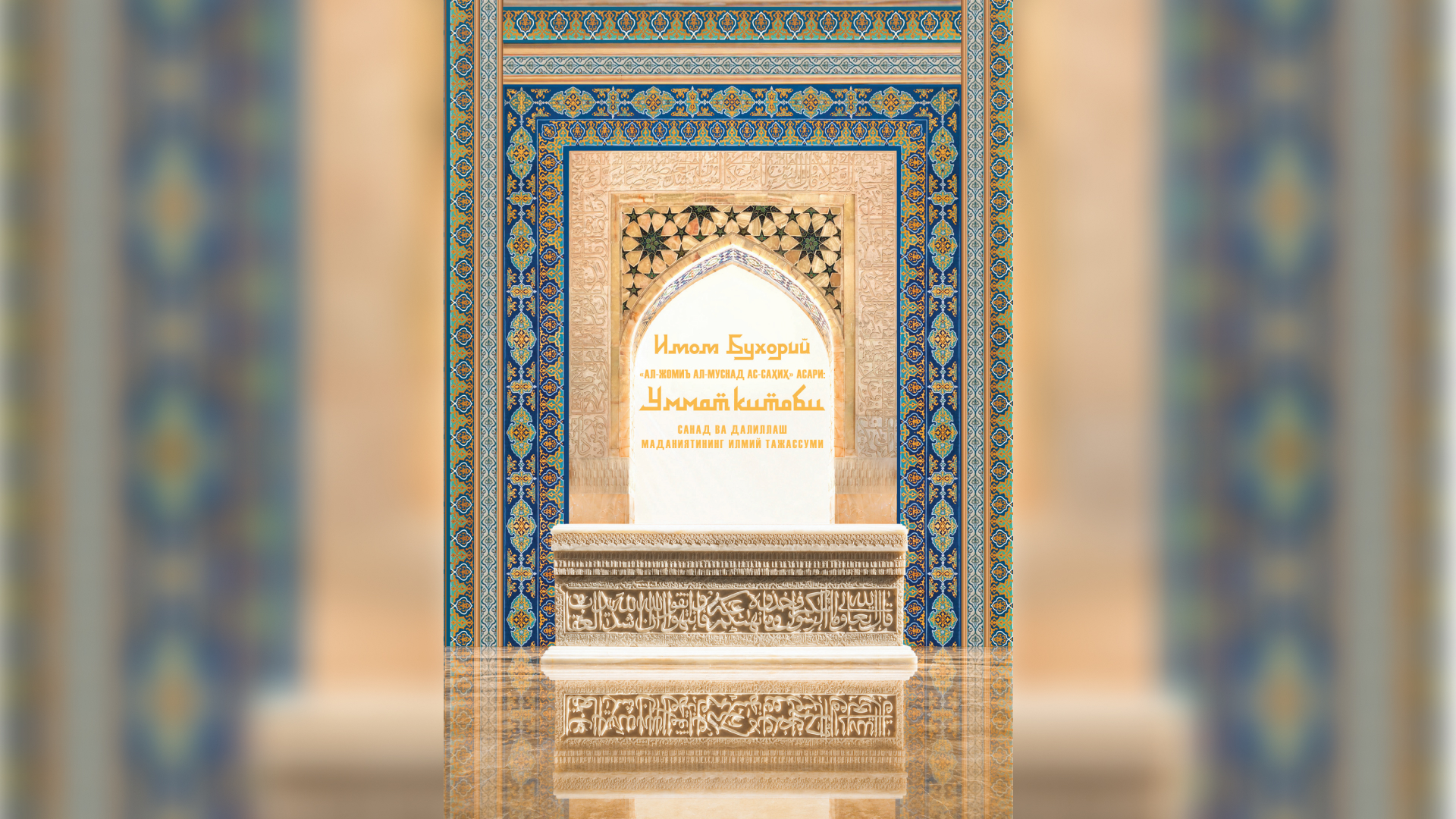 Identifying the source of information, verifying who provided it, comparing different accounts, and distinguishing reliable evidence from questionable reports have become some of the most pressing challenges in today’s information landscape. Nearly twelve centuries ago, Imam Bukhari demonstrated one of the most sophisticated examples of a scholarly tradition based on the chain of transmission, the reliability of narrators, and the comparative examination of reports when authenticating hadiths.
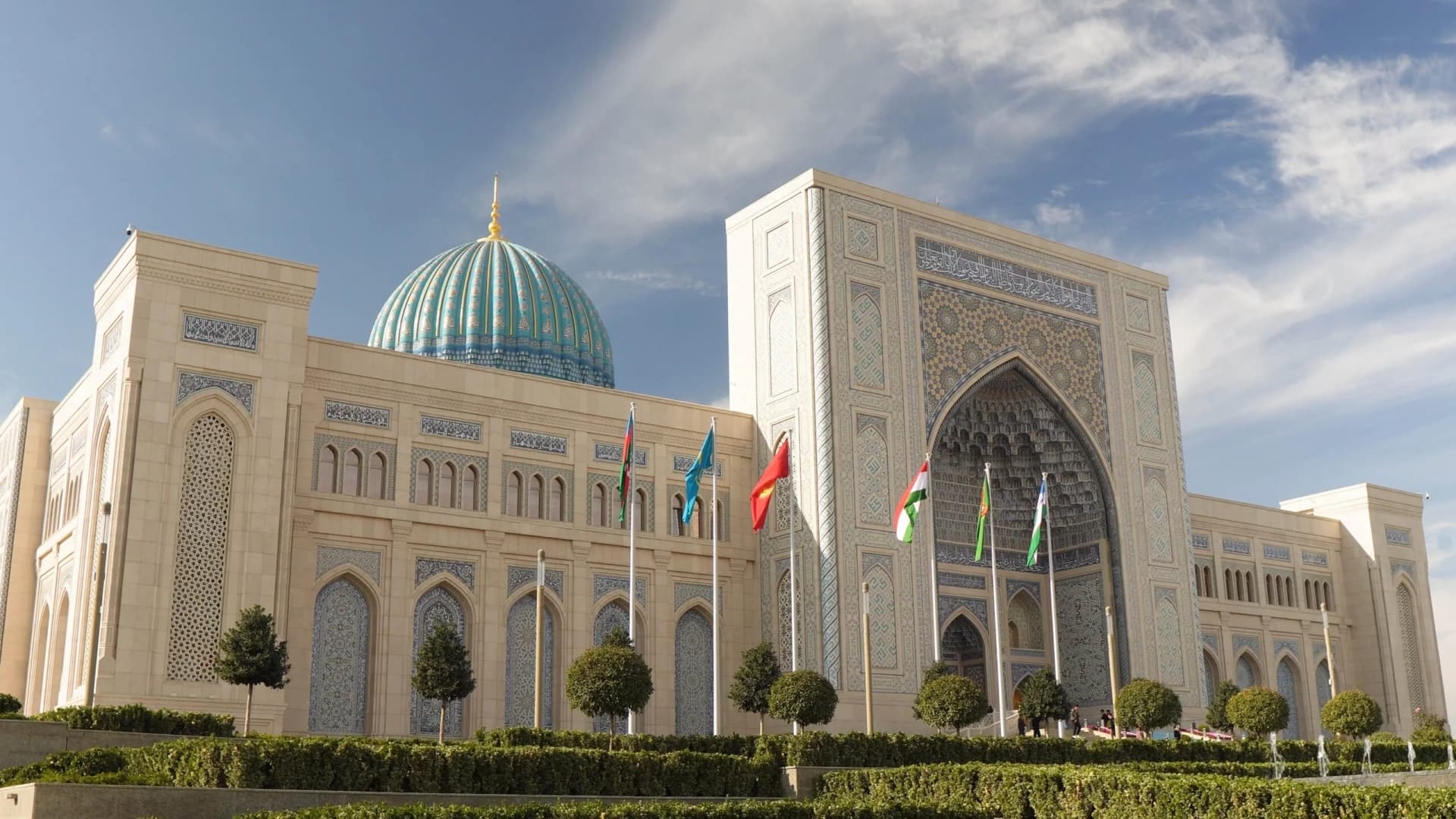
In 2026, the First International Forum on Islamic Civilization, held in Uzbekistan at the initiative of President Shavkat Mirziyoyev and organized by the Islamic Civilization Center in cooperation with the Islamic World Educational, Scientific and Cultural Organization (ICESCO) and the Imam Bukhari International Scientific-Research Center, revisited this heritage from the perspective of contemporary research as a major international scholarly project. At the international conference held in Samarkand as part of the forum, international scholars and researchers presented a range of new findings and insights. Today, drawing on these materials, the Islamic Civilization Center is preparing an approximately 800-page scholarly publication with scholars and researchers from 16 countries. The publication will cover five primary areas, examining the life and scholarly legacy of Imam Bukhari, the research methodology of his work Al-Jami’ al-Musnad al-Sahih, its manuscripts, its place in scholarly traditions worldwide, and the critical debates surrounding the work.
A scholarly journey beginning in Bukhara
Abu Abdullah Muhammad ibn Ismail Bukhari was born in Bukhara in 194 AH (810 CE). Interested in the science of hadith from a young age, the scholar later traveled to the major centers of learning of his time, such as Mecca, Medina, Iraq, Syria, Egypt, and Khorasan, and studied under many hadith scholars. His most famous work, “Al-Jami’ al-Musnad as-Sahih,” widely known as “Sahih al-Bukhari,” is recognized as one of the most authoritative hadith collections in the Sunni Islamic scholarly tradition.
The significance of the work lies not merely in its compilation of hadiths. One of its main features for researchers is the sophisticated scholarly criteria applied in the evaluation and selection of narrations.
Throughout the evolution of Islamic sciences, the sanad, the chain of narration showing how a report or hadith passed from one narrator to another, has held central importance. Hadith scholars examined narrators’ biographies, reliability, memory, the possibility of their having met one another, and how the same report had been transmitted through different chains.
Within this scholarly tradition, Imam Bukhari became renowned as a scholar who applied exceptionally rigorous standards in the verification and classification of hadiths.
“Sahih al-Bukhari”: not merely a collection, but a scholarly approach
Modern research into Imam Bukhari’s scholarship increasingly examines his method of selecting hadiths and his approach to preparing the work.
The sources record that the scholar worked on “Sahih al-Bukhari” for 16 years. Among the factors that inspired him to undertake this work was a suggestion by his teacher, Ishaq ibn Rahwayh, a great 9th-century hadith scholar, jurist, and Qur’anic exegete who was one of the most influential scholars of Khorasan. He proposed compiling authentic hadiths into a separate book.
However, from a scholarly perspective, the value of the work is reflected more clearly in the methodology applied than in in the time spent creating it.
However, from a scholarly perspective, the value of the work is reflected more clearly in the methodology applied than in the time spent producing it.
Imam Bukhari particularly emphasised on the chains of transmission, the standing of narrators, the possibility of direct contact between them, and the relationship between hadiths transmitted through different chains. The chapter headings in the work are not merely technical divisions; in many cases, they reflect the author’s legal reasoning, his interpretation of the evidence, and the legal or ethical conclusions he drew from a narration.
For this reason, Sahih al-Bukhari has not merely been read over the centuries. It has been interpreted, compared, copied, taught, and critically analyzed.
What did the academic conference explore?
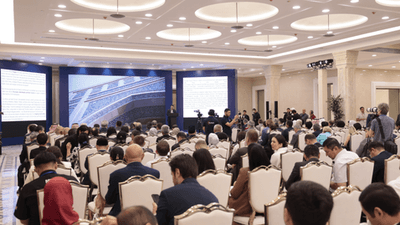
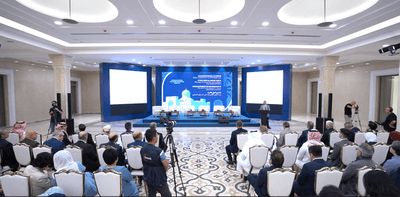
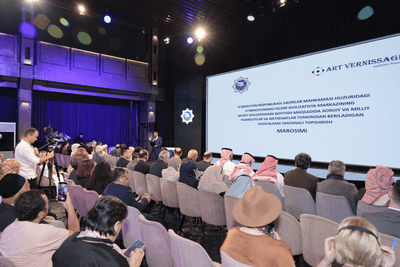
From 7 to 11 July 2026, the First International Forum on Islamic Civilization was held in Tashkent, Samarkand, and Termez. As part of the forum, an international academic conference entitled “Imam Bukhari’s Al-Jami’ al-Sahih: The Book of the Ummah” took place in Samarkand on 9–10 July. The conference’s scholarly program was aimed at studying Imam Bukhari’s legacy not as a one-sided historical memory but as a subject of comprehensive research. The scholarly edition being prepared by the Islamic Civilization Center in Uzbekistan made this aspect especially significant. Scholars and researchers analyzed Imam Bukhari’s legacy in the following five areas.
The first area covered the historical, geographical, social, and scholarly environment in which Imam Bukhari was developed. It examined the role of Bukhara and Mawarannahr in the development of hadith science, family upbringing, the environment of his teachers, and the factors that influenced the formation of the scholar’s intellectual identity.
The second area focused on the internal scholarly mechanism of “Al-Jami’ as-Sahih.” Researchers analyzed Imam Bukhari’s isnad system, the criteria for selecting and classifying hadiths, his method of detecting hidden defects in narrations, his skill in formulating chapter headings, and his principles of evidence-based reasoning.
This area makes it possible to view the work not as an ordinary compilation of hadiths, but as a source with a complex scholarly architecture.
The third area was devoted to copies of Sahih al-Bukhari preserved in libraries and manuscript collections around the world. Records of readings (qira’at), scholarly audition (sama’), authorizations (ijazah), collation (muqabalah), and other scholarly notes found in the manuscripts provide valuable evidence for studying how the work was read, copied, and transmitted from one generation to the next over the centuries.
Such sources make it possible to trace the historical movement of a single text, identify differences between copies, and reconstruct the work’s scholarly transmission.
The fourth area covered the contribution of different countries and scholarly schools to the study of “Sahih al-Bukhari.” Over the centuries, the work has been taught, interpreted, and researched across a vast territory, from North Africa to Central Asia and from the Middle East to South Asia.
This geography shows that Imam Bukhari’s legacy is not a historical value confined to a single state or region.
The fifth area was devoted to examining scholarly criticisms, controversial issues, and the responses to them that have emerged around Sahih al-Bukhari in different periods.
The inclusion of this area in the conference program is important: it shows that preserving scholarly heritage is achieved not only by glorifying it, but also by openly discussing in a scholarly manner the questions directed at it.
A publication with the participated researchers from 16 countries
The conclusion of the conference later became a separate scholarly publication.
On 16 July 2026, ICESCO announced the preparation of a major scholarly publication entitled Imam Bukhari’s Al-Jami’ al-Musnad al-Sahih: The Book of the Ummah — A Scholarly Expression of the Civilization of Isnad and Verification.
Scholars and researchers from 16 countries contributed to the publication. It brings together the studies presented across the conference’s five main scholarly areas listed above.
Alongside the history of hadith science, the publication gathers new research material for source studies, manuscript studies, textual criticism, narration methodology, and Islamic intellectual history in one place.
The Islamic Civilization Center in Uzbekistan, for its part, took part in translating the abstracts of the studies in the collection into Uzbek.
The ancient sanad system and the modern information environment
Equating Imam Bukhari’s scholarly method exactly with modern journalism or today’s fact-checking systems would not be historically accurate. They belong to different eras, functions, and scholarly environments.
However, they share an important intellectual principle: information alone is not enough, its source must also be verified.
In the hadith studies tradition, questions such as “Who did this report come from?", "How reliable is the person who transmitted it?”, “Could he have received this information directly?”, and “How is this report presented in other narrations?” have become part of scholarly verification.
Today, even as information reaches millions of people within seconds through digital platforms, identifying sources, locating original information, seeking independent verification, and evaluating reports in context remain essential conditions for reliable information.
From this perspective, Imam Bukhari’s legacy holds significance beyond its religious and historical value. It also offers an important historical example for understanding how a culture of responsibility, verification, and evidence-based reasoning in handling information took shape.
Institutional base for Imam Bukhari studies
In recent years, the systematic study of Imam Bukhari’s legacy in Uzbekistan has also been strengthened by the activities of specialized scholarly institutions.
43rd Session of The Council of Foreign Ministers — OIC
On October 18, 2016, at the 43rd session of the Council of Foreign Ministers of the Organization of Islamic Cooperation held in Tashkent, Shavkat Mirziyoyev, then acting President, put forward the initiative to establish an international scientific research center at the Imam Bukhari Memorial Complex, specializing in the study of the legacy of great scholars.
On March 27, 2017, a Presidential Resolution was adopted on measures to establish the Imam Bukhari International Scientific Research Center.
Today, cooperation between the Imam Bukhari International Scientific Research Center, the Islamic Civilization Center in Uzbekistan, and other specialized scholarly institutions accelerating manuscript studies, high-level scholarly publications, and the international visibility of Uzbekistan’s rich academic heritage.
The international conference held in Samarkand and the forthcoming scholarly publication featuring participants from 16 countries are expected to present Imam Bukhari’s legacy not merely as a subject of retrospective honor, but as a living intellectual heritage that continues to invite research, debate, and new scholarly questions.
In an era where the volume of information is growing and the boundary between truth and interpretation, reliable sources and unverified reports, is becoming increasingly complex, the most important takeaway from this legacy is simple: reliable knowledge begins with verifying the source.
Durdona Rasul