
Our great ancestors' discoveries were showcased at the International Astronautical Congress

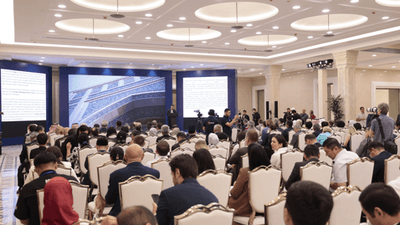
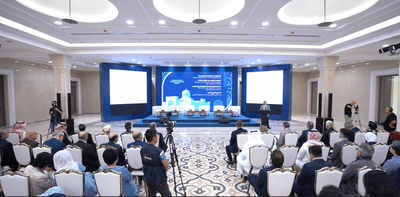
The opening ceremony of the 77th International Astronautical Congress, the world’s largest space event, held these days in Antalya, Türkiye, also paid tribute to our great ancestors such as al-Khwarizmi, Biruni, al-Farghani, Mirzo Ulugbek, and Ali Qushchi. Their contribution to modern astronautics and the scientific foundation they created were acknowledged.
Alongside politicians and industry experts from a number of countries, Turkish President Recep Tayyip Erdoğan also delivered a speech at the opening ceremony.
Uzbekistan’s “trace” in Türkiye’s space program
It is worth noting that in recent years Türkiye has achieved remarkable results not only in military innovation but also in aerospace and space research. Rapidly developing its own space program, Türkiye has moved from relying mainly on foreign satellite platforms to developing its own spacecraft and their components. Projects such as BİLSAT (2003), RASAT (2011), GÖKTÜRK-2 (2012), İMECE (2023), and TÜRKSAT 6A (2024) deserve particular mention along this path.
In particular, İMECE is the first domestically built Turkish Earth observation satellite, capable of capturing images with a resolution finer than one meter. TÜRKSAT 6A is the first telecommunications satellite in Türkiye developed on the basis of national capabilities.
The year 2024 was especially historic for Türkiye in the field of crewed spaceflight as well. Alper Gezeravcı served as Türkiye’s first astronaut aboard the International Space Station, where he carried out 13 scientific experiments.
In June of the same year, Tuva Cihangir Atasever completed a suborbital research flight, becoming the second Turkish citizen to travel to space.
One interesting and significant aspect for us is that the Turks do not consider the scientists and great scholars who lived and worked in Central Asia, and in Uzbekistan in particular, to be strangers. Because these scholars also belonged to the Turkic peoples, the Turks regard them as their own ancestors and themselves as their followers and scientific heirs.
This can also be demonstrated by the fact that some Turkish space projects use the names of great scholars of the Turkic-Islamic scientific world, including scientists who lived and made discoveries on the territory of present-day Uzbekistan.
In this regard, the private Turkish space company Fergani Space deserves special attention.
Fergani Space: Selçuk Bayraktar’s space project
The company’s name, Fergani (Farghani), refers directly to Ahmad al-Farghani, the great astronomer of the ninth century. This great scholar, who came from the land of Fergana, is known in the West as Alfraganus.
It is worth recalling that Selçuk Bayraktar, known as the chairman of the board and chief technology officer of Baykar, one of Türkiye’s major high-technology companies, has in recent years been directly developing the field of space technologies as well.
In 2022, Selçuk Bayraktar founded the space technology company Fergani Space (Fergani Uzay Teknolojileri) and serves as its chief executive officer (CEO).
This private company created the FGN-100-d1 and FGN-100-d2 satellites. The company is also working on building the Uluğ Bey, or “Ulugbek,” global positioning system (similar to GPS) in the future.
According to the company, FGN-100-d2 serves as a satellite testing technologies for the future “Ulugbek” global positioning system.
Fergani Space’s first satellite
Fergani Space is becoming one of the important participants in Türkiye’s emerging overall space ecosystem. The Turkish Space Agency has also included the launch of the FGN-100-d1 satellite in the official chronology of the country’s space development.
In January 2025, the company placed into orbit its first satellite, FGN-100-d1, weighing 102 kilograms. In November 2025, the 104-kilogram FGN-100-d2 satellite was launched.
These spacecraft serve, among other things, to test the technologies required for a satellite-based navigation system planned for creation in the future.
Ulugbek: the name of Türkiye’s future navigation system
Fergani Space is working on creating its own satellite navigation system called the Uluğ Bey Küresel Konumlama Sistemi, that is, the “Ulugbek Global Positioning System.” As part of the project, a constellation of more than 100 satellites operating in low Earth orbit is planned. “Ulugbek” is not the name of a single satellite launched to date, but the name of the Turkish navigation system and satellite constellation being created. Its name is dedicated to the memory of the great Uzbek statesman and astronomer Mirzo Ulugbek (1394–1449).
Ali Qushchi: another name connected with Samarkand
The name of the great scholar Ali Qushchi (Ali Kushçu) is also being used in Türkiye’s Moon program. In particular, in its lunar science program, TÜBİTAK UZAY uses the term “Ali Kushçu Science, Exploration, and Mapping Objectives.” This, too, can be called an interesting example of historical and scientific continuity between Türkiye and Uzbekistan. Ali Qushchi was one of the leading astronomers and mathematicians of the fifteenth century and worked in Samarkand within Mirzo Ulugbek’s scientific school. He later moved to the Ottoman state and continued his scholarly work in Istanbul. In this sense, the figure of Ali Qushchi serves as a historical bridge linking the scientific traditions of Samarkand with the scientific milieu of the Ottoman state. Fergani Space, for its part, is a company that is strengthening these historical ties further and forging new ones.

An era of awakening in Uzbekistan’s astronautics
In his speech at the opening ceremony of the event in Antalya, the President of Türkiye, as well as Türkiye’s Minister of Industry and Technology in his own address, placed particular emphasis on the historical role of our great Uzbek scholars.
Of course, Uzbekistan too is not content with merely taking pride in its ancestors. Especially under the new administration, a number of successful projects have been planned and have begun to be implemented on the path of developing Uzbekistan’s own space program.
On the initiative of President Shavkat Mirziyoyev, creating a national scientific satellite and sending the first Uzbek astronaut into space for the first time in the country’s history have been set as strategic tasks.
The first national scientific satellite is planned to be named after the great Uzbek astronomer and statesman Mirzo Ulugbek. It has been proposed to launch the 6U-format “Mirzo Ulugbek” satellite into space in 2028. The project also envisages forming a national team of engineers and training highly qualified specialists.
Today, work on preparing Uzbekistan’s first national astronaut has begun. According to the initial plan, during a 10–14-day space flight, the Uzbek astronaut may conduct scientific research in the fields of medicine, biology, plant genetics, and materials science.
President Shavkat Mirziyoyev links these projects with the scientific and technological progress of New Uzbekistan, paying particular attention to developing the space sector, engaging young people in modern science and technology, and strengthening the country’s independent scientific potential. Uzbekistan’s scientists, too, are striving to follow the path of our great astronomer ancestors and make their own contribution to world science.
Abulfayz Sayidasqarov
P.S.: The article may be reproduced and published with a link to the Center’s official website.
This article was automatically translated using artificial intelligence.