
On Ibn Sina’s “Sarguzasht”
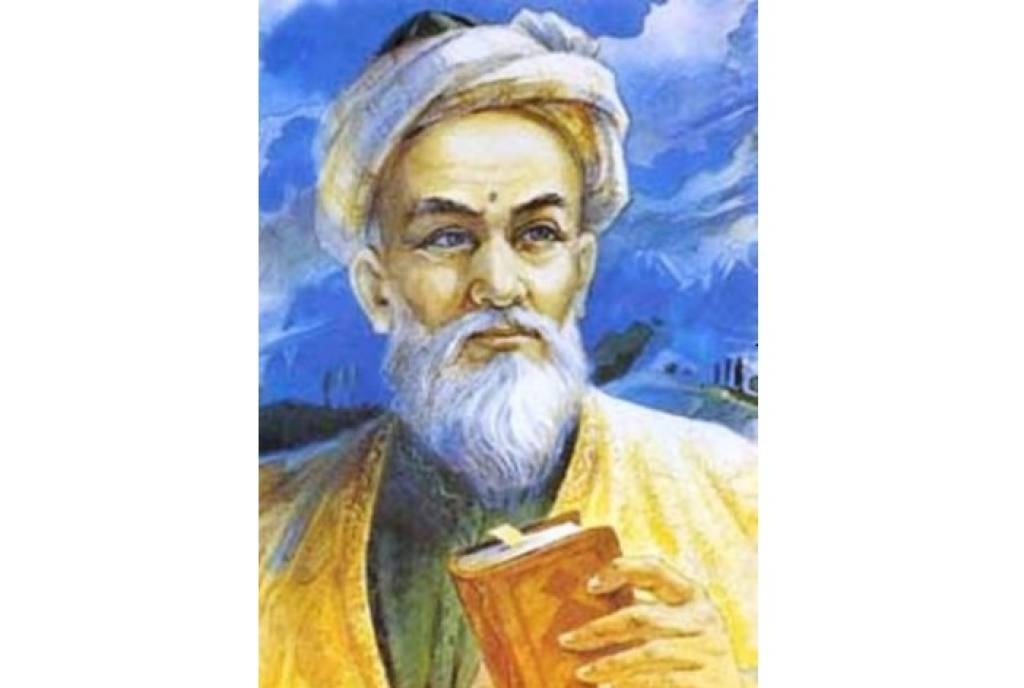
Abu Ali ibn Sina is one of the brilliant figures of the Eastern Renaissance. His profound scientific and intellectual legacy has enriched human civilization for a thousand years. The in-depth study of his works, created in dozens of fields including medicine, philosophy, theology, mathematics, music, literature, linguistics, and logic, remains one of the most pressing concerns of modern scholarship. The breadth and depth of Ibn Sina’s thought continue to reveal new dimensions to researchers across diverse disciplines. Notably, he was not only a great scientist but also a creator who mastered the art of words and expressed his aesthetic sensibilities through poetic expression.
The thinker’s “Sarguzasht” (Adventure) was left unfinished by the author and was later completed by his devoted student Abu Ubayd al-Juzjani. The work chronicles the principal milestones of Sheikh al-Rais’s life from early childhood to his final days. It remains an indispensable primary source for examining the scholar’s biography, scientific activity, family environment, and the picture of his era. In this work, Ibn Sina also reflects on his affinity for poetry:
“I returned to Jurjan, where Abu Ubayd al-Juzjani came and joined me. Around that time, I composed a qasida expressing my condition which included the following verse: ‘When I grew in stature, no city could contain my presence; when my worth ascended, I was left without a buyer.’”
Through “Sarguzasht”, readers gain access to rare and intimate details of the master’s life. The biographical section documented by al-Juzjani vividly illustrates Ibn Sina’s extraordinary intellect and relentless work ethic. In particular, it records that the scholar wrote an average of 50 pages a day.
It also relates that, at the request of his neighbor Abulhasan al-Aruz, Ibn Sina compiled a book called “Al-Majmu’,” which gathered all existing sciences except mathematics. Information of this kind is of great importance for understanding the scholar’s personality.
The survival to our era of such an authentic memoir, reflecting the scientific environment of the tenth century, stands as a milestone of historical significance. Ibn Sina’s treatise abounds in instructive details that demonstrate his efficient use of time and his lifelong devotion to the pursuit of knowledge. In particular, Hakim Termizi, who lived before Ibn Sina, likewise described in his autobiographical work “Badv ush-sha’n” the scientific environment of Mawarannahr, the scholar’s life, and extraordinary experiences. Both iconic figures created in their own fields in unmatched ways and made enormous contributions to the development of world science.
In “Sarguzasht,” Ibn Sina respectfully mentioned the names of his teachers, such as Abu Abdullah an-Natili and Ismail Zahid, and fairly assessed their level of knowledge. In recounting his rapid mastery of various disciplines, the thinker observes:
“The science of medicine is not among the difficult sciences, so I advanced very quickly in this field. Before long, distinguished and veteran physicians began seeking my counsel and studying medical treatment under my guidance.”
Along with his thirst for knowledge and rare intellect, he never feared the hardships on the path to his goal. He deeply understood that great victories are achieved not by ability alone but through ceaseless effort. Recalling his years at sixteen to seventeen, Ibn Sina writes: “In those days, I never slept through a full night, and my days were spent in unbroken contemplation of the sciences.”
Although no clear historical records survive about who commissioned the autobiography or why it was written, the text shows that Ibn Sina sought to record the most important turning points of his life.
It is known from the work that Ibn Sina gained access to the royal library of the Samanid ruler Nuh ibn Mansur as a reward for curing him. His vivid descriptions of the library’s vast size and its systematic organization by subject give us a rare firsthand look at library culture and record-keeping in the Samanid era. The author concludes with reflections on his intellectual maturity, noting that by the age of 18 he had mastered the main sciences of his time and then devoted himself to retaining this knowledge firmly in his memory.
According to al-Juzjani, Sheikh al-Rais could work on several books at the same time. For example, when he began the natural sciences section of the famous “Ash-Shifa,” he had already completed the first book of the “Canon of Medicine.” Al-Juzjani recalls with profound admiration that he served his teacher faithfully for 25 years, yet in all that time never saw Ibn Sina simply sit and read a new book from beginning to end (since he knew all the sciences so thoroughly that he proceeded directly to writing).
Through “Sarguzasht,” we also gain valuable information about the scholar’s lost works that have not survived to the present day. Al-Juzjani regretfully notes that the scholar’s work “Lisan al-Arab” (“The Arabic Language”) was never copied out in clean form and that manuscripts recording medical experiences that were to be included in “Al-Qanun” were lost.
In conclusion, the treatise “Sarguzasht” is one of the most authoritative sources for studying Ibn Sina's life, his family environment, the status of Bukhara as a major scientific center in the tenth century, and the state of the Samanid library. It is a rare document that speaks directly through the voice of the thinker himself and his devoted student, reflecting the scholar’s unique memory, high creative potential, and unparalleled genius.
Today, this work has been translated into numerous global languages, including Uzbek, and many scientific articles and treatises have been written about it. The scholar’s literary creativity and poetic legacy will be discussed in detail in the next chapter of the book.
Khusrav Hamidov, Senior Researcher at the Islamic Civilization Center in Uzbekistan, PhD