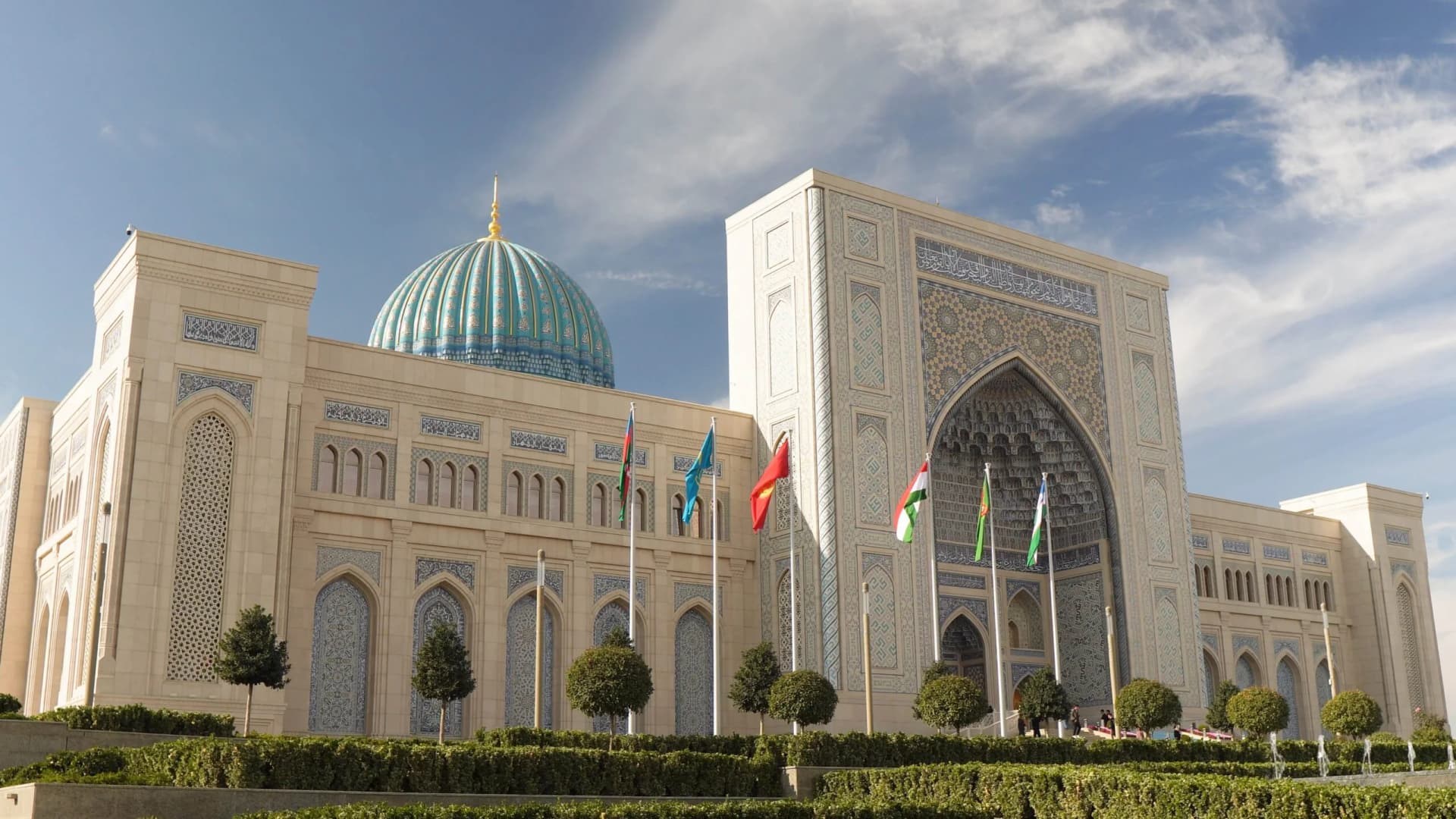
Premier of the State Council of the People’s Republic of China Li Qiang visited the Islamic Civilization Center in Uzbekistan
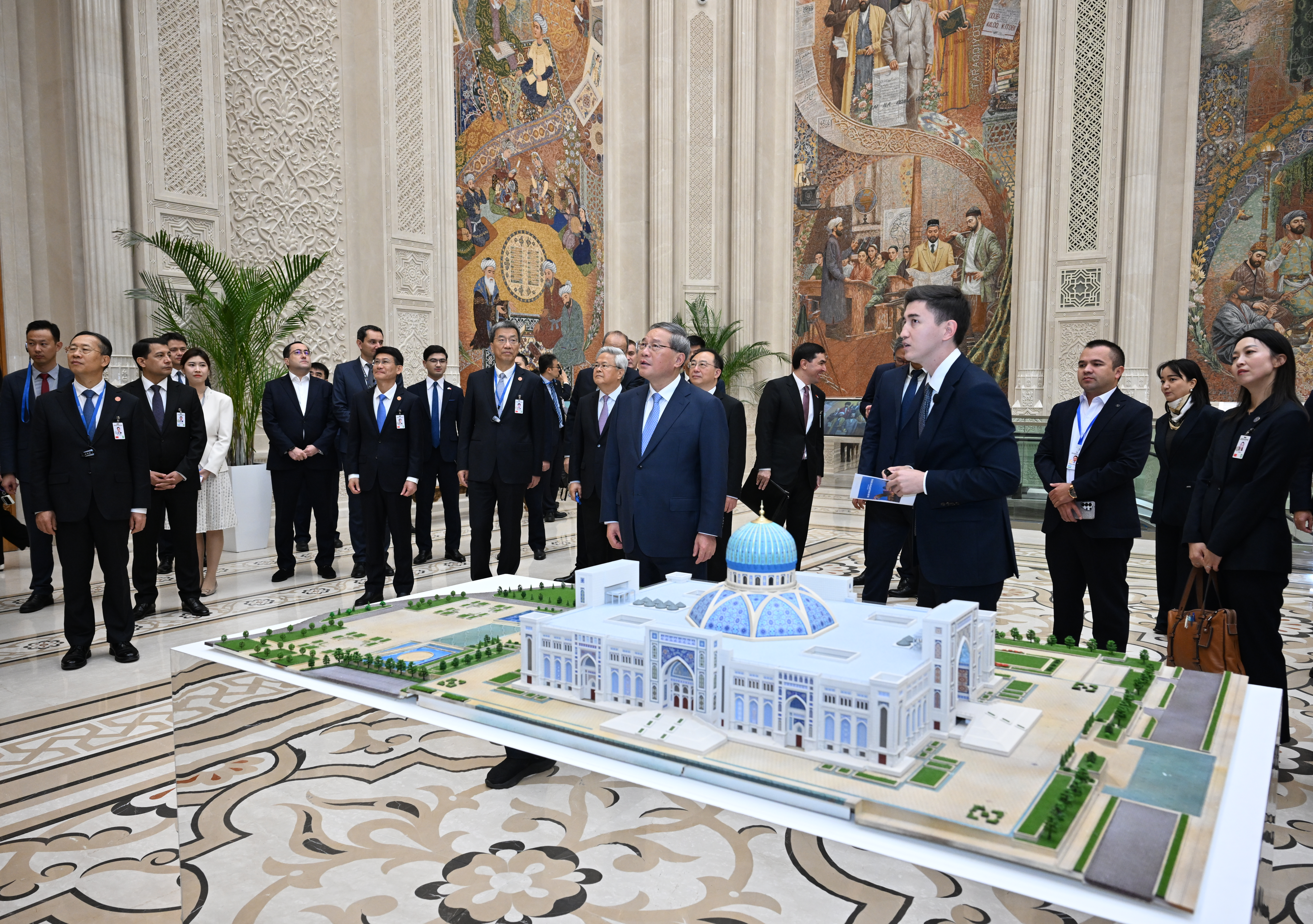
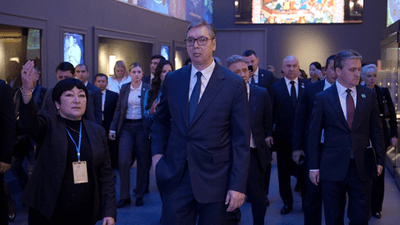
As part of his official visit to Uzbekistan, Premier of the State Council of the People’s Republic of China Li Qiang visited the Islamic Civilization Center in Uzbekistan, established on the initiative of President Shavkat Mirziyoyev. The high-ranking guest was accompanied by Prime Minister of the Republic of Uzbekistan Abdulla Aripov.
They were welcomed by the Director of the Center, Firdavs Abdukhalikov. As he toured the exhibitions at the Center, the guest viewed materials on the pre-Islamic period in the territory of Uzbekistan, the First and Second Renaissance eras, the scientific and spiritual legacy of great scholars, and important pages of the country’s history.
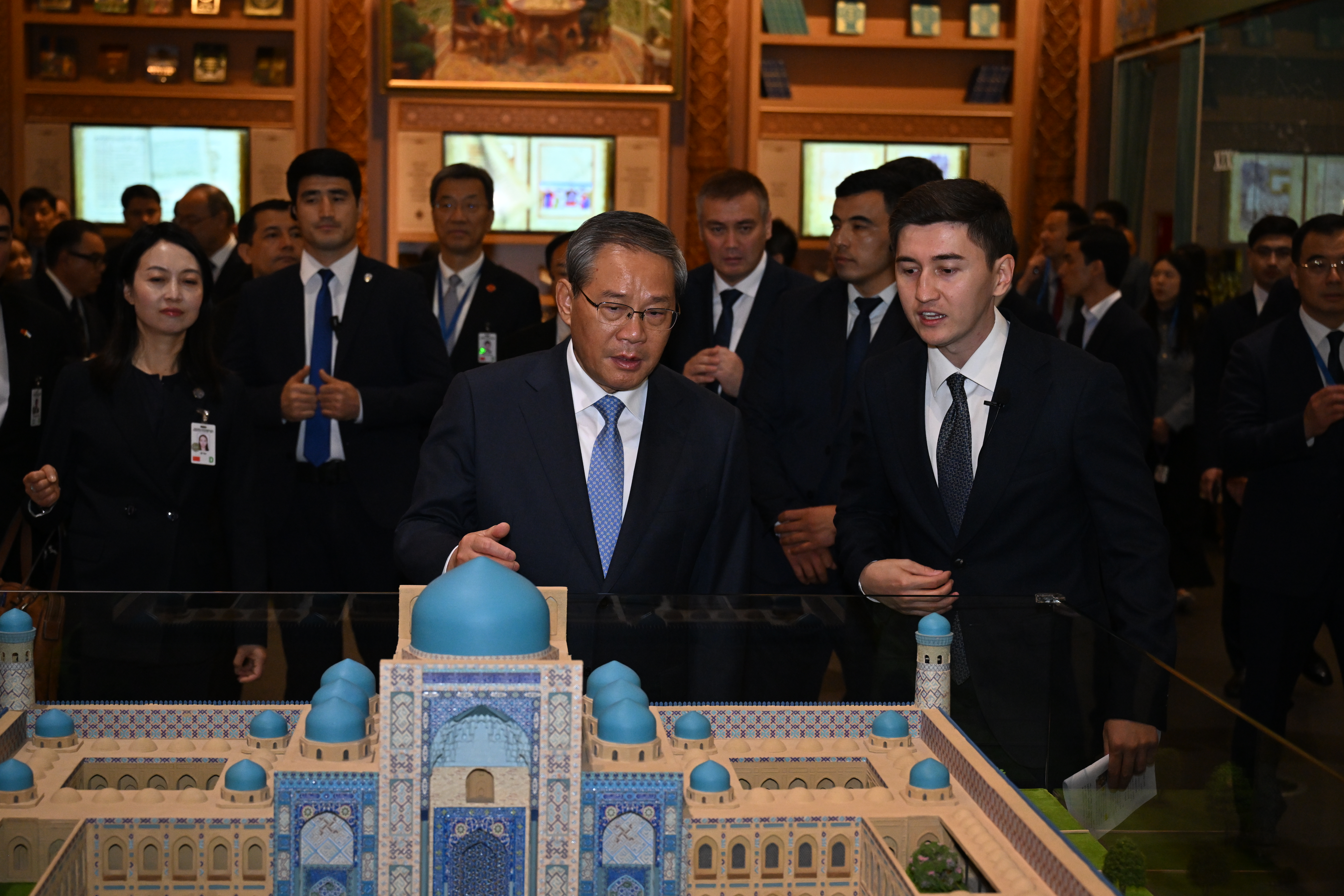
The compositions dedicated to scholars and historical figures, placed in the 14 arches of the Center’s foyer, were also an important part of the visit. These compositions showcase the contribution of great thinkers and historical figures from our region to the development of world civilization. Notably, these detailed frescoes were crafted entirely by hand using micro-mosaic stones across 110 distinct colors, in cooperation with specialists from the People’s Republic of China.
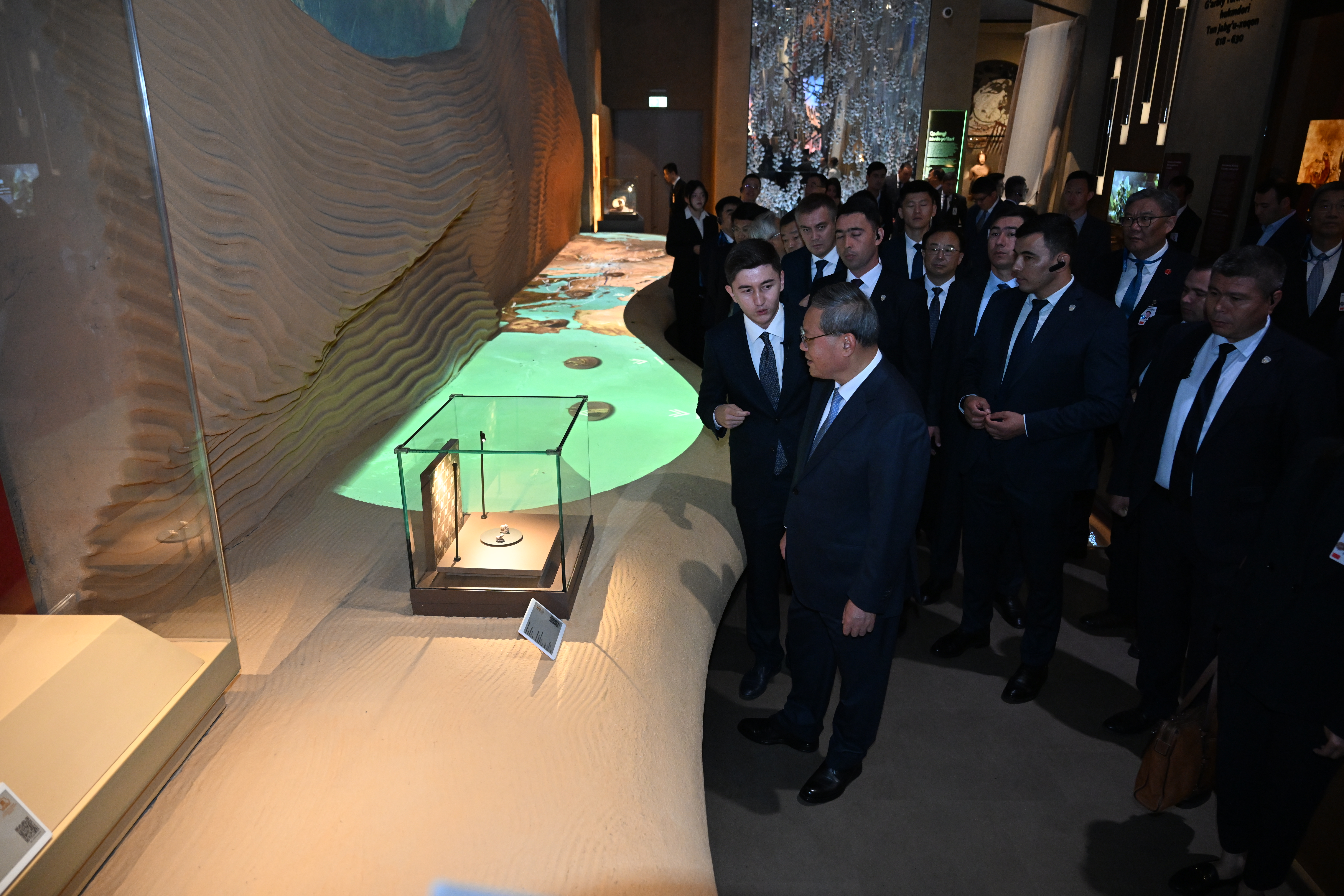
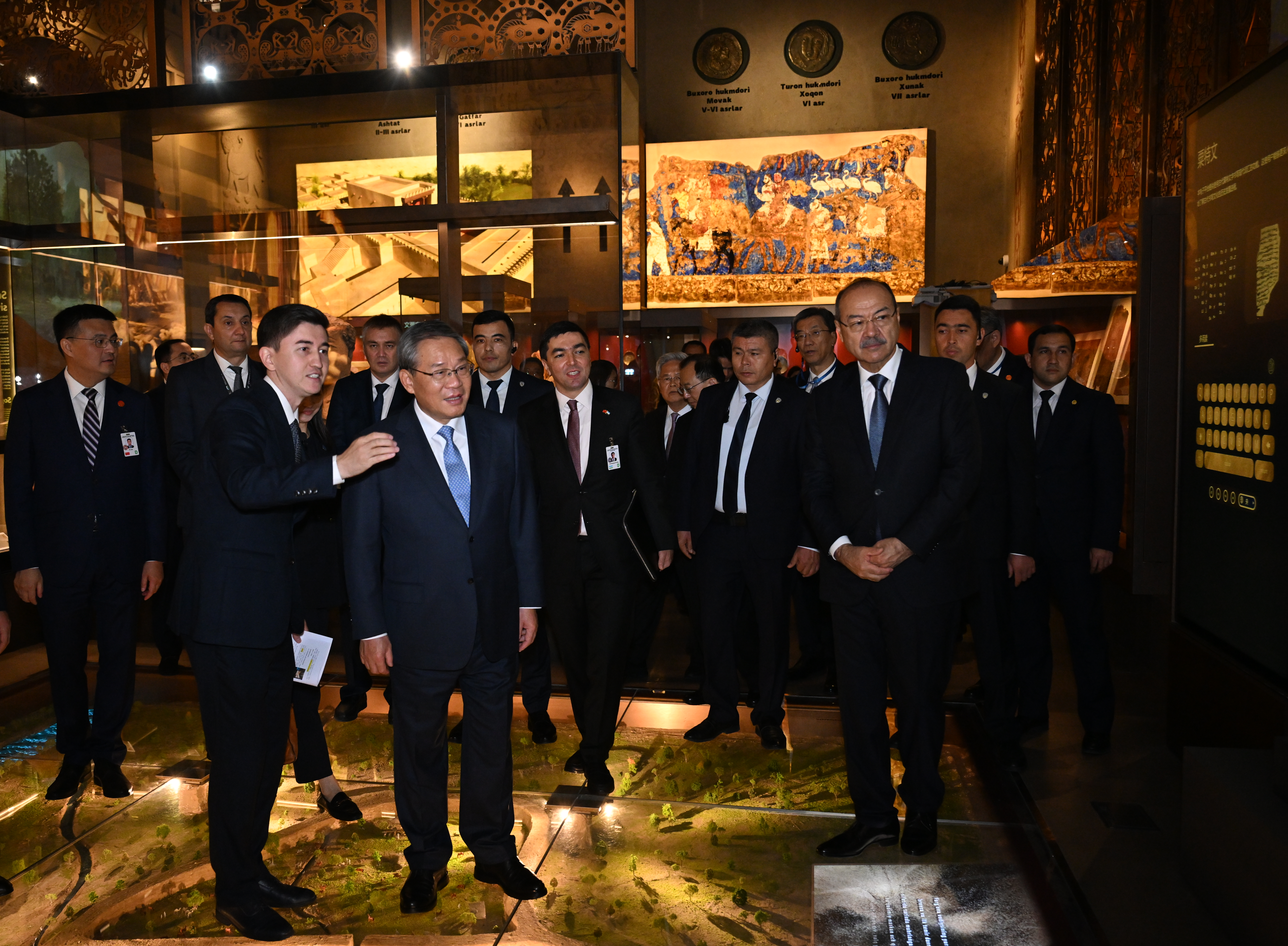
The pre-Islamic exhibition highlights the ancient ties between China and the historic kingdom of Dayuan in the Fergana Valley. In particular, it provides information that the famous “heavenly horses” bred in the Fergana Valley in ancient times also aroused great interest in China. It was noted that Chinese rulers sent envoys to Dayuan several times in order to obtain these horses. The appearance of images of Fergana horses on Sogdian garments and vessels, as well as in works of fine art found in ancient China, shows the scale of the historical ties between the two regions.
The exhibition further underscores the vital role of the Great Silk Road. Trade goods originating in China, including silk, tea, paper, and porcelain, reached Western markets via the vibrant trading hubs of Central Asia. Beyond commerce, this ancient trade network served as an essential bridge for cultural dialogue, scientific exchange, and shared intellectual traditions.
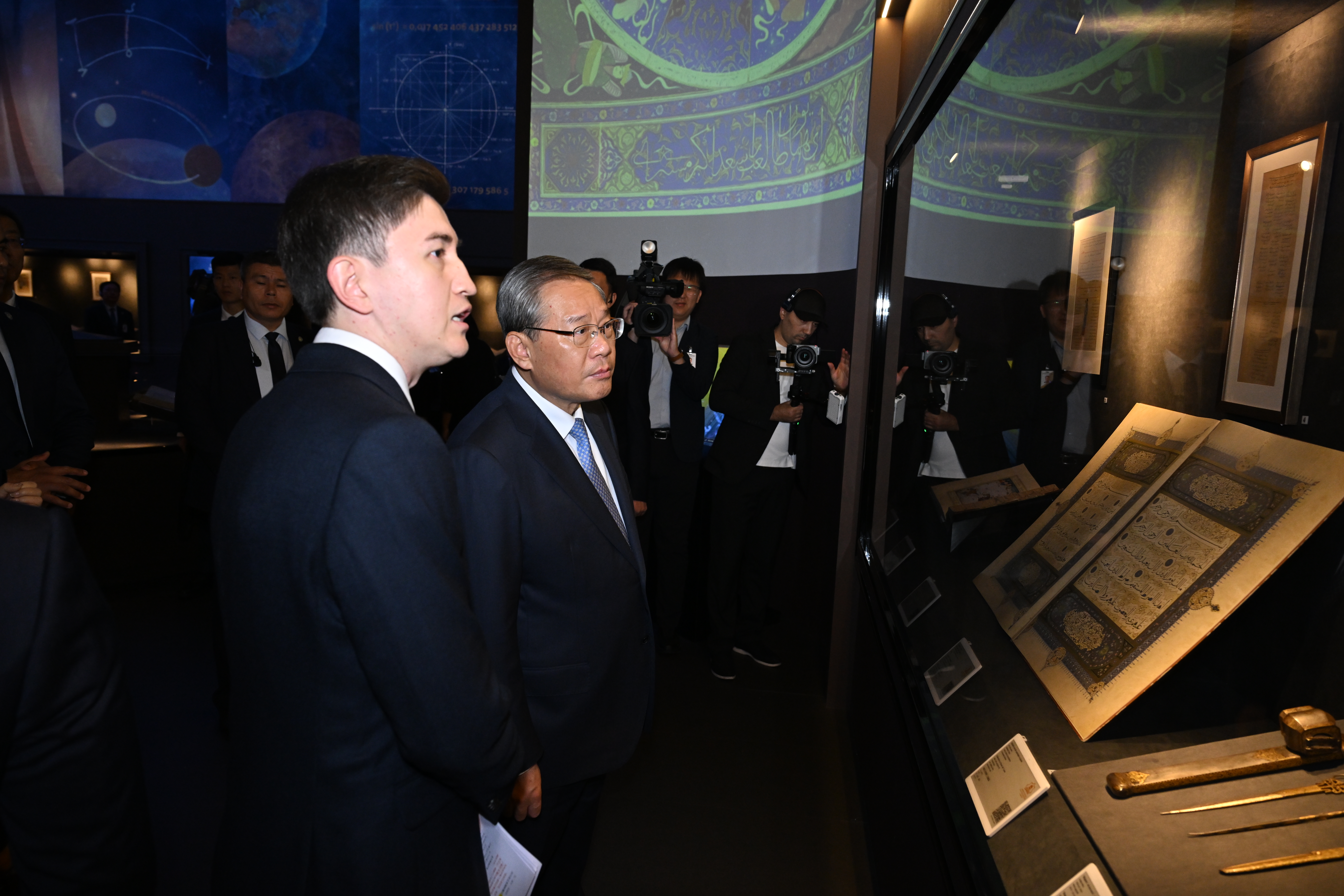
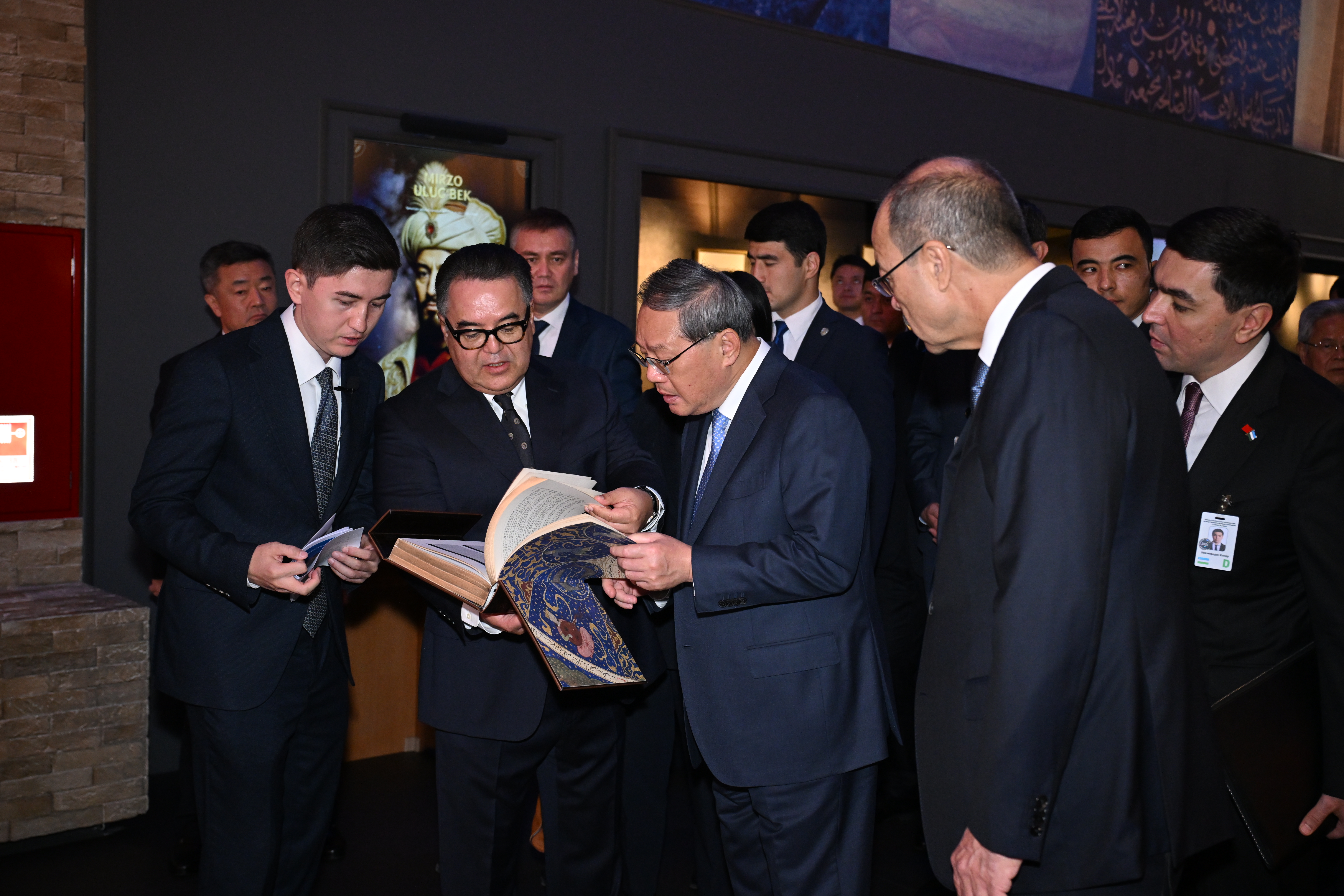
The distinguished guest also viewed examples of pottery from the era of Mirzo Ulugbek. Experts suggest that these items may have been created under the influence of, and in imitation of, Chinese porcelain. Historical information about the envoy sent to China during the reign of Shahrukh Mirza and the journey of Ghiyasiddin Naqqash likewise shows that diplomatic and cultural relations between the two regions have a long history.
The exhibition related to the image of Bibi Khanum and her garments also made a great impression on the guest. This section reflects the historical and cultural heritage of the Uzbek people, their national traditions, and their refined artistic taste in the past.
While viewing the “New Uzbekistan – The Foundation of a New Renaissance” exhibition, Mr. Li Qiang paid special attention to materials reflecting the large-scale reforms being carried out in the country and the renewal in the fields of socio-economic development, education, science, and culture. Notably, interactive touch panels throughout this hall provide content in the Chinese language, enabling international visitors to explore contemporary developments in Uzbekistan in their native tongue.
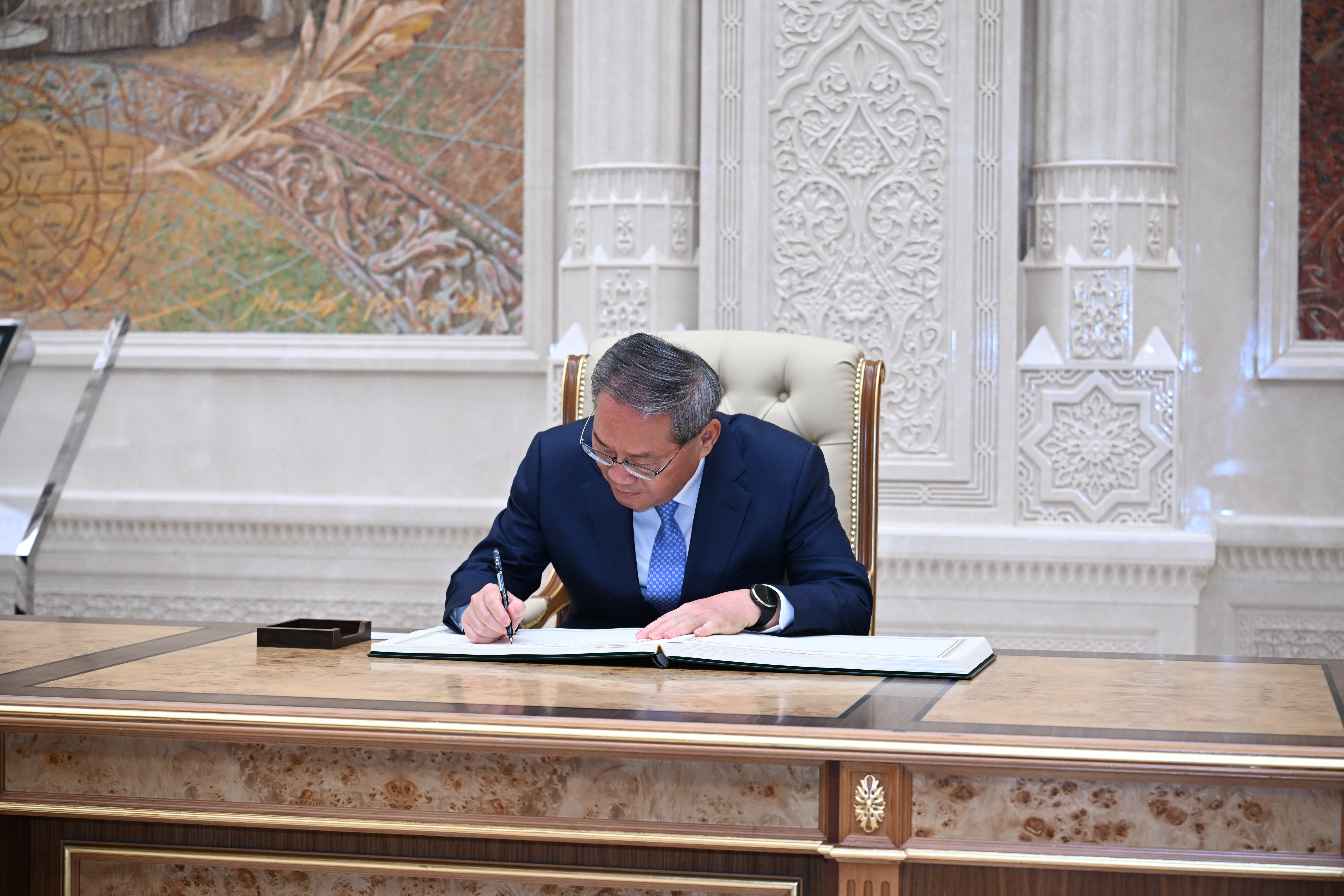
At the end of the visit, Li Qiang wrote his wishes in the Center’s Book of Honored Guests
“For mutual understanding and exchange of experience among civilizations, and for friendship among the world’s cultures.”
The Chinese Premier’s visit to the Center demonstrated the importance of shared civilizational heritage in strengthening the centuries-old historical, cultural, mutual understanding, and friendship between the peoples of Uzbekistan and China.