The eleventh-century encyclopedia of the Turkic world: A new look at the legacy of Kashgari
Can a single book be a dictionary, a historical map, a collection of folklore, and a distinctive encyclopedia of a past society at the same time? “Divanu Lughat at-Turk,” the work of the great eleventh-century linguist Mahmud Kashgari, answers this question.
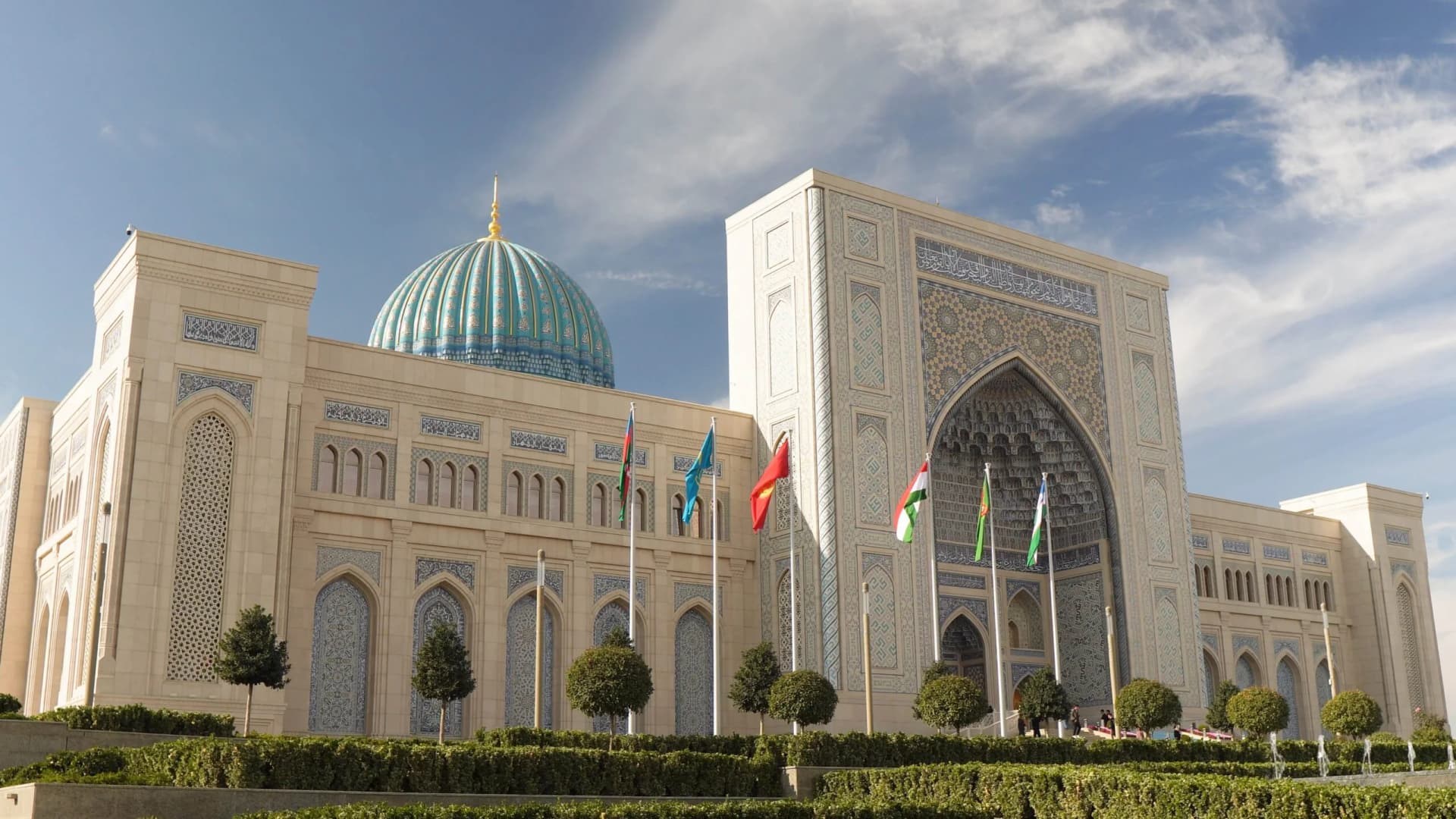
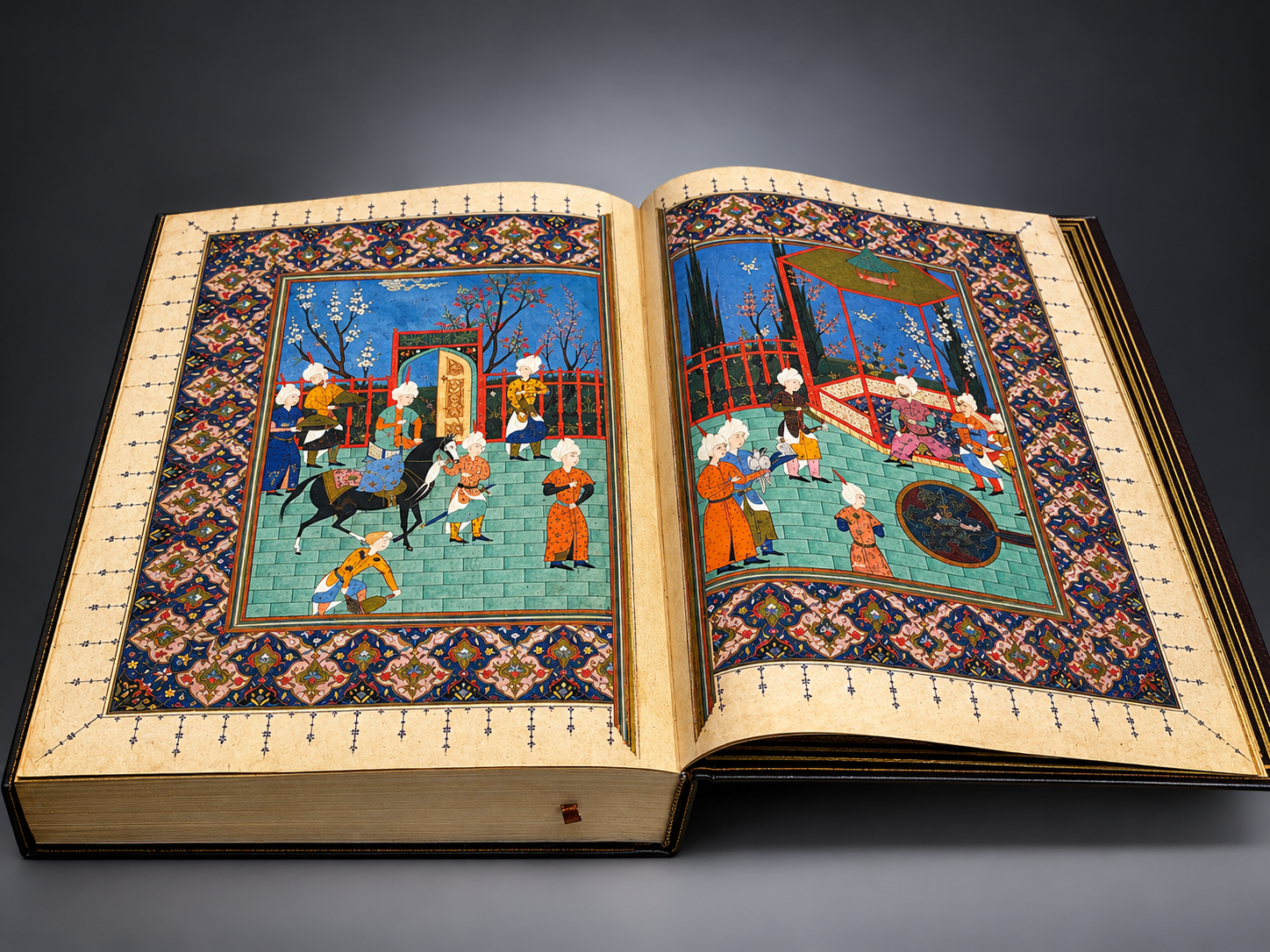
Created in the eleventh century and bringing together the language, geography, and cultural life of the Turkic peoples in a single work, “Divanu Lughat at-Turk” remains an important source for world linguistics today. Mahmud Kashgari’s encyclopedic legacy was inscribed in UNESCO’s Memory of the World International Register in 2017. The display of a facsimile copy of the work in the First Renaissance exposition of the Islamic Civilization Center in Uzbekistan allows visitors to become acquainted with the Turkic world of nearly a thousand years ago.
Although the work, created in 1072–1074, was compiled to explain the language of the Turkic peoples in Arabic, its scholarly significance goes far beyond that of an ordinary dictionary. Alongside the meanings and usage of Turkic words, it brings together the linguistic features of various tribes, proverbs, poetic fragments, geographical names, and information on social life.
A map depicting the Turkic world of the eleventh century
One of the work’s most notable features is its circular historical map. It reflects the territories where the Turkic peoples lived, geographical features, and the conceptions of space held at that time.
According to the Turkish Manuscripts Institution, the map depicts mountains, lakes, rivers, and the lands inhabited by the Turkic peoples, along with other regions, including Japan.
This aspect further increases the significance of the work. Mahmud Kashgari studied Turkic words in connection with a particular geographical and cultural environment. His map is not an atlas based on modern geographical measurements, but a historical witness to the knowledge and worldview of the eleventh century.
In this sense, “Divanu Lughat at-Turk” can be studied as one of the important sources of early Turkic linguistic geography.
Behind one word: the life of an entire people
Mahmud Kashgari’s scholarly approach was not limited to explaining the meanings of words. He recorded them in connection with folklore, everyday life, and different linguistic environments.
The proverbs and poetic fragments in the work make it possible to study the moral views, labor traditions, social relations, and artistic thinking of the Turkic peoples of the eleventh century.
These materials are especially important for folklore studies. Some examples of oral literature have come down to us precisely through this work. Thus, Kashgari preserved not only words but also the cultural memory of a particular era along with them.
Another important feature of the work is that it records differences among Turkic languages and dialects. This information serves as valuable evidence for the comparative study of the form, meaning, and spread of words in historical linguistics.
Why was the work written in Arabic?
One of the distinctive features of “Divanu Lughat at-Turk” is that Turkic words are explained in Arabic.
In the eleventh century, Arabic was one of the main languages of science and written culture in the Muslim world. Within that scholarly environment, Mahmud Kashgari systematically demonstrated the rich vocabulary and expressive possibilities of the Turkic languages.
This makes it possible to regard the work as an important example of intercultural scholarly dialogue.
By explaining the Turkic languages to an audience speaking another language, the scholar not only compiled a dictionary but also showed that they have an independent language system and rich cultural traditions.
The history of the work’s transmission to the present day
The only known manuscript copy of “Divanu Lughat at-Turk” dates not to the time of Mahmud Kashgari but to the thirteenth century.
According to the Turkish Manuscripts Institution, the manuscript was copied in 1266 by Muhammad ibn Abu Bakr as-Sawi. It consists of 319 folios and is now kept in the Ali Amiri collection of the Millet Manuscript Library in Istanbul.
The manuscript was acquired by Ali Amiri in the early twentieth century and was later introduced into scholarly circulation. Its rediscovery created a new source base for research on the history of the Turkic languages.
An important point is that the text researchers use today has reached us through a copy made nearly two centuries after the author’s time. For this reason, in studying the work, the textual history of the manuscript, the characteristics of its copying, and the comparative analysis of its scholarly editions are also of great importance.
A universal heritage recognized by UNESCO
The inscription of the manuscript of “Divanu Lughat at-Turk” in UNESCO’s Memory of the World International Register in 2017 confirmed its significance not only for the Turkic peoples but also for the world’s cultural and scientific heritage.
The Turkish National Commission for UNESCO regards the work as one of the richest sources on the language and ethnography of the Turkic peoples of the eleventh century.
This recognition shows that the work is significant for several scholarly fields, such as linguistics, cartography, ethnography, and history.