Qariyb 400 yillik "Xamsa" qo‘lyozmasi O‘zbekistondagi Islom sivilizatsiyasi markazi ekspozitsiyasida namoyish qilinmoqda
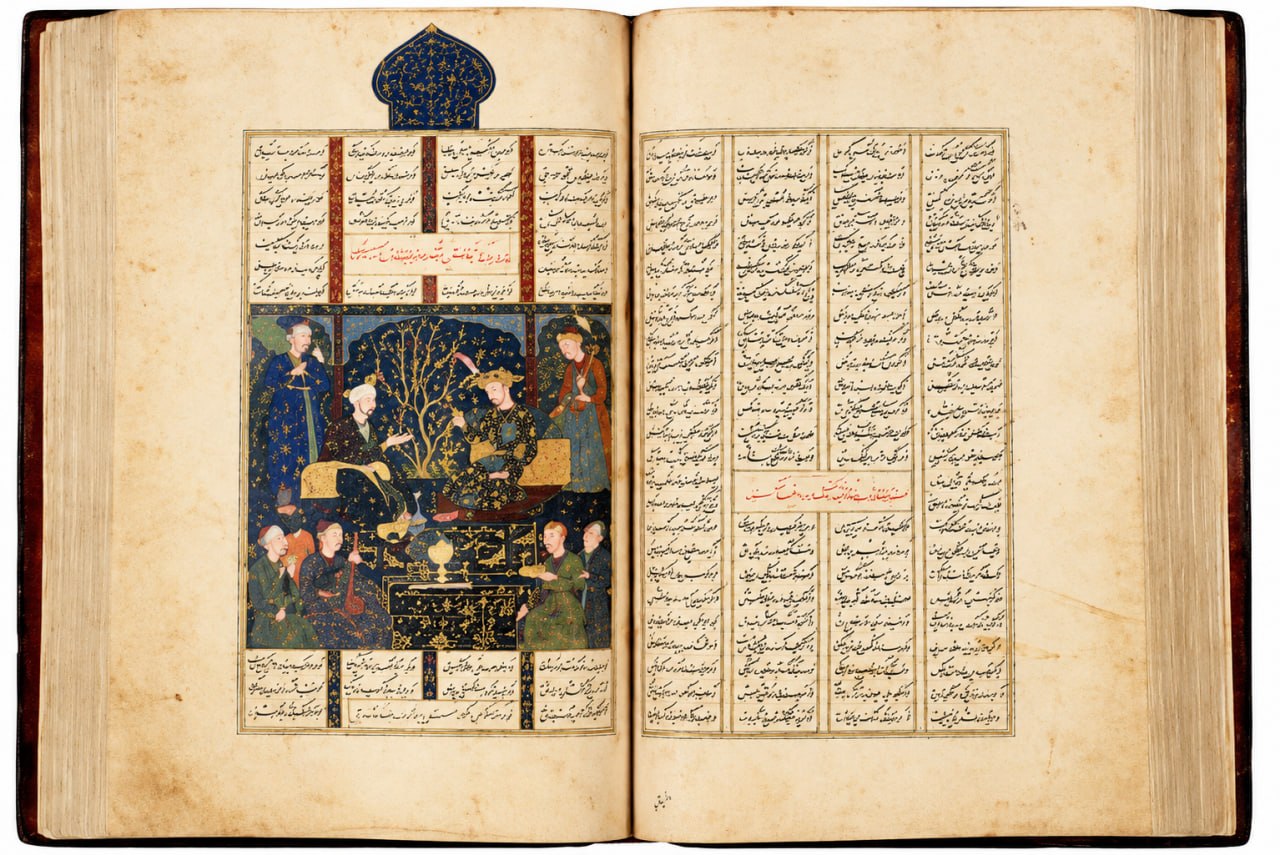
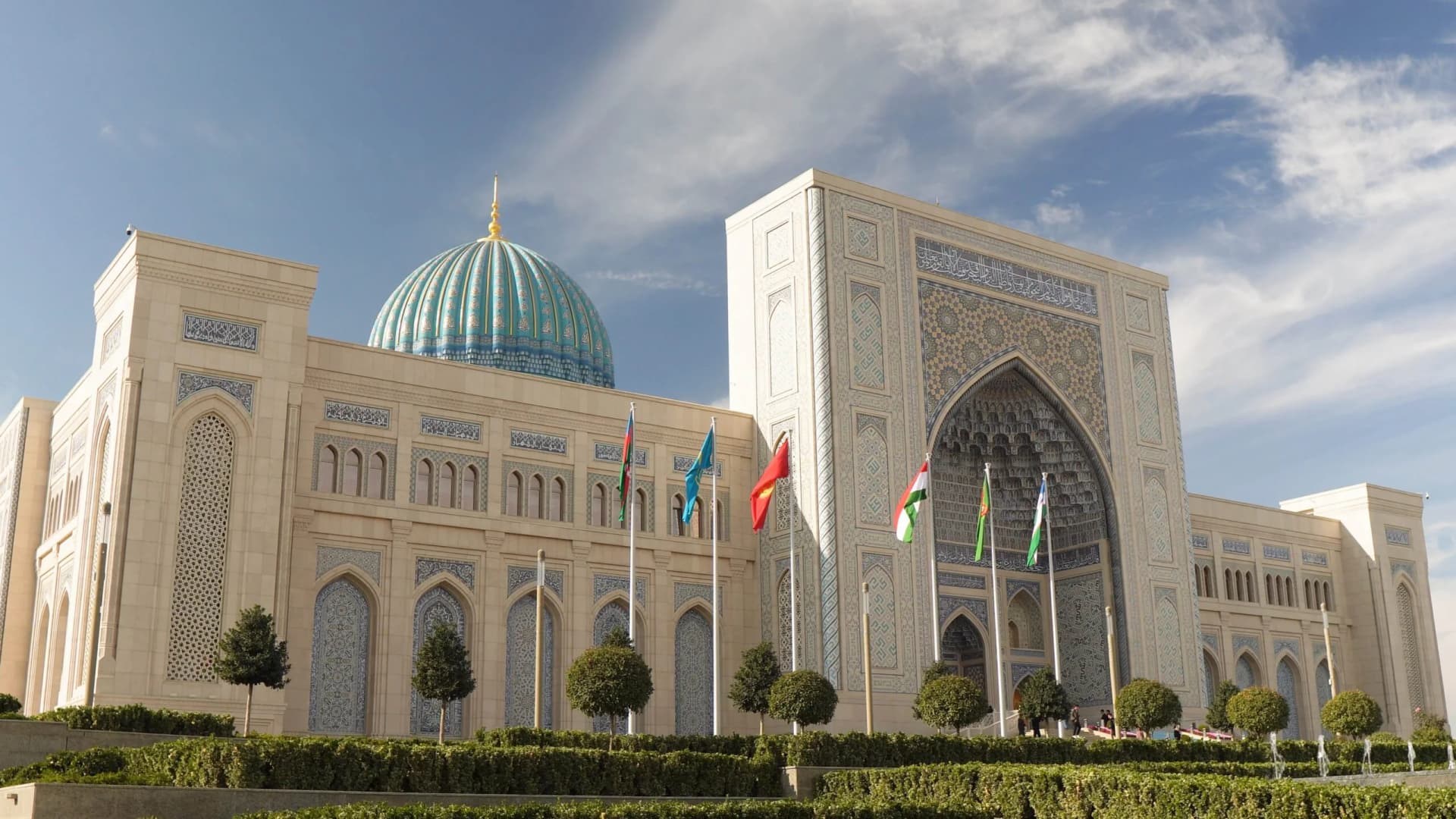
Among the rare manuscripts on display at the Islamic Civilization Center in Uzbekistan, the celebrated “Khamsa” of Nizami Ganjavi, one of the greatest figures of classical literature, holds a place of particular significance.
This manuscript of Nizami Ganjavi’s “Khamsa” was copied by the scribe Ibn Husayn Murad Ali Damavandi during the Safavid period, at the beginning of the month of Rabi’ al-Awwal 1061 AH, corresponding to 23 February 1651 CE. The manuscript measures 37.2 × 22.2 centimetres.
The manuscript consists of 303 folios and one additional folio. The headings are written in red ink, and the work contains six polychrome and gilded unvan (illuminated headpiece) pages, as well as 28 gilded miniatures executed in gouache.
The lacquered medallions at the centre of the brown Morocco leather binding further enhance the artistic value of the manuscript. Nizami Ganjavi’s “Khamsa” comprises five narrative poems: “Makhzan al-Asrar”, “Khusraw and Shirin”, “Layla and Majnun”, “Haft Paykar” and “Iskandarnama”. These works are regarded as among the finest masterpieces of Eastern literature.
Created in the 17th century, this manuscript demonstrates the high level of the art of the book in that era. It later entered the library of Farhad Mirza (1818–1888), a prince of the Qajar dynasty. Farhad Mirza, who took a keen interest in collecting Persian and Arabic manuscripts, possessed a library that was one of the most valuable private collections in Iran.
The manuscript was accessioned into the prince’s library on 10 September 1881, corresponding to 15 Shawwal 1298 AH. This rare manuscript is a unique example not only of the great poet’s literary legacy but also of the arts of the book, calligraphy and miniature painting, refined over the centuries.
This article was automatically translated using artificial intelligence.