A rare golden belt from the Golden Horde period is on display at the Islamic Civilization Center
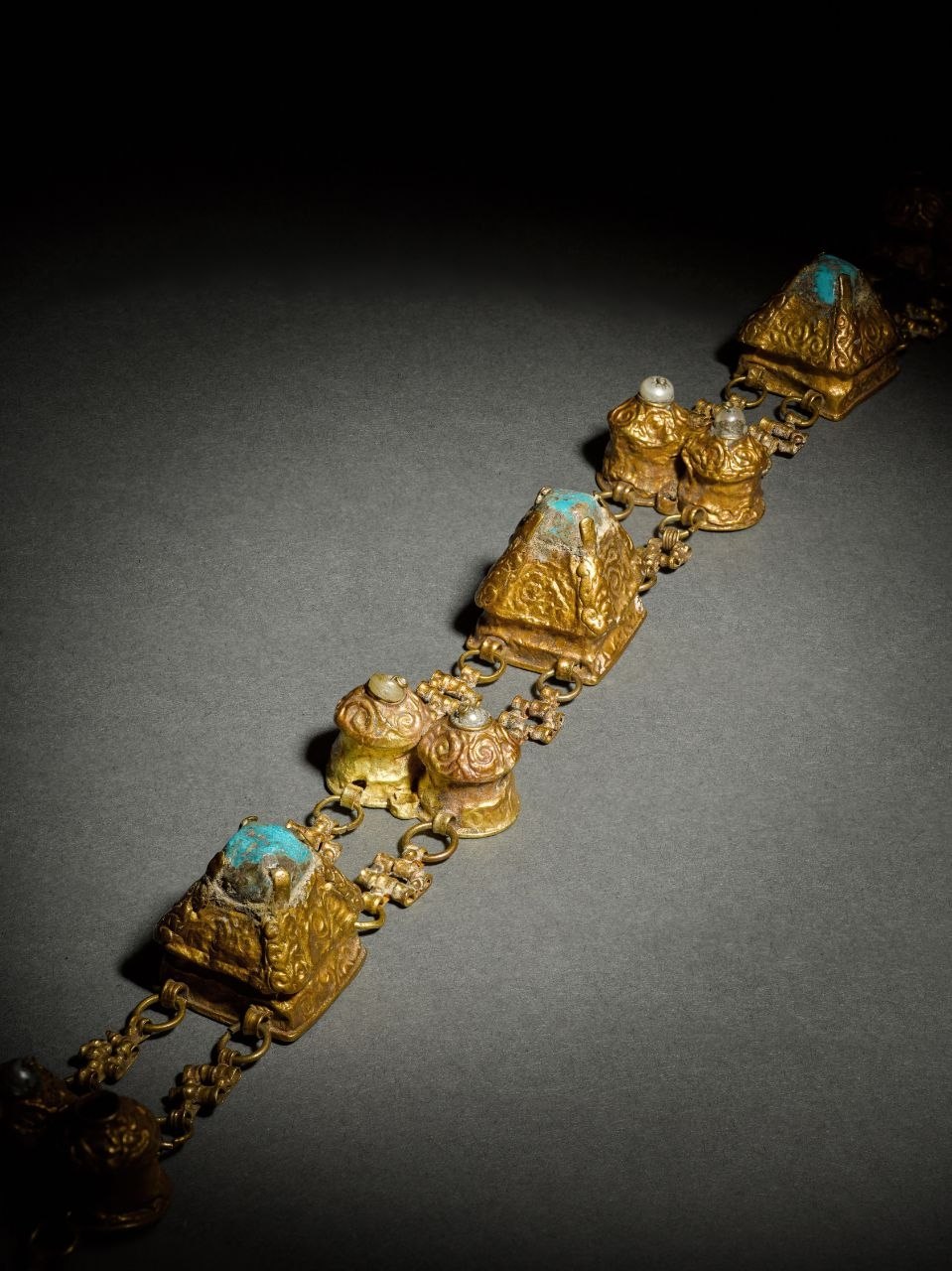
This 14th-century chain belt exemplifies the sophisticated jewelry-making traditions that flourished across Central Asia and the Caspian steppes during the Golden Horde era.
The belt has a complex structure consisting of seven large square gold elements, each topped with a pyramid-shaped turquoise stone. Five of these stones have survived to the present day. The sides of the square elements are decorated with raised scroll patterns.
The components of the belt are interconnected by chain links and paired cylindrical segments strung with beads, secured in place by finely crafted gold terminal pins.
The square elements at both ends of the artifact were added later, when the belt needed to be lengthened. This is evident from the way the end elements differ from those in the middle, illustrating how the piece was thoughtfully altered and cherished over generations of wear.
Such rare artifacts were crafted exclusively for elite society, including high-ranking nobility and ruling circles. For this reason, they were regarded as symbols not only of material wealth but also of social status, power and aesthetic taste.
Today, historical artifacts such as this serve as an indispensable source for studying the economic life, transcontinental trade routes, cultural ties, social structure and development of the applied arts of past civilizations.