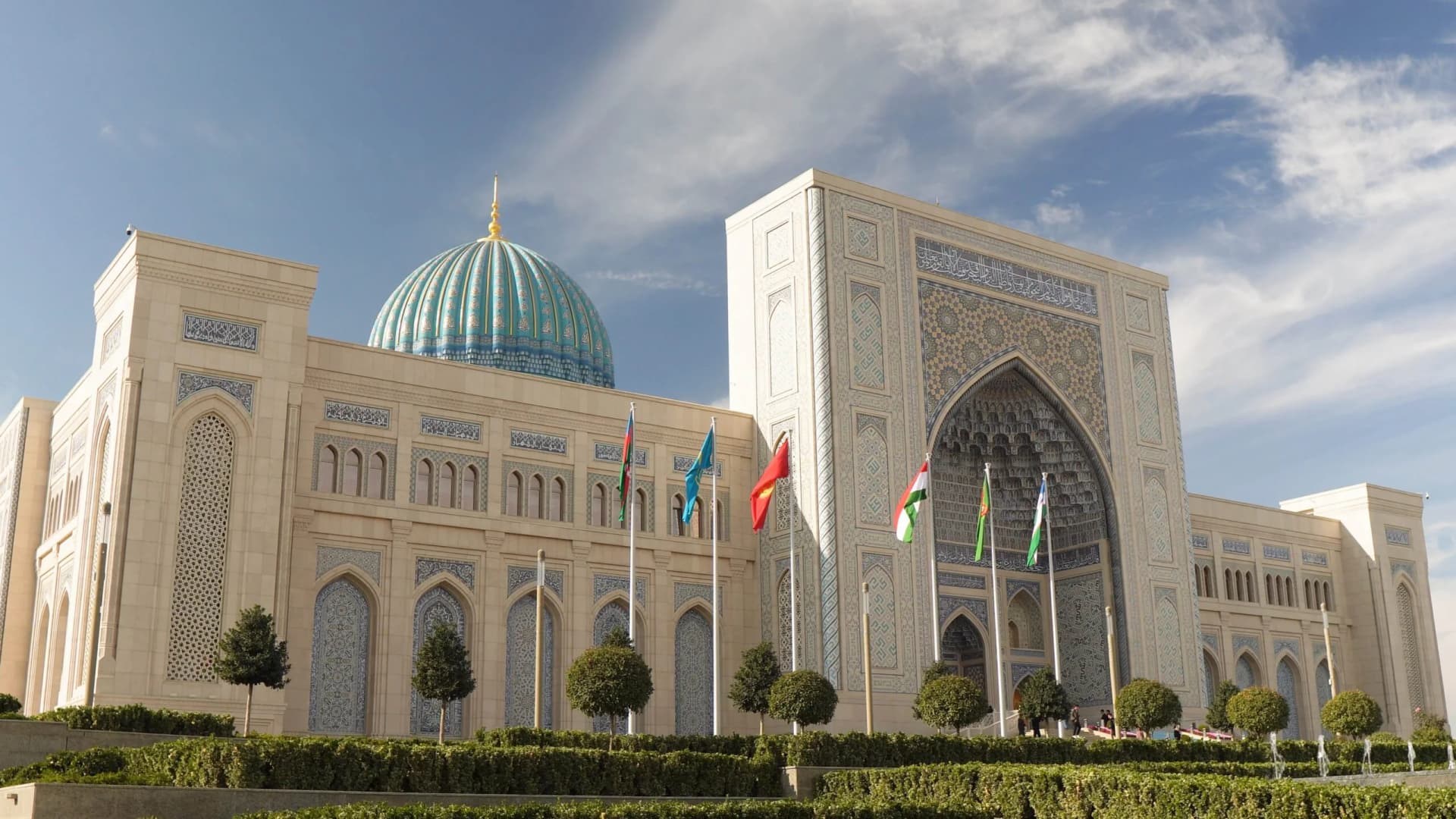
A sample of Baburid-era jewelry art in the Islamic Civilization Center's exhibition
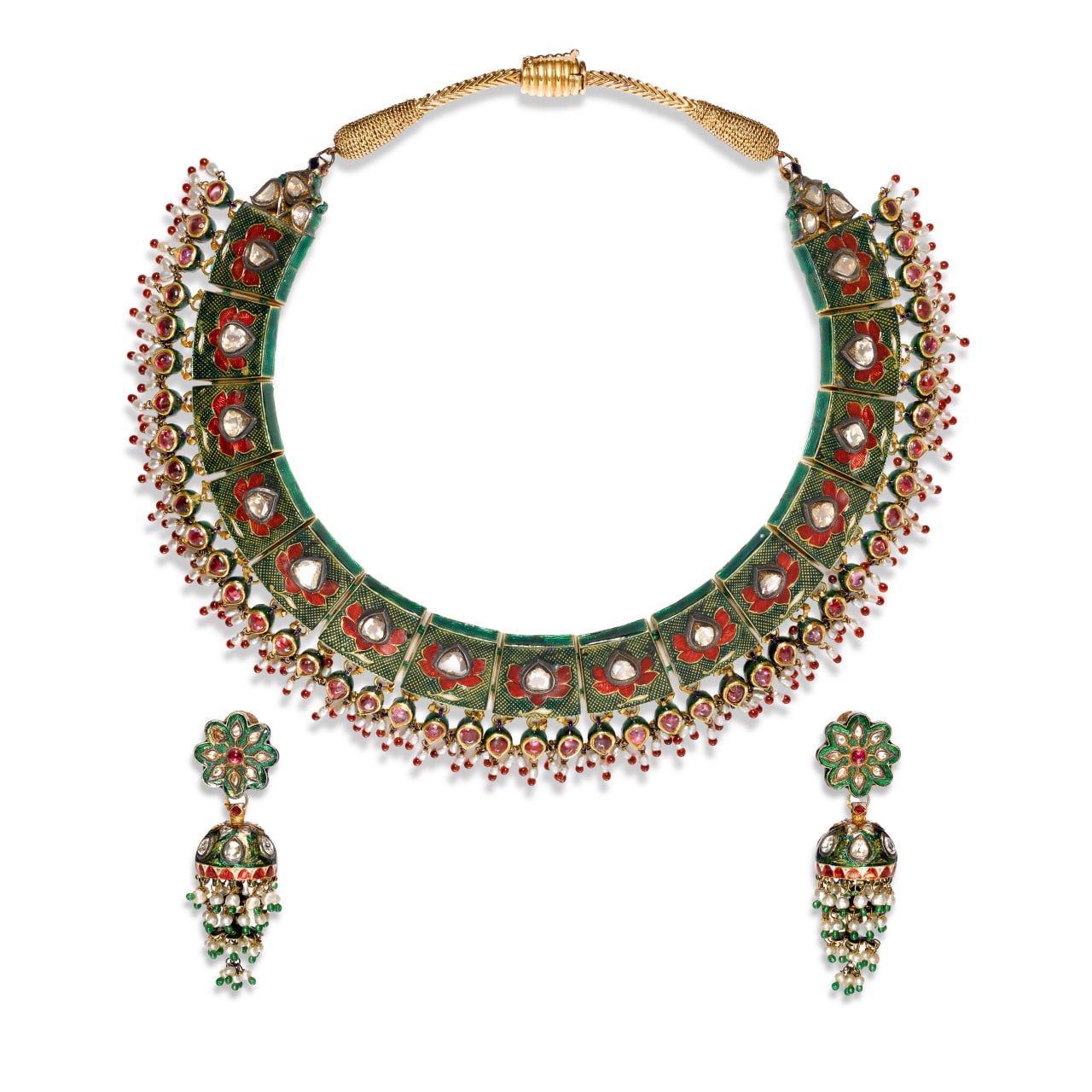
Comprising an exquisite necklace and coordinating earrings, this fine example of Indian jewelry art dates to the late 19th century, embodying the artistic traditions and opulent decorative style of the Mughal era.
The set consists of a necklace and a pair of earrings. The necklace is composed of 15 elements, each set with diamonds arranged in a floral design. Petals in red enamel form a distinctive composition against a dotted green enamel background. The lower part of the necklace is adorned with tassels of rubies, seed pearls and red beads.
The reverse side of the necklace is also equally remarkable. Its exquisite enamel decoration features red and green floral motifs on a cream background, allowing the piece to be worn reversibly. The earrings, in turn, are decorated with diamonds and enamel and take the form of dome-shaped pendants. They reflect the jewellery traditions of the Mughal era. The necklace is made of diamonds, rubies and non-ferrous metal, measuring 37.4 centimetres in length, and the total weight of the set is 179.3 grams.
During the late 19th and early 20th centuries, Indian jewellery art, while preserving its traditional styles, was also enriched by European artistic influences. In Rajasthan, Gujarat and other regions, the art of decorating with precious stones and enamel reached a high level of development.
Such elegant pieces of jewellery were created mainly for the royal dynasties, wealthy merchants and members of the upper classes of society. Beyond their decorative beauty, these jewelry pieces served as emblems of wealth, social status and cherished family heritage.
Today, this rare jewellery set showcases India’s rich cultural heritage, its traditional schools of jewellery making and the artistic mastery developed over the centuries.