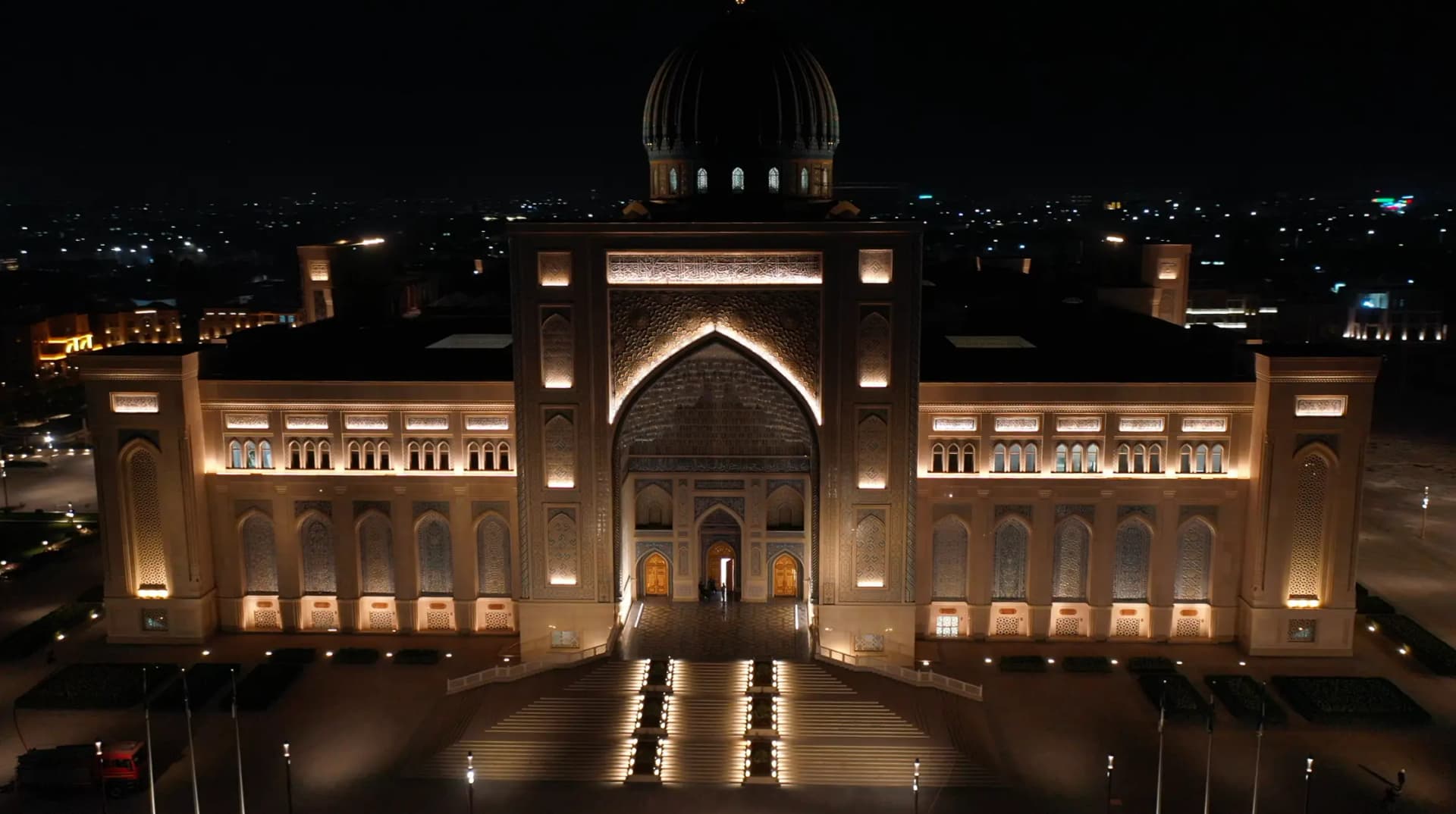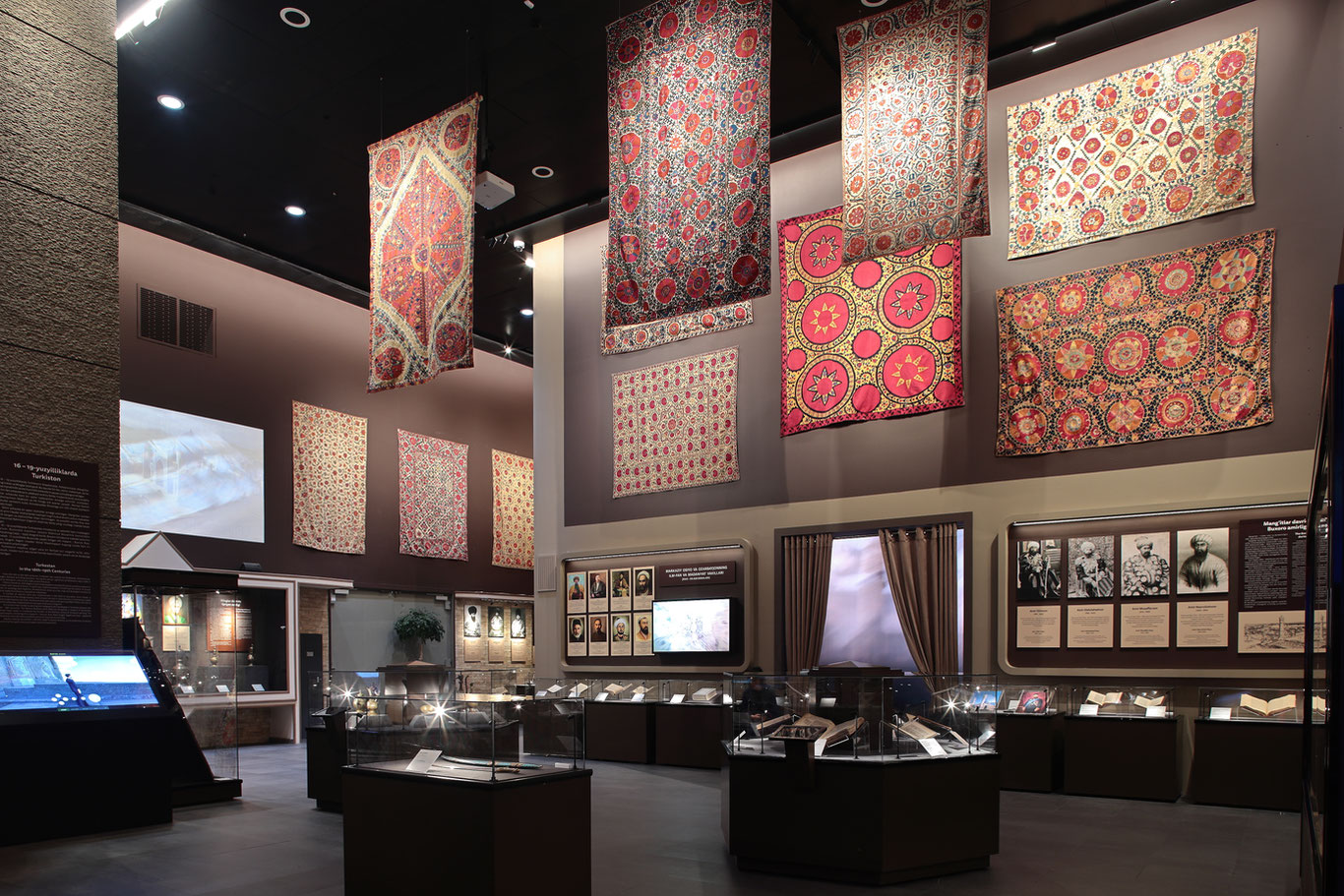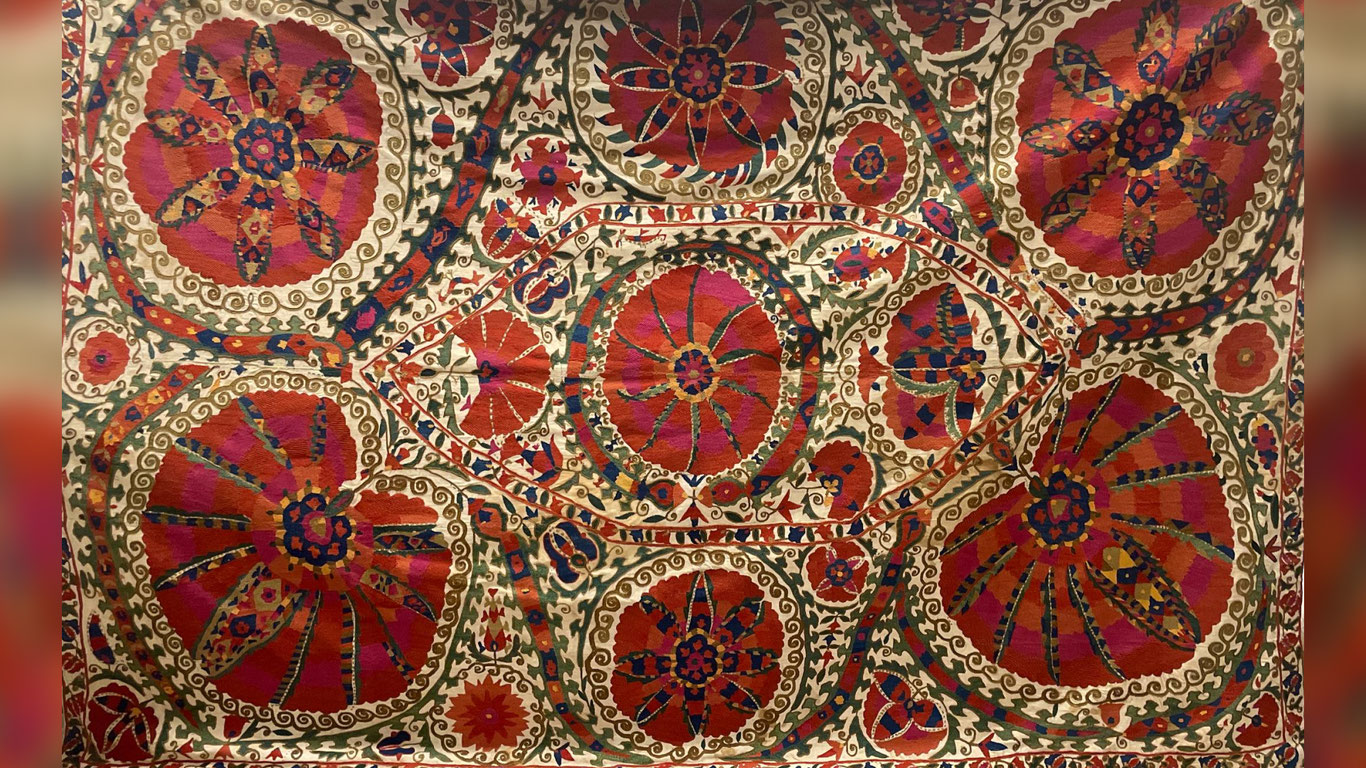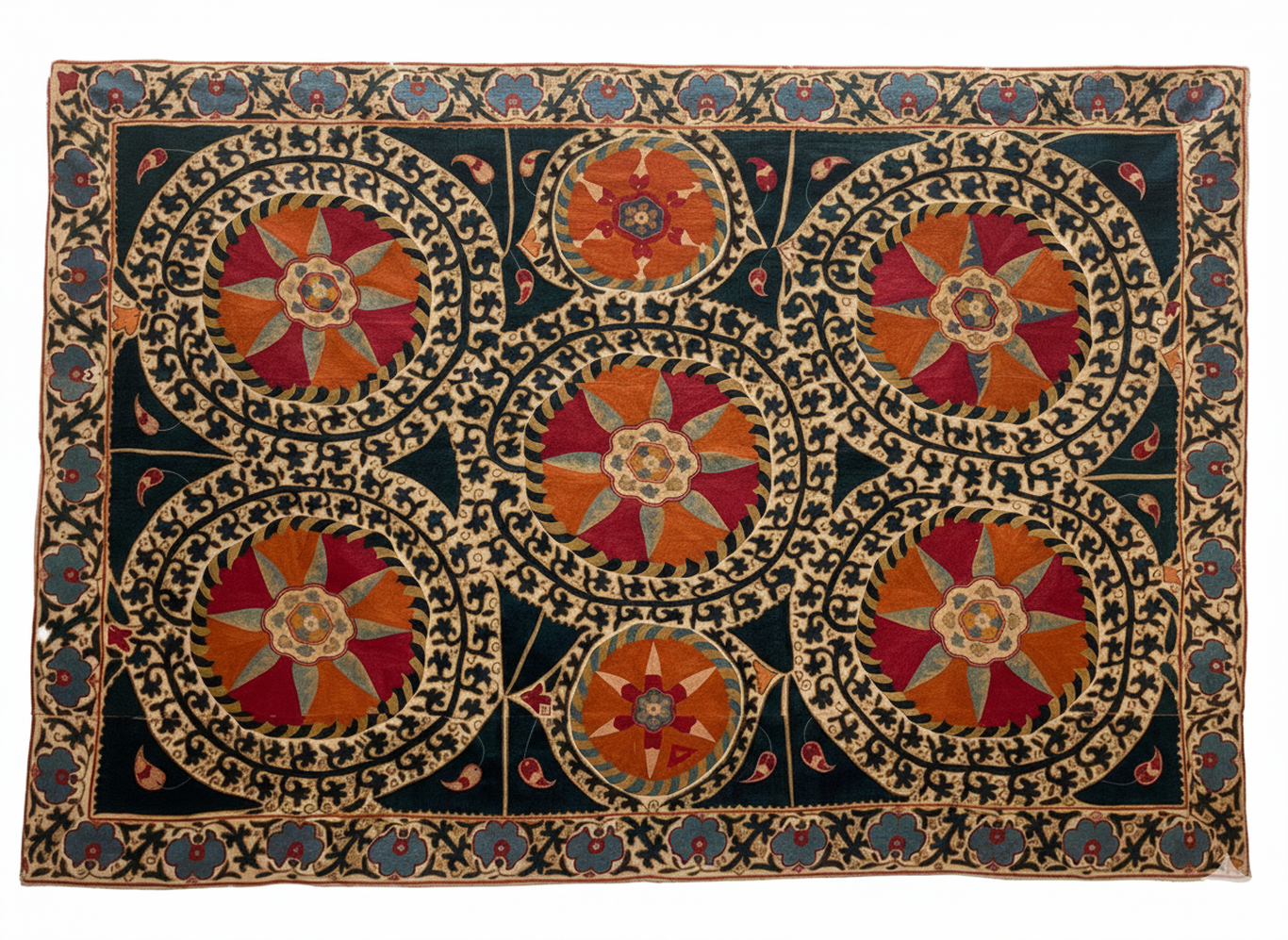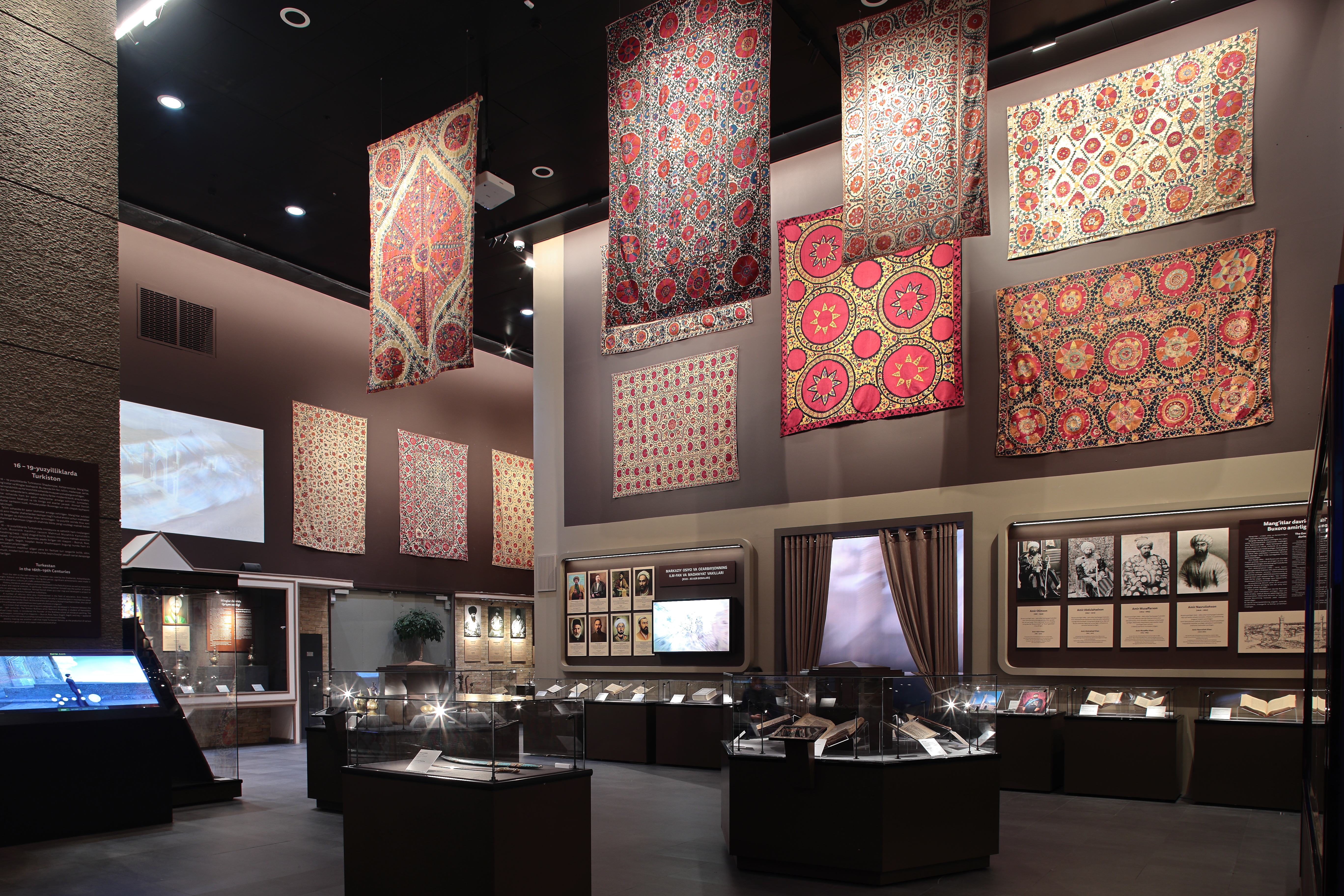
Through suzanis dating to the 18th-19th centuries, it is possible to understand the taste, way of life, and artistic thinking of the Uzbek people. The ancient suzanis preserved in the museum of the Islamic Civilization Center tell the story of cultural life, a refined sense of color, and artistic traditions of the khanate period.
The ancient suzanis kept in the “Khanate Period” section of the museum of the Islamic Civilization Center in Uzbekistan are considered priceless examples of Uzbek folk decorative and applied art. These works from the 18th-19th centuries are significant not only artistically but also for their historical and spiritual content. Suzani is valued as a cultural monument that reflects the people’s lifestyle, taste, worldview, and aesthetic thinking.
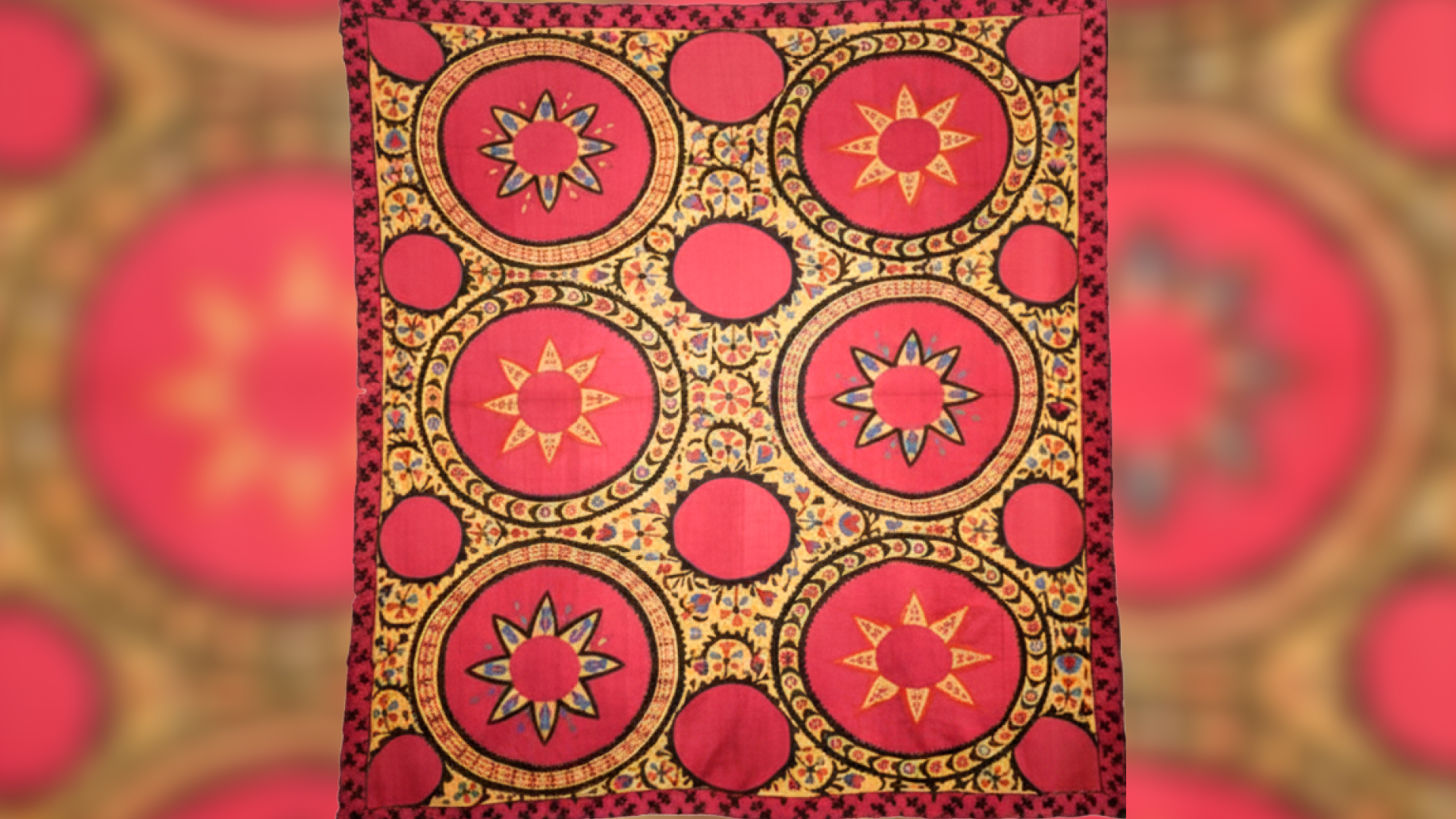
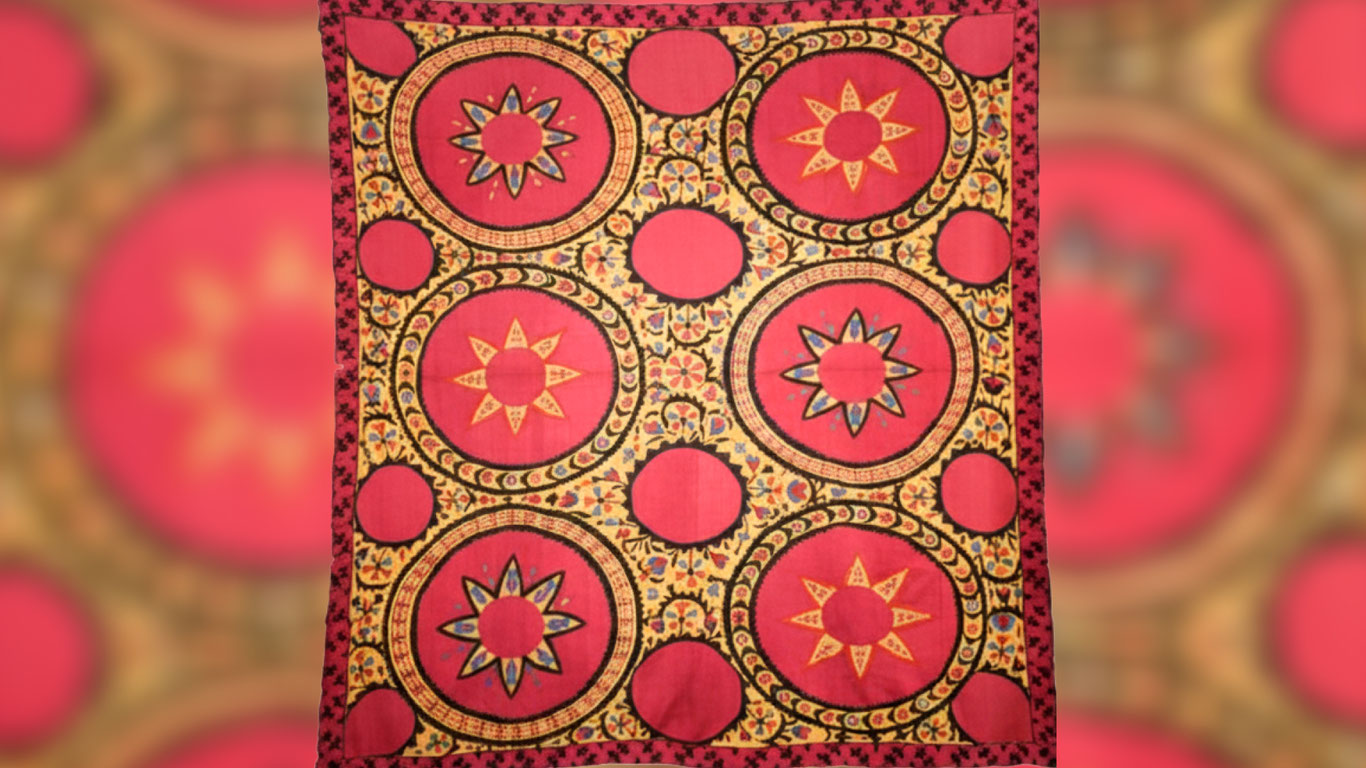
Suzani with yellow star-shaped motifs and balanced colors
The Pskent suzani displayed in the Center’s exhibition is close to Tashkent suzanis in terms of color and style, yet stands out because the entire fabric surface is fully covered with embroidery. In the composition, each flower occupies a distinct place within a yellow field, while the harmony of reddish-purple and golden-yellow colors gives the piece a unique charm. The later addition of blue and dark yellow tones further enhances the overall visual effect.
To intensify the sense of depth, embroiderers worked around the yellow star-shaped motifs with warm red threads. This technique ensured color balance and enhanced the visual expressiveness of the work. The use of a blend of silk and wool threads in Pskent suzanis provided softness and a lustrous appearance, indicating the high level of development of embroidery schools of that period.
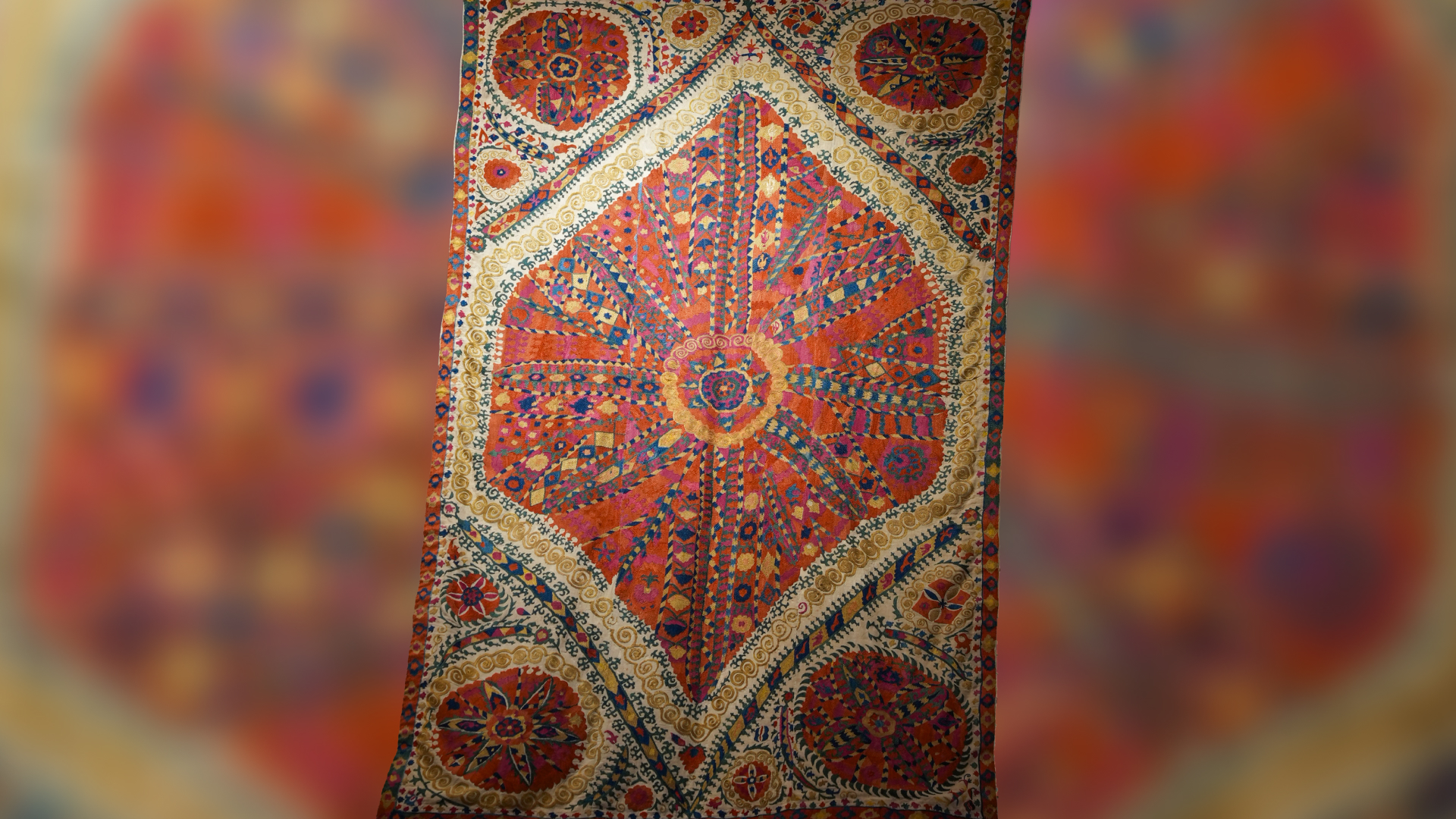
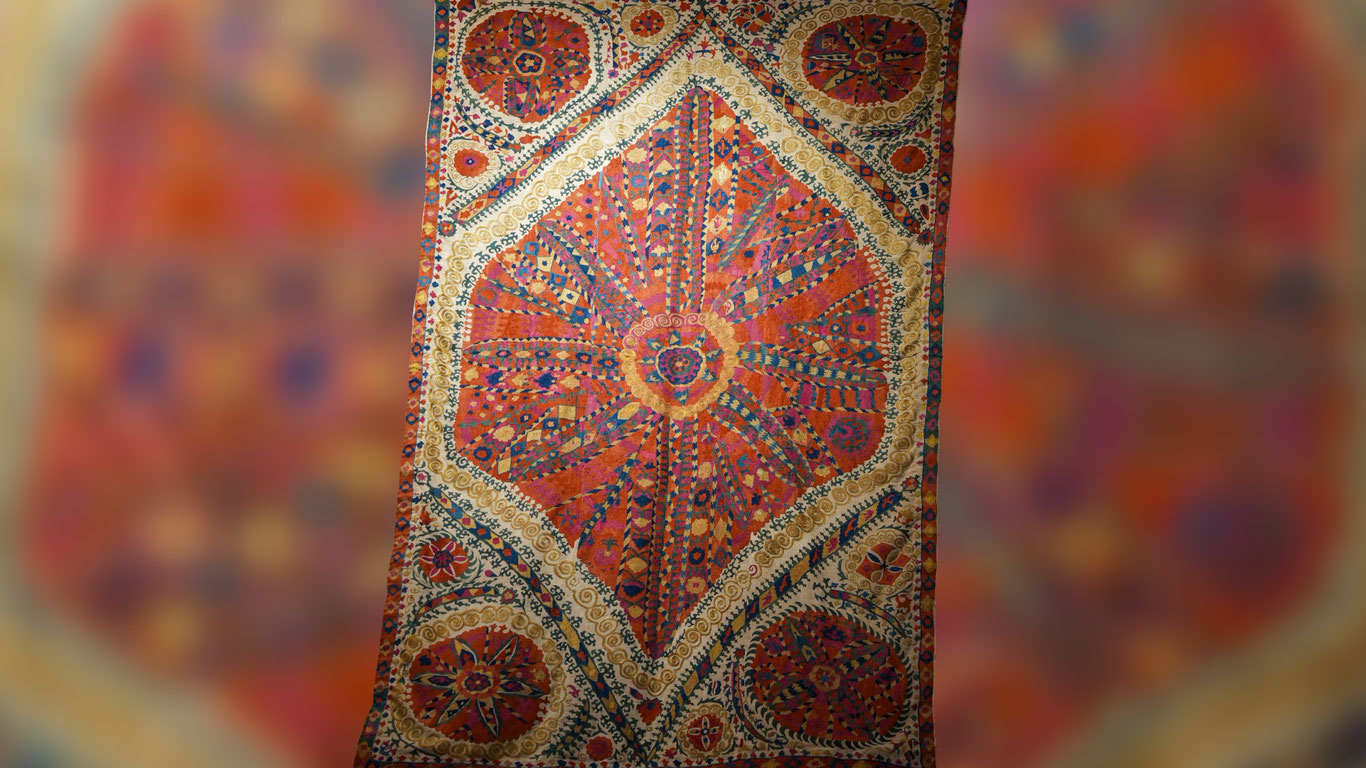
Suzani framed with ram’s horn motifs
Another noteworthy piece in the exhibition is a large-patterned suzani dating to the mid-19th century. It features a large hexagonal ornamental design with interlocking circles at its center. This motif is surrounded by patterns in the form of “ram’s horns.” Pink, dark yellow, and red colors are used in balanced proportions, resulting in a vibrant and cohesive composition.
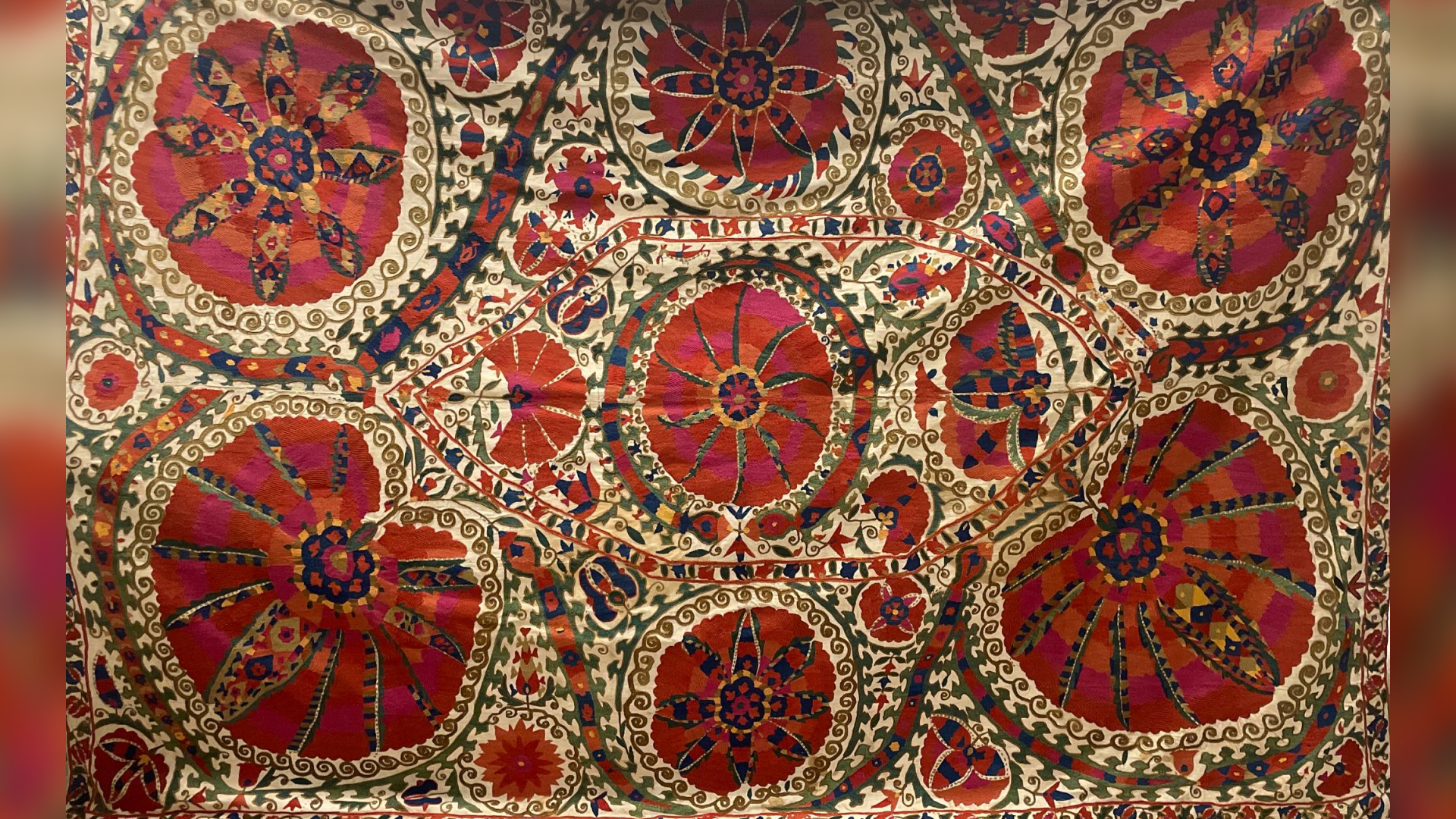
Suzani with flowers outlined in golden lines
The Center’s collection also includes another large-patterned suzani from the 18th century. It is decorated with large floral motifs in reddish and dark yellow tones. Around the flowers are golden lines, rhombuses, and geometric bands. Serpentine lines connecting the motifs lend the piece a sense of movement and vitality.
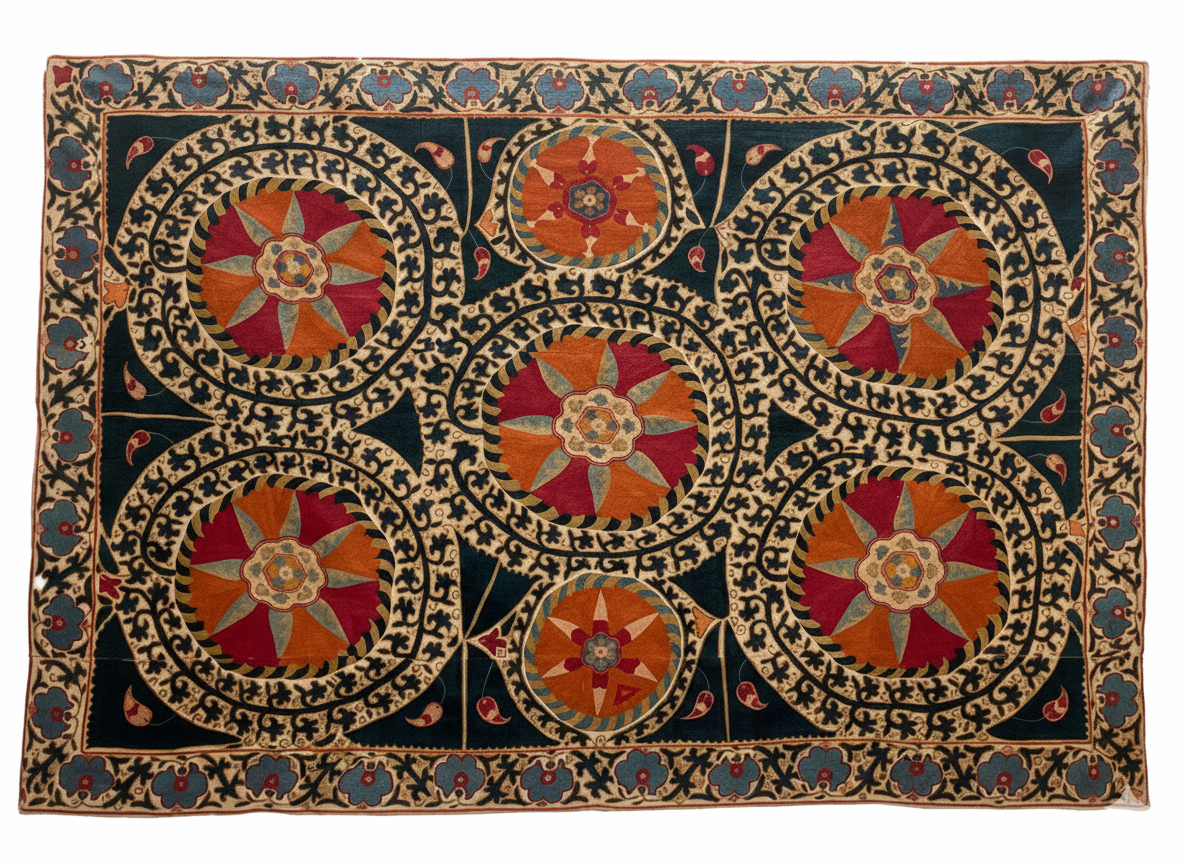
A small-sized suzani distinguished by the sheen of silk threads and delicately executed colors
One of the important exhibits in the section is the Kattakurgan “nim suzani,” dating approximately to the 1800s. Despite its small size, it stands out for its technical execution. The main surface is embroidered in various shades of blue using the “jurma” stitching technique. The sheen of silk threads and the subtle transitions of color give the piece softness and depth. Large leaf motifs reminiscent of lotus flowers ensure compositional balance.
According to Doctor of Historical Sciences and Professor Dilnoza Jamolova, suzanis clearly reveal the differences between regional schools of Uzbek embroidery.
“In the Tashkent and Pskent schools, embroidery density and clarity of colors were predominant. In the Fergana Valley, softer colors and more delicate patterns are common. In Kattakurgan suzanis, geometric order is stronger and the colors are more subdued. These differences are connected to the people’s way of life and cultural environment,” she notes.
The suzanis displayed at the Islamic Civilization Center vividly reflect the artistic level, sense of color, and technical capabilities of their time. They were widely used in the cultural life of the khanate period and played an important role in wedding ceremonies, home decoration, gift-giving, and religious events.
Today, these suzanis are valued as rare artifacts that illuminate the rich history of folk applied art. Through them, the labor, patience, and contribution of Uzbek women to national culture are clearly revealed. The suzanis preserved in the Center’s exhibition are of great importance for studying national heritage, shaping aesthetic taste among the younger generation, and researching the history of Uzbek embroidery.