 Our national and spiritual heritage, preserved for centuries in different parts of the world, is today being reconnected with the homeland. Efforts initiated by the President of Uzbekistan to return historical manuscripts and rare artifacts to the country are currently attracting the attention of the global scholarly community as well. One such invaluable relic is a Qur’an manuscript associated with the name of Muhammad Uzbek Khan, ruler of the Golden Horde, which holds particular significance as a rare historical source embodying the high level of statehood, book arts, and spiritual life of the 14th century.
The Qur’an manuscript linked to the name of Uzbek Khan (1313–1341), ruler of the Golden Horde, occupies a special place. This mushaf is not only a religious text, but also an invaluable historical monument reflecting the advanced level of statehood, culture, and the art of manuscript production in the 14th century. At present, this unique manuscript is preserved in the library of Kütahya University in Türkiye.
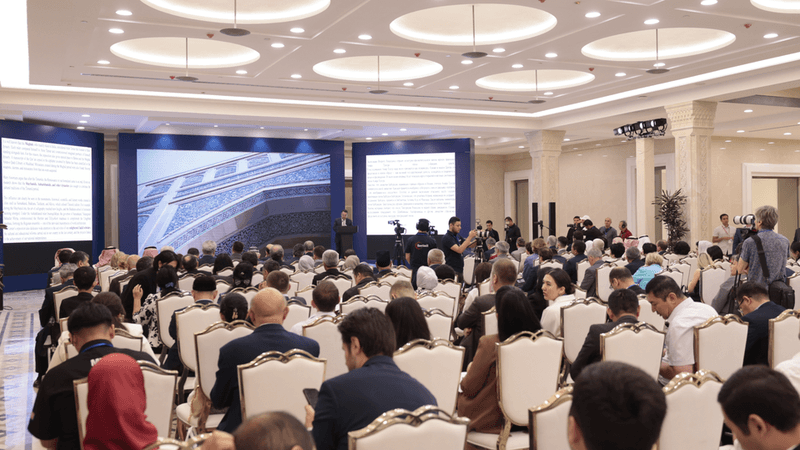
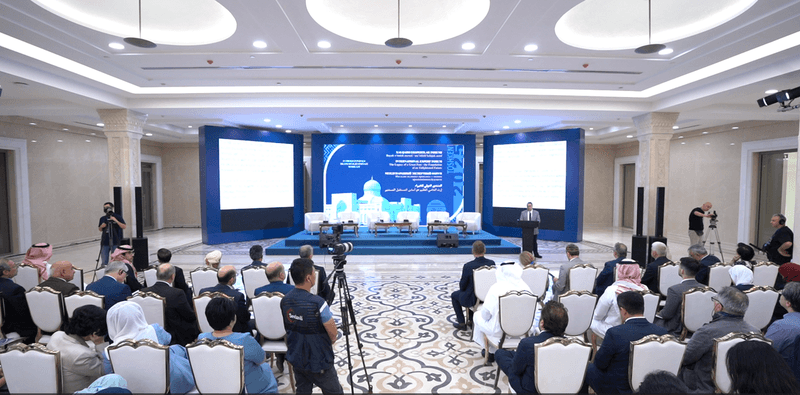
Information about this manuscript was first presented during the International Cultural Heritage Week titled “The Phenomenon of Eastern Renaissances: Empires, Religions, Personalities, and Civilizations,” held in Tashkent on October 18–26, 2024, at the initiative of the Islamic Civilization Center in Uzbekistan. Coşkun Yılmaz, Head of the Suleymaniye Library under the Turkish Manuscripts Institution, and Professor Emek Uşenmez of Istanbul University emphasized that among ancient Qur’an manuscripts worldwide, the first mushaf bearing the name “Uzbek” was copied precisely by order of the Golden Horde ruler.
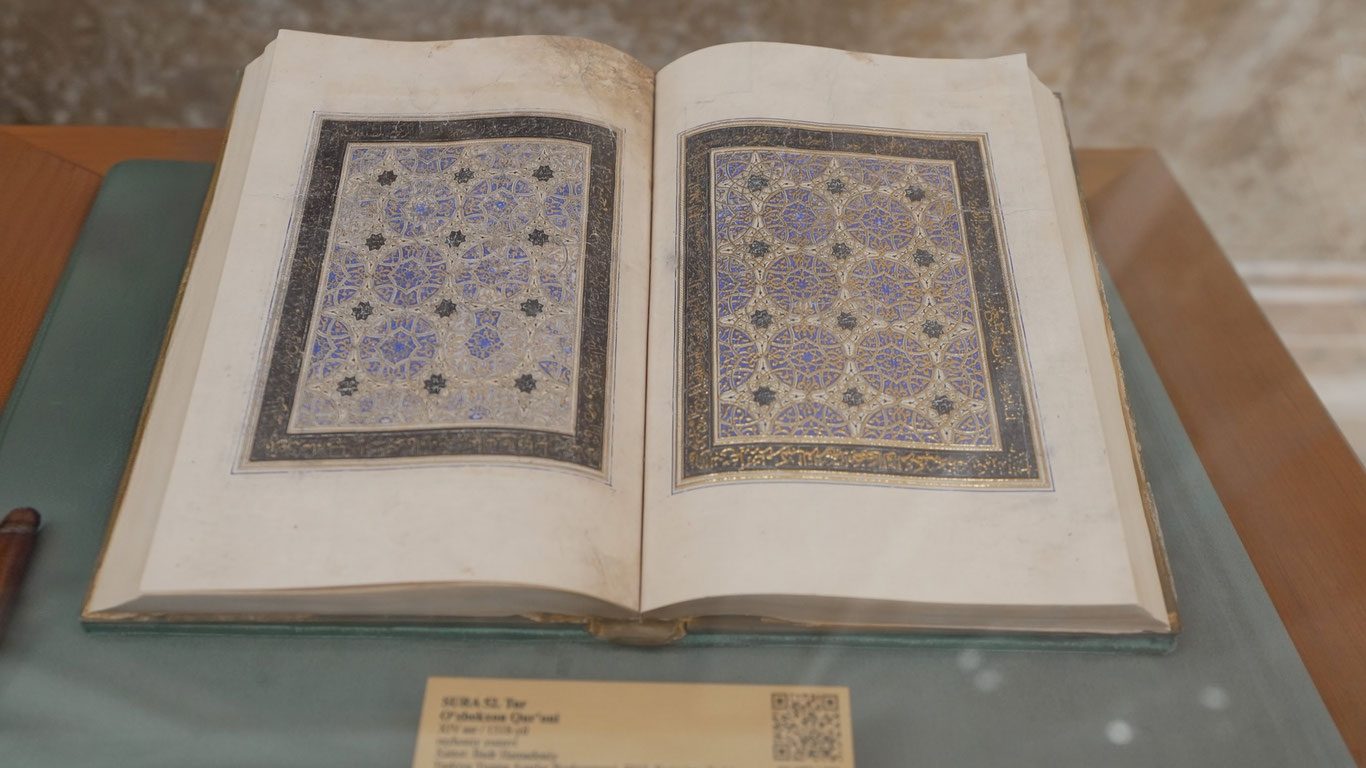
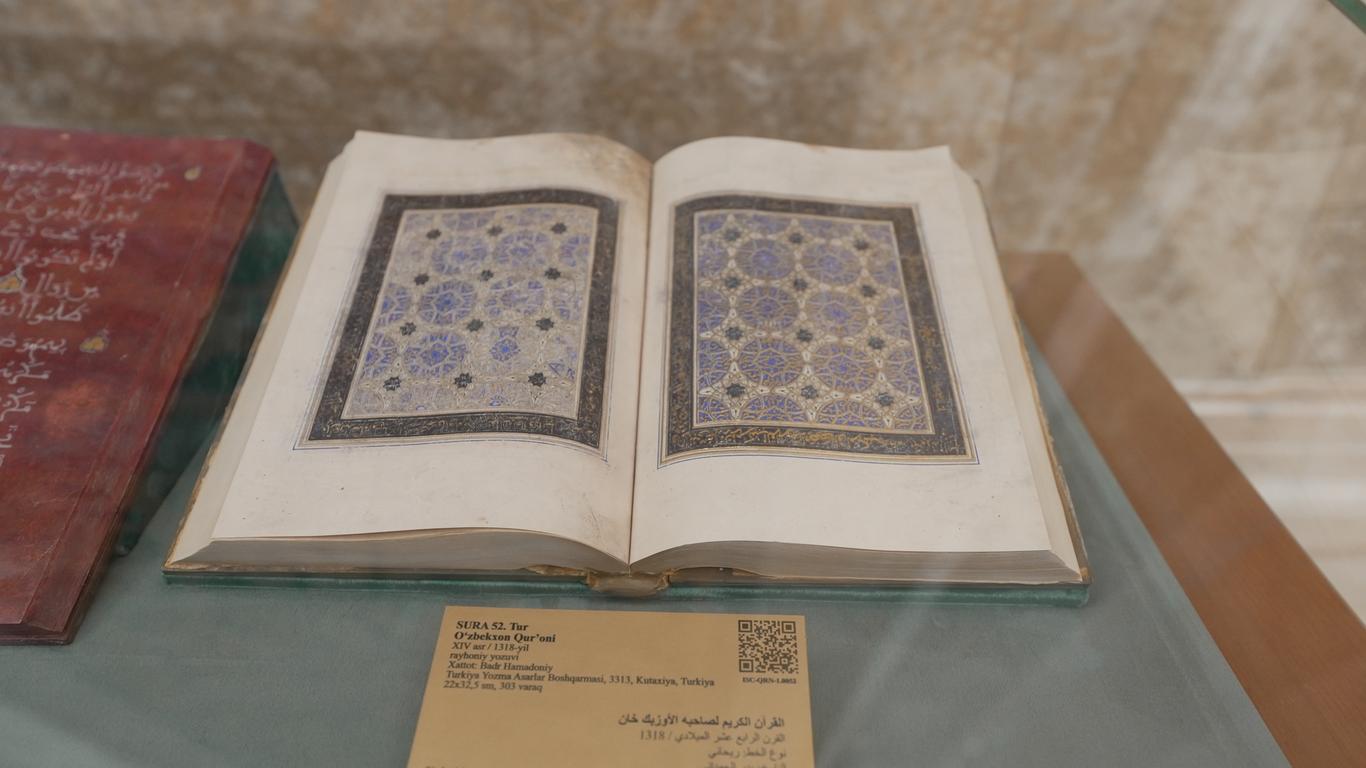
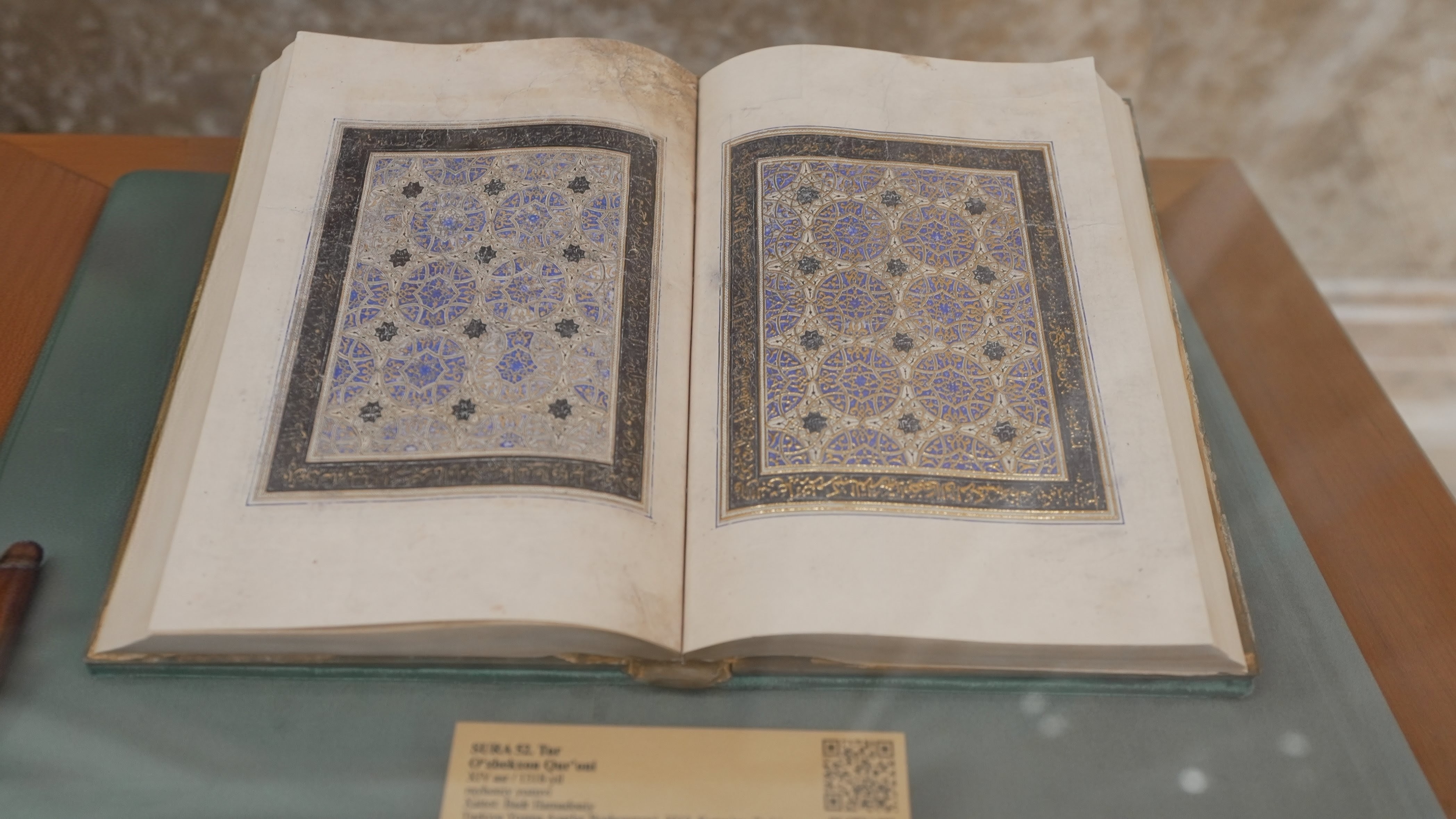
“This Qur’an manuscript was copied in 1318 in the territory of the Golden Horde on gilded paper in the Rayhani script. In the colophon, it is recorded that it was written in the month of Ramadan of the year 718 AH by the scribe Badr al-Hamadani on the order of the Sultan of Sultans, Muhammad Uzbek Khan. The mushaf consists of 303 folios, with 14 lines of text on each page. The pages are polished with gold, and the margins are adorned with special ornamental shams motifs. Such refined artistic decoration is considered rare in the manuscript traditions of that period,” said Professor Emek Uşenmez of Istanbul University.
The manuscript is written on Eastern paper. According to historical sources, this mushaf was brought to Istanbul in 1475 during the Crimean campaign by the Ottoman ruler Sultan Mehmed the Conqueror and was later included in the collection of the Suleymaniye Library. Preserved for centuries, this rare relic underwent scholarly conservation and restoration in 2024.
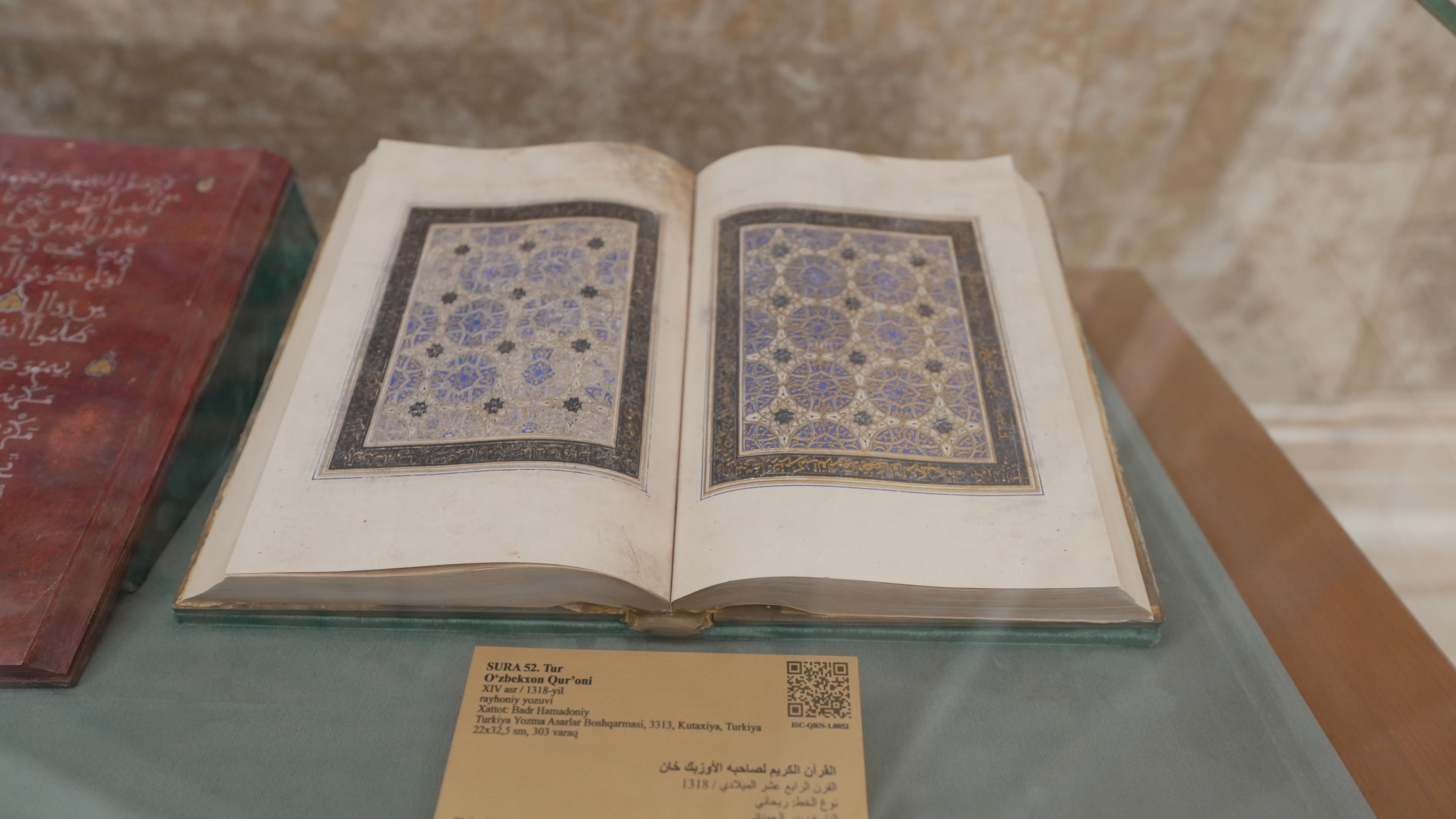
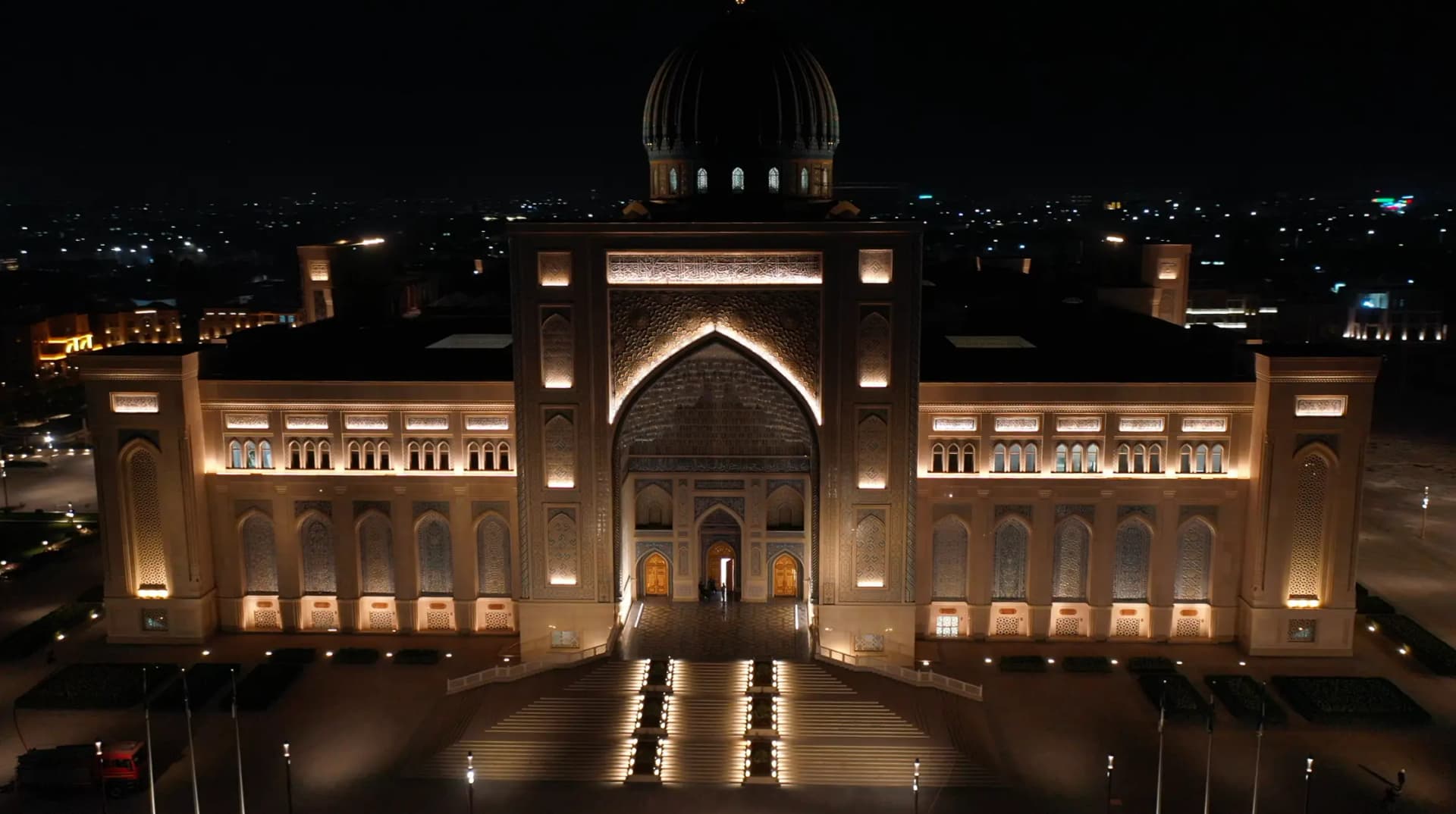
At present, a replica of the Uzbek Khan Qur’an is being displayed in the exhibition of the Islamic Civilization Center in Uzbekistan within the framework of the “114 Qur’ans” project. This rare manuscript, featured in the Center’s exhibition, is presented to the public as a significant exhibit that vividly demonstrates the development of Islamic civilization in Central Asia and the contribution of Turkic dynasties to religious and spiritual life. Through this exhibition, visitors gain a rich understanding of the art of manuscript production, artistic decoration, and state patronage of spiritual heritage during the Golden Horde period.
In the future, the publication of a facsimile edition of this manuscript is planned. Therefore, printing a high-quality facsimile edition of the Uzbek Khan Qur’an in Uzbekistan is considered an important scholarly and cultural task.
In conclusion, the Uzbek Khan Qur’an holds exceptional significance as a distinguished example of the spiritual life of the Golden Horde period, as well as of science and the art of manuscript production supported by state patronage. This rare mushaf, exhibited at the Islamic Civilization Center, represents not only a national treasure but also an invaluable gem of universal cultural heritage, preserved as a historical memory for future generations.
Durdona Rasulova
P.S. The article may be republished with a link to the Center’s official website