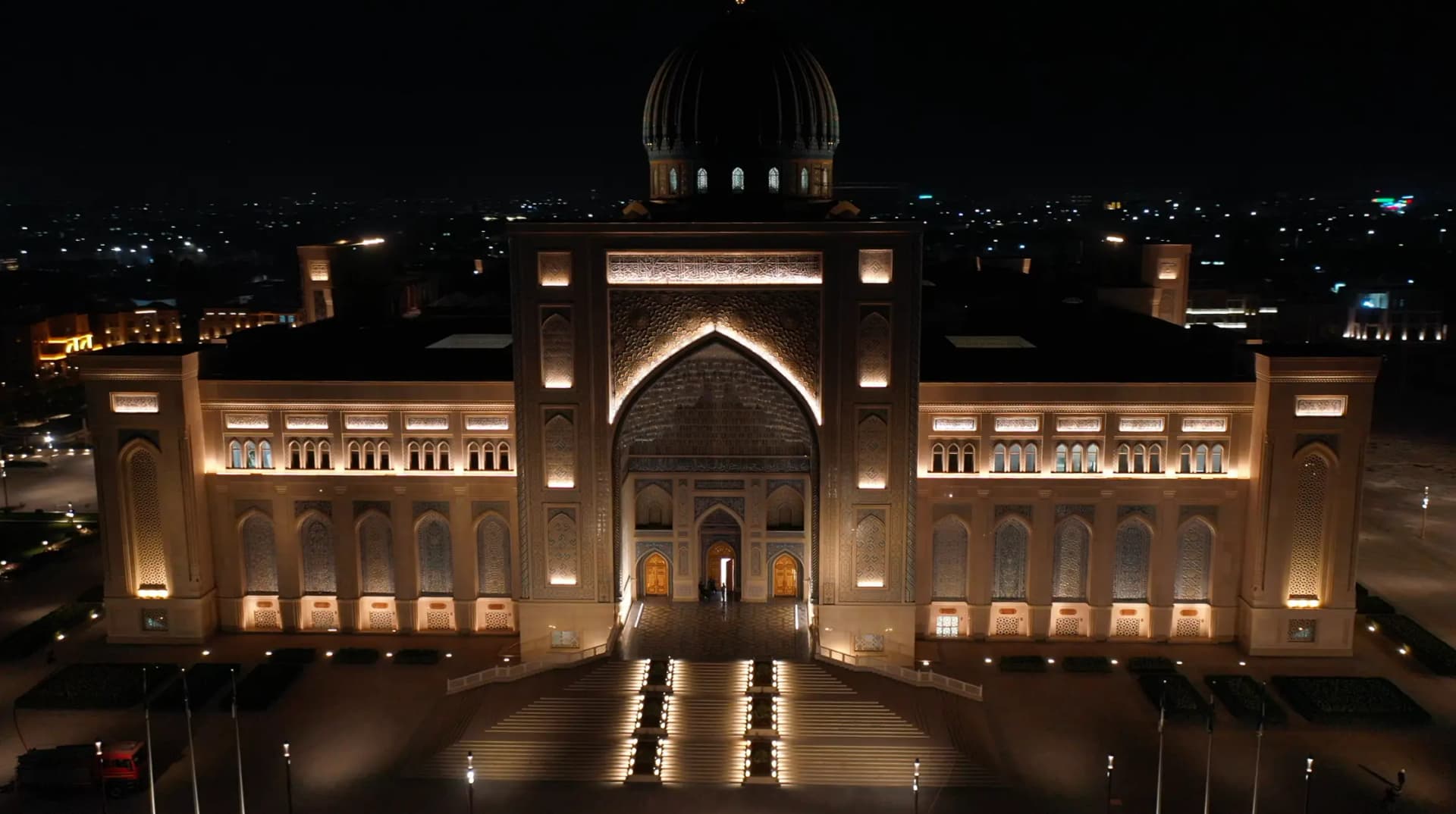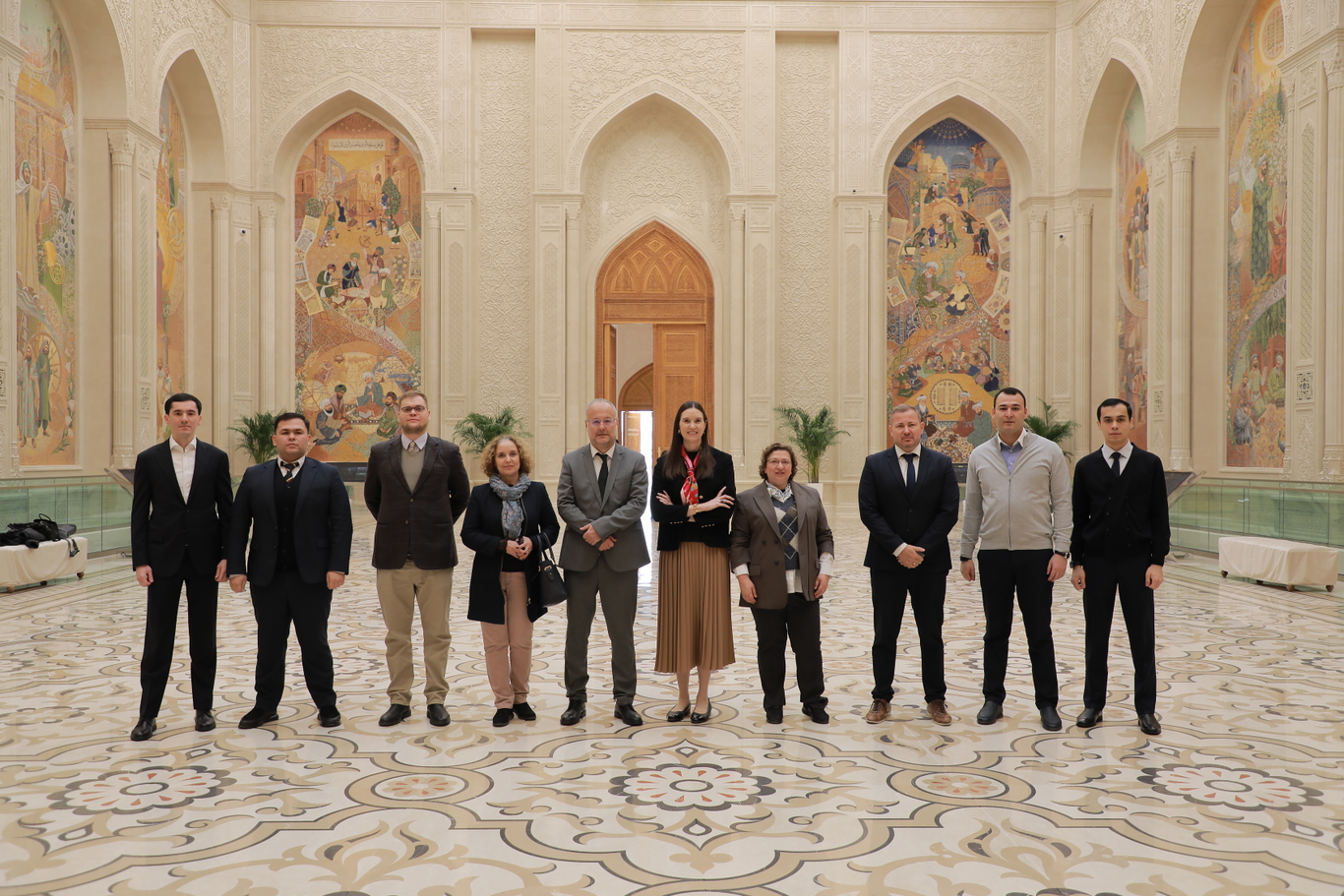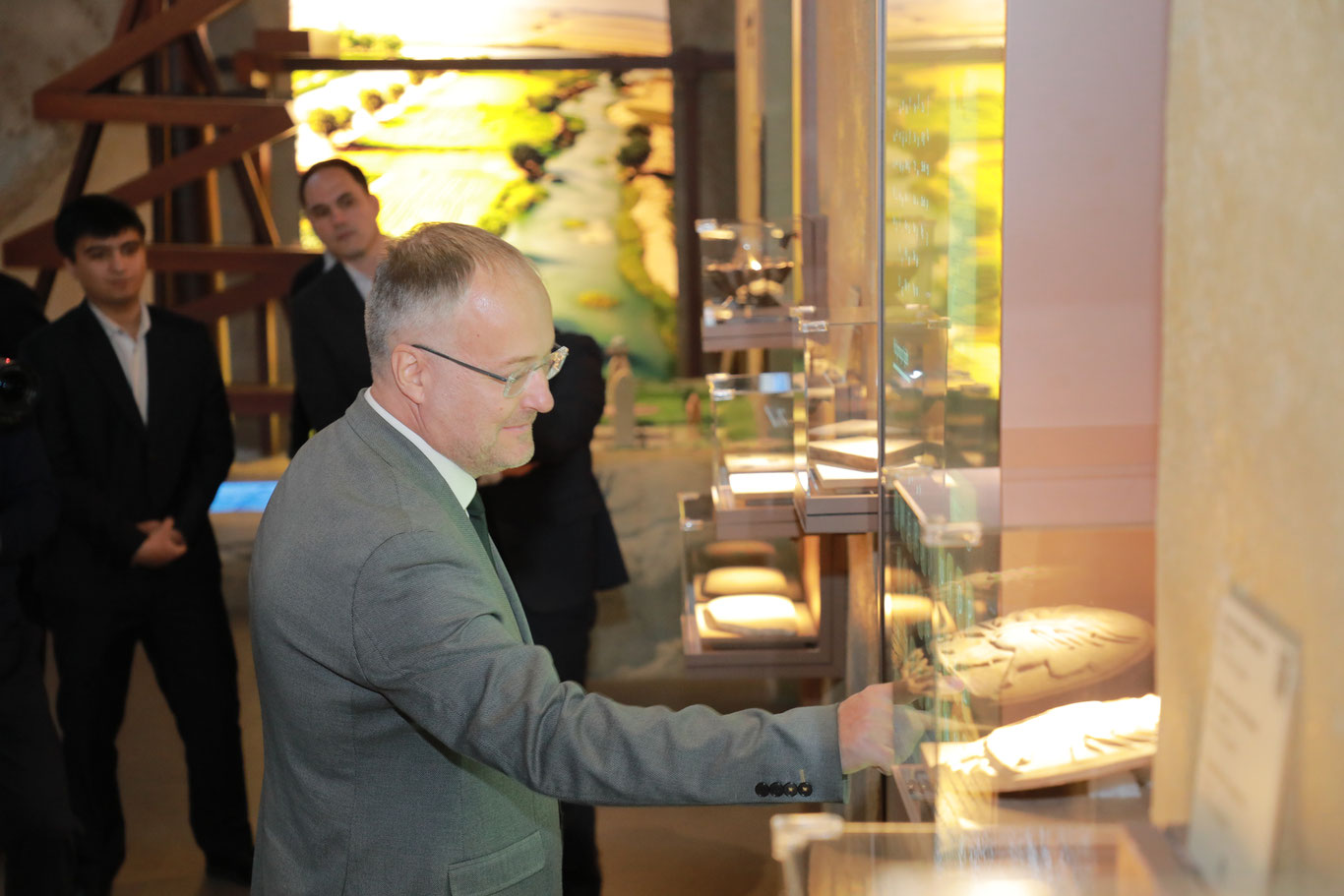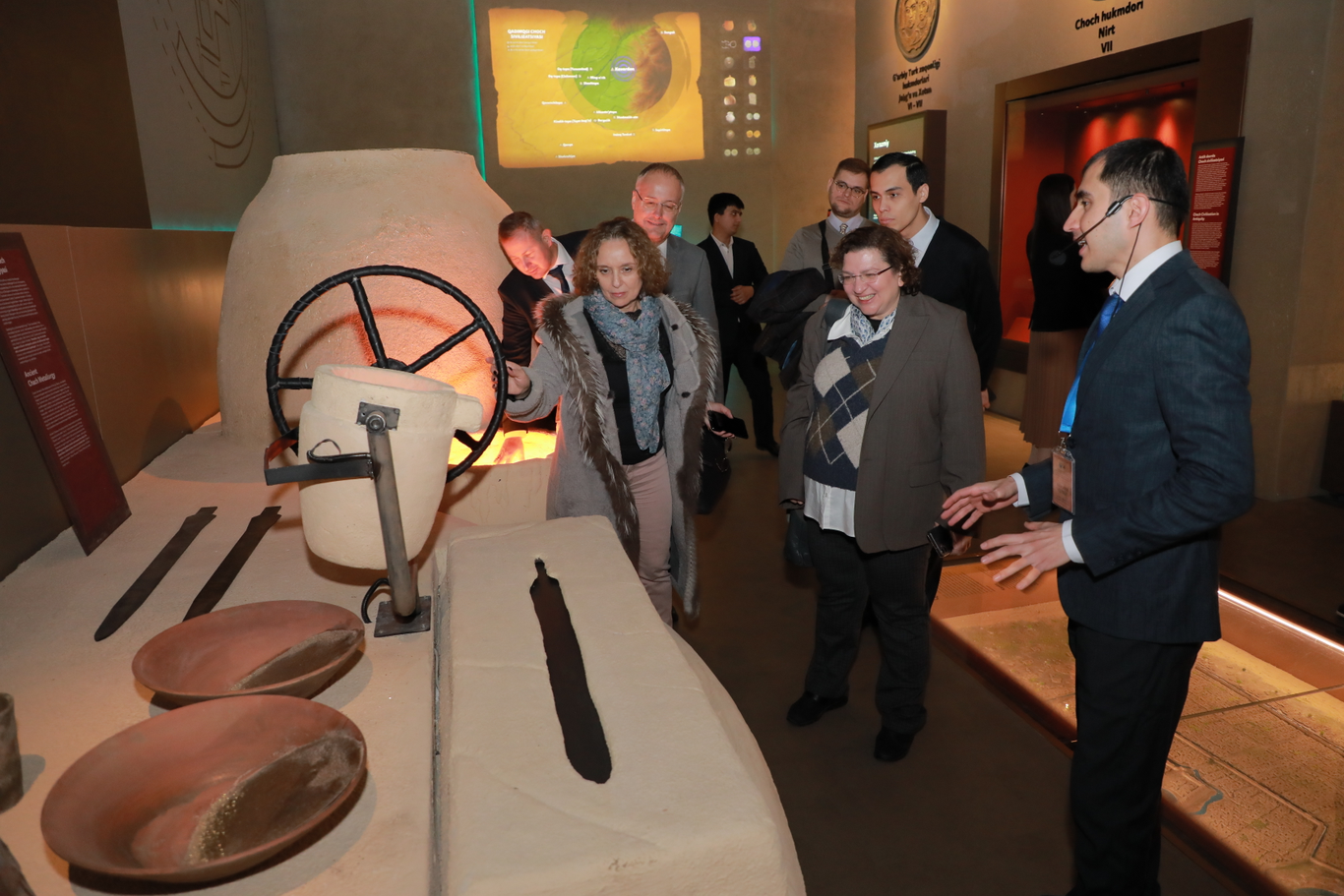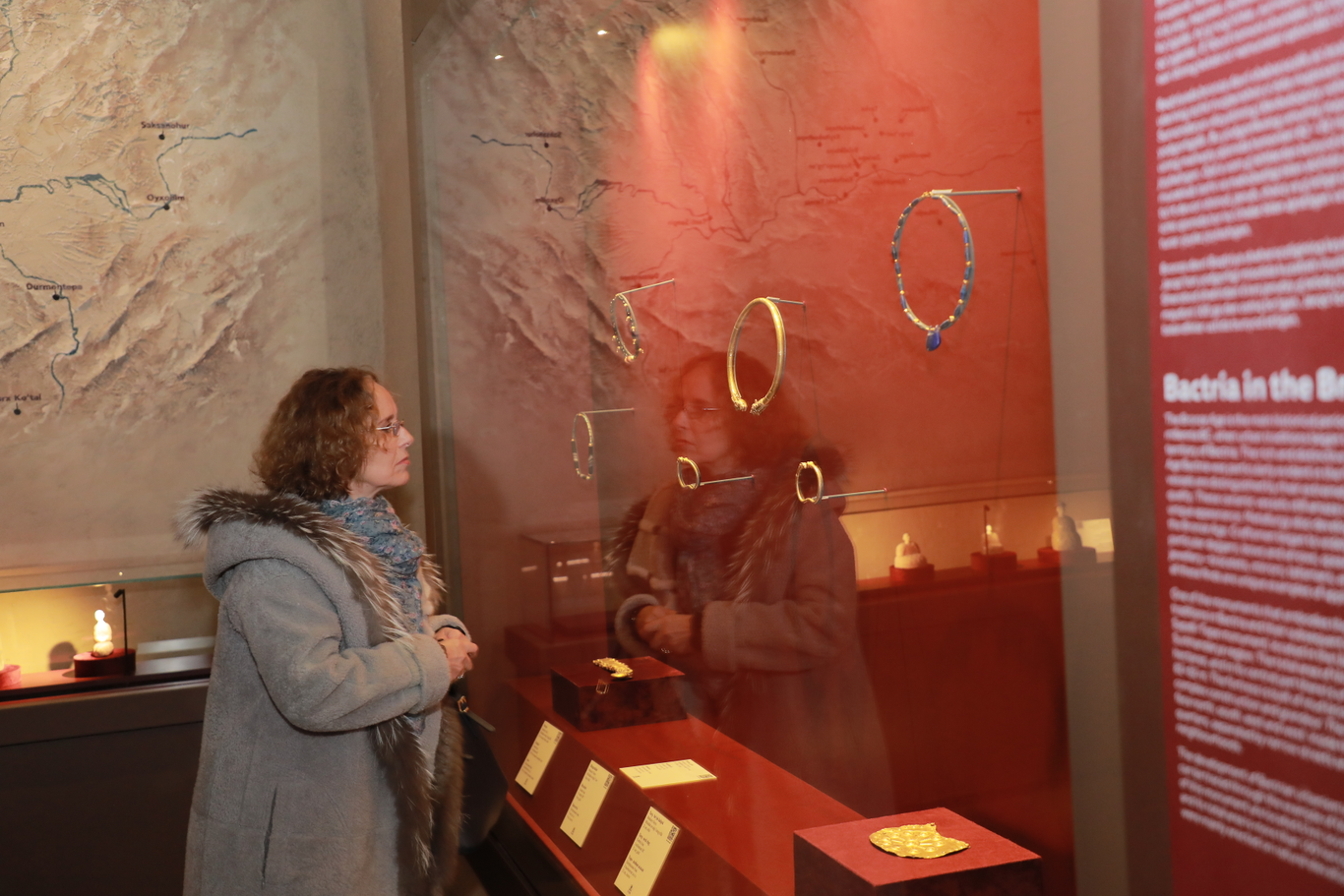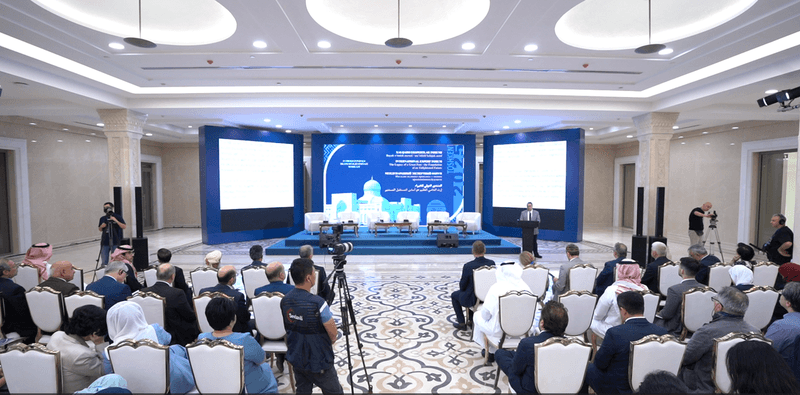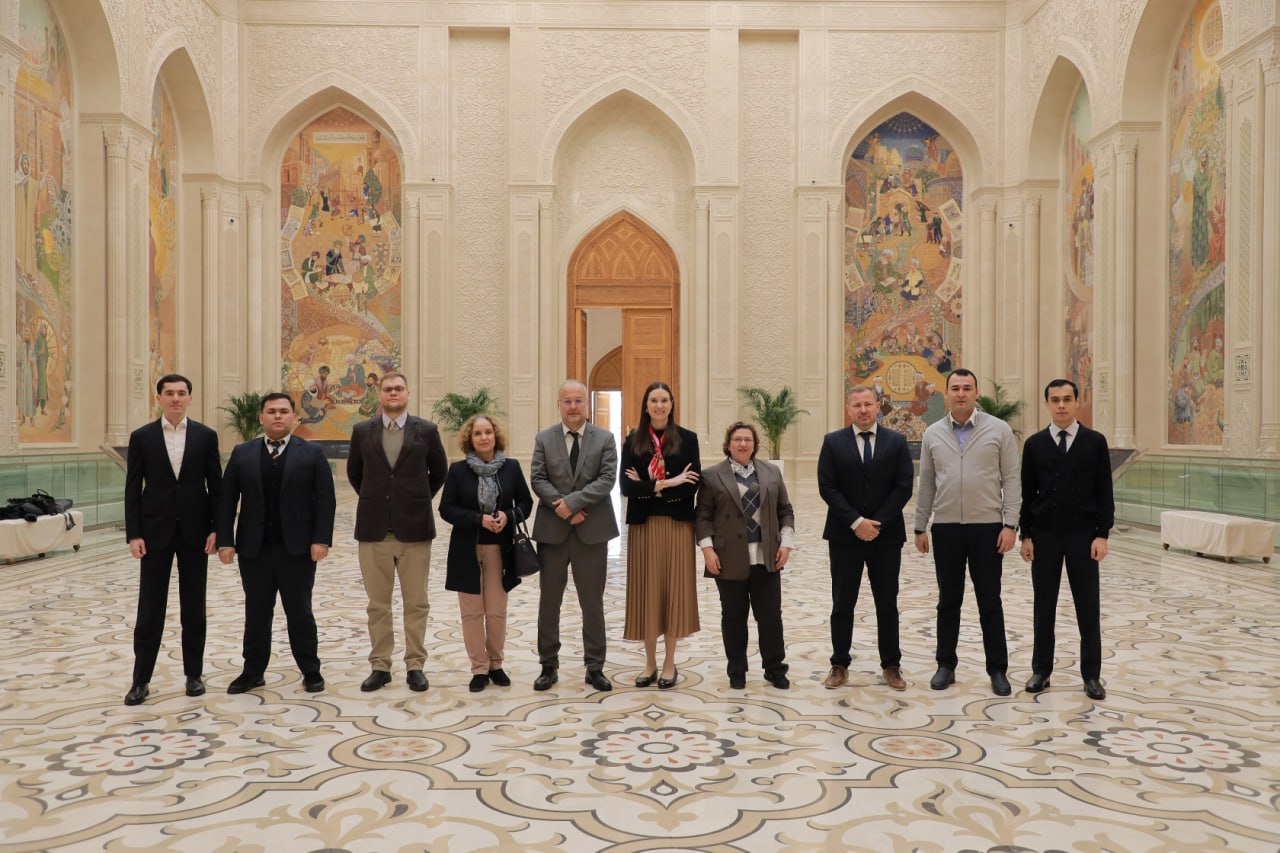
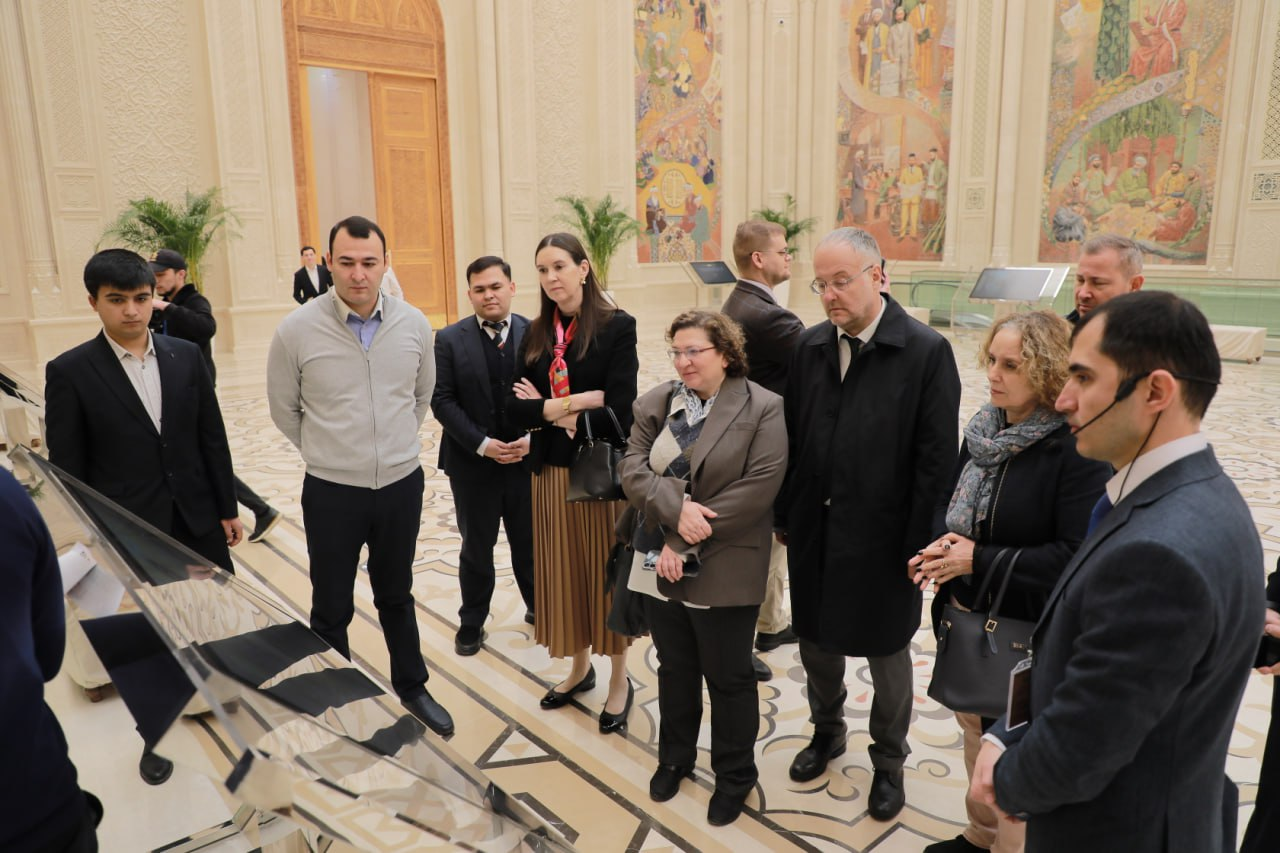
 Representatives of the diplomatic missions of the United States, Romania, Bulgaria, Hungary, Israel, and the Czech Republic visited the Islamic Civilization Center, established on the initiative of the President of Uzbekistan, Shavkat Mirziyoyev, and became acquainted with its content-rich and technologically advanced exhibitions.
The visit began in the “Hall of Honor,” where the guests viewed an architectural and compositional ensemble depicting prominent scholars and statesmen who emerged from Uzbekistan. Particular attention was drawn to the coherent presentation of the spiritual power, scholarly schools, and traditions of statehood of the First and Second Renaissance periods.
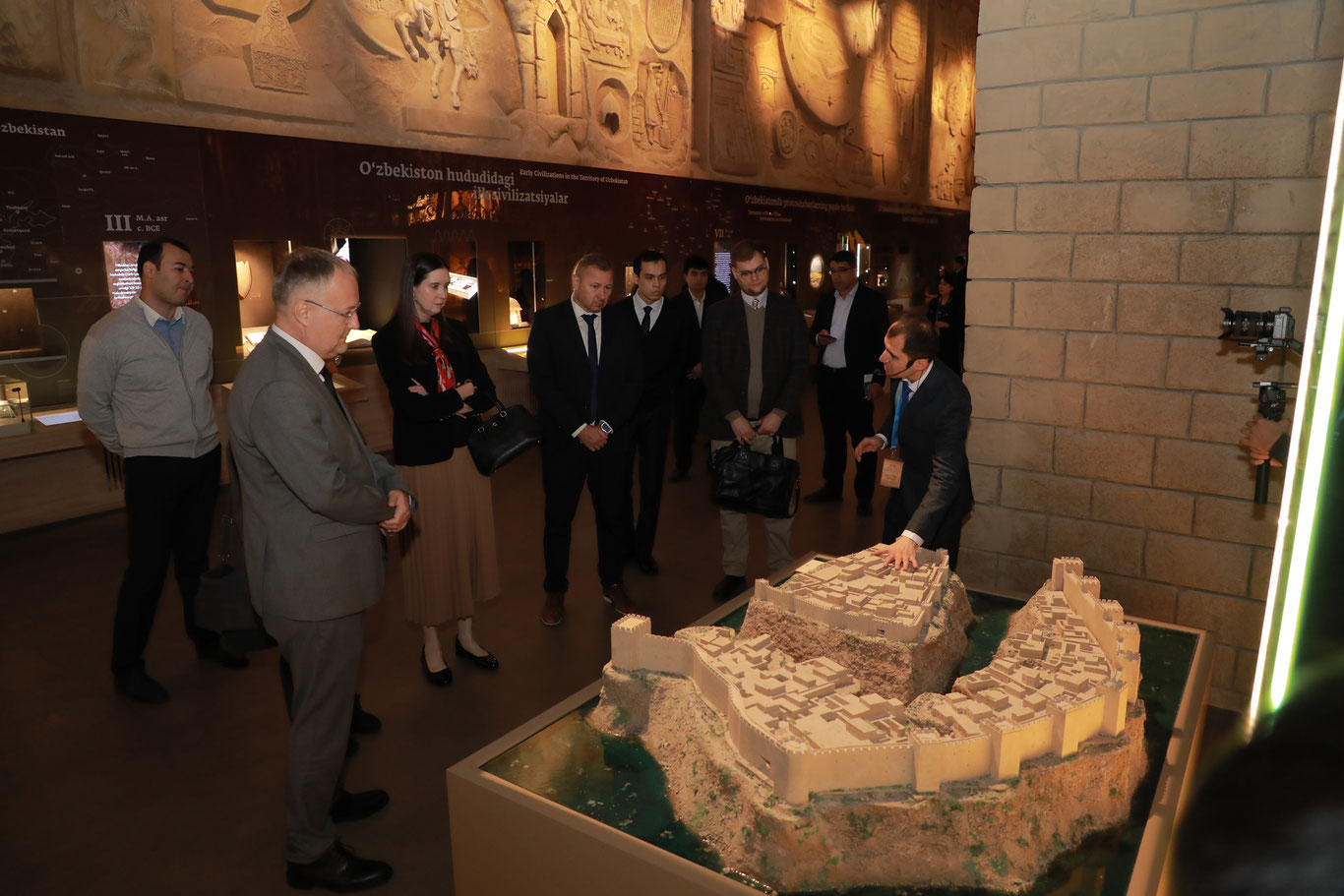
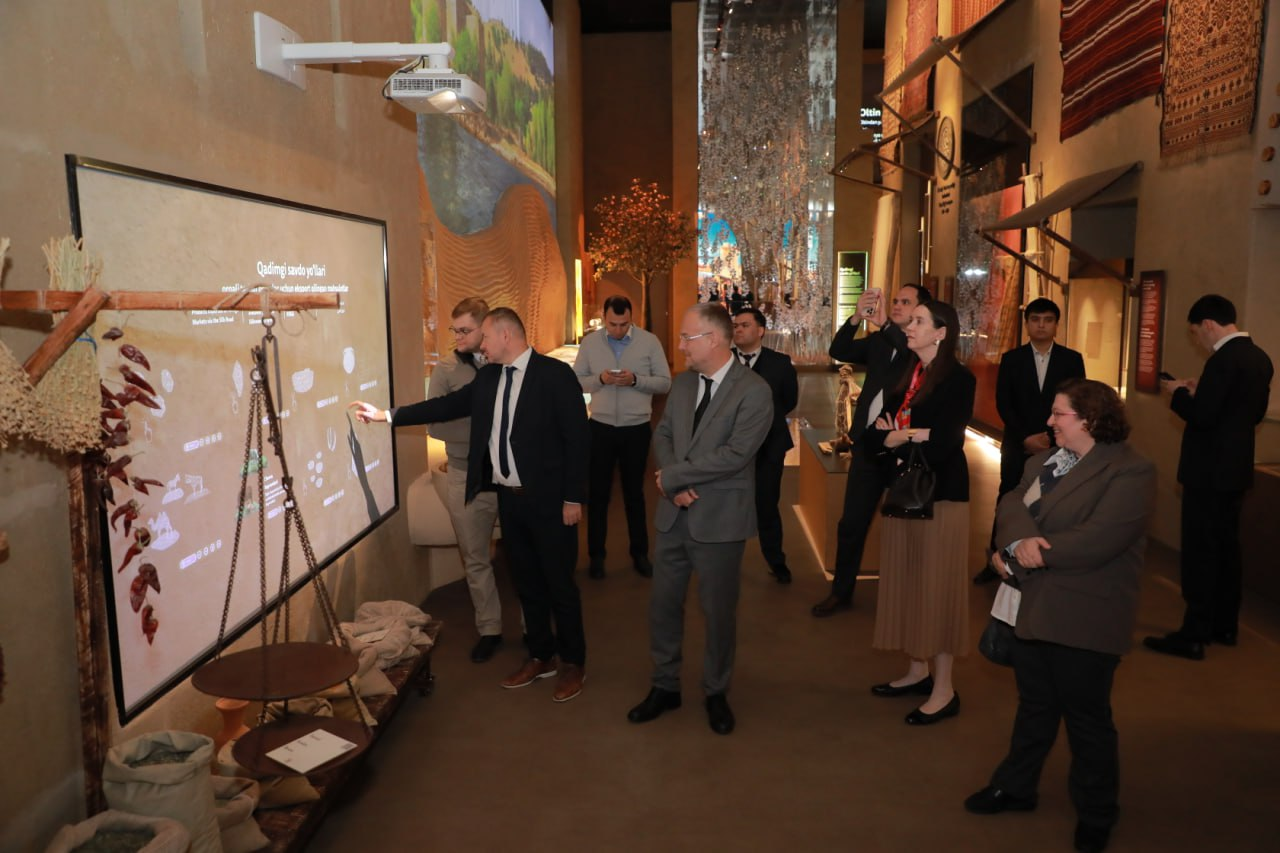
In the pre-Islamic era exhibition, the guests were introduced to the ancient civilizations of Khorezm, Sogdiana, and Bactria, the heritage of the Avesta, archaeological findings, and early statehood traditions. This left a profound impression, demonstrating that the roots of high culture in Central Asia date back to very ancient times. The interactive “Waal of Civilizations and Discoveries” and scale models of ancient cities were explored with great interest. After viewing the “Great Silk Road Map” exhibition, the guests emphasized that Uzbekistan had been a crossroads of this historic trade route and remains a center of international relations today.
In the First Renaissance section, the multimedia presentation of the legacy of scholars who lived and worked in the 9th–12th centuries deeply impressed the visitors. The scientific discoveries of thinkers such as Abu Rayhan Beruni, Ibn Sina, and al-Khwarizmi, and their contributions to world science, were showcased in visual and interactive formats, adding special appeal to the exhibition. The original Kaaba covering on display and the section dedicated to Imam Bukhari inspired a deep sense of reverence among the guests.
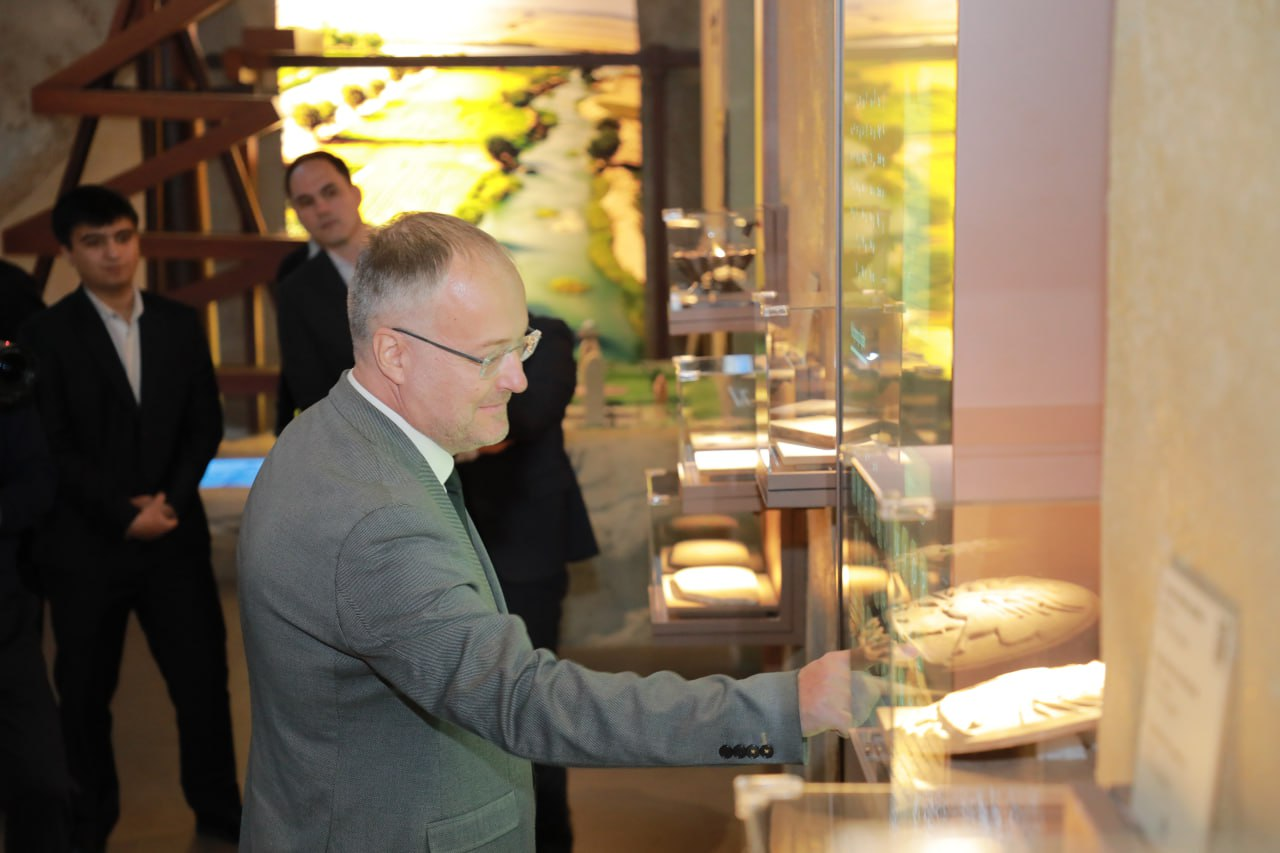
Daniel Cristian, Ambassador Extraordinary and Plenipotentiary of Romania to Uzbekistan, said:
“I can say that this Center clearly demonstrates that Uzbekistan is not only an economic and political power, but also a cultural force in Central Asia.
What I have seen here has once again convinced me that Uzbekistan’s greatest wealth is not uranium, gold, or cotton, but its wonderful people. Here one can see the great generations that have grown from history to the present day. I am confident that the future will also be bright.
I especially liked the section dedicated to the era of Amir Temur. Amir Temur is a symbol of Uzbekistan, an embodiment of the Second Renaissance, and one of the great figures in world history. However, all the exhibitions here are impressive. It is difficult to single out just one period or one hero, because the history of Uzbekistan is rich in glory and filled with significant events. The museum presents this great history very well.
This Center plays a very important role, because historical and cultural heritage is extremely important for every nation. It is difficult to build the future without a deep knowledge of our history. For Romanian scholars, it is also very important to come here and study the history of Uzbekistan directly in this place. There are also some Uzbek artifacts in Romania, which creates opportunities to expand cooperation and develop new scholarly projects. The Center is an important educational space not only for scholars, but also for the general public and tourists. The number of Romanian tourists is increasing year by year, and I will definitely recommend this Center.”
 Heather Byrnes, Deputy Chief of Mission at the U.S. Embassy in Uzbekistan, said:
“Honestly, I came here today for a short visit, but I definitely plan to return with my family and spend an entire day here. Even one day might not be enough.
The most interesting aspect of the exhibitions is how they present Uzbekistan’s incredibly rich history, which stretches back to very ancient times. Since I had previously visited Bukhara and Samarkand, I was familiar with part of this history, but learning about even earlier periods truly amazed me.
The collection assembled here can easily rival the finest museums in the world. I especially liked how interactive the exhibitions are. This is not only engaging, but also highly educational for children — not only Uzbek children, but also for young visitors from around the world.
All of the exhibitions are impressive, and it is difficult to single out just one. Although Tashkent appears modern on the surface, it was fascinating for me to see that it actually has an extremely ancient history. One of the most interesting exhibits is an 80,000-year-old arrowhead. Humanity’s history is estimated to be around 100,000 years old, which means that culture and civilization existed on the territory of present-day Uzbekistan from the very earliest periods of human history.
I congratulate your people on such a mega project and eagerly await the official opening of the Center.”
The “New Uzbekistan — Foundation of the New Renaissance” section also made a strong impression on the guests. The multimedia presentation of the country’s recent development, international cooperation, and reform processes was highly praised.