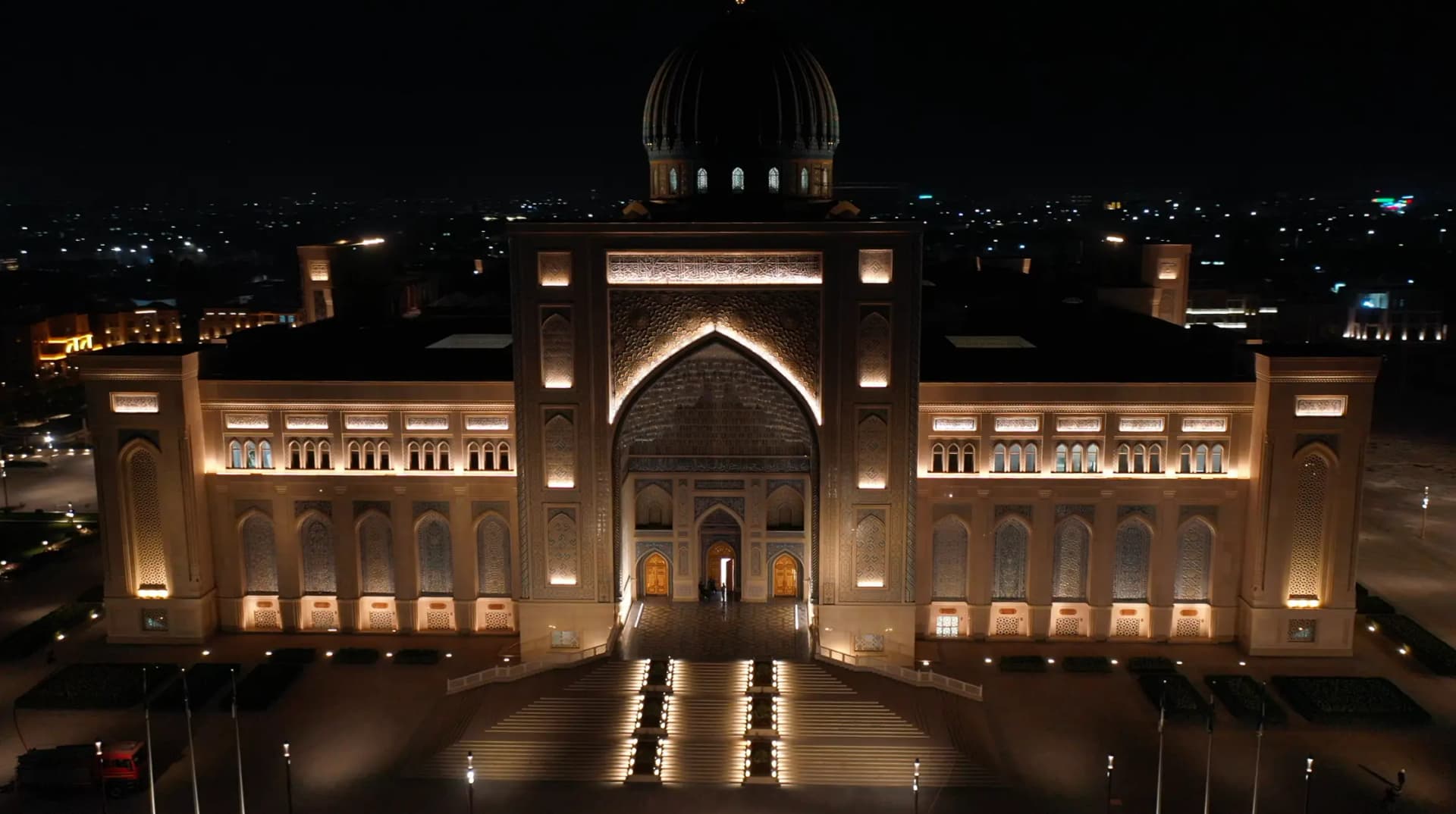
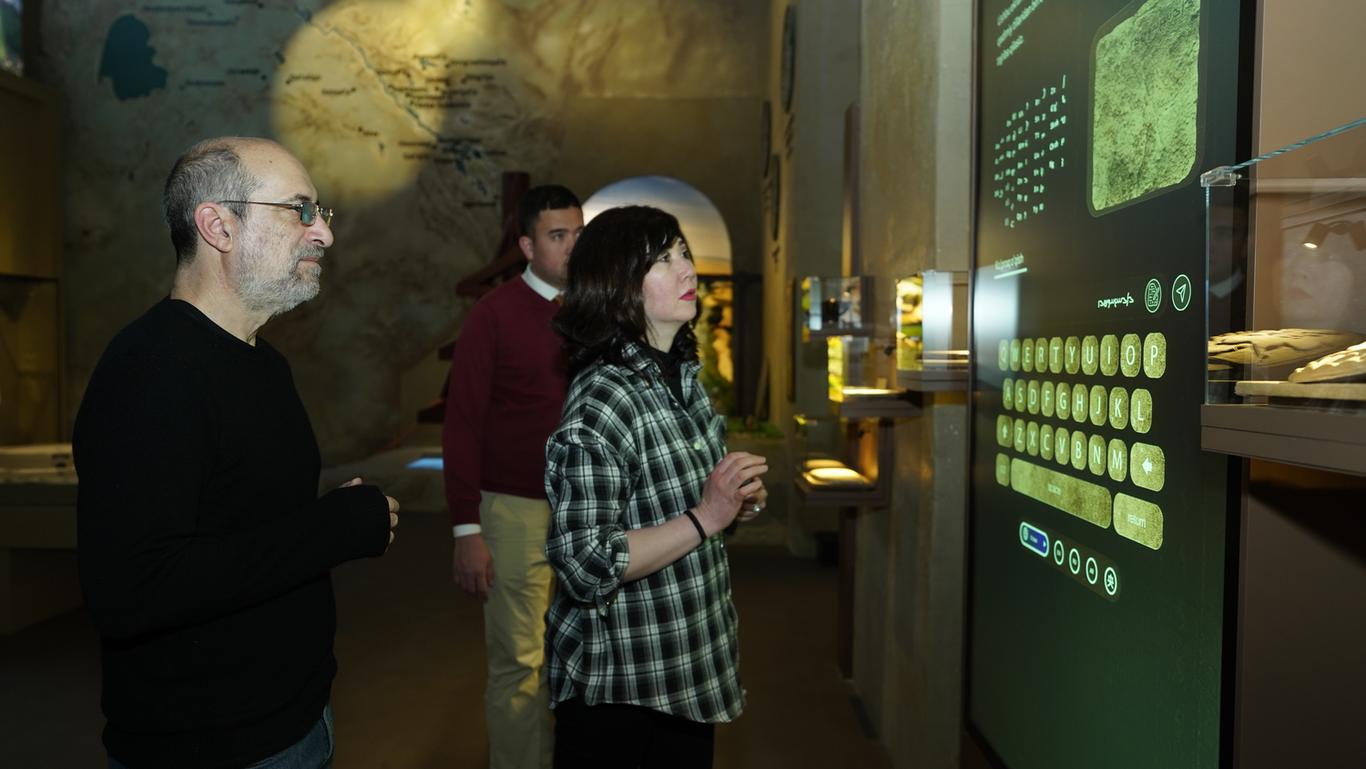
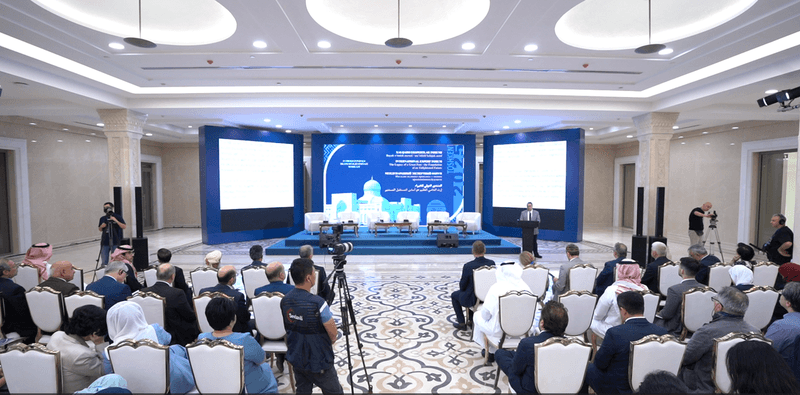
The exhibitions presented at the Islamic Civilization Center in Uzbekistan are being recognized by foreign scholars as exemplary models of an international academic approach. During his visit to the Center, Professor Marco Di Branco of Sapienza University of Rome was deeply impressed by the diplomatic letters of the Prophet Muhammad (peace be upon him) and the globe of al-Biruni. “Here, you not only gain knowledge, but also acquire new scientific and cultural perspectives,” he noted while exploring the exhibitions.
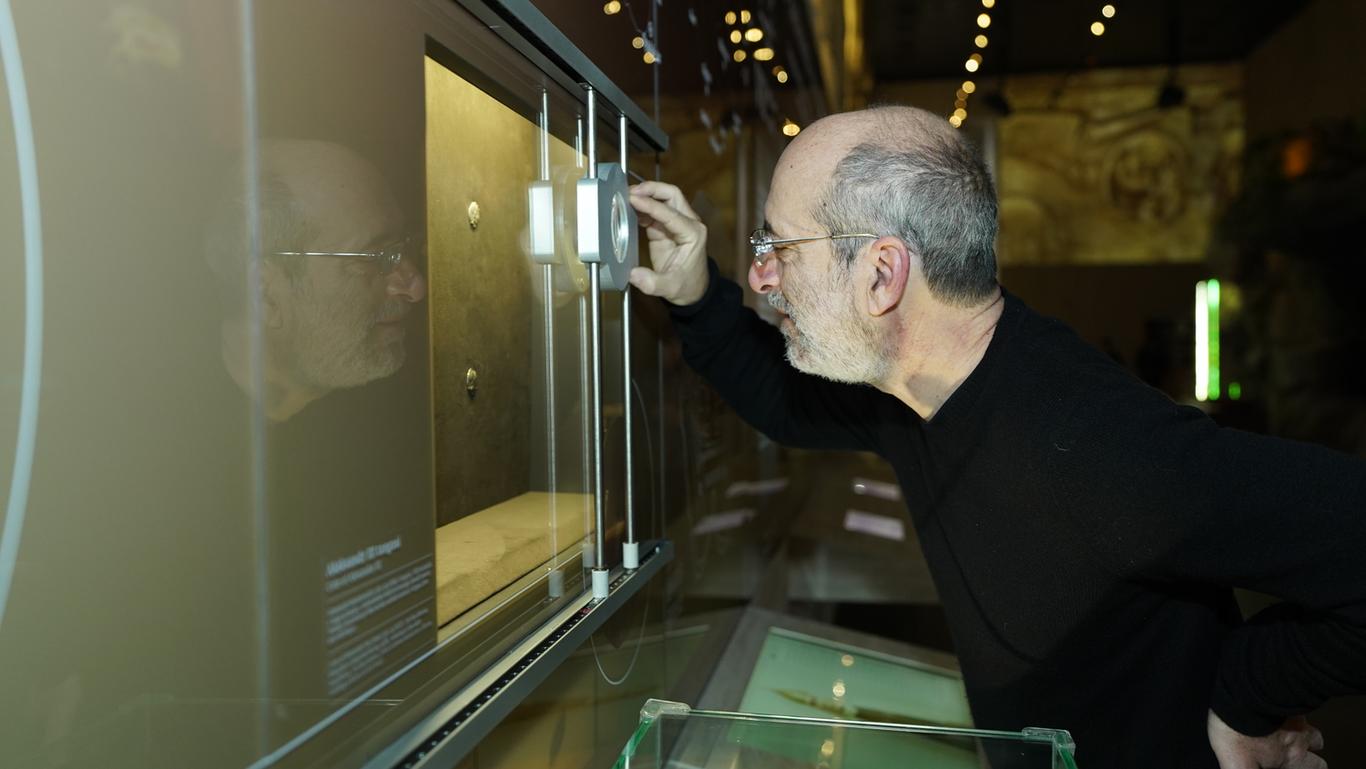
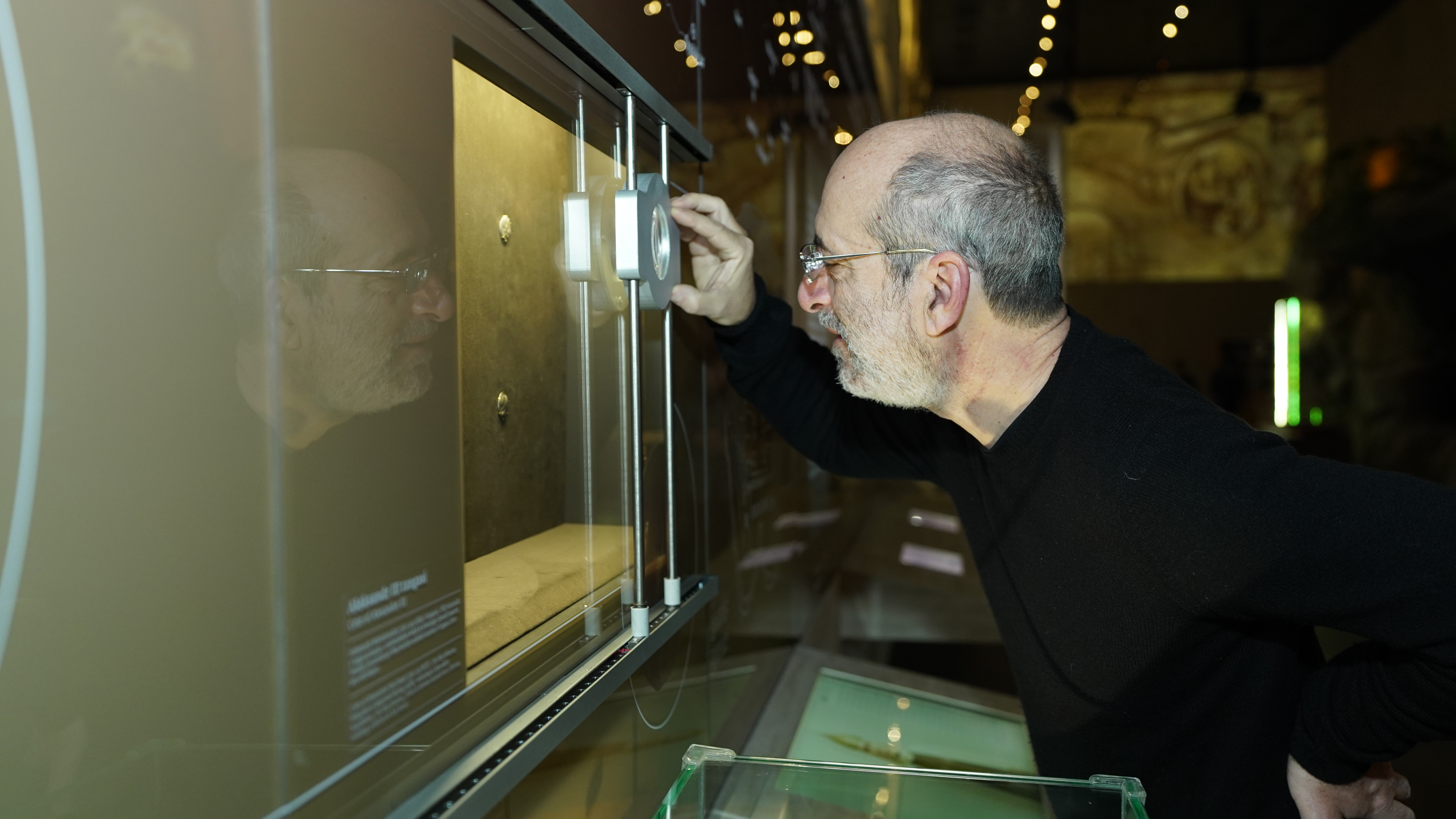
The delegation led by Professor Marco Di Branco, a distinguished scholar from Sapienza University of Rome, expressed particular interest in the logical and coherent presentation of historical materials throughout the exhibitions. In particular, the coins displayed on the “Civilizations and Discoveries” wall and the opportunity to examine them closely through special magnifying lenses were highly appreciated by the guests.
The Anikova silver plates dating back to the pre-Christian era, as well as silver artifacts from the 8th century depicting warriors, also attracted considerable attention. It was emphasized that the symbols, patterns, and inscriptions on these objects reflect an exceptionally high level of artistic taste and technical mastery for their time.
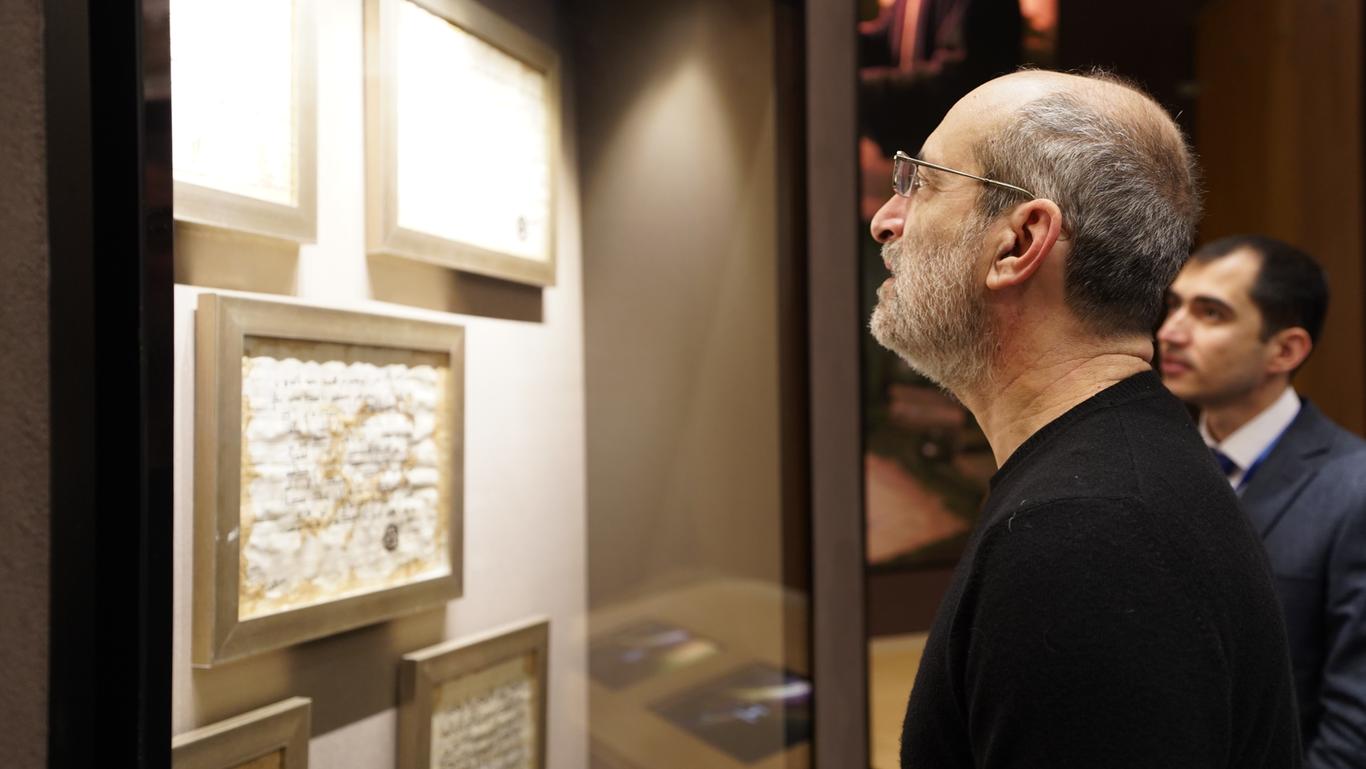
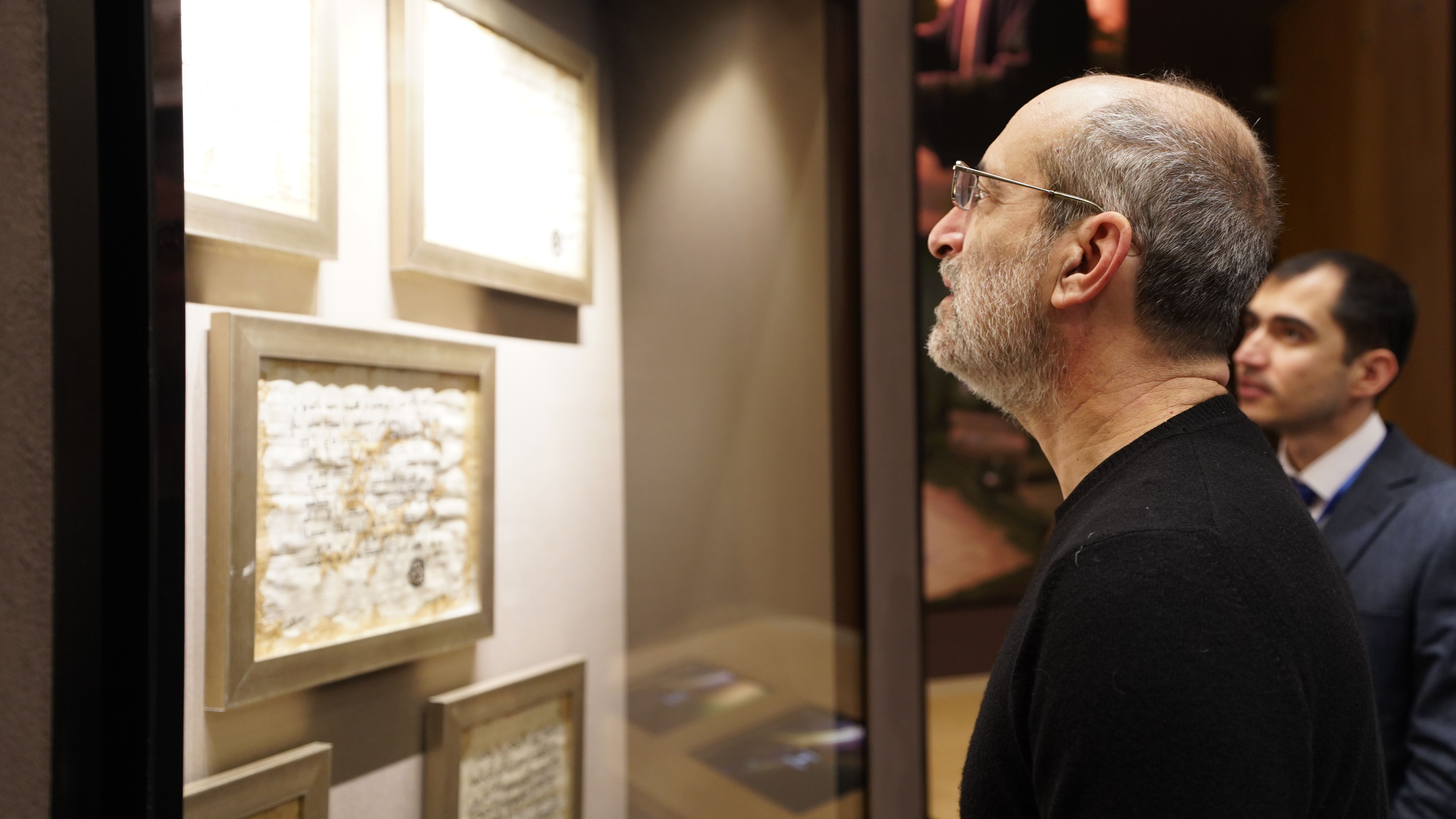 As a scholar specializing in Islamic history, Professor Marco Di Branco showed special interest in the diplomatic letters of the Prophet Muhammad (peace be upon him). Observing these rare sources with great attention, he highlighted that their inclusion in the Islamic Civilization Center’s exhibition represents an important and well-founded scholarly approach.
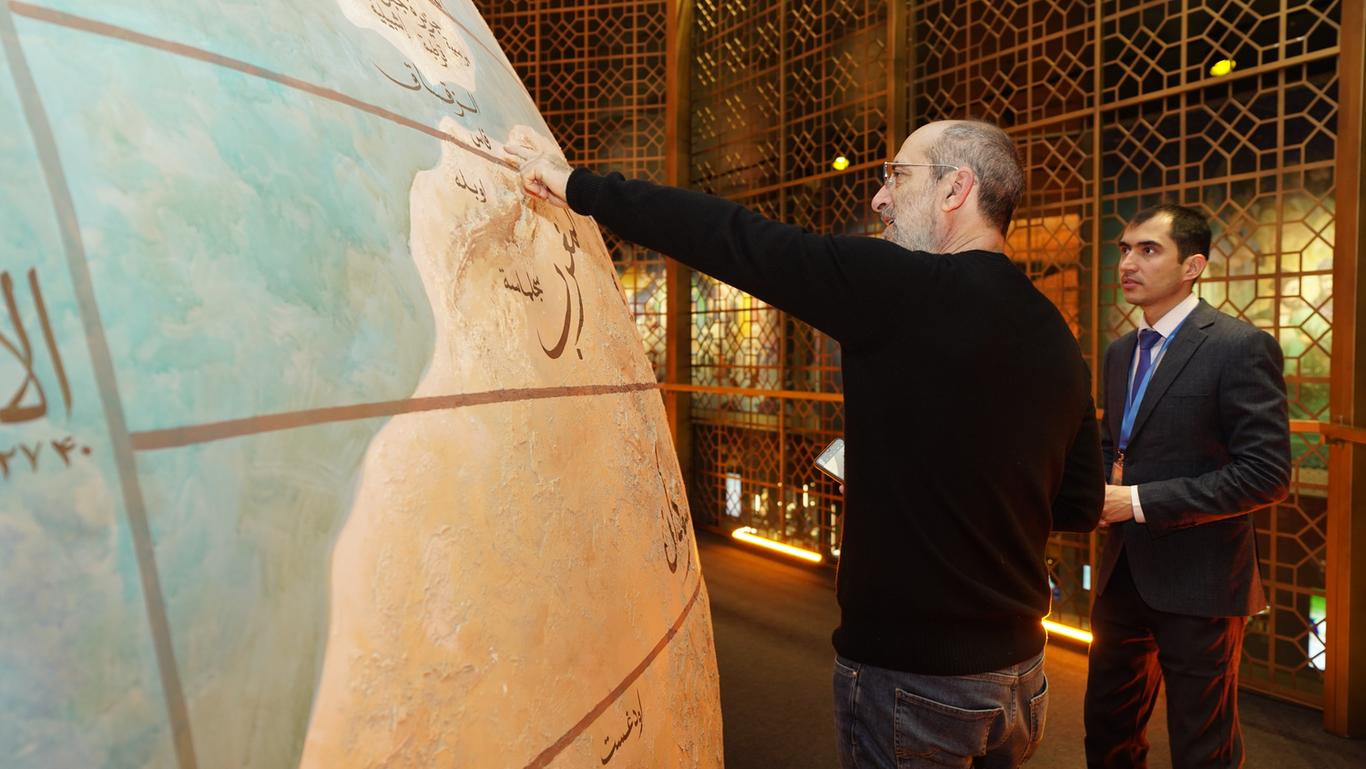
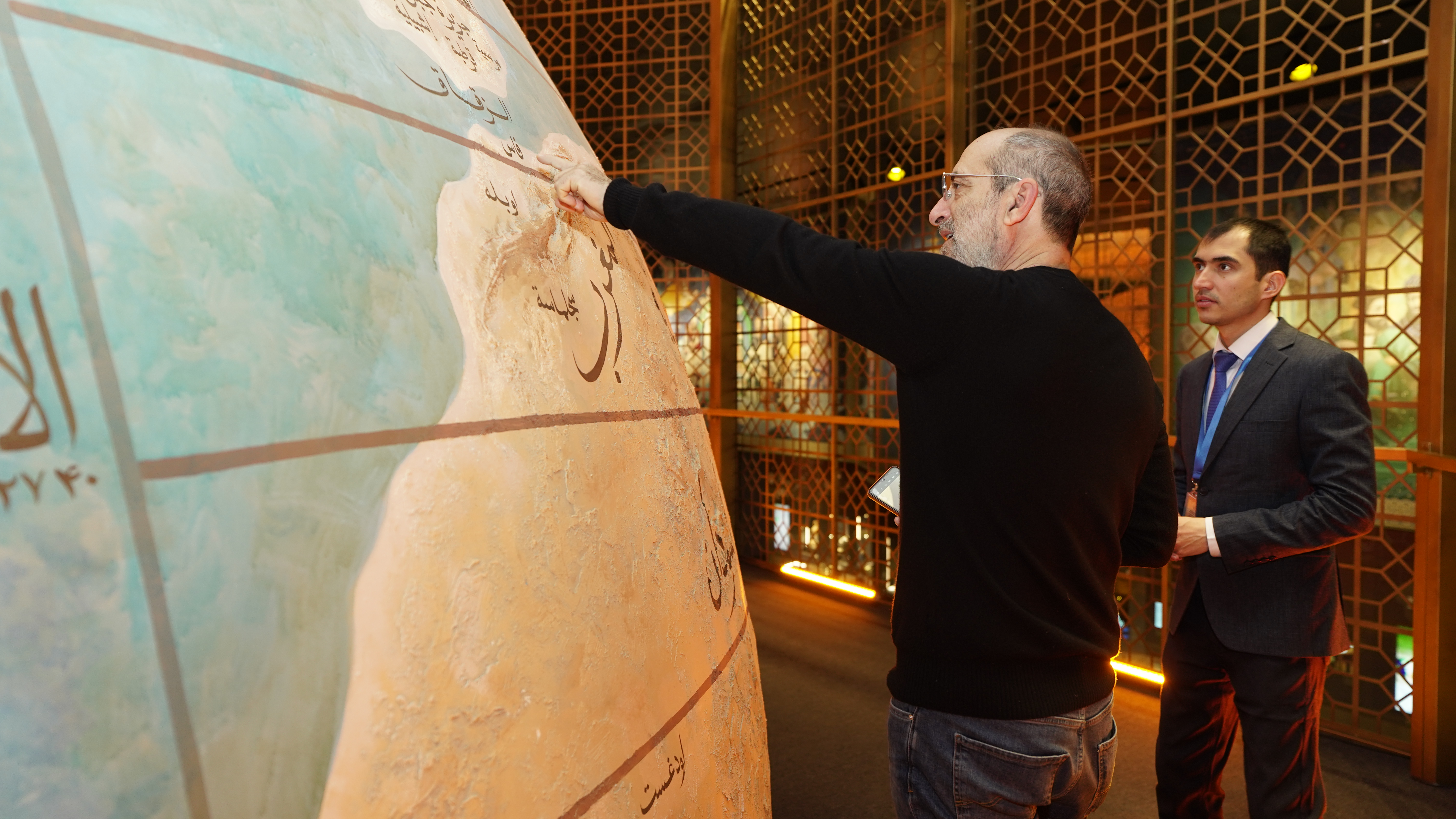
The maps displayed in the First Renaissance section also captured the delegation’s attention. The globe of al-Biruni, along with three significant maps presented on the “Science Wall” — the map from Mahmud al-Kashgari’s “Dīwān Lughat al-Turk,” the world map from the era of Caliph al-Ma’mun, and the famous cartographic work of al-Idrisi — generated strong interest among the visitors. Professor Di Branco particularly emphasized that the scientifically accurate reconstruction of al-Biruni’s globe in its original form vividly demonstrates the scholar’s unparalleled intellectual capacity.
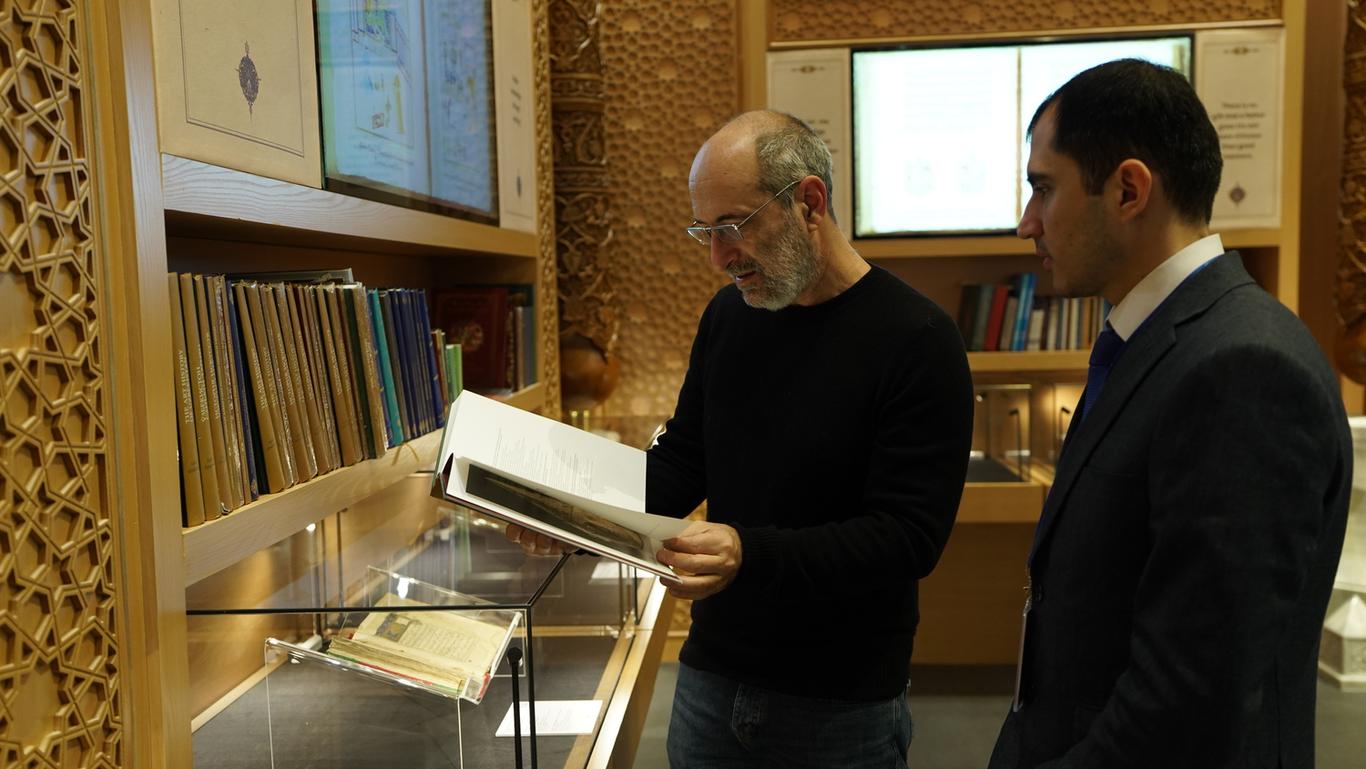
In addition, the Timurid-era library in the Second Renaissance section, together with the original historical books, manuscripts, scholars’ works, waqf documents, and lithographic publications preserved there, drew significant interest from the delegation.
Professor Marco Di Branco, Sapienza University of Rome:
“Here, you not only gain knowledge, but also acquire new scientific and cultural perspectives. The way art and history are presented to the public is profoundly impactful. I believe this experience is also important for other countries. The monument that impressed me the most was the Qur’an of Caliph Uthman.
Islamic civilization is one of the most significant civilizations in human history. This Center provides a unique opportunity to study it in depth and from multiple perspectives. I also observed many materials in the museum connected to Europe and Italy. For example, the world map created by al-Idrisi for the Norman King Roger of Sicily, as well as sources related to Galen, Ibn Sina, and other scholars who played a crucial role in the European Renaissance. In my view, a true leader must build for the benefit of his people. This museum stands as a vivid symbol of the idea that authority should serve the people.”