


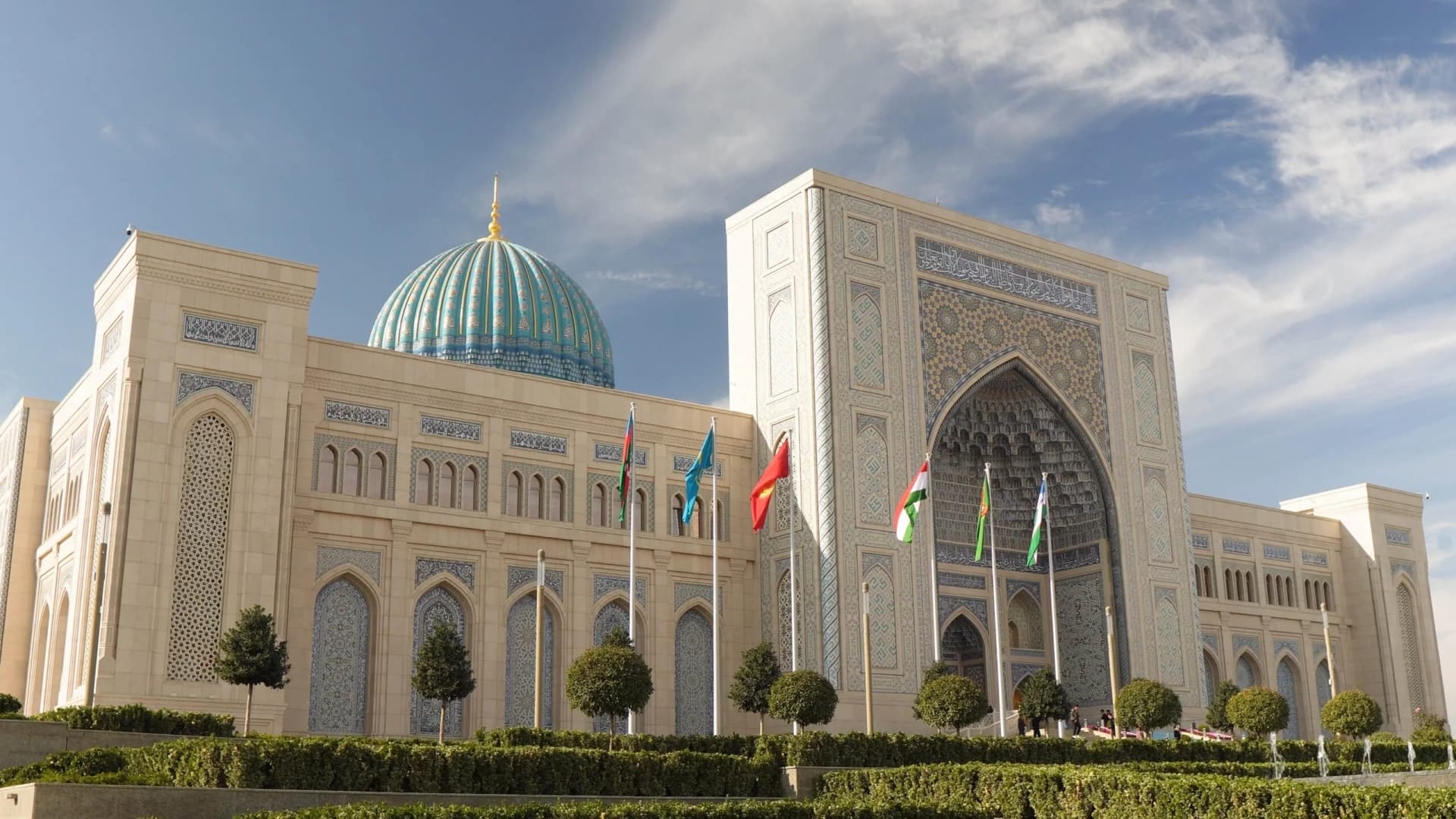


Answers to millennium-old questions about society at the Islamic Civilization Center
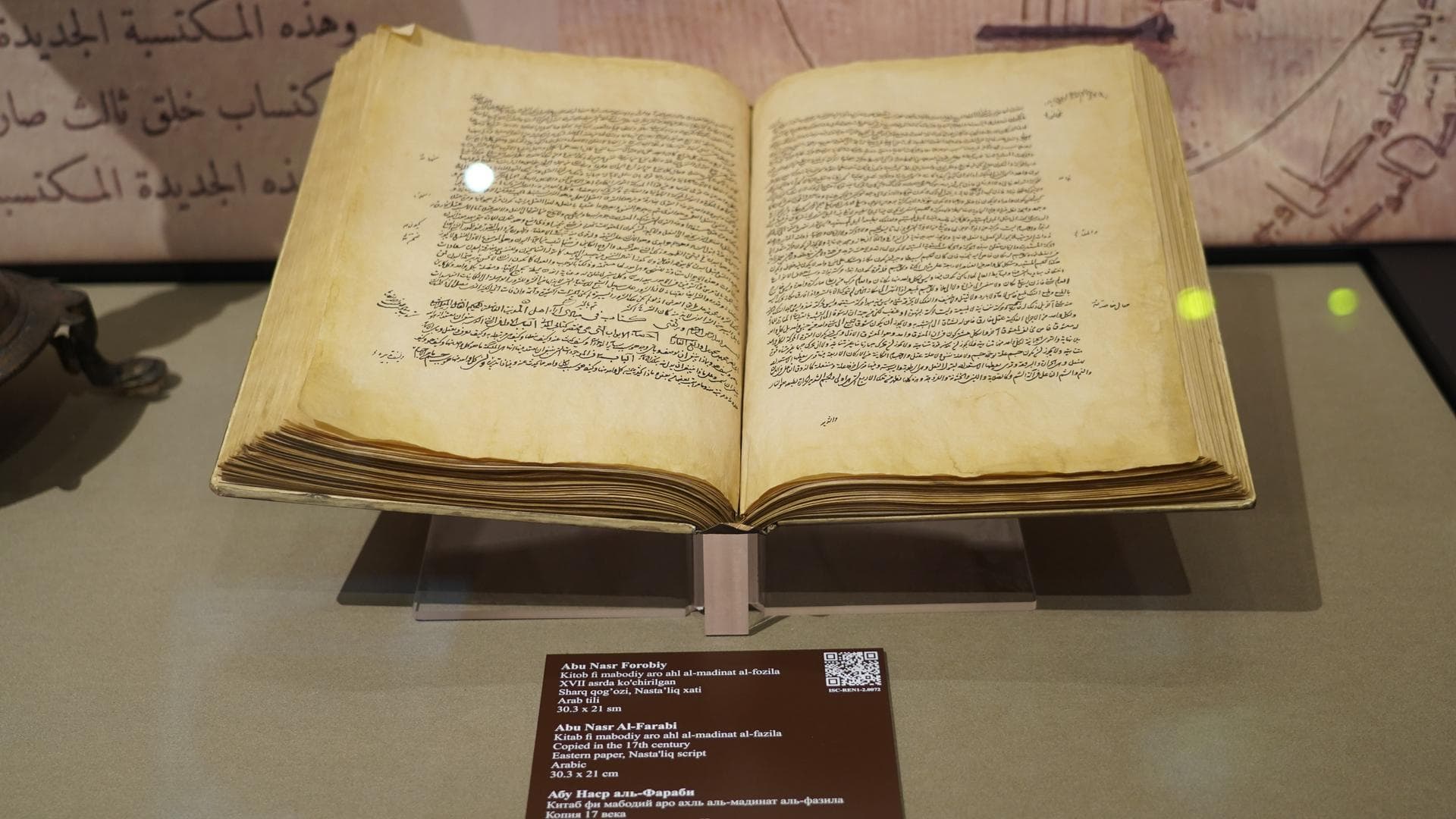
When discussing the improvement of society, many people think of laws or systems of governance. Al-Farabi, however, reached a different conclusion centuries ago: in order to transform society, one must first transform the individual.
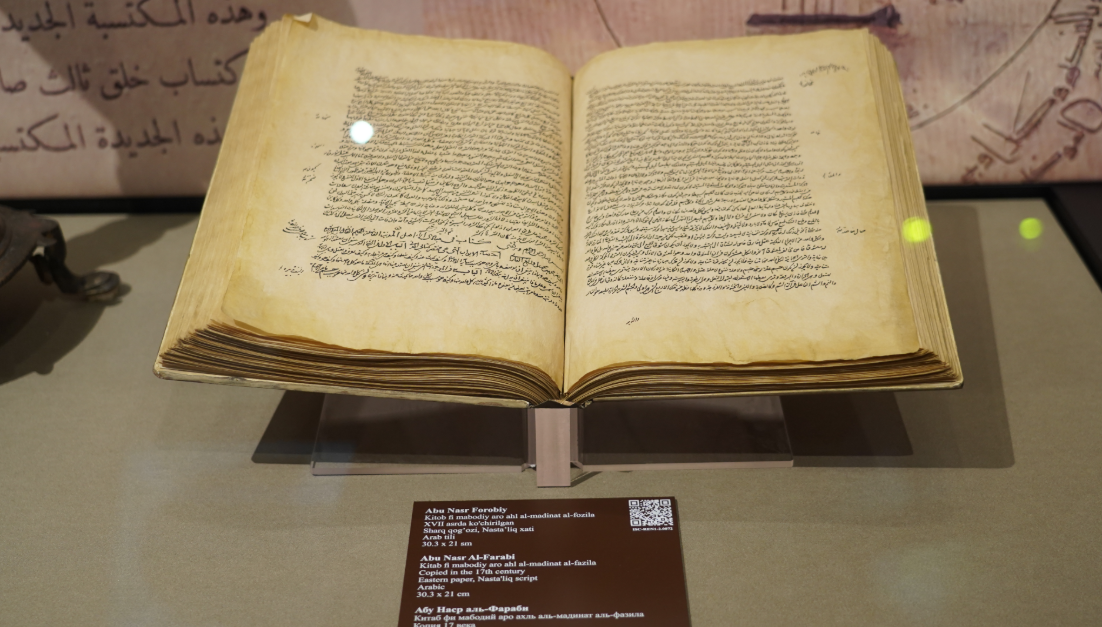
This idea is consistently and eloquently expressed in one of his most famous works, “Kitab fi Mabadi Ara Ahl al-Madina al-Fadila” (“The Virtuous City”). The book is not about urban planning or state structure in a narrow sense; rather, it is a profound reflection on the governance of society.
Today, this work is presented to the public through the Abu Nasr al-Farabi exhibition in the First Renaissance section of the Islamic Civilization Center in Uzbekistan. The exhibition features a manuscript copy of the work transcribed in Arabic in the 17th century.
According to al-Farabi, the highest goal of society is to lead people toward true happiness. However, this happiness is not measured by wealth or status, but by knowledge, intellect, and moral character. Therefore, when speaking of the “virtuous city,” he first describes the virtuous individual.
In the work, the leader occupies a central position. Al-Farabi views the leader not merely as an administrator, but as a model for society. If the leader is upright, the surrounding environment will also develop in a sound manner.
Al-Farabi believed that a leader must first possess intelligence and wisdom. He must understand the essence of things and be capable of resolving complex issues. A leader should retain knowledge and experience, not be forgetful, grasp situations quickly, and make sound decisions. At the same time, he must express his thoughts clearly and convincingly, guiding people toward the right path through speech.
From a moral standpoint, the leader must be just, refrain from oppression, and never deviate from truth. Al-Farabi emphasizes that a leader should not seek praise, pursue selfish desires, or act for personal gain, but should strive solely for goodness. In difficult times, he must remain firm and resolute in his decisions.
Al-Farabi also pays attention to the physical condition of the leader. He should be healthy, capable of fulfilling his duties, maintain open relations with the people, be generous, and prioritize the interests of society over personal interests.
In al-Farabi’s view, if these qualities are united in one individual, he can guide society toward true perfection. If such a person cannot be found, the one possessing the greatest number of virtuous qualities may assume leadership. In certain cases, he also considers collective governance to be appropriate.
Fakhriddin Ibragimov, Doctor of Philosophy in History:
“In his 17th-century manuscript of ‘The Virtuous City,’ al-Farabi focuses less on how society should be governed and more on what kind of person an individual should be. He evaluates both the leader and the ordinary person by the same standard intellect and morality. In this respect, the work was far ahead of its time. It is conceptually close to Plato’s ‘The Republic,’ yet enriched with distinctly Eastern ideas of responsibility and moral upbringing.”