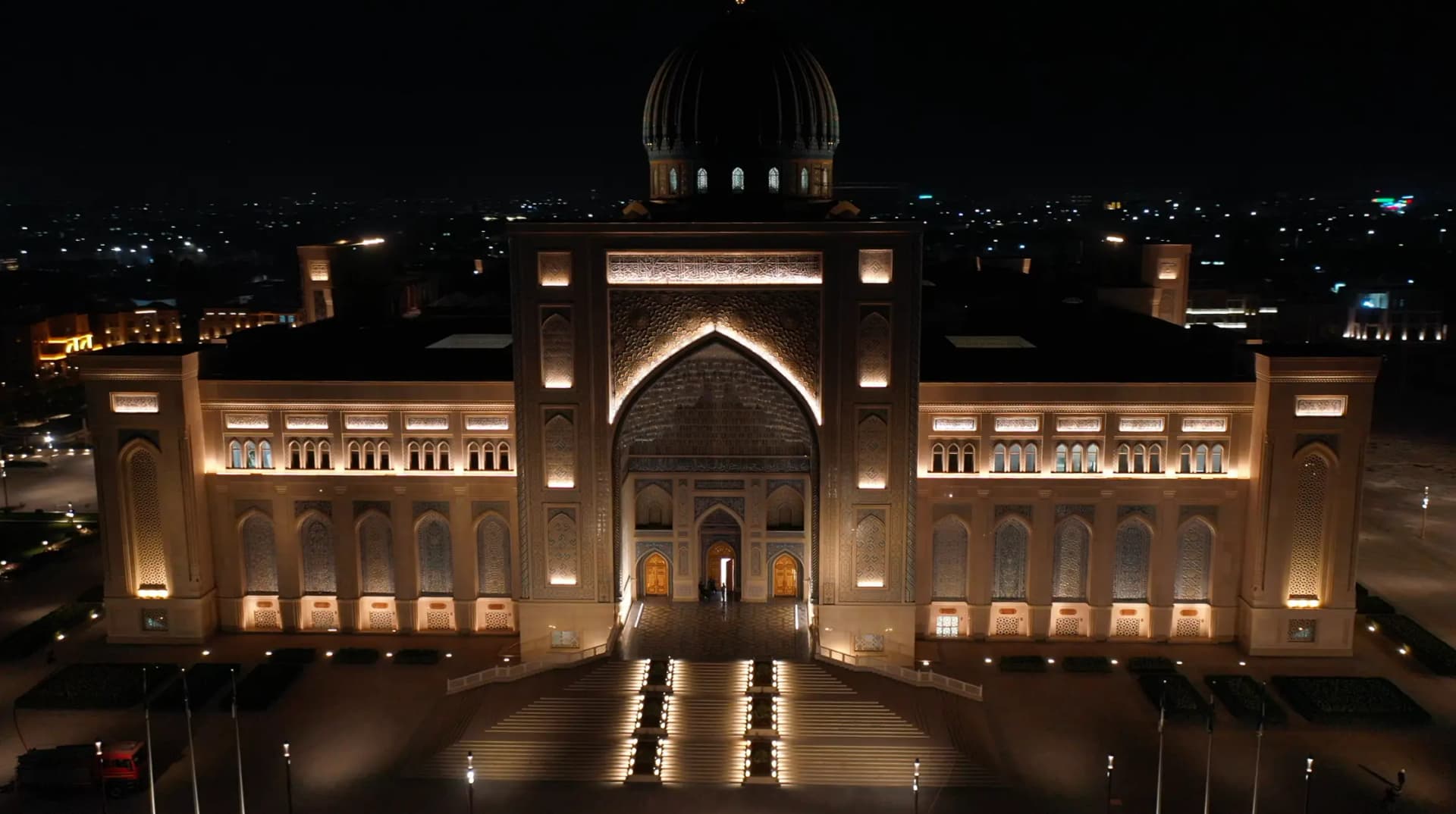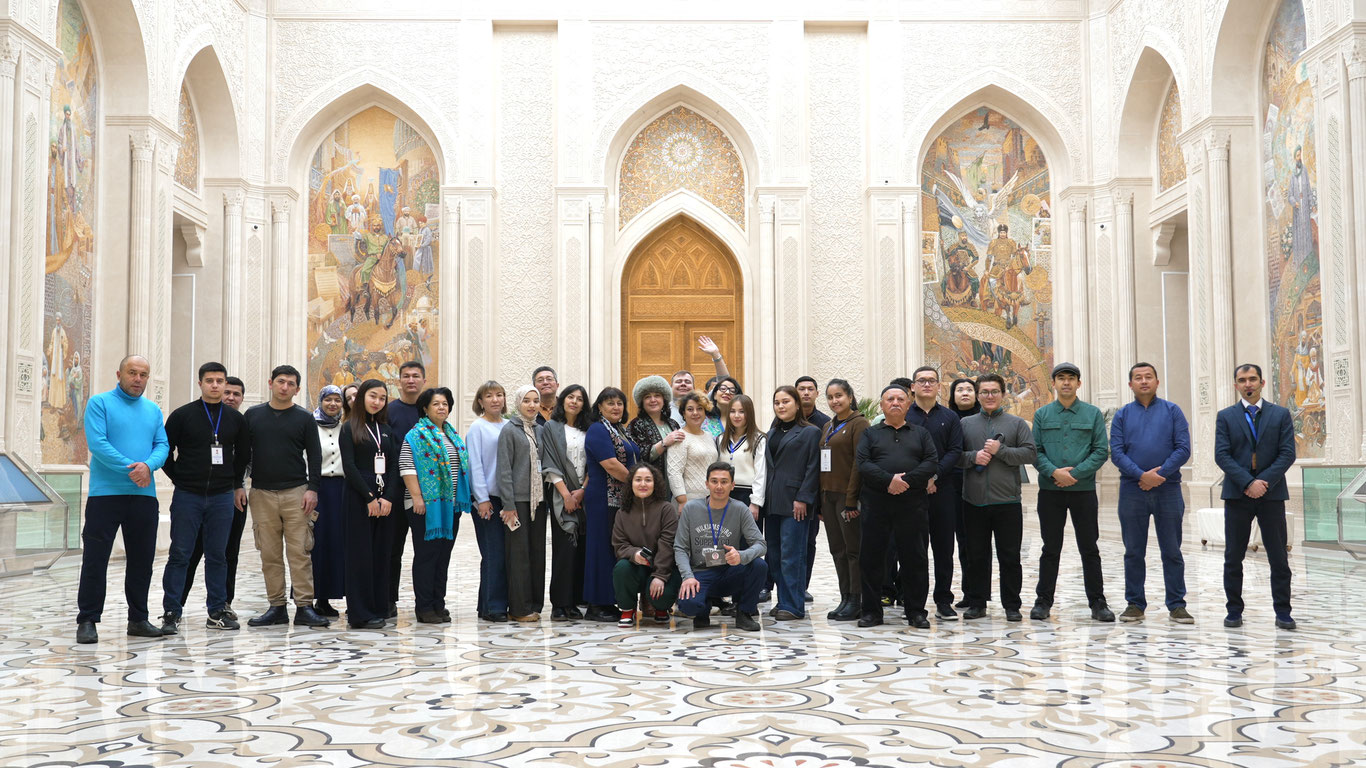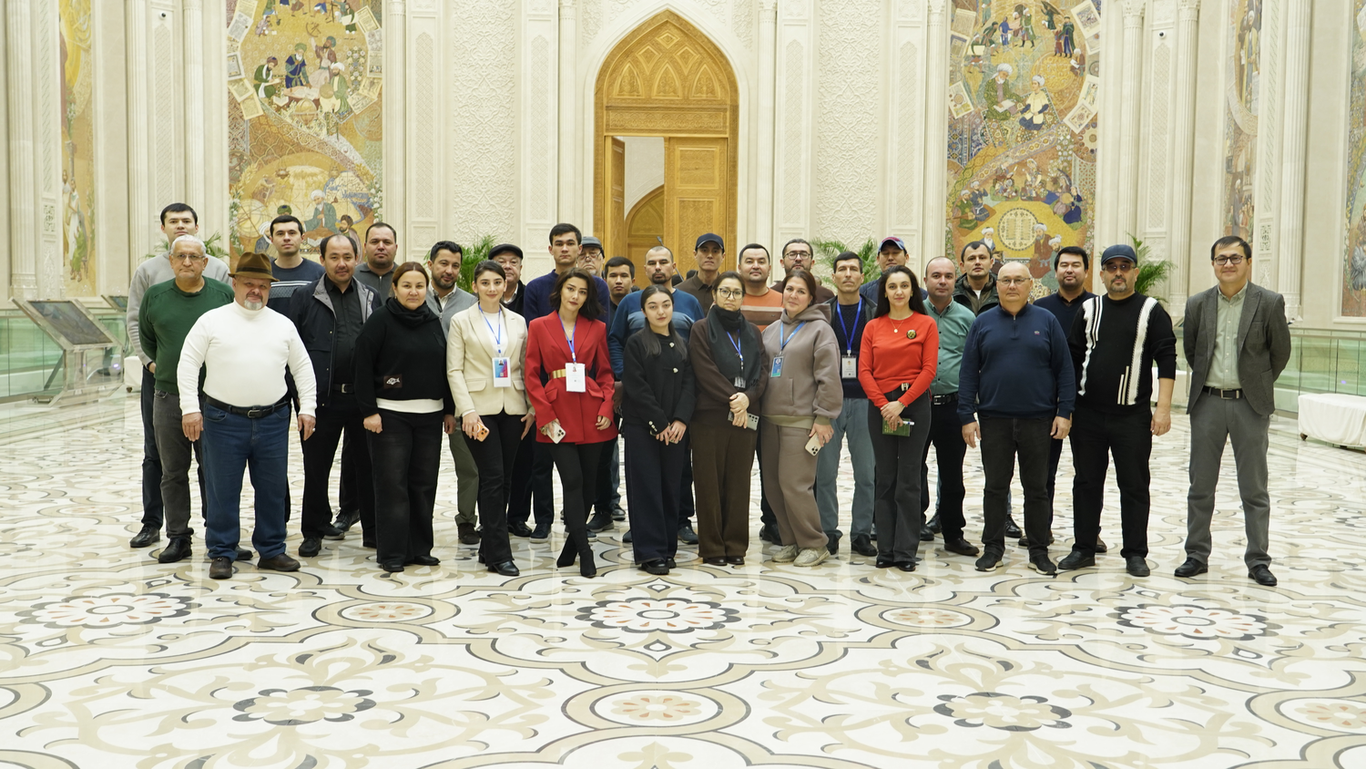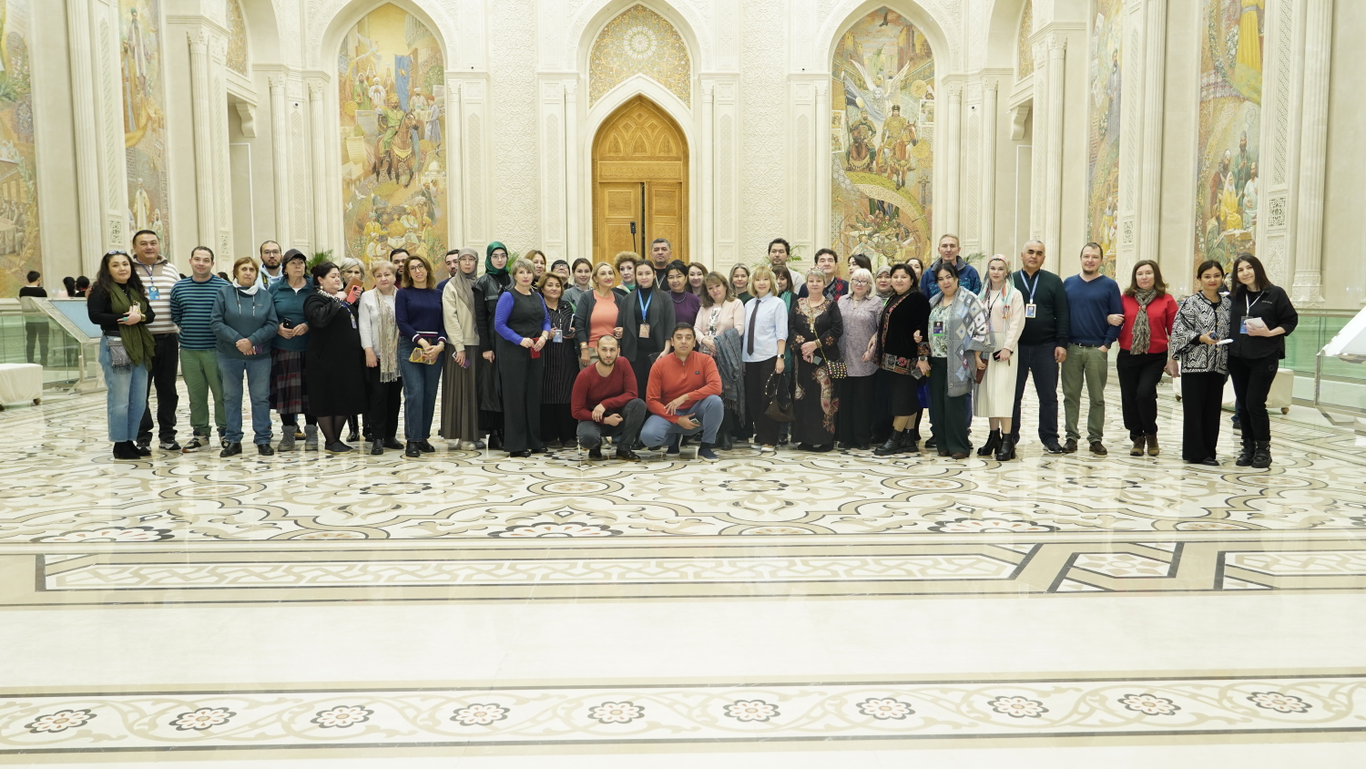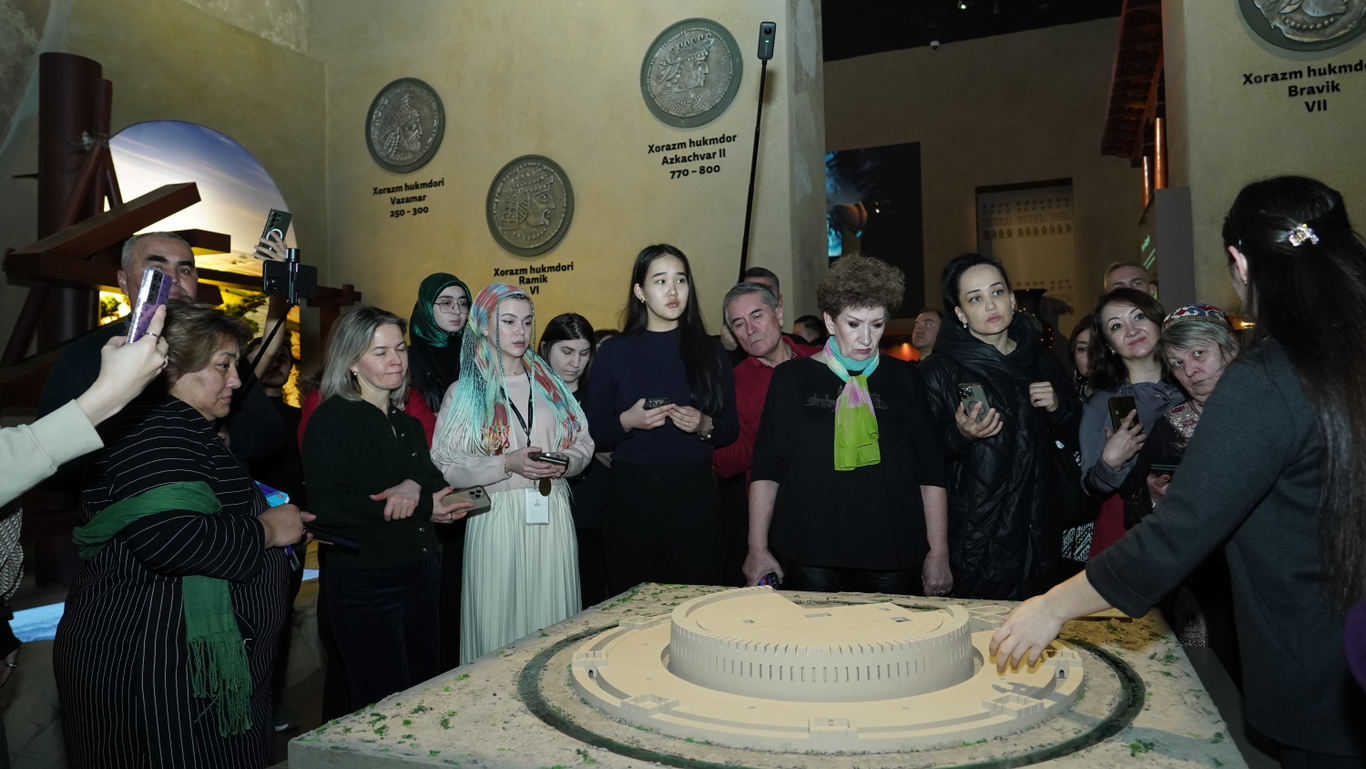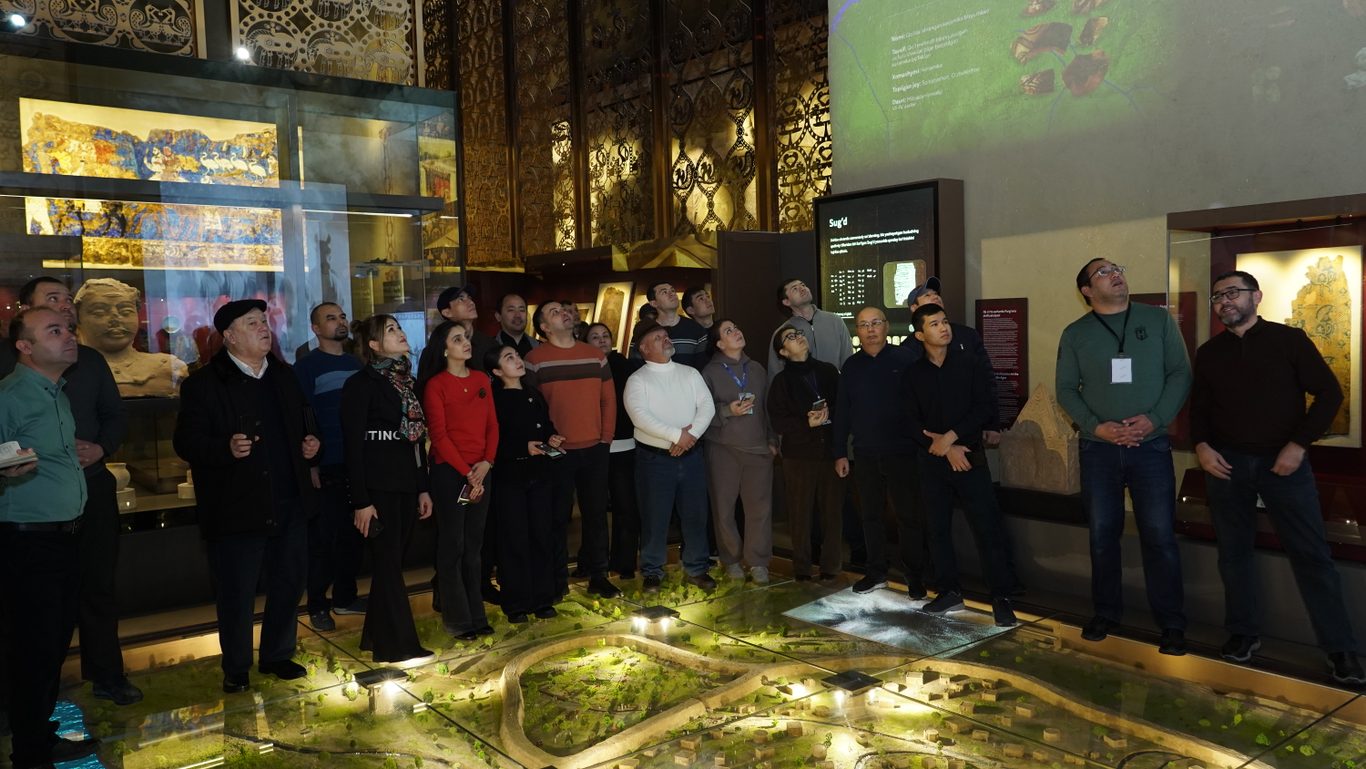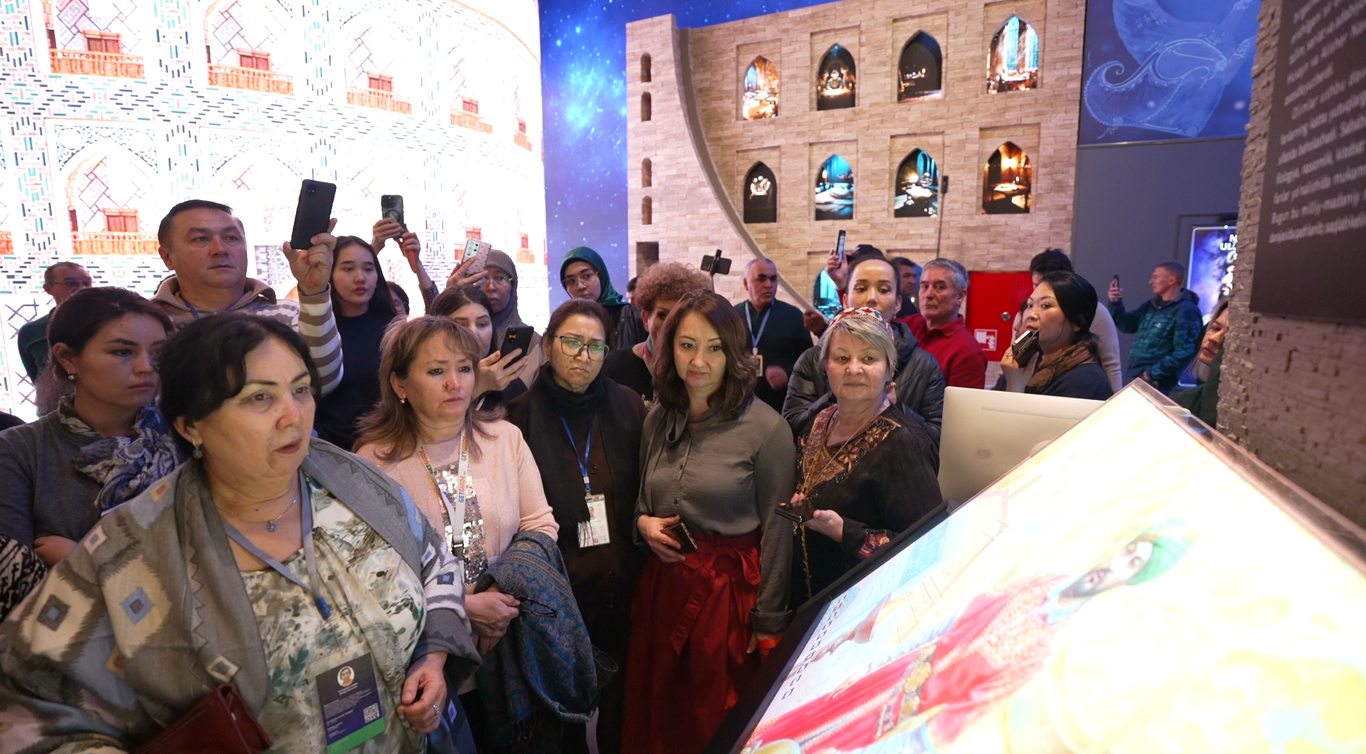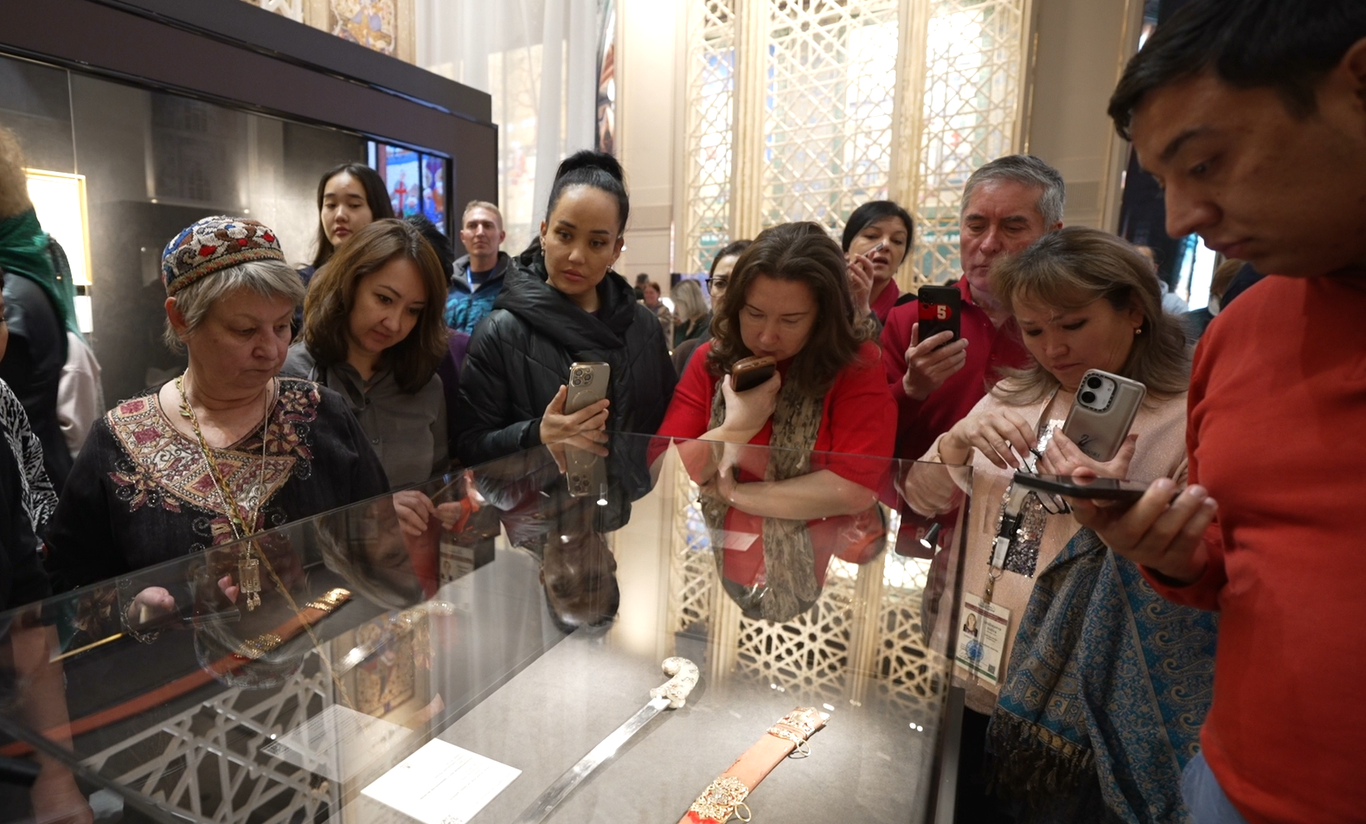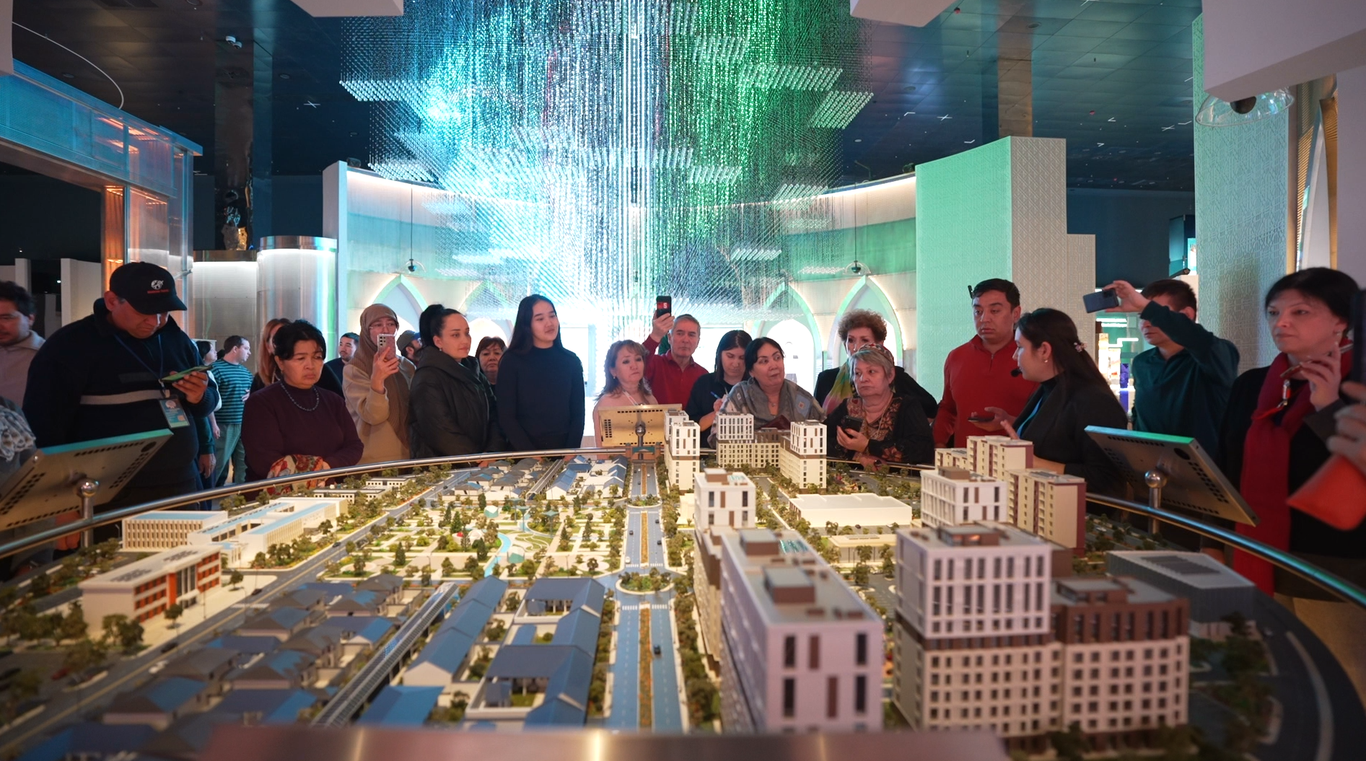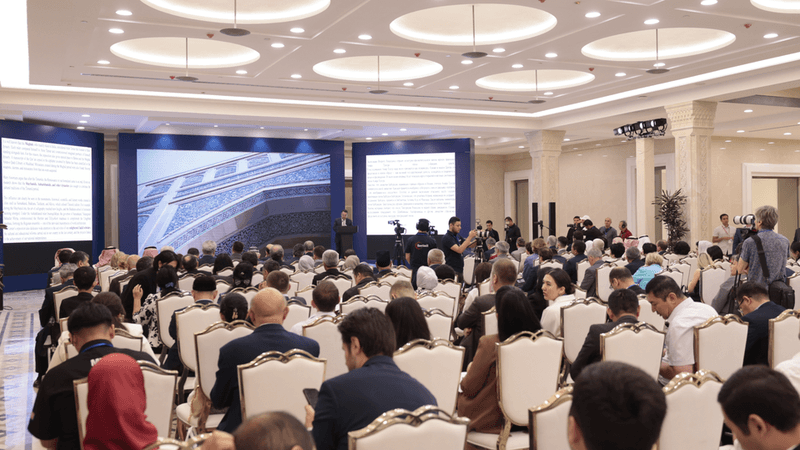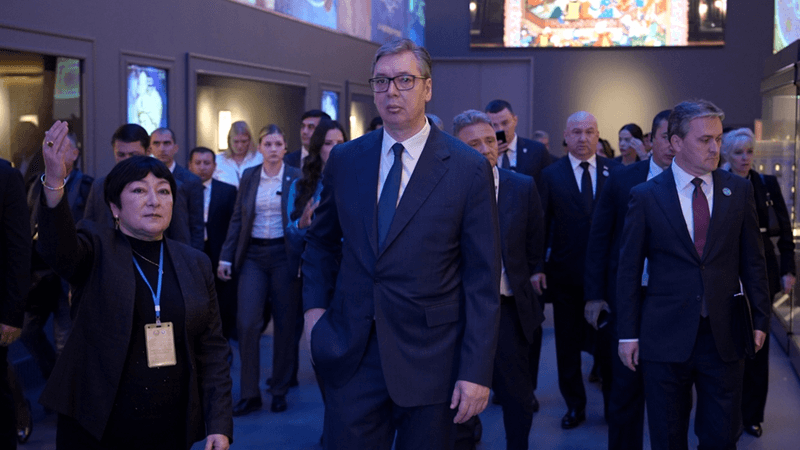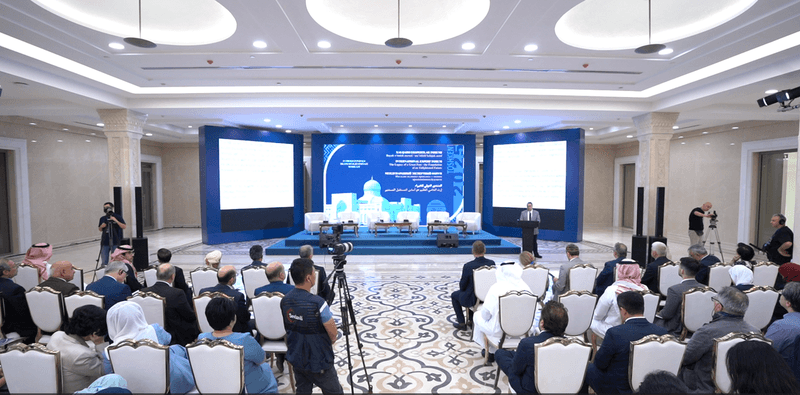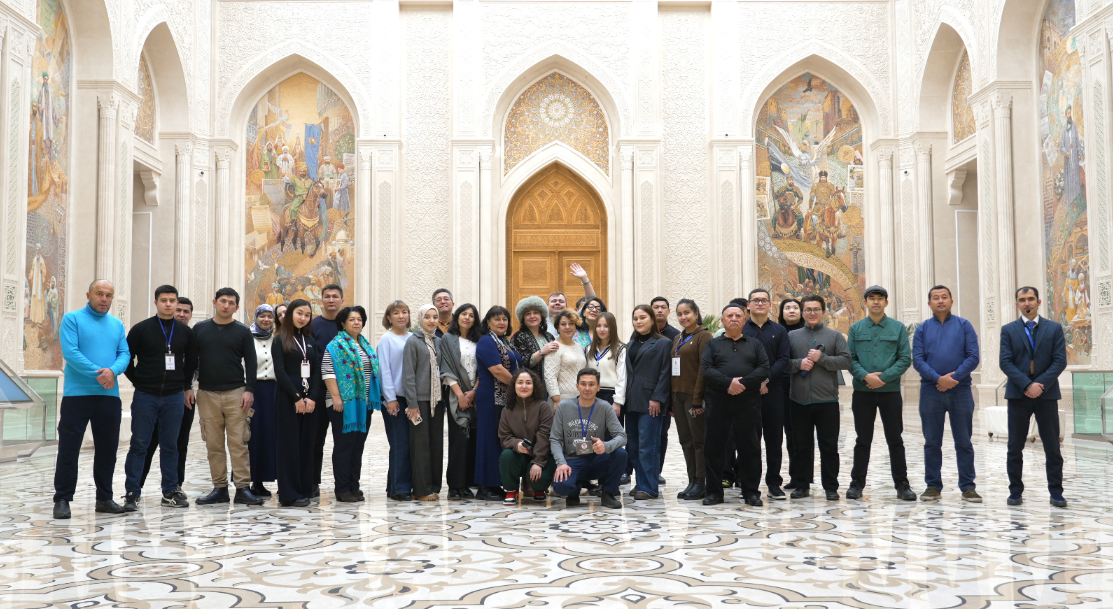
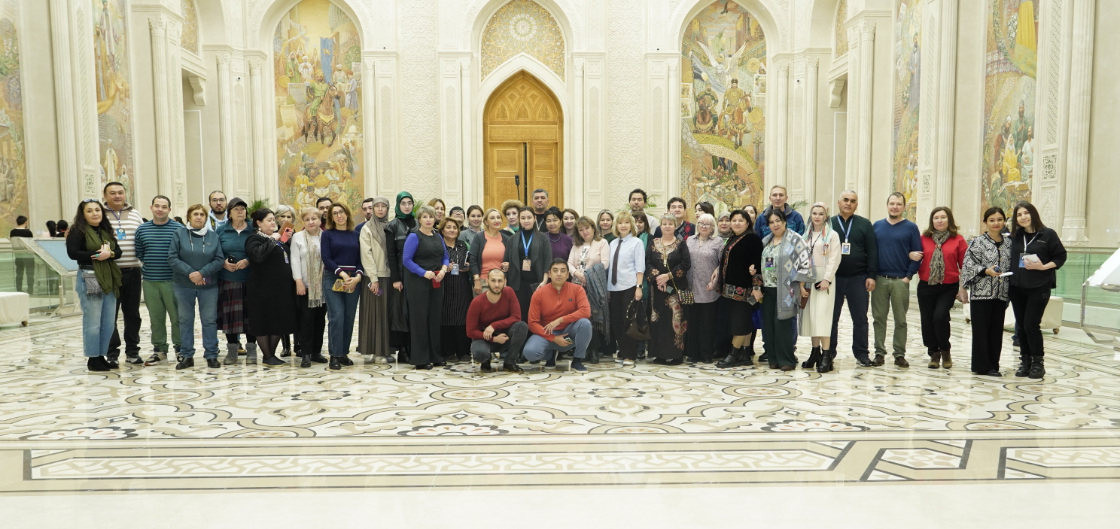
 Nearly 200 guides operating across the republic visited the Islamic Civilization Center in Uzbekistan. During the visit, an open dialogue was held with the participation of the Center’s Director, Firdavs Abdukhalikov, and the guides.
This familiarization tour, organized at the initiative of the Tourism Committee, allowed the participants to closely explore the Center’s exhibitions, its scientific concept, and its environment harmonized with modern technologies. They assessed it as a new stage in the development of the country’s tourism. According to the guides, the Islamic Civilization Center in Uzbekistan, established at the initiative of President Shavkat Mirziyoyev, is not an ordinary museum — it is a new-format educational space where one can engage face-to-face with history, feel it, and understand it.
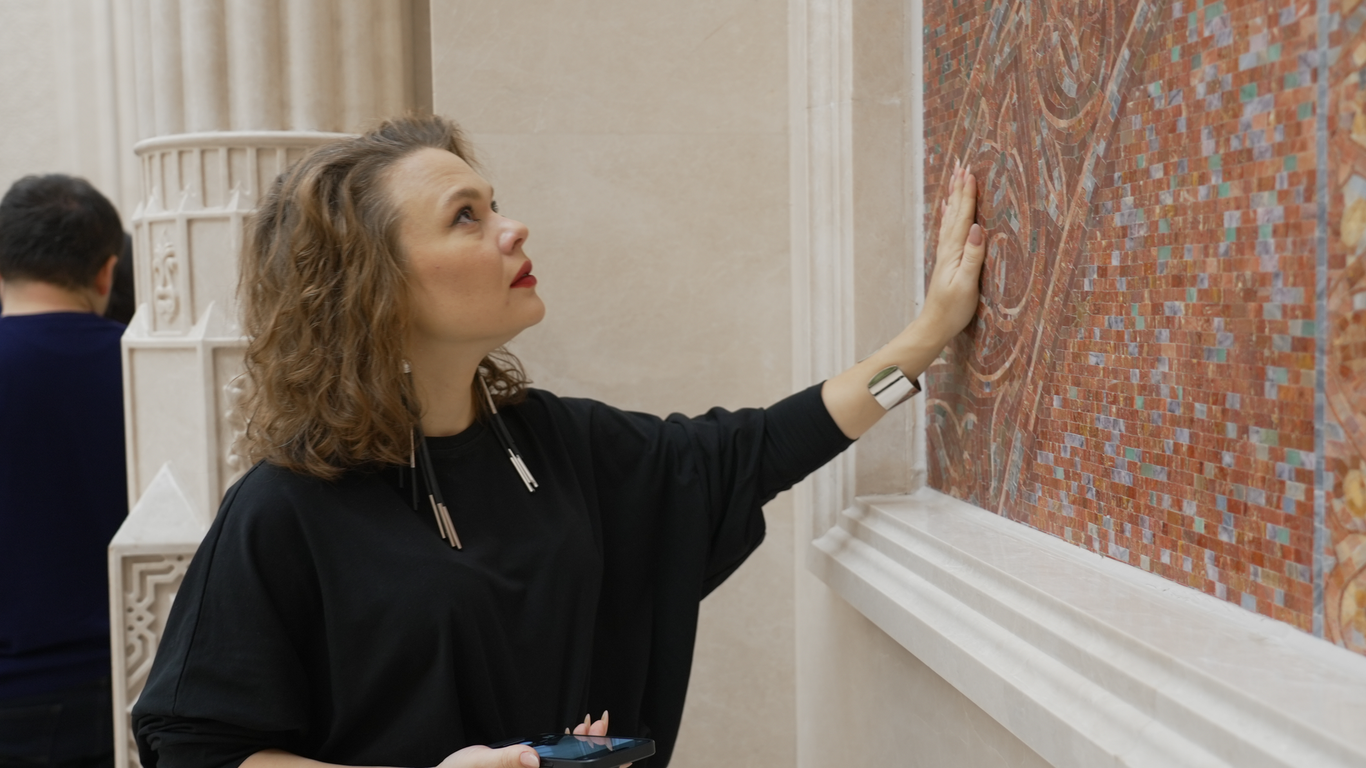
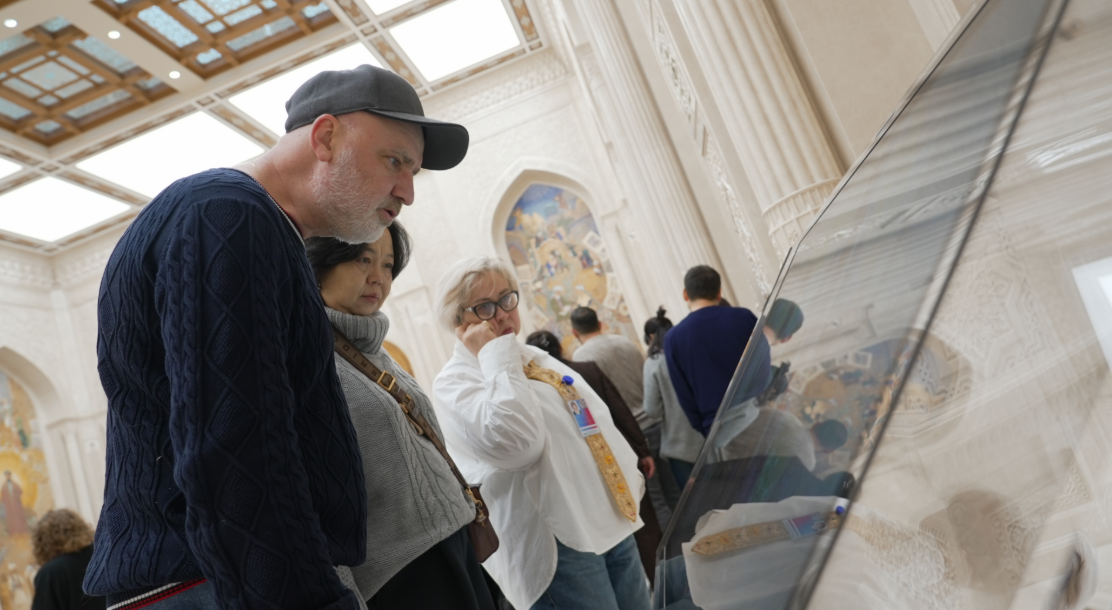 The place that impressed the guides the most was the 14-arched mosaic “Hall of Honor.” The architectural grandeur of the hall, the mosaic panels depicting scholars and historical figures, as well as the presentations integrated with digital technologies, left a strong impression.
Veteran guide Zohir Rajabov, with nearly 60 years of experience, said:
I was amazed when I entered the Center. We have seen it many times from the outside, but the impression inside is tremendous. One or two hours are not enough here. You live with history for three or four hours. The “Hall of Honor” especially made a powerful impact. I would recommend young guides to обязательно visit this place and gain knowledge. I thought that after many years of working in this field, I knew quite a lot. But today I learned new information again. This is a significant place not only for Tashkent but for the entire republic.
Muhabbat Hasanova, who worked at the State Museum of the History of the Timurids and the State Museum of the History of Uzbekistan and now works as a local guide, emphasized the Center’s unique features:
A museum is a cradle, a place where you stand face-to-face with the past. But the Islamic Civilization Center is different. Here, you do not just see history — you feel it. A large part of the exhibits has been brought from different countries around the world. Archaeological findings confirm that our civilization has a history of at least three thousand years. Passing this heritage on to the younger generation is our duty.
Guide Ja’far Begaliyev highlighted the growing responsibility in the tourism sector:
Tourism is developing, and the number of guides is increasing. But simply being a guide is not enough. Continuous study and knowledge improvement are essential. Whatever question a guest asks, you must provide a clear and reliable answer. Behind every hall here lies a vast history, which requires deep knowledge and responsibility. That is why we came to familiarize ourselves closely with the Center’s exhibitions.
Young guide Iroda Bahriddinova emphasized the Center’s importance for the capital’s image:
Samarkand has Registan, Bukhara has the Ark, and Khiva has Ichan-Kala. Tashkent also needed such a place that combines national identity and modernity. Here, everything is comprehensively covered — from the pre-Islamic periods of Bactria and Sogdiana to the Timurid era and New Uzbekistan. At least one full day should be dedicated to introducing tourists to this place, because it reflects an immense history.
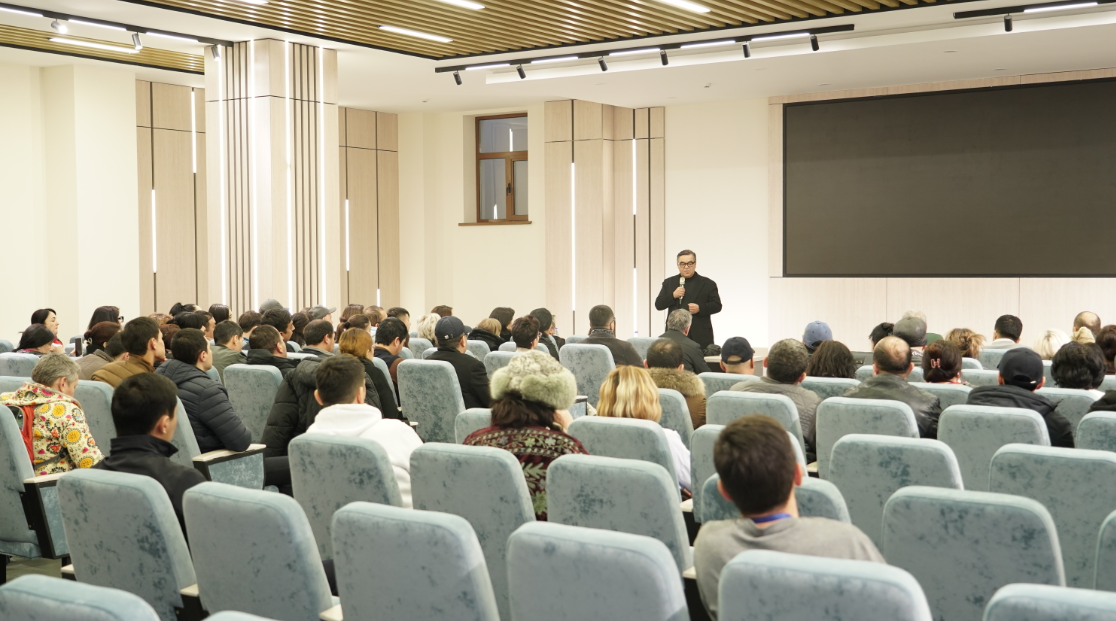 After touring the exhibitions, an open dialogue was held between Director Firdavs Abdukhalikov and the guides. At the beginning of the discussion, he emphasized the importance of organizing cooperation in a spirit of partnership. Issues such as improving excursion routes, preparing additional explanatory materials for certain exhibitions, expanding guide services in foreign languages, and organizing professional development seminars for young guides were discussed.
The guides shared their impressions, practical suggestions, and feedback regarding the Center’s activities.
They stressed the importance of clarifying the museum’s working schedule and establishing a stable regime for visitors.
Suggestions were made to improve the entry and exit system, install clear directional signs for main and additional doors, and prevent congestion when large groups arrive. It was also proposed to organize a separate exit route.
Based on the experience of historical complexes in Samarkand and Bukhara, it was proposed to install shaded areas outdoors during the summer season and to manage visitor flow so that guests can rest briefly before entering in an orderly manner.
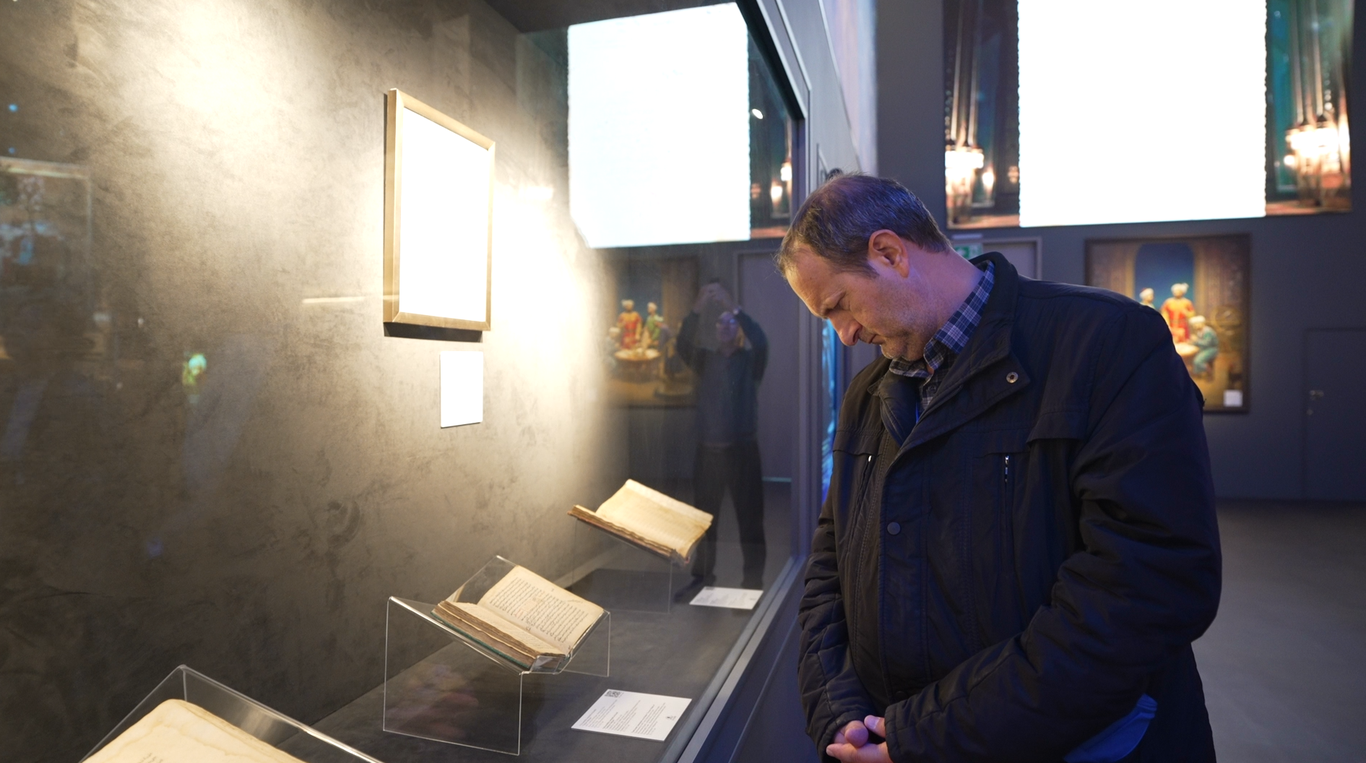
Inside the museum, it was suggested to introduce clear directional indicators and a 3D interactive map system for visitors who do not use guide services. This would allow them to independently obtain detailed information about the exhibitions, including the location where the Qur’an is preserved and other key sections.
In addition, the idea of creating an electronic map or mobile application providing information about external infrastructure — bus stations, parking areas, hotels, restaurants, and other service facilities — was supported.
Increasing the number of volunteer guides and regularly organizing training seminars for young specialists were also considered.
At the conclusion of the meeting, Director Firdavs Abdukhalikov expressed gratitude for the guides’ sincere opinions and proposals and noted that work to enrich the exhibitions and improve service quality would continue systematically.
The proposals voiced are very important for us. We will consistently continue efforts to enrich the exhibitions and enhance service quality. It is also appropriate to provide visitors with clear and accessible information not only about the exhibitions but also about the construction of the Center, the craftsmen involved, key facts, and its scale. This information is interesting and significant for visitors. We will continue our cooperation in a systematic manner.
As noted during the dialogue, the Islamic Civilization Center will undoubtedly serve the development of the country’s tourism. Its opening is expected to mark the beginning of a new stage in national tourism development.