


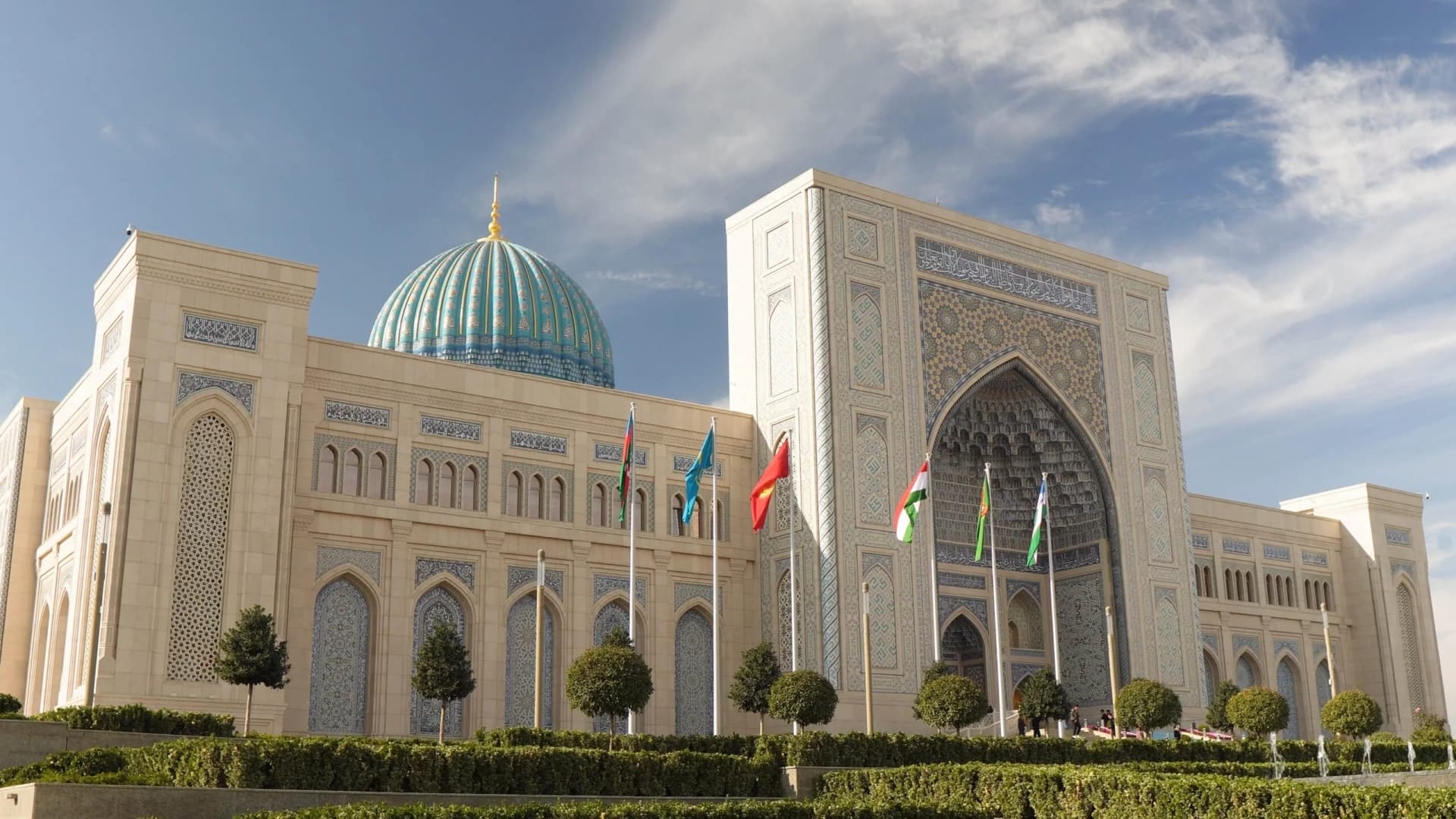

It Is Possible to Witness the Truth Proven by Archaeological Evidence in the Exhibition
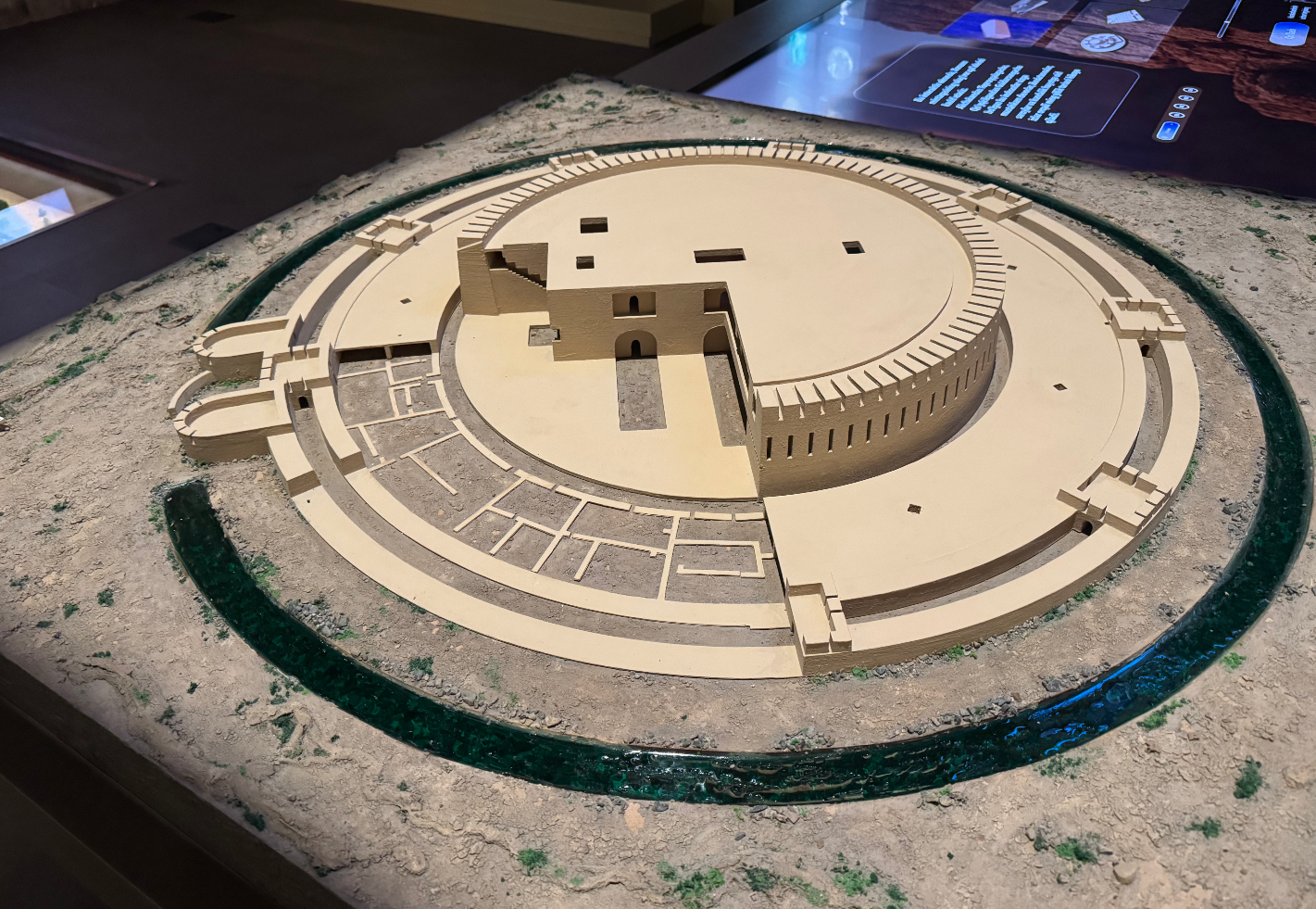
Archaeological evidence confirms that the most ancient and unique structure devoted to the scientific study of the secrets of the sky in the 4th century BCE was Koy-Krylgan Kala, located in the territory of ancient Khorezm in Central Asia. A model of this ancient observatory is displayed in the exhibition of the Islamic Civilization Center in Uzbekistan.
An observatory is a special scientific structure built to observe and scientifically study celestial bodies, including the Sun, the Moon, planets, and stars — their movements, positions, and governing laws. Such structures have played a crucial role in the history of human civilization, serving as key centers for determining time, creating calendars, predicting natural phenomena, and advancing scientific knowledge. Observatories laid the foundation not only for astronomy but also for the development of fundamental sciences such as mathematics, geometry, trigonometry, geodesy, and physics. In this regard, Koy-Krylgan Kala, established in the territory of ancient Khorezm, holds special significance as one of the earliest observatories in Central Asia.
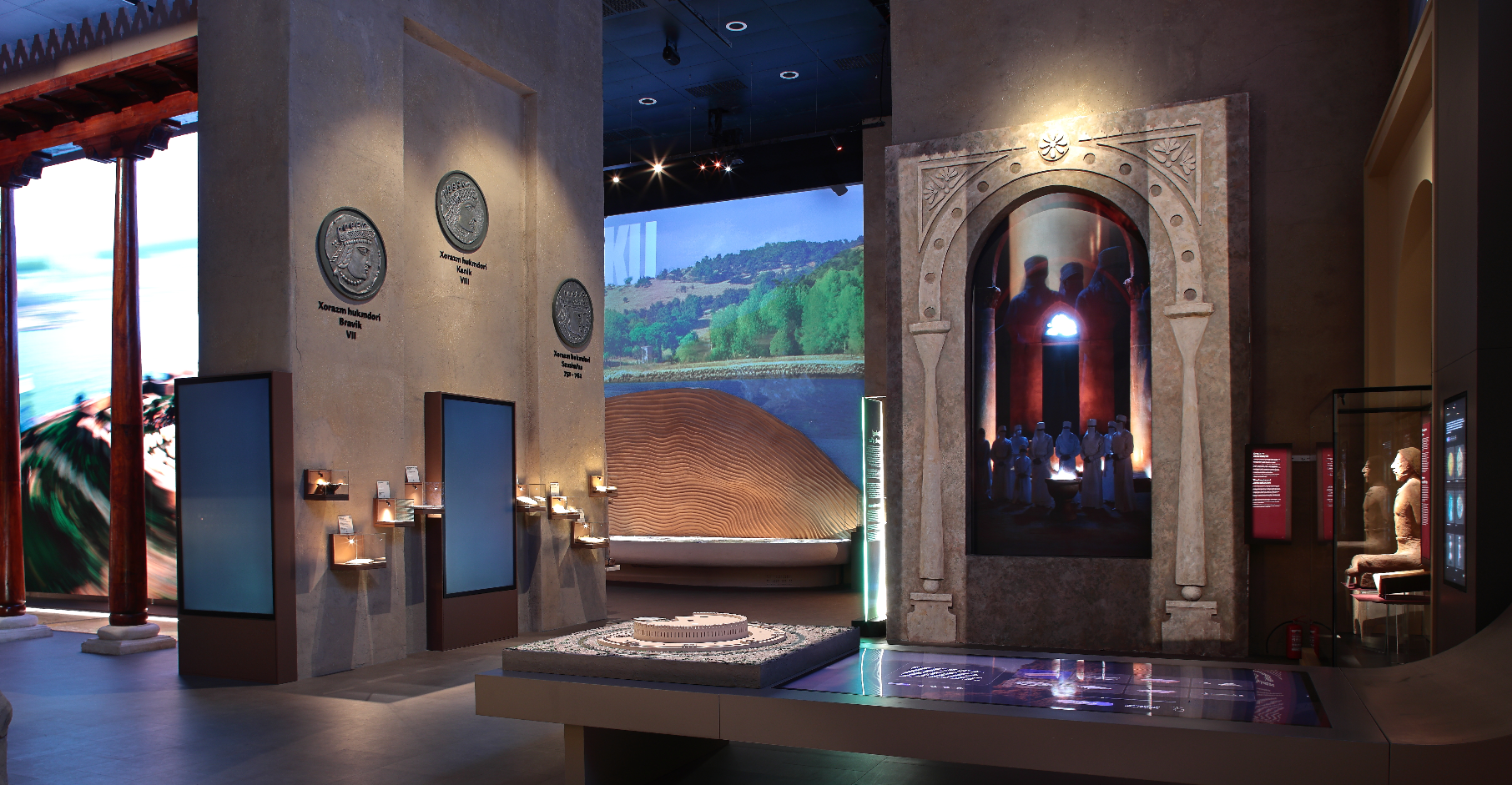
Today, a model of this unique historical monument occupies a place in the section dedicated to pre-Islamic civilizations within the exhibition of the Islamic Civilization Center in Uzbekistan. This demonstrates that even before the advent of Islam, the territory of our country was home to advanced science, sophisticated architecture, and a developed civilization.
 Located in the Ellikkala district of the Republic of Karakalpakstan, Koy-Krylgan Kala stands in the heart of the Turan desert and is one of the most remarkable monuments in the famed “Valley of Fortresses.” It left an indelible mark in history as one of the important political, religious, and scientific centers of ancient Khorezmian civilization. According to archaeological research, the monument dates from the 4th century BCE to the 4th century CE, and some scholarly views suggest that its origins may extend even further back in time.
The architectural structure of the fortress indicates that it was not merely a defensive facility but also a scientific and religious center. It was built in a circular form, with a two-story temple and palace complex at its center, measuring approximately 44.4 meters in diameter. The fortress was surrounded by thick rammed-earth and mudbrick walls, reinforced externally with towers and defensive walls. Such a complex structure, constructed with precise calculations, clearly demonstrates the high level of knowledge and expertise possessed by ancient architects and scholars.
The circular shape of Koy-Krylgan Kala is one of the key indicators that it functioned as an observatory. According to scholars, this design made it possible to accurately observe the movements of celestial bodies, determine the sunrise and sunset, mark the changing of the seasons, and develop a calendar system. The astronomers and scholars who worked here engaged in observing celestial bodies to measure time, study the laws of nature, and draw scientific conclusions.
Excavations have uncovered numerous archaeological finds within the fortress, including pottery, coins, figurines, wall paintings, sacred symbols, and samples of writing. These discoveries testify to the existence of a developed culture, established state traditions, and a well-formed belief system in this region. In particular, the discovery of early examples of ancient Khorezmian script here confirms that the site was not only an observatory but also a scientific and educational center.
Koy-Krylgan Kala was scientifically studied in 1938–1939 by the Khorezm Archaeological-Ethnographic Expedition led by the renowned archaeologist S. P. Tolstov. The results of the expedition confirmed that this monument is one of the most ancient and architecturally sophisticated sites in Central Asia.
Today, through the model of this ancient structure displayed in the exhibition of the Islamic Civilization Center in Uzbekistan, visitors gain a comprehensive understanding of the achievements of our ancient ancestors in astronomy, mathematics, geometry, and architecture, as well as their intellectual potential and scientific heritage.
This historical architectural monument once again confirms that the land of Uzbekistan was one of the major scientific centers that made a significant contribution to the development of human civilization.
Durdona Rasulova
P.S. The article may be reposted on the Center’s official website with a reference link