



The sword of the Kokand Khan returned from London: a masterpiece of Uzbek military craftsmanship on display in the exhibition
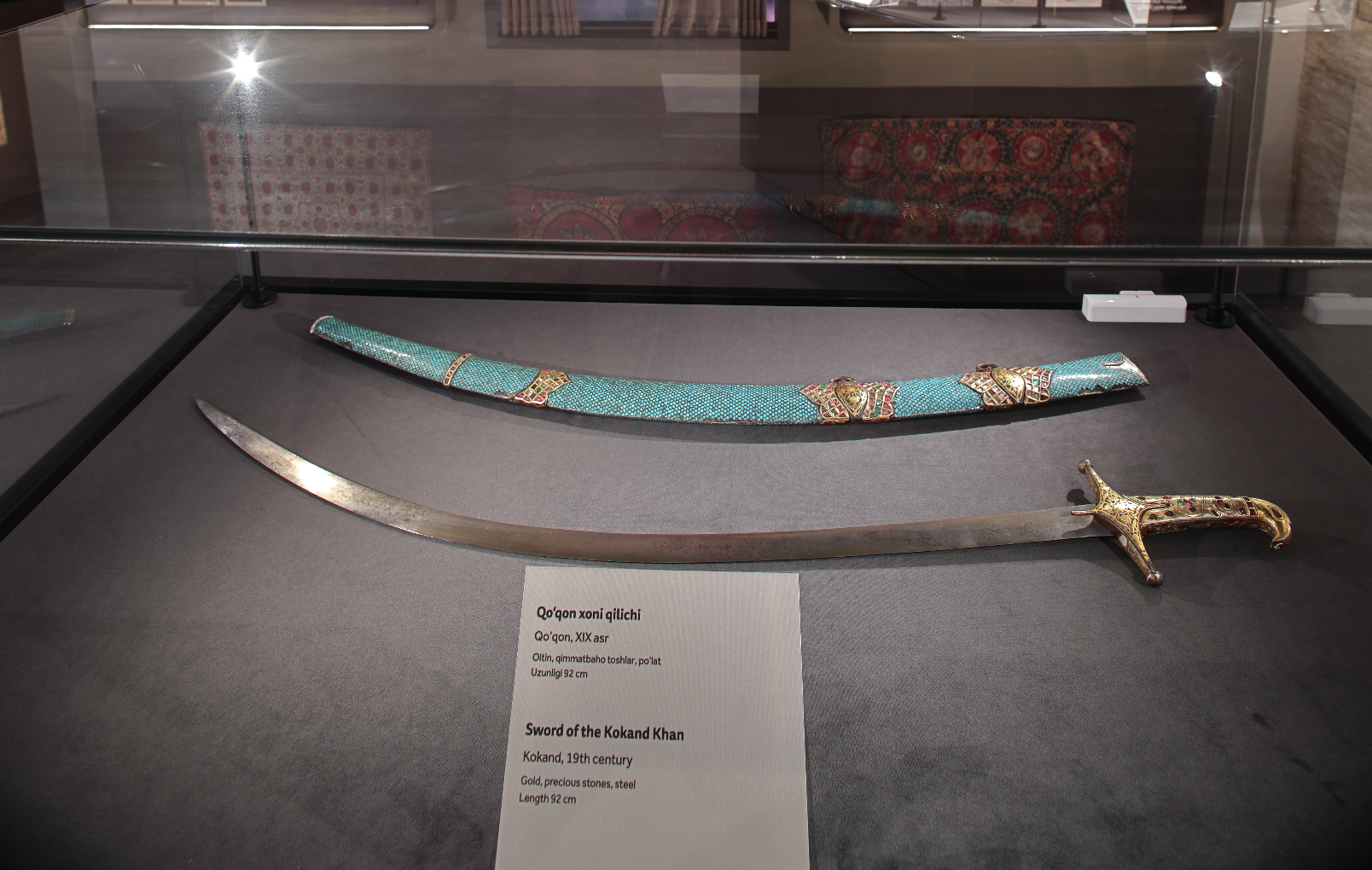 The sword of the Kokand Khan displayed in the exhibition of the Islamic Civilization Center in Uzbekistan dates back to the 19th century and represents an outstanding example of our nation’s military culture and craftsmanship. This exhibit, associated with the Kokand Khanate, is made of gold, precious stones, and steel. The sword measures 92 centimeters in total length. This rare artifact was returned to our homeland from the Amir Muhtashamiy collection in London.
According to researchers, very few swords from the era of Khudoyar Khan have survived. Some sources indicate that two swords belonging to the khan are preserved in Russian museums. The sword displayed in the exhibition was crafted in Shahrisabz, within the territory of the Emirate of Bukhara, in the 19th century, and is also attributed to Khudoyar Khan. This further enhances the historical value of the exhibit.
The fact that the hilt is made of gold and the scabbard is adorned with blue precious stones shows that it was not merely a weapon of war, but a symbol of prestige intended for a ruler. Such swords were often presented as diplomatic gifts to sovereigns. In this regard, the exhibit is also connected with diplomatic relations and the culture of statehood.
In the 18th–19th centuries, the Kokand Khanate was one of the significant political powers in Central Asia and was distinguished by its well-organized military system. By the mid-19th century, the territory of the khanate had expanded, and its population and political influence had increased. A regular army played a decisive role in ensuring state security, protecting borders, and maintaining internal stability.
The armament of the army largely depended on the ruler’s attention. Although in certain periods this sphere did not receive sufficient focus, overall military affairs in the khanate were systematically developed. In terms of the number and quality of weapons, cannons, and firearms, the Kokand army was not inferior to those of Bukhara and Khiva.
The cities and border fortresses of the khanate were surrounded by strong defensive walls and housed permanent garrisons. By the mid-19th century, the number of soldiers in the khanate exceeded 11,000. By the 1860s, the regular army had reached 40,000 troops. This demonstrates the considerable military capacity of the state.
Weapon production in the Kokand Khanate was organized in specialized workshops. In cities such as Kokand, Tashkent, Margilan, and Andijan, there were foundries for casting cannons and manufacturing firearms. Artillery was considered one of the main striking forces of the army. Cannon casting was a complex process carried out by skilled craftsmen.
Sources from the 1860s note that cannons were cast in Kokand with the participation of foreign specialists. Fortress cannons and field cannons differed according to their function. Large cannons were used to defend cities and fortresses, while lighter types were deployed on the battlefield. Gunpowder production was also established, enhancing the combat readiness of the army. The military hierarchy included ranks such as mingboshi (commander of a thousand), yuzboshi (commander of a hundred), and ellikboshi (commander of fifty), operating within a strict chain of command.
In the army of the Kokand Khanate, the sword was regarded as one of the most essential and reliable weapons. It was designed for both cutting and thrusting in combat. From the 6th–7th centuries onward, curved blades became widespread in Eastern states. Their lightness and durability made them effective in battle.
Just as the swords of Samarkand, Axsikent, and Ustrushona were renowned, Kokand swords also gained fame for their quality. Kokand had a special “Swordsmiths’ Quarter,” where skilled masters produced weapons from high-quality steel. Kokand swords were typically 80–90 centimeters in length and were distinguished by their durability and balanced structure.
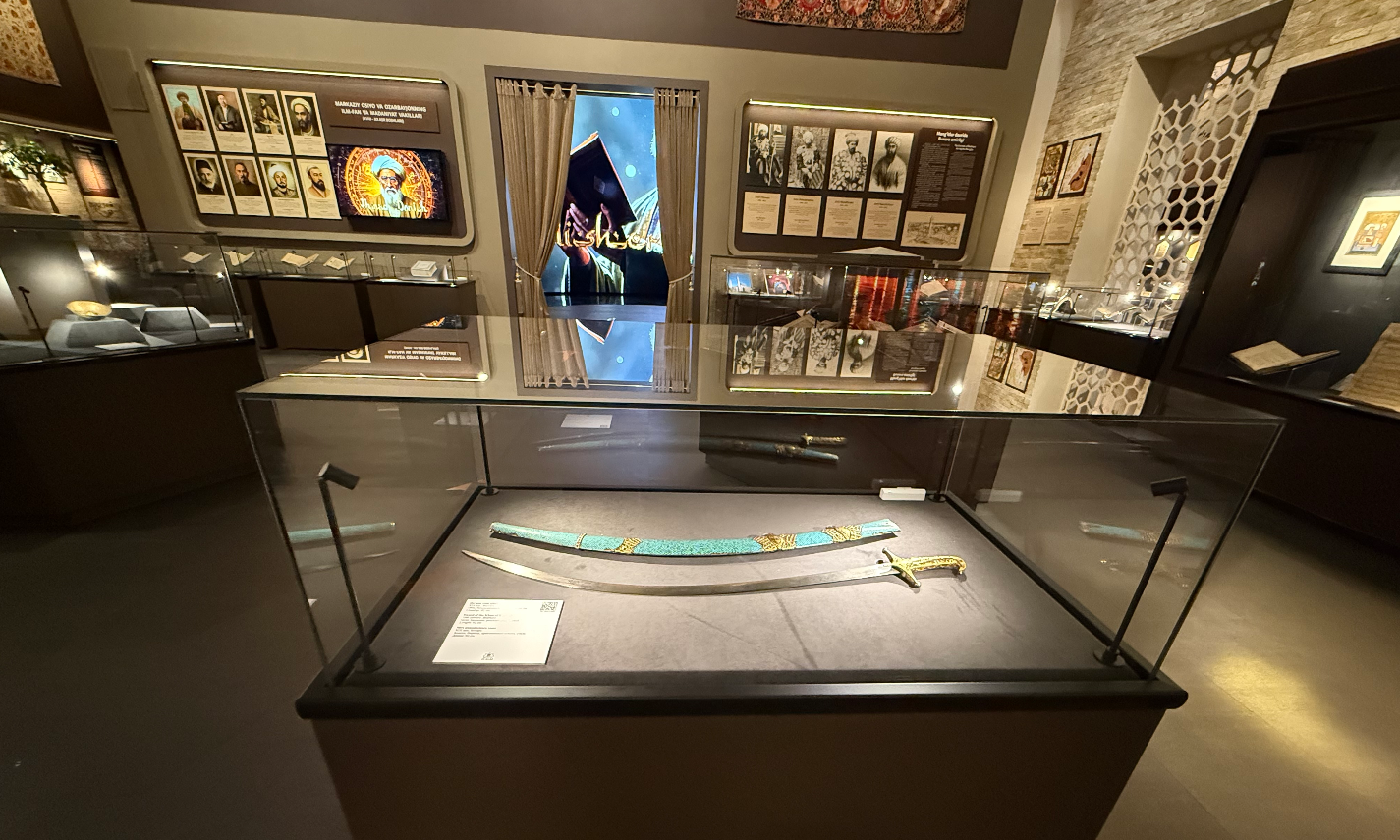 The sword presented in the exhibition is not only a military weapon but also a remarkable work of art. Its golden hilt and scabbard adorned with precious stones reflect the aesthetic vision and refined taste of the craftsmen. This demonstrates that weapon-making rose beyond a purely practical craft to the level of decorative and applied art.
In its time, the sword of the Kokand Khan symbolized the ruler’s power, the independence of the state, and military strength. Such weapons played an important role in state ceremonies, official receptions, and diplomatic relations, serving to display the authority of the ruler and the might of the state.
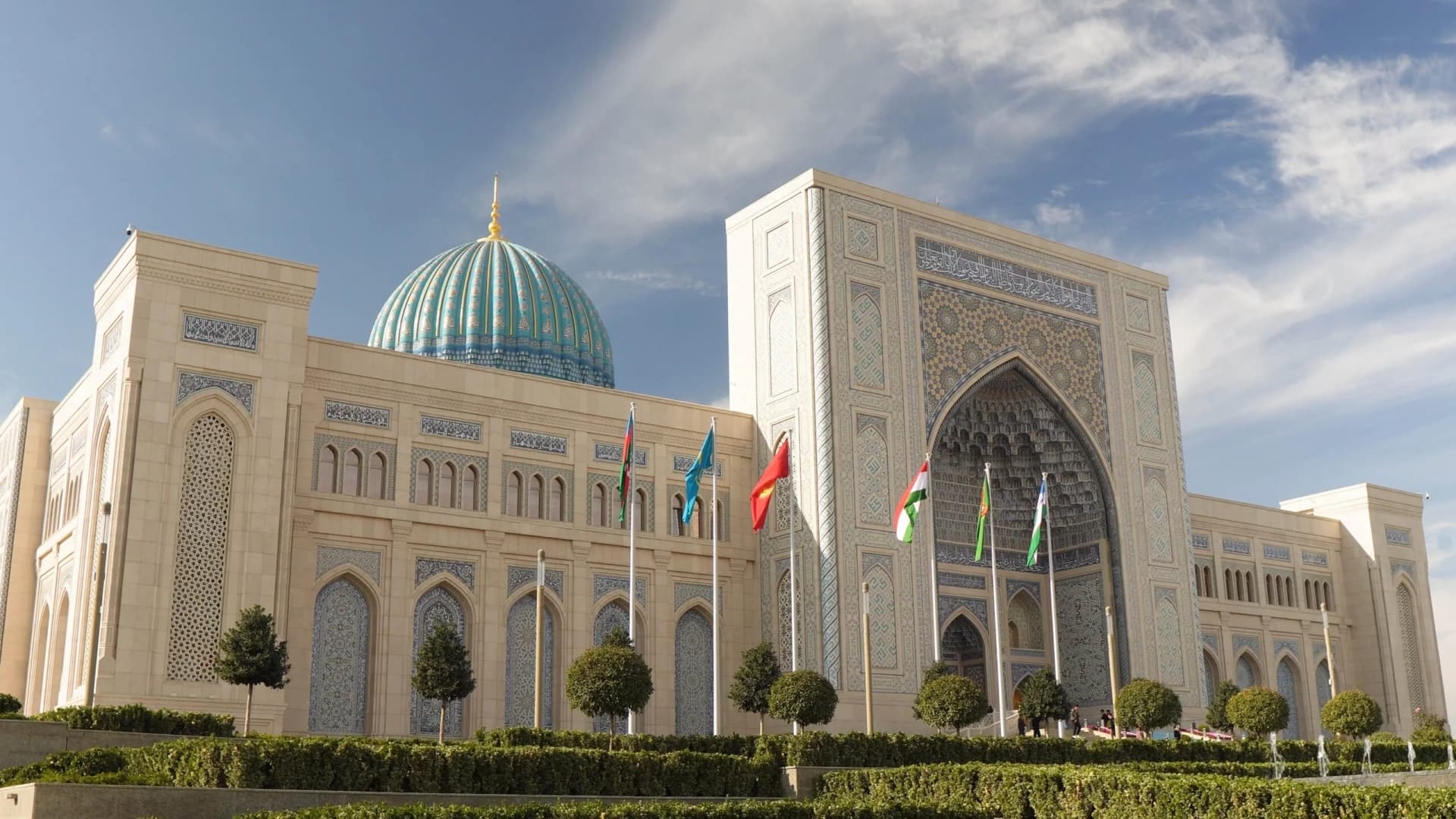
Today, this sword is exhibited at the Islamic Civilization Center as a vivid example of our people’s historical heritage. It offers visitors a comprehensive understanding of 19th-century traditions of statehood, the military system, and the art of weapon-making.
Durdona Rasulova
P/S: The article may be republished on the Center’s official website with a reference link