



A colorful chronicle of the Great Silk Road: an interactive journey into the past through the Afrasiab frescoes
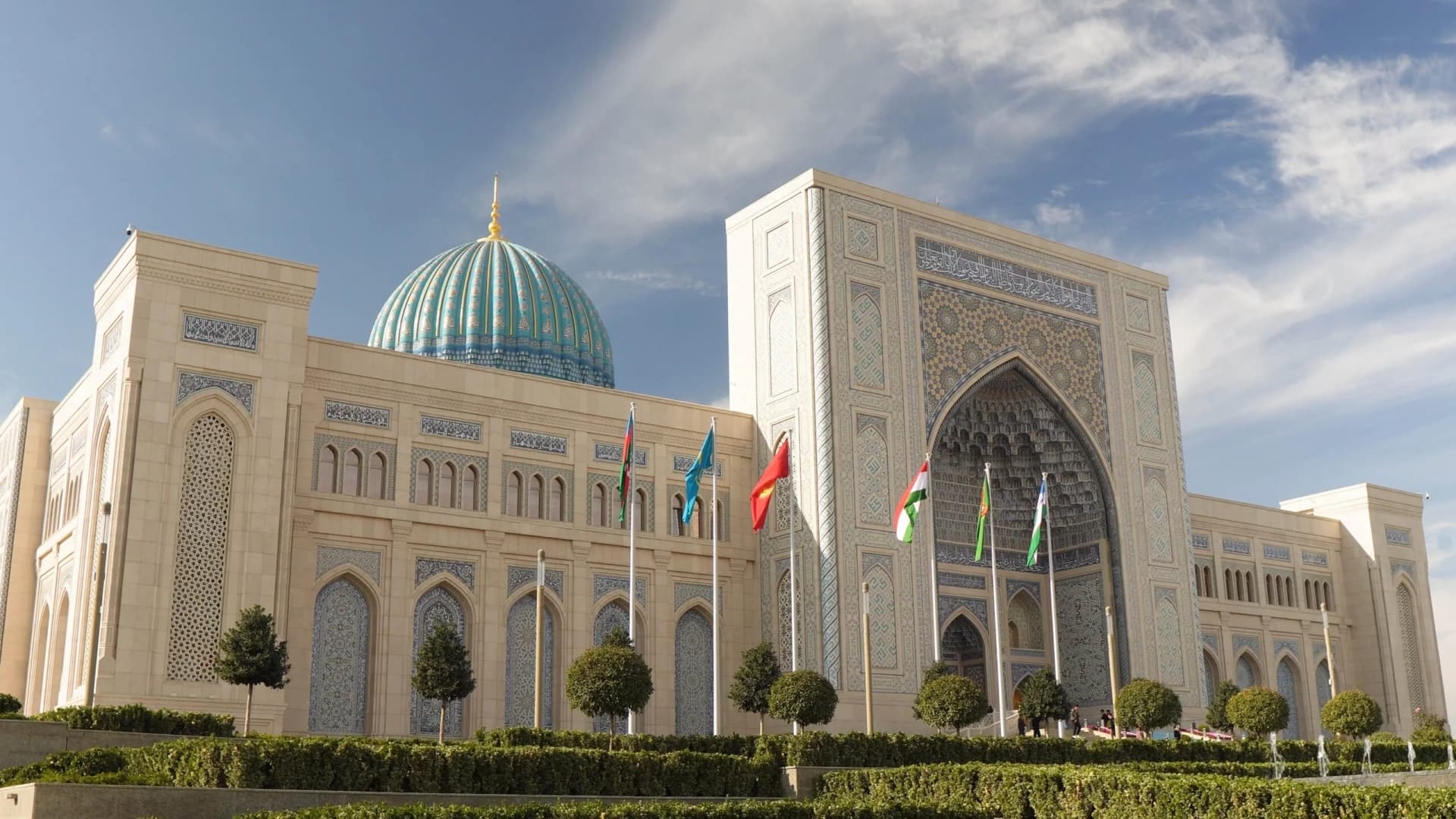
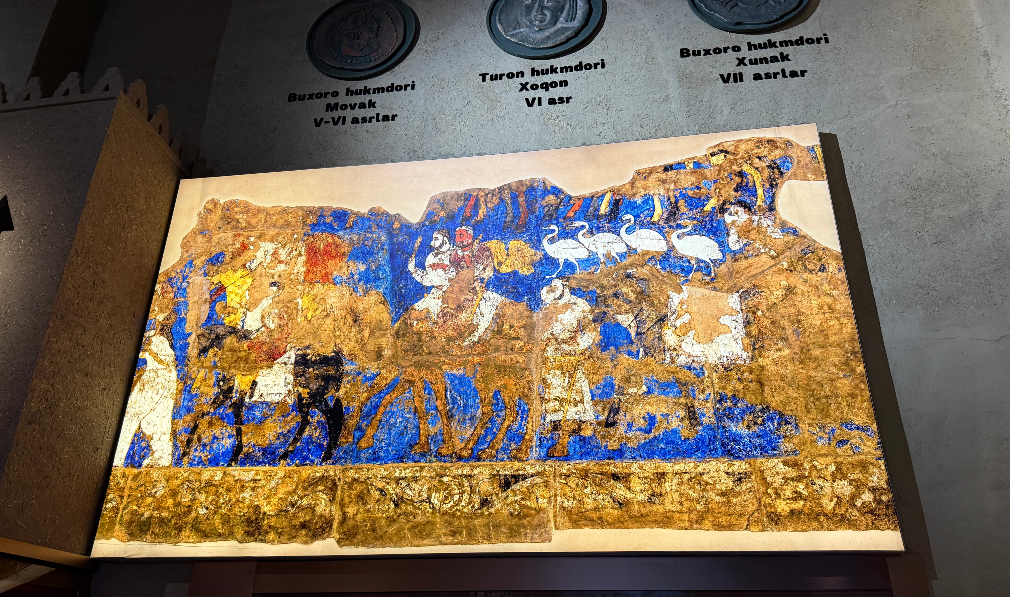 The Afrasiab frescoes displayed in the Pre-Islamic Civilizations section of the exhibition at the Islamic Civilization Center in Uzbekistan are considered one of the most unique artistic and cultural heritage masterpieces in human history. These wall paintings vividly demonstrate not only the high cultural life of ancient Samarkand but also the prominent role of Central Asia as a center of international relations. Their presentation in the exhibition through modern scientific and visual technologies provides an opportunity to gain a deep understanding of the history, art, and worldview of pre-Islamic civilizations.
The Afrasiab frescoes were discovered at the Afrasiab archaeological site, regarded as the oldest part of Samarkand, and date back to the 7th century. Numerous unique historical artifacts were uncovered during archaeological excavations in this area. The frescoes once adorned the palace walls built during the reign of the Ikhshid dynasty that ruled Samarkand.
Since ancient times, Samarkand has been one of the most important hubs of the Great Silk Road. Through this city, trade, diplomatic, and cultural relations were carried out with China, Iran, India, Byzantium, and other states. Sogdian merchants played a key intermediary role in this process. Beginning in the 4th century, the Sogdian language served as a lingua franca across many regions of Central Asia and along the Silk Road.
The Afrasiab frescoes are an artistic reflection of this multiethnic and multicultural environment. They vividly depict Samarkand’s position as an international political and cultural center. The frescoes are arranged along four walls, each illustrating a distinct historical reality.
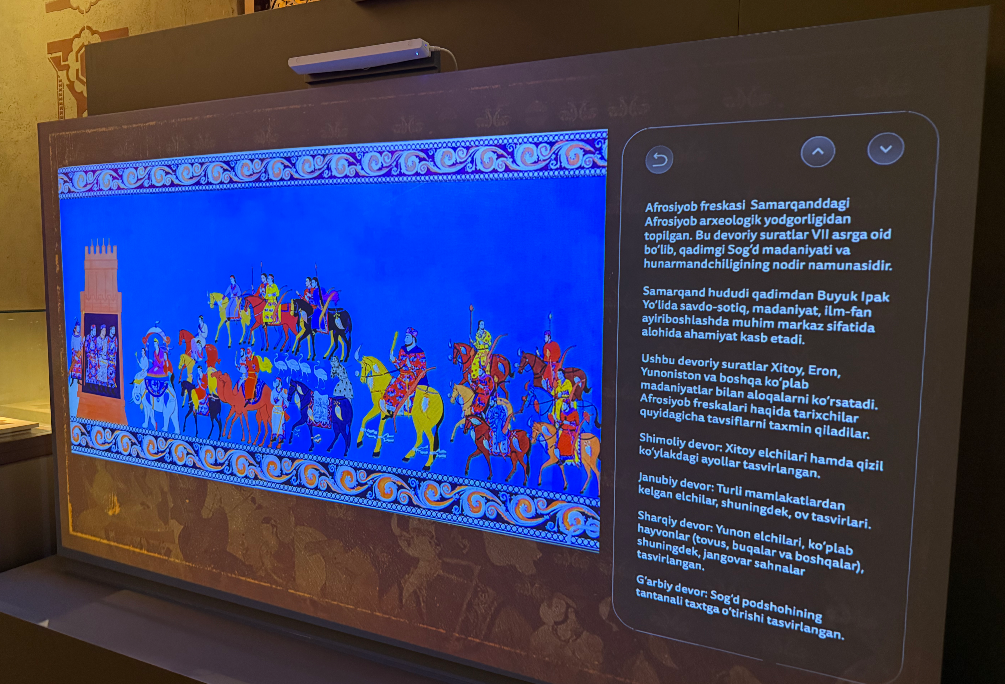
The northern wall portrays Chinese envoys, women dressed in red garments, and hunting scenes. These images reflect Samarkand’s diplomatic and cultural ties with China. The southern wall depicts envoys from various countries, palace ceremonies, and possibly scenes associated with the Navruz celebration, offering important information about state traditions and festive culture. The eastern wall features figures associated with Hellenistic and Indian cultures, animals, and symbolic compositions — evidence of scientific and cultural exchange. The western wall illustrates the enthronement ceremony of the Sogdian ruler and the arrival of foreign envoys bearing gifts, expressing Samarkand’s political prestige and international status.
Through the images in the frescoes, valuable insights can also be gained into the clothing styles, customs, ceremonies, and aesthetic views of that era. The harmony of colors, compositional perfection, and lifelike representation of figures testify to the high mastery of 7th-century artists. These works reveal the artistic thinking and worldview of Sogdian civilization.
 The frescoes also indicate that before the advent of Islam, Zoroastrianism and local cultural traditions were widespread in Samarkand and the Sogdian region. The depiction of festivals, sacrificial rituals, and palace ceremonies reflects the rich spiritual life of the area.
In the exhibition, the frescoes are presented through modern interactive methods. Visitors can compare the earlier black-and-white state of the wall paintings with their original colored appearance via digital screens. By touching the screen, certain parts of the fresco “come to life,” enabling a deeper exploration of the exhibit.
The Afrasiab frescoes are not merely wall paintings. They are an artistic chronicle of dialogue among ancient civilizations, cultural exchange, and the progress of humanity. They embody Samarkand’s role as a central hub of the Great Silk Road, the high development of Sogdian culture, and Central Asia’s significant contribution to world civilization.
At the Islamic Civilization Center exhibition, the content and composition of these frescoes are presented to the public in a clear and impactful form through modern technologies.