


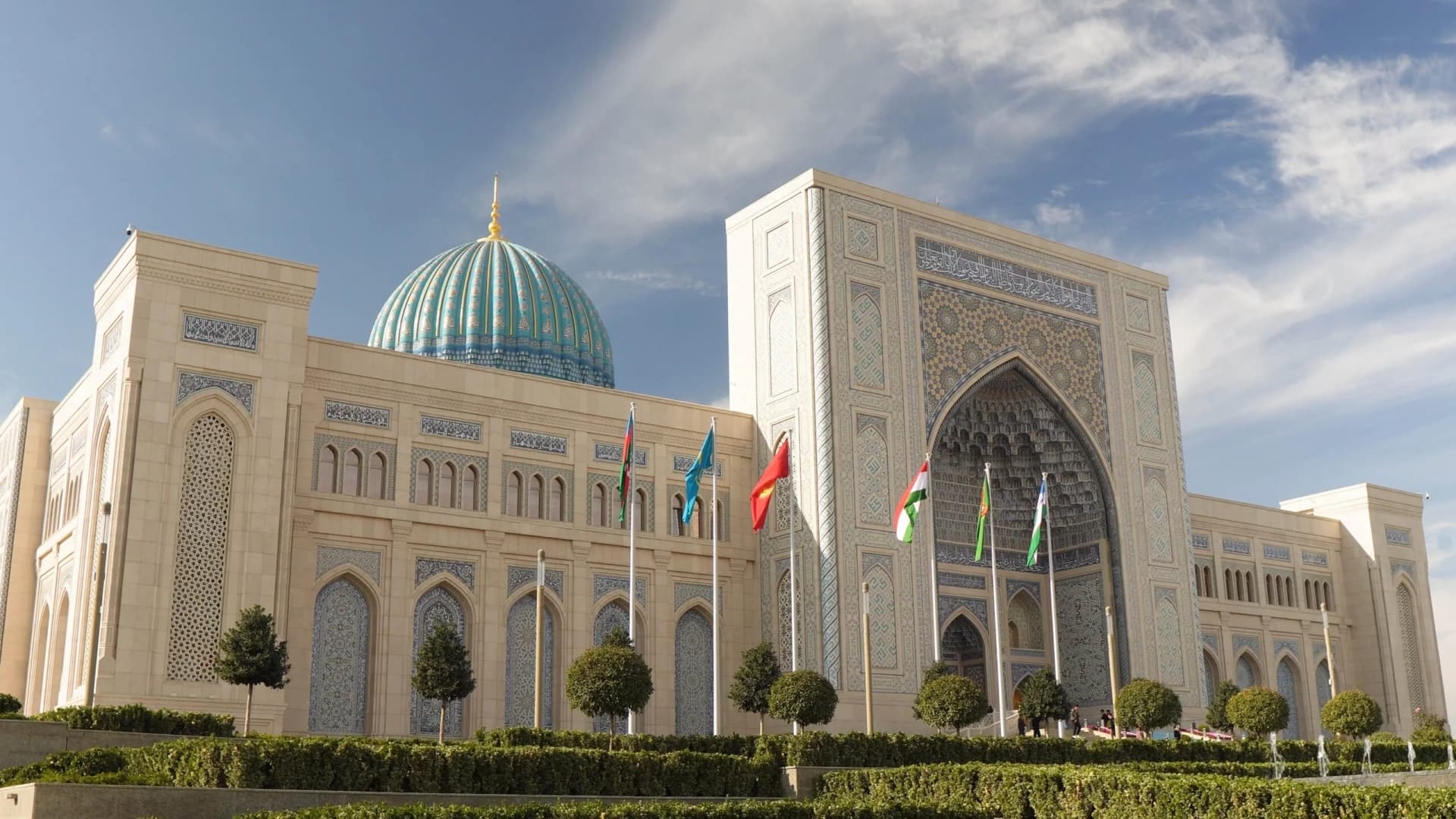

At the “Wall of Civilizations and Discoveries,” you will encounter the cultural reality of 19th-century Turkestan
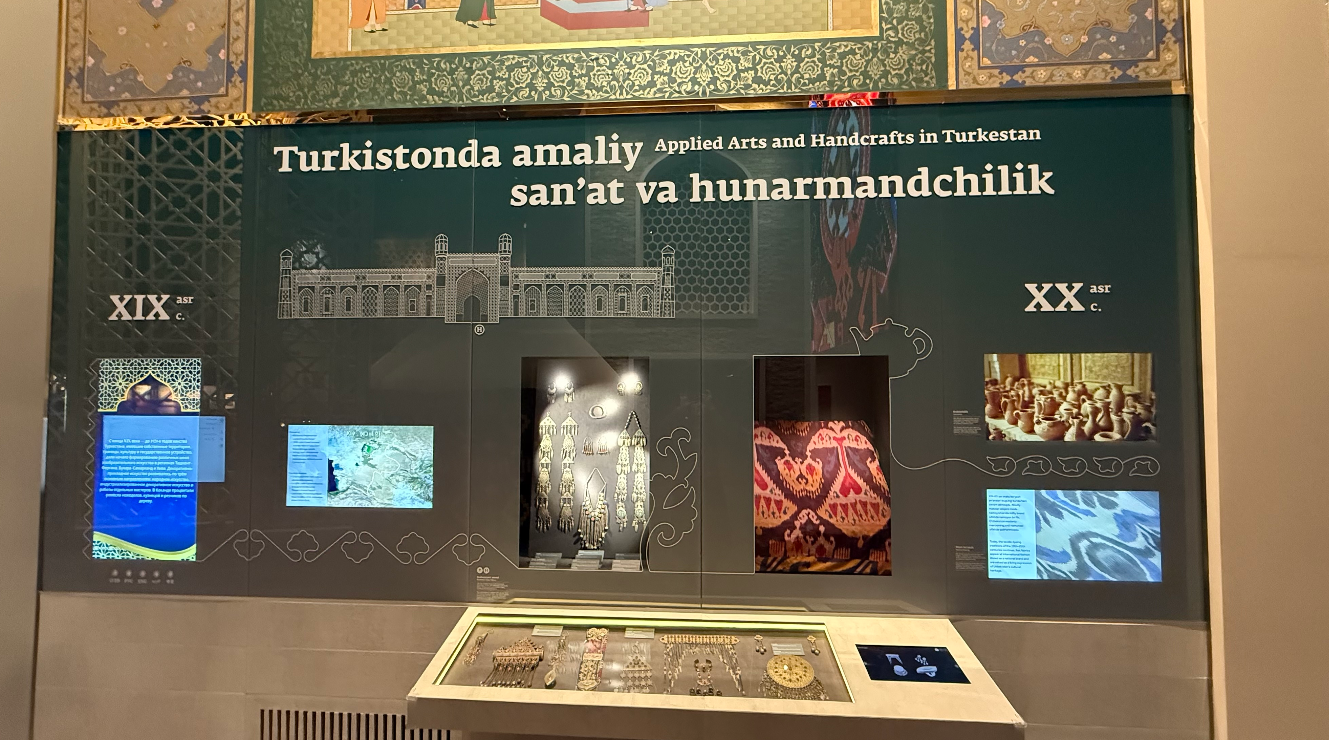 The 19th–20th centuries marked a period of flourishing applied arts and craftsmanship in the territory of Turkestan. Silk adras fabrics, delicate silver jewelry, and ceremonial ornaments were not merely objects, but artistic heritage reflecting the aesthetic taste, social relations, and cultural identity of that era. Today, these unique examples displayed at the “Wall of Civilizations and Discoveries” in the exhibition of the Islamic Civilization Center in Uzbekistan vividly portray the cultural environment of the Second Renaissance period and invite visitors into the world of past artistic traditions.
In the second half of the 19th century and the early 20th century, textile production and jewelry art in Turkestan reached a distinct stage of development. During this period, local craftsmen succeeded in preserving traditional styles while introducing new artistic solutions and compositional forms. The adras curtain and jewelry pieces exhibited serve as vivid evidence of this process.
Adras — an artistic expression of the silk ikat tradition
The silk adras curtain created in the territory of Uzbekistan around the 1880s is regarded as a remarkable example of late 19th-century textile craftsmanship. Produced using the ikat technique, the fabric’s colors were achieved by tying the threads in a special manner before dyeing them. As a result, the patterns appear with soft transitions and distinctive “vibrating” lines.
Such curtains were used in the late 19th century as refined decorative elements in household interiors, while also representing the family’s social status and prosperity. It is known that adras fabrics were widely used in ceremonies, especially at weddings and official receptions.
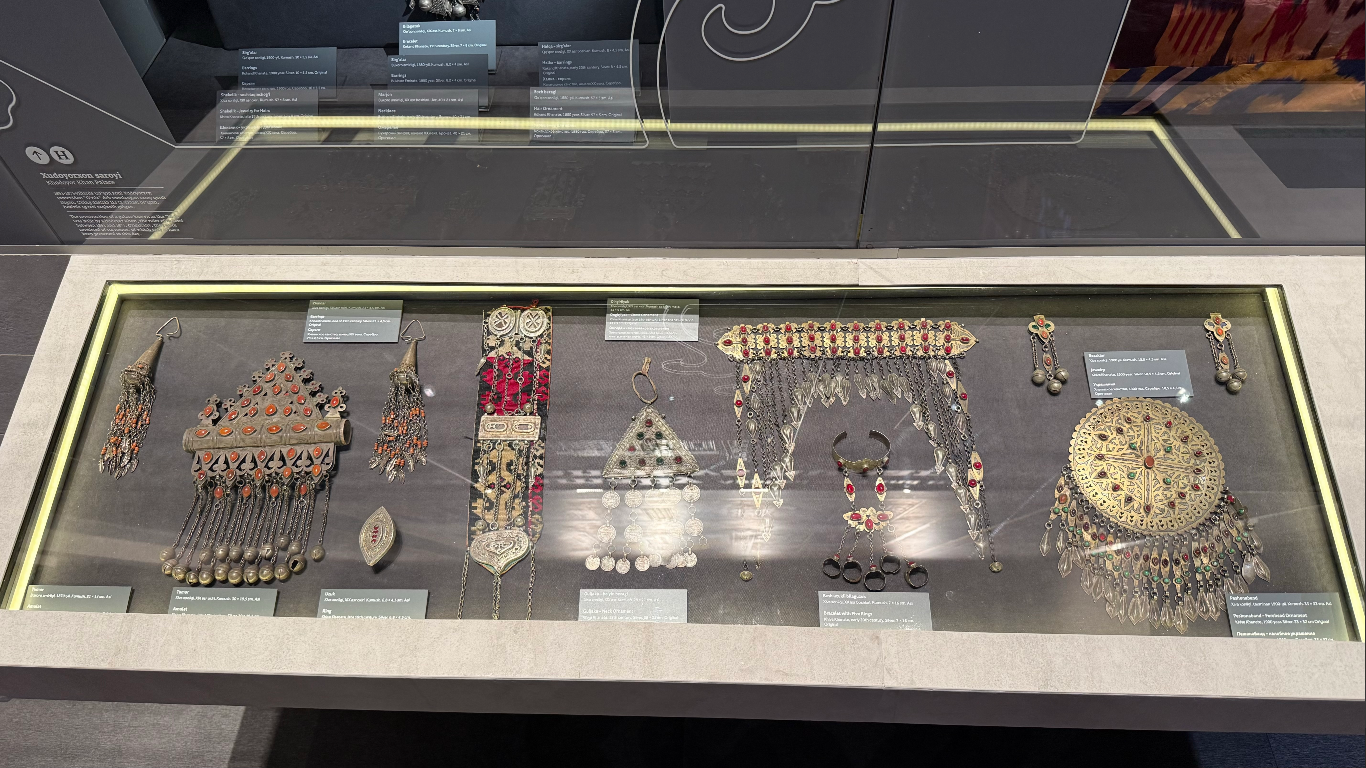 The Khiva school of jewelry: a symbol of refinement and mastery
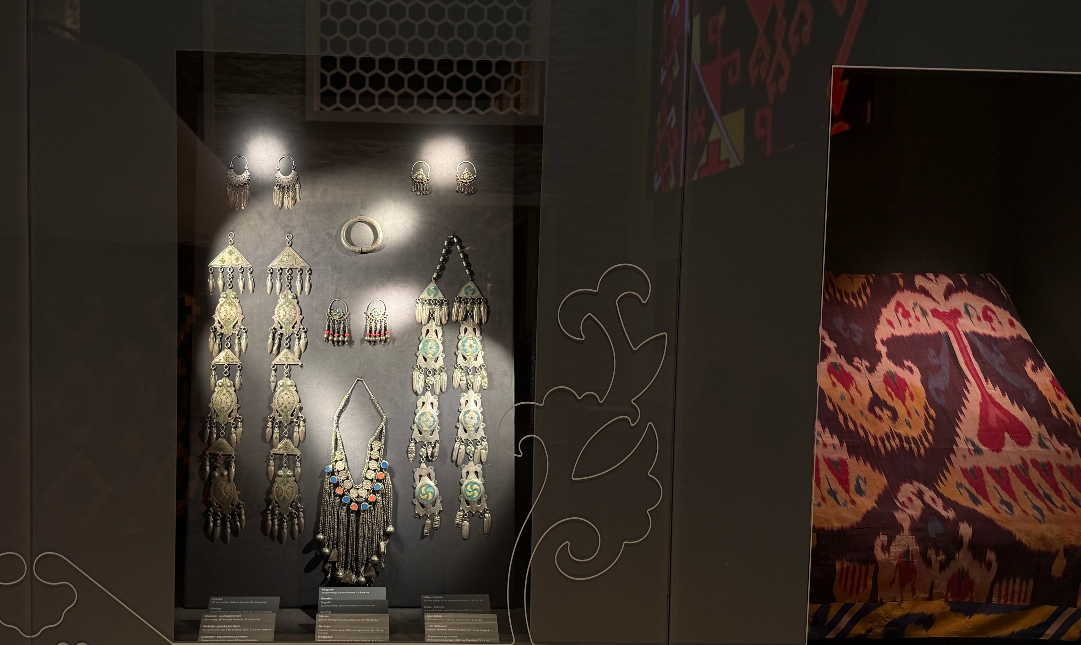
A silver ring created in the territory of the Khiva Khanate in the late 19th century occupies a special place in the exhibition. The ring’s form and decorative style clearly demonstrate the jewelry traditions of that period. Khivan jewelers possessed exceptional skill in metalworking, engraving, and harmonizing ornamental elements. The ring served not only as an adornment, but also as an expression of personal social status, aesthetic taste, and, in some cases, ceremonial significance.
Also created in this region, the ongirjiyak — a chest ornament — represents another outstanding example of late 19th-century jewelry art. Crafted from silver and natural fabric, it formed an important part of women’s ceremonial attire. Its engraved patterns, applied elements, and metal composition reflect artistic perfection and refined taste. Such large chest ornaments were worn at weddings, festivals, and religious ceremonies, symbolizing a woman’s social standing and cultural affiliation.
The jewelry traditions of Bukhara
Silver earrings produced in the territory of the Emirate of Bukhara in the late 19th century are also a valuable part of the exhibition. Their form and decorative style illustrate the refined taste and meticulous craftsmanship characteristic of the jewelry school of that time. Earrings were an integral part of women’s attire, expressing not only standards of beauty but also social and cultural values.
The adras curtain and jewelry pieces displayed at the “Wall of Civilizations and Discoveries” serve as important sources for understanding the cultural atmosphere of the Second Renaissance period. They clearly demonstrate the high level of development of applied arts and craftsmanship in Turkestan during the 19th–20th centuries, as well as the richness of the people’s aesthetic taste and cultural heritage.
These exhibits are not only works of art, but also material embodiments of national history, cultural memory, and tradition.
Durdona Rasulova
P/S: The article may be republished on the Center’s official website with a reference link