


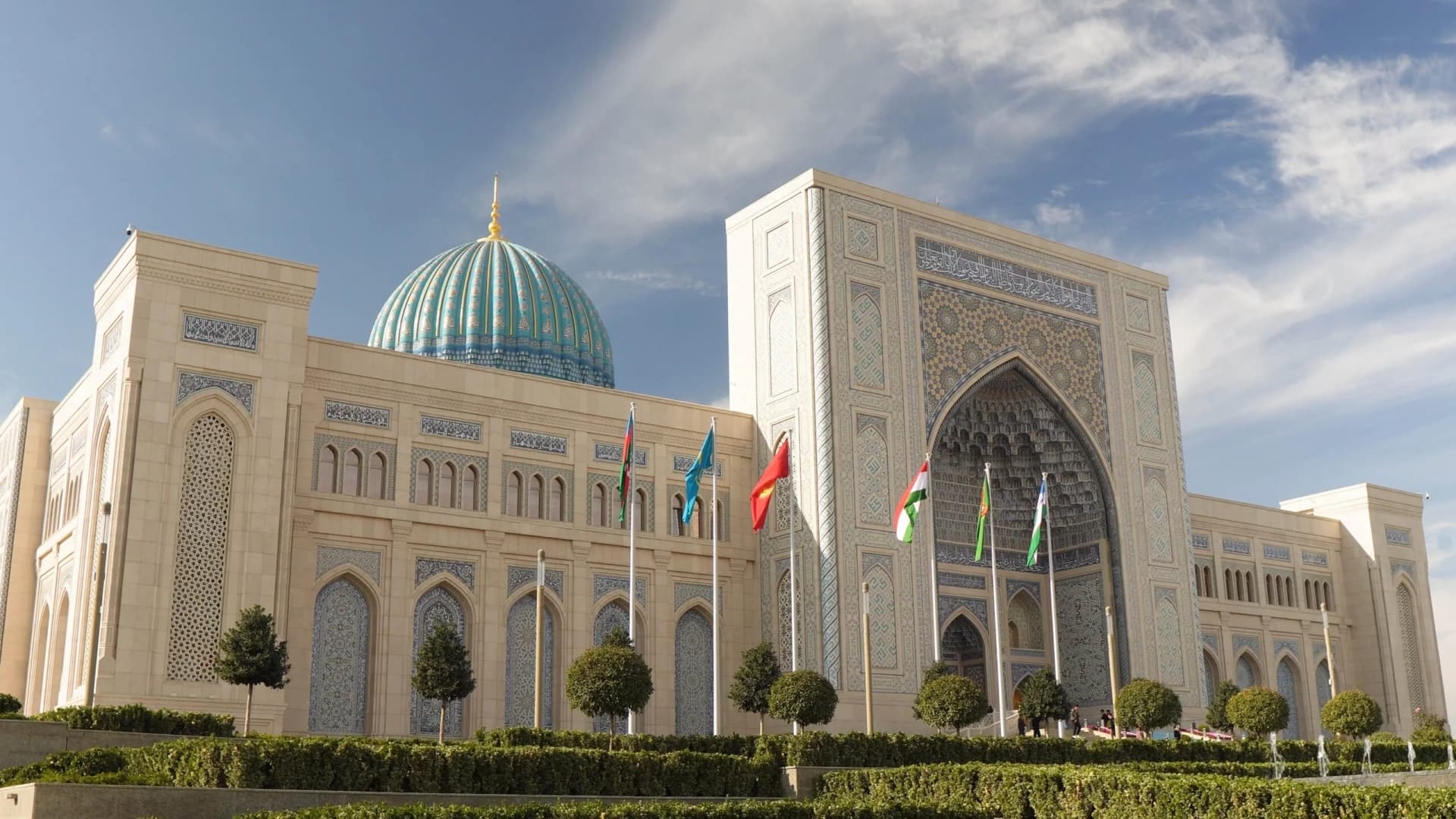


Do you know which Uzbek scholar Europe studied from for 600 years?
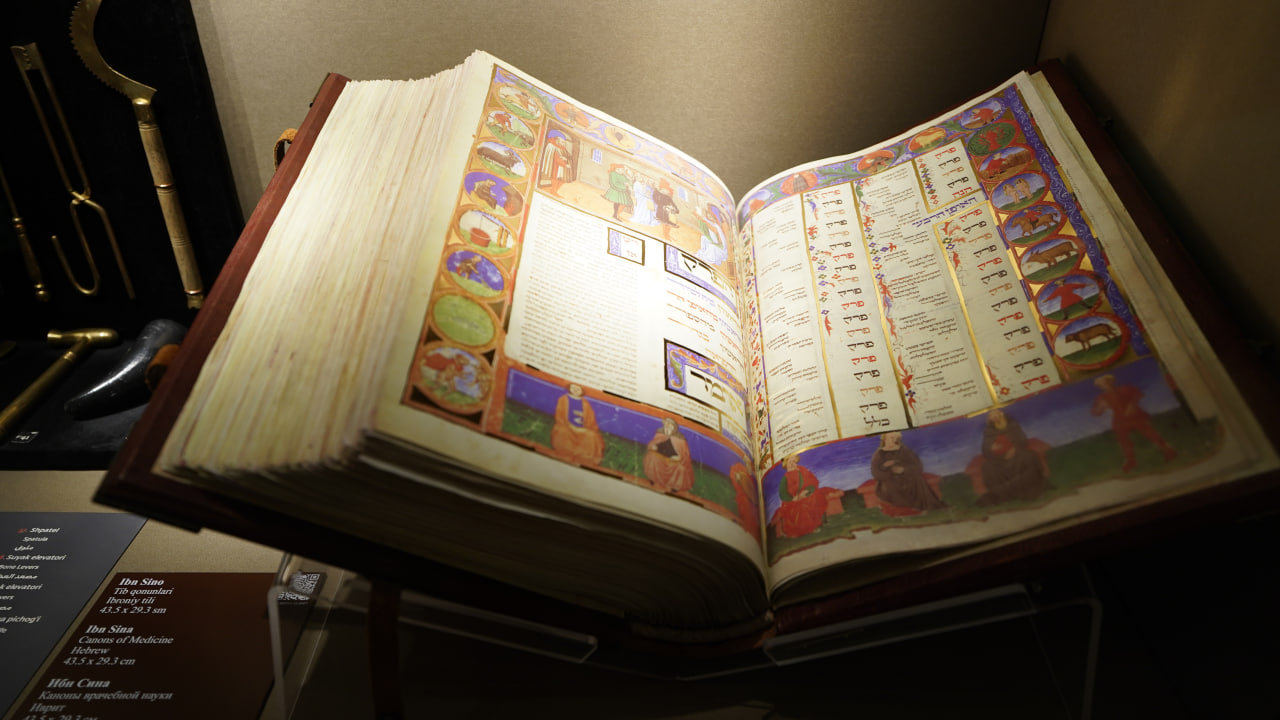 The book that served as a primary textbook in European universities for 600 years was created not in Paris or Rome, but in the land of Movarounnahr. Today, a facsimile copy of this unique manuscript, which laid the foundation for the development of global medicine, is on display in the First Renaissance section of the exhibition at the Islamic Civilization Center in Uzbekistan.
It is hard to imagine that a work born in the 11th century in the land of Movarounnahr served as a main textbook in European universities for centuries. Yet this is a historical fact. The great encyclopedic scholar Abu Ali ibn Sina authored The Canon of Medicine (Al-Qanun fi al-Tibb), a work that exerted an unparalleled influence not only on Eastern medicine but on the entire development of world medicine.
This book was not merely a medical manual. It was a vast encyclopedia that systematized the human body, the causes of diseases, methods of diagnosis, and treatment within a scientific and logical framework. Ibn Sina elevated medicine to the level of an independent science by harmonizing theory and practice.
A genius who systematized knowledge
The Canon of Medicine consists of five books covering medical theory, the foundations of anatomy and physiology, general diseases, organ-specific illnesses, infectious diseases, toxicology, and the rules for preparing compound medicines.
The work describes more than 800 medicinal substances and classifies over 760 remedies. Most importantly, Ibn Sina developed precise principles of diagnosis. He emphasized analyzing disease through a combination of symptoms and adopting a holistic approach to the patient’s body.
Many concepts applied in modern medicine today — prevention, clinical observation, medical ethics, and principles of drug testing — can be found expressed in Ibn Sina’s work.
1279: the path of the work to Europe opens
Translation schools played an invaluable role in the advancement of science. In 1279, the Jewish scholar Nathan ha-Meati fully translated The Canon of Medicine into Hebrew. This translation was decisive in introducing the work into the European intellectual environment.
The Hebrew text was later translated into Latin. As a result, The Canon of Medicine was taught as a primary textbook in prestigious European universities from the 12th to the 17th centuries. Medical students were required to master Ibn Sina’s encyclopedia before anything else.
This clearly demonstrates the profound influence of Eastern scientific heritage on the development of Western civilization.
A unique legacy preserved in Bologna
An illuminated 532-folio manuscript created in Northern Italy in the first half of the 15th century is considered one of the most famous copies of The Canon of Medicine. Today, it is preserved in the library of the University of Bologna.
This five-volume collection is unique not only medically but also artistically. The manuscript is adorned with delicate miniatures, gilded margins, and floral decorations. It depicts scenes such as a physician examining a patient’s pulse, conducting urine analysis, and working in a pharmacy.
French paleographer Bernard de Montfaucon aptly described this volume as Liber Avicennae elegantissimus — “The Most Elegant Book of Ibn Sina.”
The Hebrew edition printed in Naples in 1491 entered history as one of the earliest printed translations. This demonstrates that the work was widely disseminated not only in manuscript form but also within print culture.
The journey of the manuscript: a return
Until the late 18th century, the manuscript was preserved in the library of the Monastery of Saint Dominic in Bologna. In 1796, it was taken to Paris by French troops along with hundreds of rare works. Later, it was returned to Italy and once again placed in the collection of the University of Bologna.
This historical journey itself shows that scientific heritage stands far above national borders and constitutes a universal human value.
Today, a facsimile copy of this unique manuscript is displayed in the First Renaissance section of the exhibition at the Islamic Civilization Center in Uzbekistan.
This is symbolic, as Ibn Sina’s legacy was formed precisely within the scientific environment of Central Asia. During the period known as the First Renaissance, the scholars of Movarounnahr laid the foundations for global awakening processes in science, medicine, philosophy, and culture.
The Canon of Medicine and its Hebrew translation remain a vivid symbol of scientific dialogue, knowledge exchange, and cultural cooperation between civilizations.
Why is it still relevant today?
The value of Ibn Sina’s work is not limited to its historical significance. It promotes principles such as a comprehensive approach to human health, the harmony of science and practice, and ethical responsibility. These ideas remain essential for today’s global medical system.
In this sense, The Canon of Medicine is not merely a relic of the past but a source of inspiration for present and future generations. Born in the land of Movarounnahr, this scientific heritage continues to serve human health across the centuries.
Shahnoza Rahmonova
P/S: The article may be republished on the Center’s official website with a reference link