 Have you ever heard of the horses that became the dream of emperors, glorified as “heavenly”? Chinese emperors even dispatched armies to obtain them. Described in historical sources as “blood-sweating horses,” these legendary steeds have now returned to the stage of history through the exposition of the Islamic Civilization Center in Uzbekistan.
According to sources, the most renowned swift horses were bred in the Fergana Valley, as well as in the eastern regions of Tajikistan and along the northern foothills of the beautiful Pamirs adjoining northeastern Afghanistan. They stood out for their strength, endurance, and ability to cover long distances. Some Fergana steeds became true “stars” of their time — celebrated in poetry and depicted in sculpture and works of visual art.
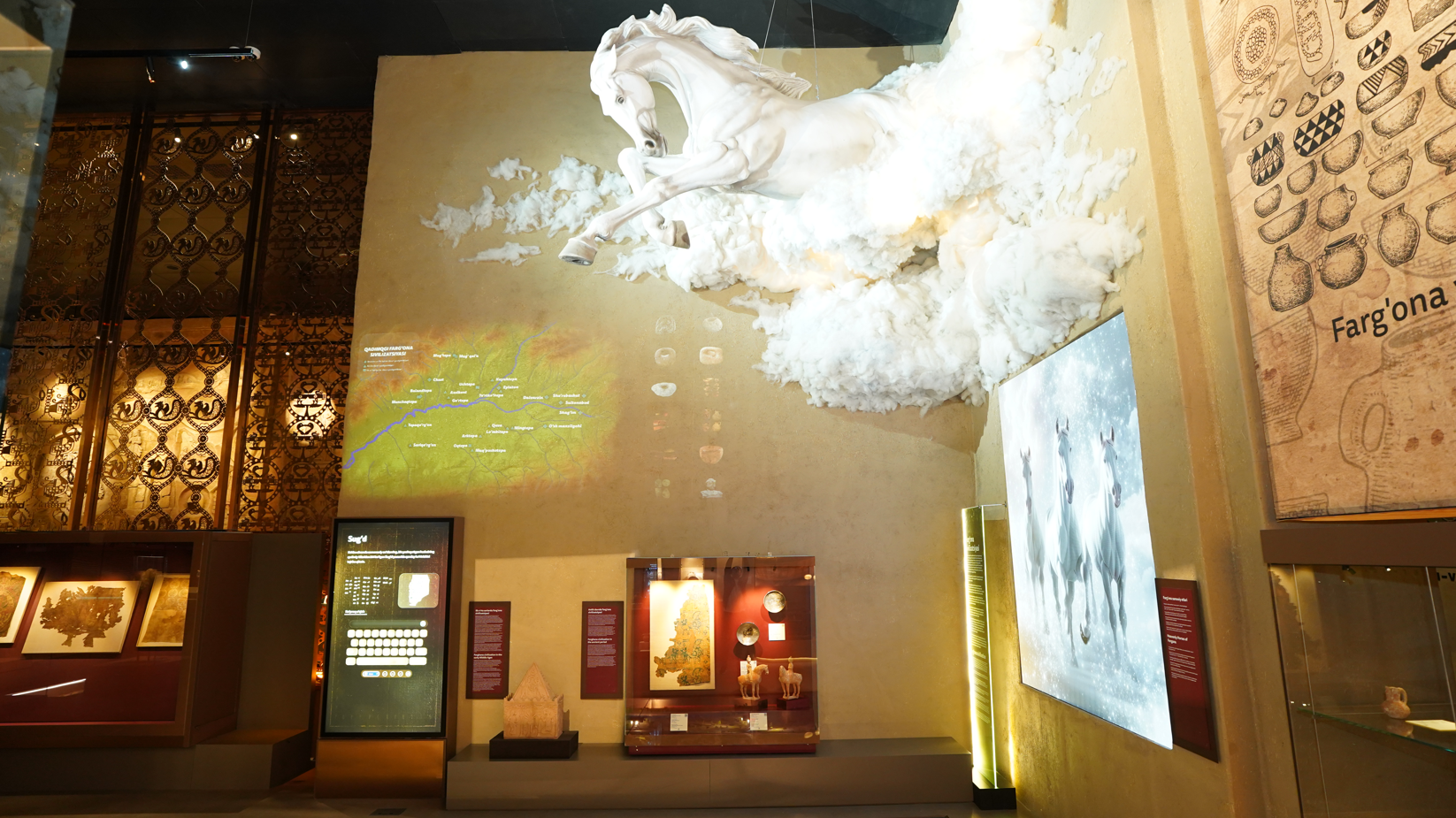
Today, these pages of history have come alive once again. In the Pre-Islamic Period section of the Islamic Civilization Center in Uzbekistan — within the Ancient Fergana exposition — a special exhibition has been organized dedicated to the history of these unique horses.
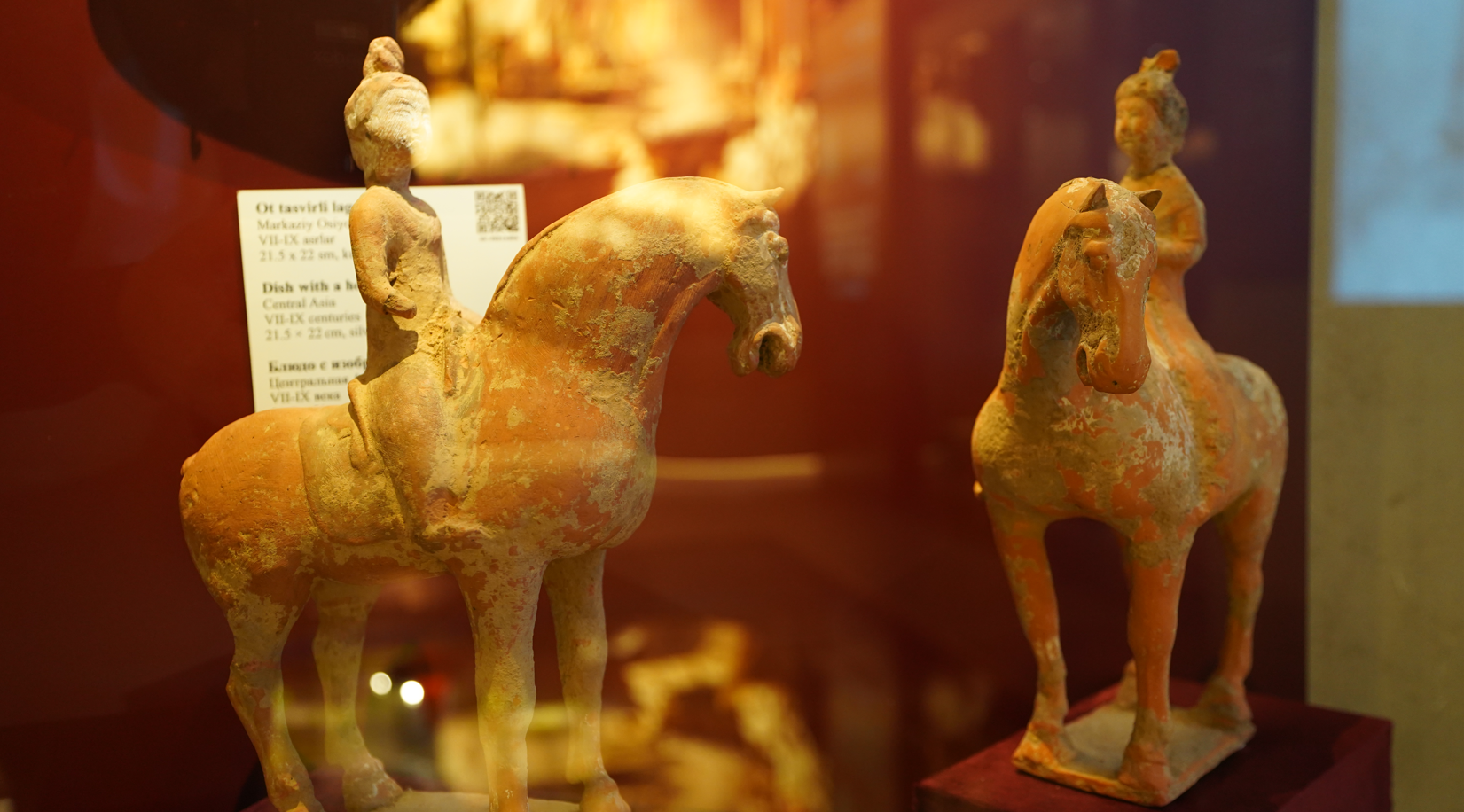 In ancient Chinese sources, the Fergana Valley is mentioned under the name “Dayuan.” The horses bred there were called “Tianma” — that is, heavenly or divine horses. Chinese authors even described them as descendants of mythical dragons. Sources also contain the term “hansyu ma” — meaning “blood-sweating horses.” These descriptions were primarily expressions of admiration and recognition. Researchers explain the reddish sweat of the horses as the result of unusually thin skin or the rupture of tiny capillaries caused by intense physical exertion. This characteristic only enhanced their fame.
According to historical records, Emperor Wu of the Han dynasty organized a special campaign to obtain the Fergana horses. These events took place in 104–102 BCE and are known in history as the Han–Dayuan War. Thus, these horses were not merely a legend but a strategically significant asset of their time.
Some legends suggest that rulers were buried alongside their favorite steeds. The burial sites of beloved horses and the terracotta statues depicting them demonstrate the high status horses held in ancient society.
Anvar Matniyazov, PhD in Philology, notes:
Information about the heavenly horses appears not only in legends but also in precise historical written sources. These steeds played an important role in ancient Fergana’s relations with the wider world. The exposition reveals this very historical truth. The depiction of “sweating blood” is more of a mythological expression. Yet even this image alone shows how greatly the Fergana horses inspired awe.
The exhibition features archaeological finds related to ancient Fergana, horse equipment, depictions based on written sources, and historical explanations. Visitors can learn how the Fergana Valley became a renowned center of horse breeding in antiquity and understand its role in international trade and diplomatic relations.
The heavenly horses are not merely a beautiful legend. They are a symbol of Fergana’s glorious past, courage, and power. Now you can witness this history firsthand at the exposition of the Islamic Civilization Center in Uzbekistan.
Guzal Beknazarova
P/S: The article may be republished with a link to the Center’s official website