



A rare 900-year-old silk garment is on display
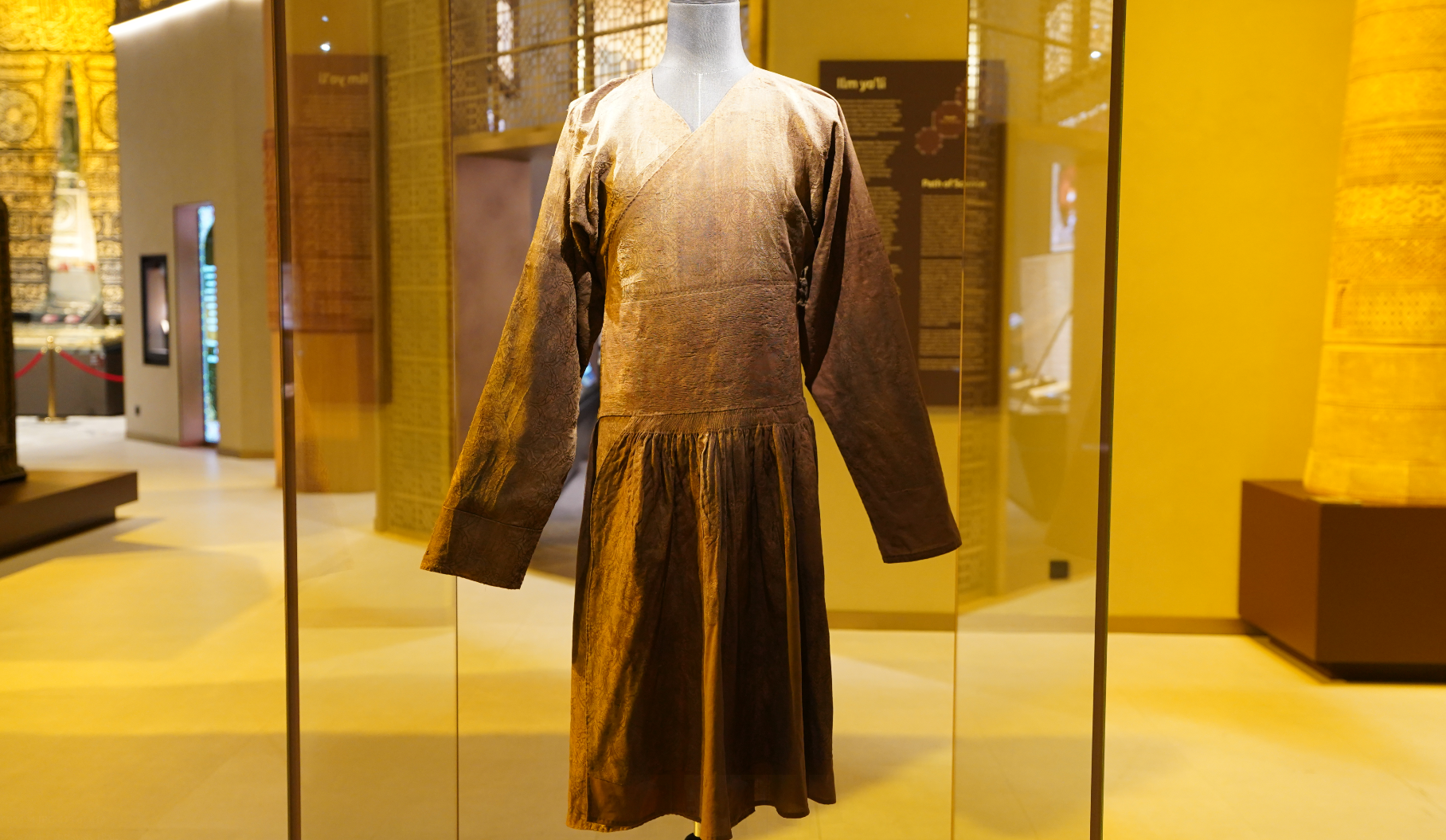 Having survived nearly nine centuries and reached our time, a rare silk robe is now on display in the First Renaissance section of the exhibition at the Islamic Civilization Center in Uzbekistan, a unique complex in the world built on the initiative of President Shavkat Mirziyoyev. Dating back to the 12th century, this garment is not only an example of exceptional textile craftsmanship but also a vivid expression of the traditions of statehood, diplomatic culture, and aesthetic thought that developed in Central Asia.
This robe belongs to the period of the Seljuk Empire and was not an ordinary ceremonial garment but rather created as a symbol of authority and prestige. The Seljuks were descendants of Turkic tribes originating from the region of Movarounnahr who founded a powerful empire. Their court culture was distinguished by elegance, symbolic meaning, and artistic sophistication. The robe on display is a product of that refined cultural environment.
The garment features a round collar, long sleeves, and a wide cut. Its fabric is woven using the complex lampas weaving technique, combining red, blue, and gold threads. The depiction of paired bulls and griffins in the textile composition gives the robe a solemn and majestic appearance. These symbols represent power, prosperity, and the protection of the ruler.
Around the figures there is an inscription in Kufic script meaning “complete blessing.” This inscription indicates that the robe was prepared by the ruler for honorary purposes and presented as a gift. Such textiles served not only as decoration but also conveyed political and spiritual significance.
As academician Alisher Hakimov has noted, textile ornamentation in Central Asia not only expressed beauty but was elevated to the level of a state symbol. In this context, art also served as a means of reinforcing authority and cultural value. According to the research of historian and archaeologist Edward Rtveladze and scholar Oleg Grabar, Seljuk textile culture was closely connected with the traditions of ancient centers such as Samarkand and Balkh. In these cities, fabric was sometimes regarded as the ruler’s second crown.
The paired griffins and bulls symbolize the harmony between earthly power and divine protection. Such high-quality lampas silk was likely woven in workshops of Movarounnahr or Khorasan. As the American art historian Sheila Blair has noted, silk garments decorated with inscriptions expressing blessing symbolized diplomatic recognition and personal respect. Therefore, such robes were worn by emirs, ministers, and crown princes and represented the image of the “ideal ruler” in the Islamic East.
Fully preserved garments from the 12th century are extremely rare. For this reason, this unique artifact holds exceptional importance not only for Central Asia but for the entire history of Islamic art. It is connected with the land of Turan — the cultural space of present-day Uzbekistan — and embodies the harmony of advanced textile traditions, statehood culture, and refined aesthetic taste.
This silk robe is a living witness to the grandeur of the past and the spiritual heritage of history — a unique masterpiece where history and art unite.
Guzal Beknazarova
P.S. The article may be republished with a reference link to the Center’s official website