



A rare artifact preserving the palace secrets of the Baburid era is on display in the exhibition
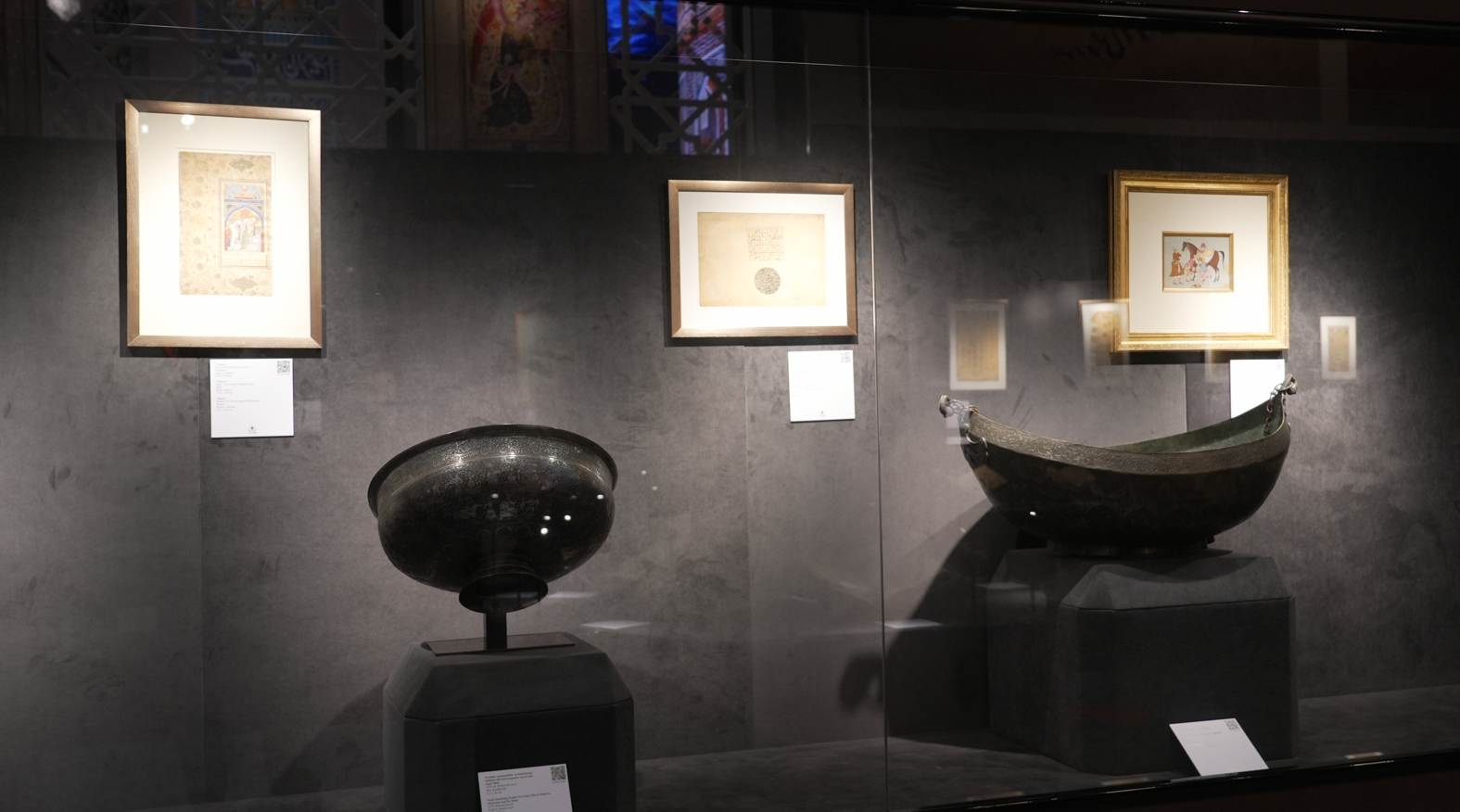 The object you see in the photograph may at first glance appear to be an ancient copper vessel. But in reality, it takes us back to the Baburid court of the 17th century — a world where music resounded, hunting scenes came to life, and ceremonial moments unfolded as gifts were presented before the ruler. This monumental vessel, decorated with depictions of hunters, musicians, and figures carrying offerings to the sovereign, is one of the most remarkable and conceptually rich examples of Baburid court art.
This work was created in the spirit of artistic traditions that flourished during the reign of Akbar I, one of the most powerful rulers of the Baburid Empire, remembered in history as a great patron of science and the arts. Scholars regard the period of Akbar’s rule as the time when the “grand style” of Baburid art was formed. During this era, metal objects evolved from simple utilitarian items into symbolic works of art expressing the power and ideology of the empire.
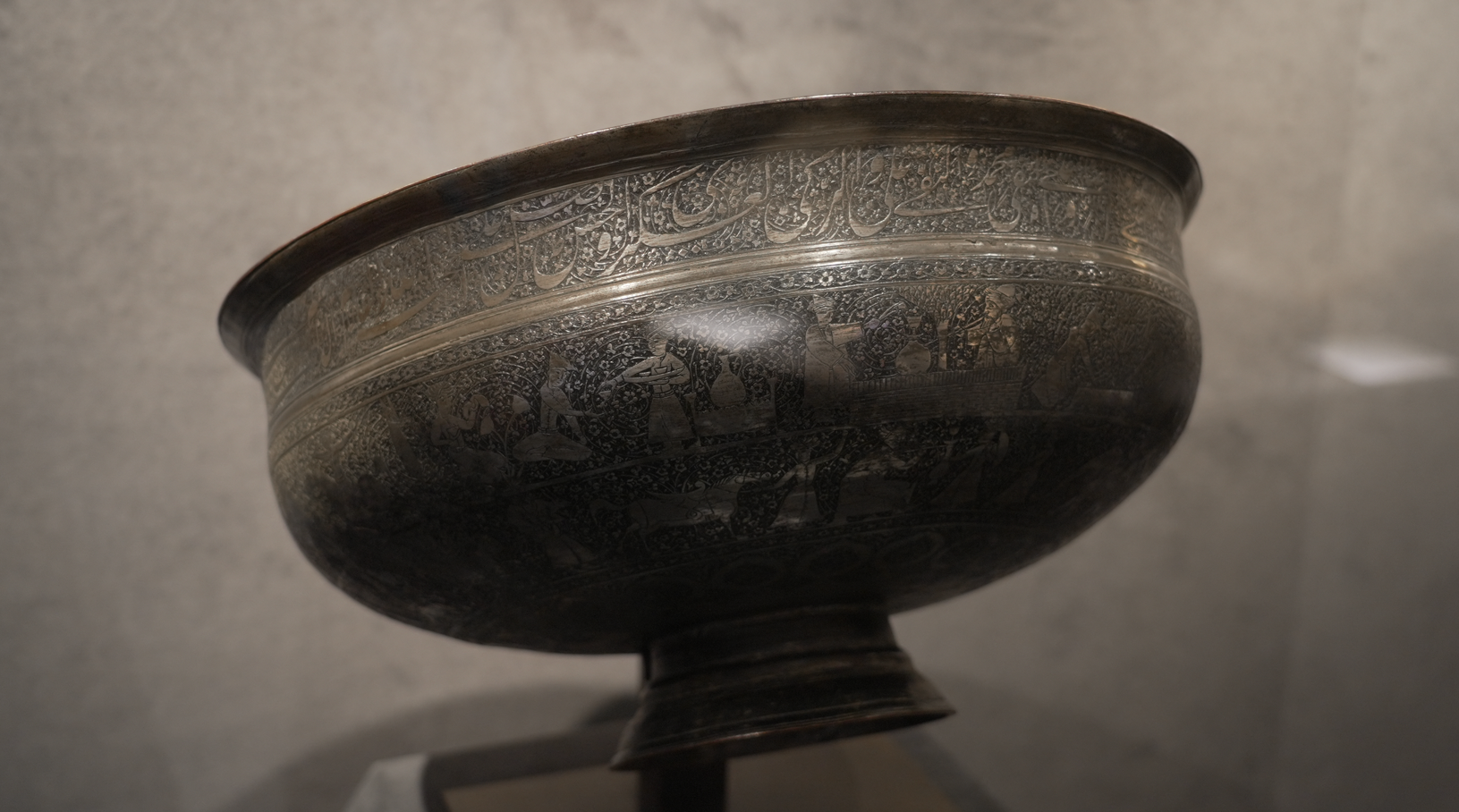 Dating back to 1670, this copper vessel was crafted with exceptional skill in the imperial workshops of the Baburid court. It continues the artistic traditions that had earlier developed during the Timurid period.
The decoration of the vessel is arranged in a three-tiered composition. The upper section features refined nastaliq calligraphy associated with poetic and philosophical texts. The lower sections depict hunting scenes, ceremonial processions, and the presentation of gifts to the ruler, symbolizing royal generosity, prosperity, and boundless power. These images reveal the ceremonial and ideological essence of life at the Baburid court.
The uniqueness of the artifact lies both in its narrative composition and its remarkable state of preservation. Copper vessels with such complex and detailed compositions are extremely rare. Most importantly, this object is an original piece that was brought back to Uzbekistan from abroad as a result of efforts carried out within the framework of initiatives aimed at locating, recovering, and repatriating rare cultural heritage objects that had been taken overseas for various reasons in the past.
The natural patina on the surface of the vessel, the color changes formed over time, and the craftsmanship confirm that it is not an artificial reconstruction but an authentic historical witness that has survived through the centuries.
According to historical sources, such vessels were used in the Baburid court during ceremonial occasions and high-level receptions. They symbolized abundance, divine favor, and the stability of the state during royal ceremonies.
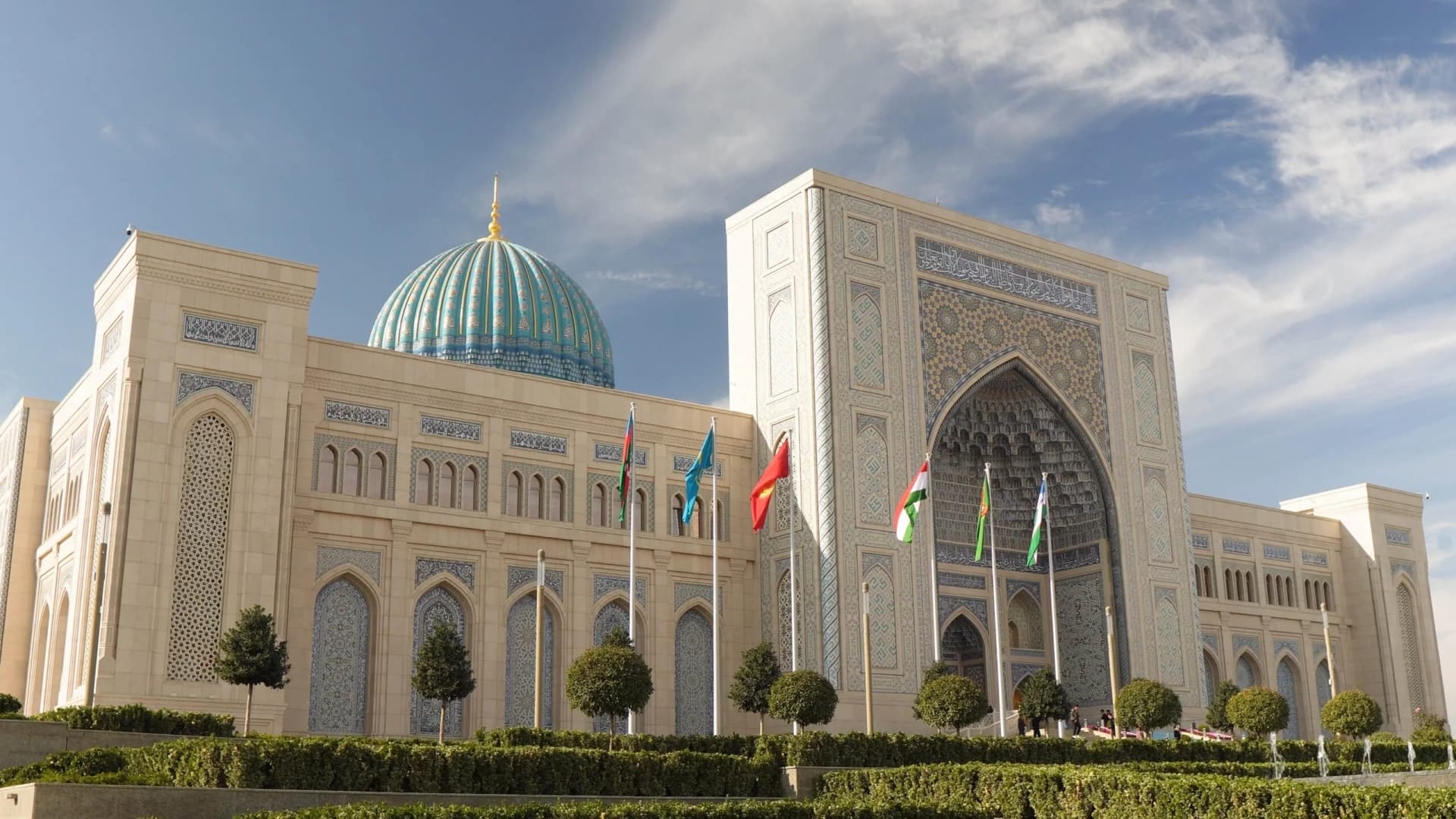
Today, this priceless work is preserved at the Islamic Civilization Center in Uzbekistan, established at the initiative of the President of the Republic of Uzbekistan, within the section dedicated to the Baburid period that illustrates the idea of the Second Renaissance. Here, the vessel is presented not merely as a museum exhibit, but as a unique heritage object demonstrating the historical, cultural, and artistic continuity between Central Asian and Indian civilizations.
This copper vessel is a silent yet powerful story connecting the past with the present. Within it, art, politics, and thought converge, conveying the grandeur of the Baburid Empire to today’s generation without words. Through such authentic and rare works, history is not only studied — it is rediscovered.
Laylo Abdukakhkharova
P/S: The article may be republished with a link to the official website of the Center