



A mysterious symbol of 700 years of Central Asian art will be presented in the exhibition
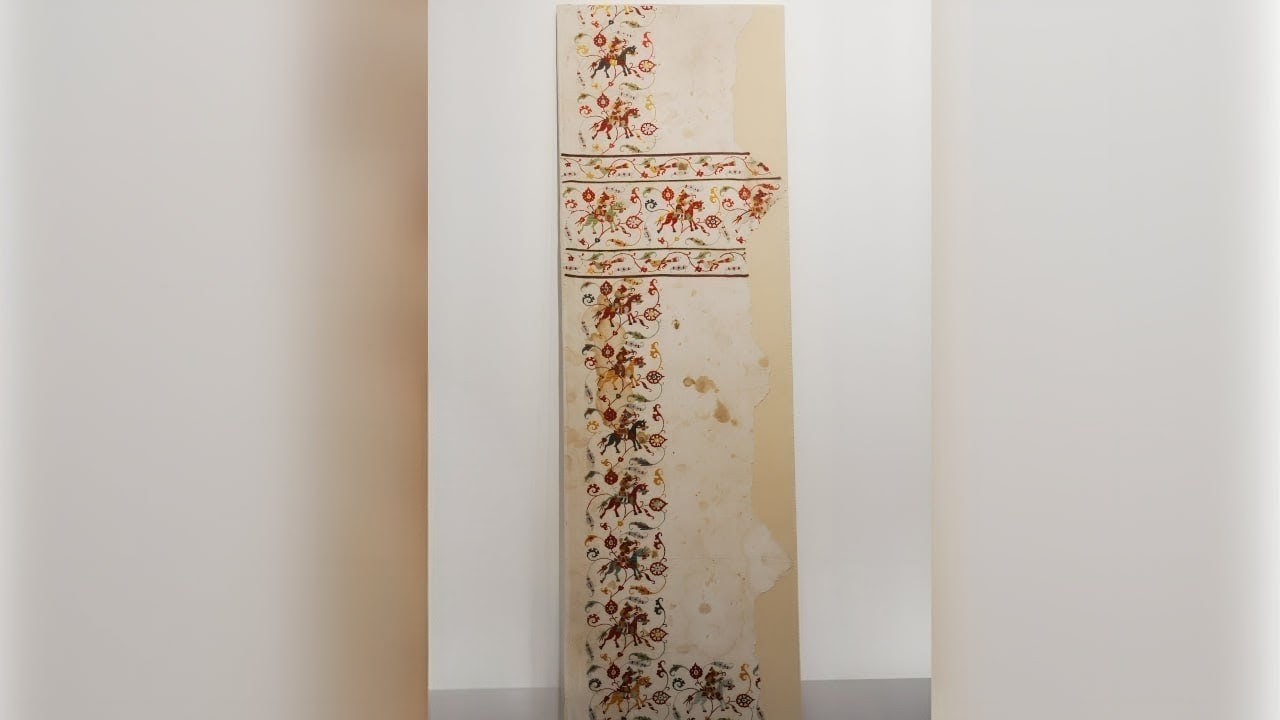 Sometimes a single piece of fabric can tell the story of an entire civilization. This embroidered panel fragment depicting women on horseback is one of such rare monuments. Specialists describe it as one of the oldest and most important examples in the history of Central Asian embroidery, even symbolically calling it the “mother of embroideries.”
This embroidery, dating to the 14th century, is considered a rare example of medieval textile art in Central Asia. The work is embroidered with colored silk threads on a cotton base using the traditional embroidery technique and originally formed part of a larger panel.
Within the composition, elegant vegetal ornaments, intertwined branches, and birds are depicted, among which female riders on horseback are arranged vertically in a sequential order.
Specialists attribute this monument to the period between 1285 and 1414 — a transitional stage from the artistic traditions of the Ilkhanid period to those of the Timurid era. This places the work within a historically significant moment.
One of the most remarkable aspects of this embroidery is its iconography — the visual narrative it presents. In the traditions of Islamic art, female figures were often depicted symbolically or decoratively; however, representations of women on horseback are extremely rare.
These images trace back to the ancient cultural concepts of Turkic peoples. In early epic traditions, women were often portrayed as hunters, warriors, or protectors of their tribes. For this reason, the embroidery demonstrates how the female image in Central Asian culture could symbolize strength, protection, and independence.
The decorative style of the patterns is also distinctive. It clearly reflects the harmonious combination of Persian, Khorezmian, and Turkic artistic traditions. This once again confirms that Central Asia of that period was an important civilizational crossroads where different cultures intersected.
According to researchers, this textile fragment was likely part of a decorative panel or curtain used to adorn palace interiors. Such items may have been used to decorate the women’s quarters of royal palaces or the residences of the nobility.
Bruce Bagans, co-chair of the Board of Trustees of the Textile Museum in Washington and a specialist in Central Asian textile art, evaluates this artifact as one of the earliest surviving examples of embroidery from the Islamic period. In his view, this monument represents one of the important historical roots of the suzani embroidery tradition that later became widespread throughout the region.
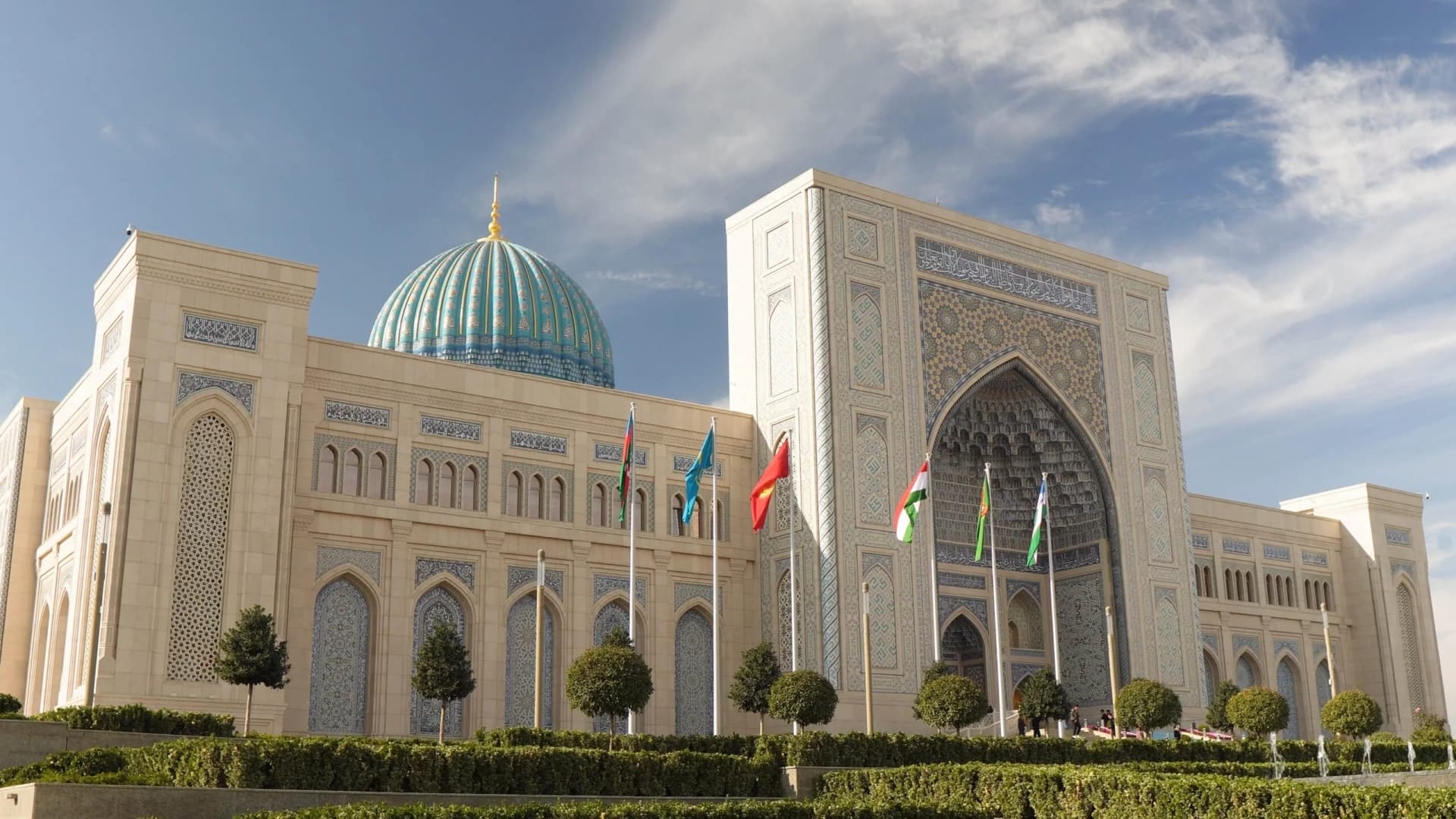
Today, this unique work of art is displayed in the exhibition of the Center for Islamic Civilization, established at the initiative of the President of the Republic of Uzbekistan and expected to open in the near future.
Laylo Abdukakhkharova
P.S. The article may be republished with a link to the Center’s official website