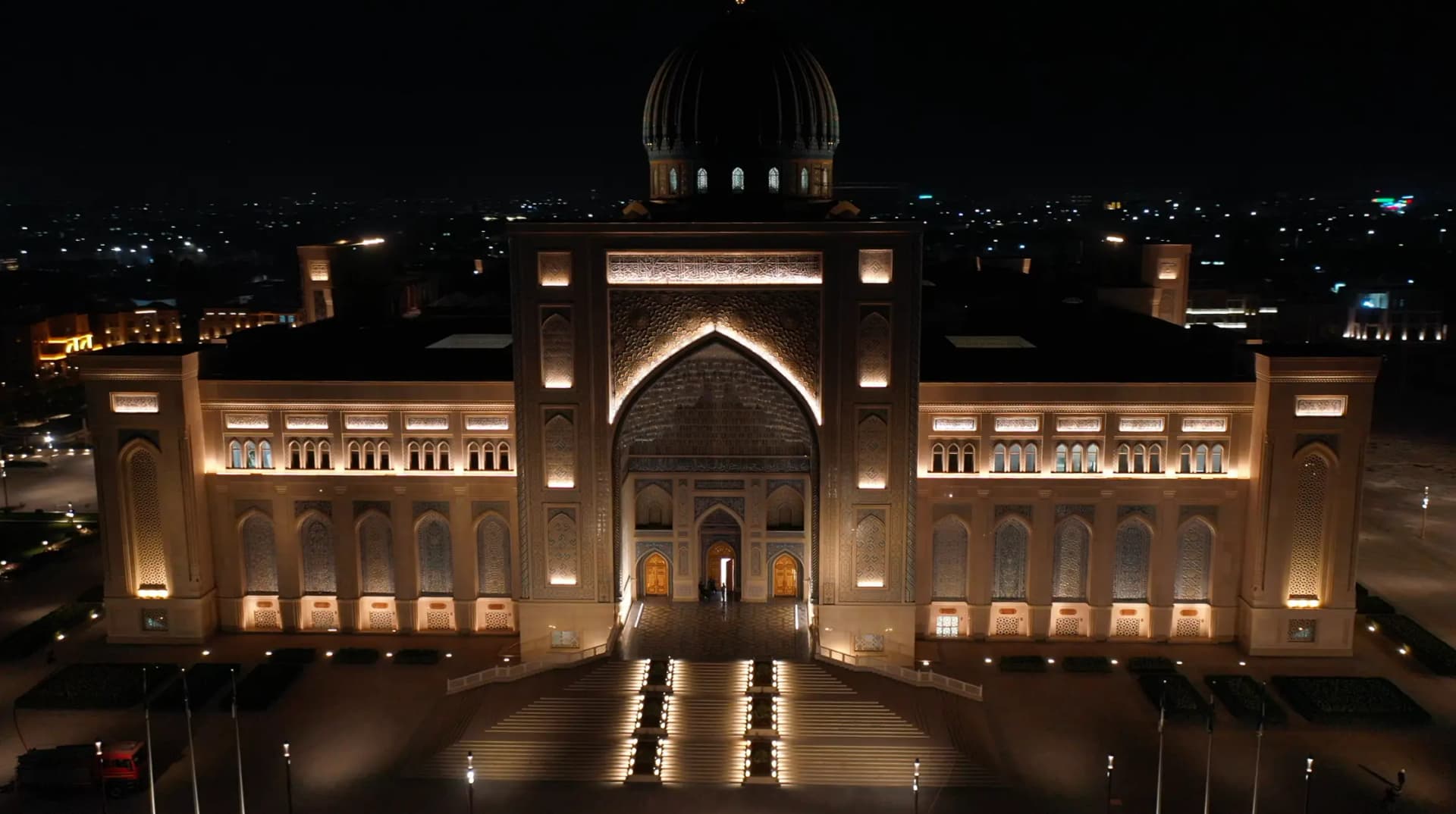
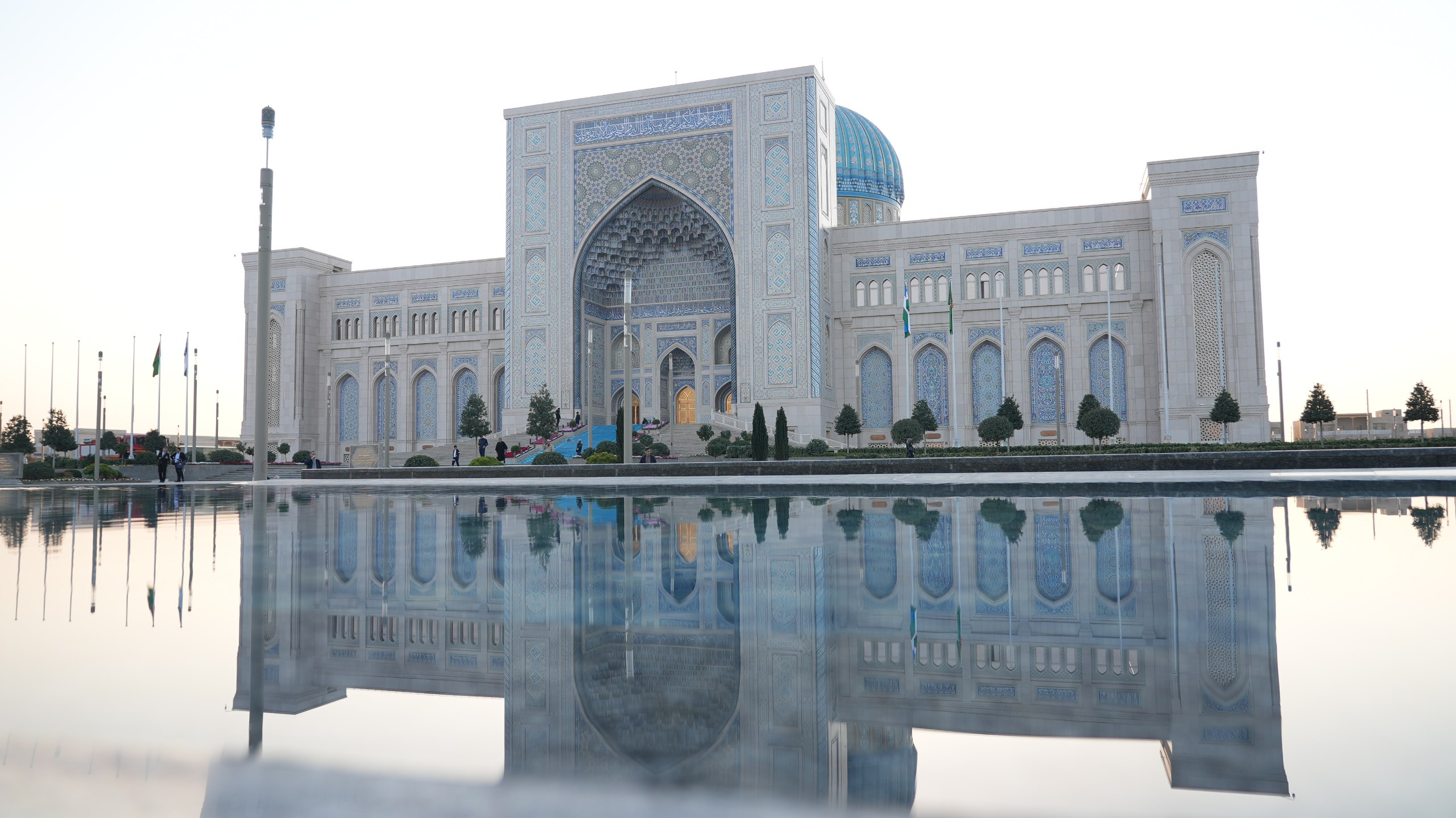
 The building of the Islamic Civilization Center in Uzbekistan was constructed based on national architectural traditions and can be entered through four main portals located on its four sides. The portals and the arches on the building’s façade are adorned with verses from the Holy Qur’an and hadiths expressing such noble values as knowledge, enlightenment, tolerance, and respect for parents. In particular, the hadith of our Prophet Muhammad (peace be upon him) — “Seeking knowledge is an obligation for every Muslim man and Muslim woman” — is inscribed three times around the portals, symbolizing that the central idea of the Center is the glorification of knowledge and enlightenment.
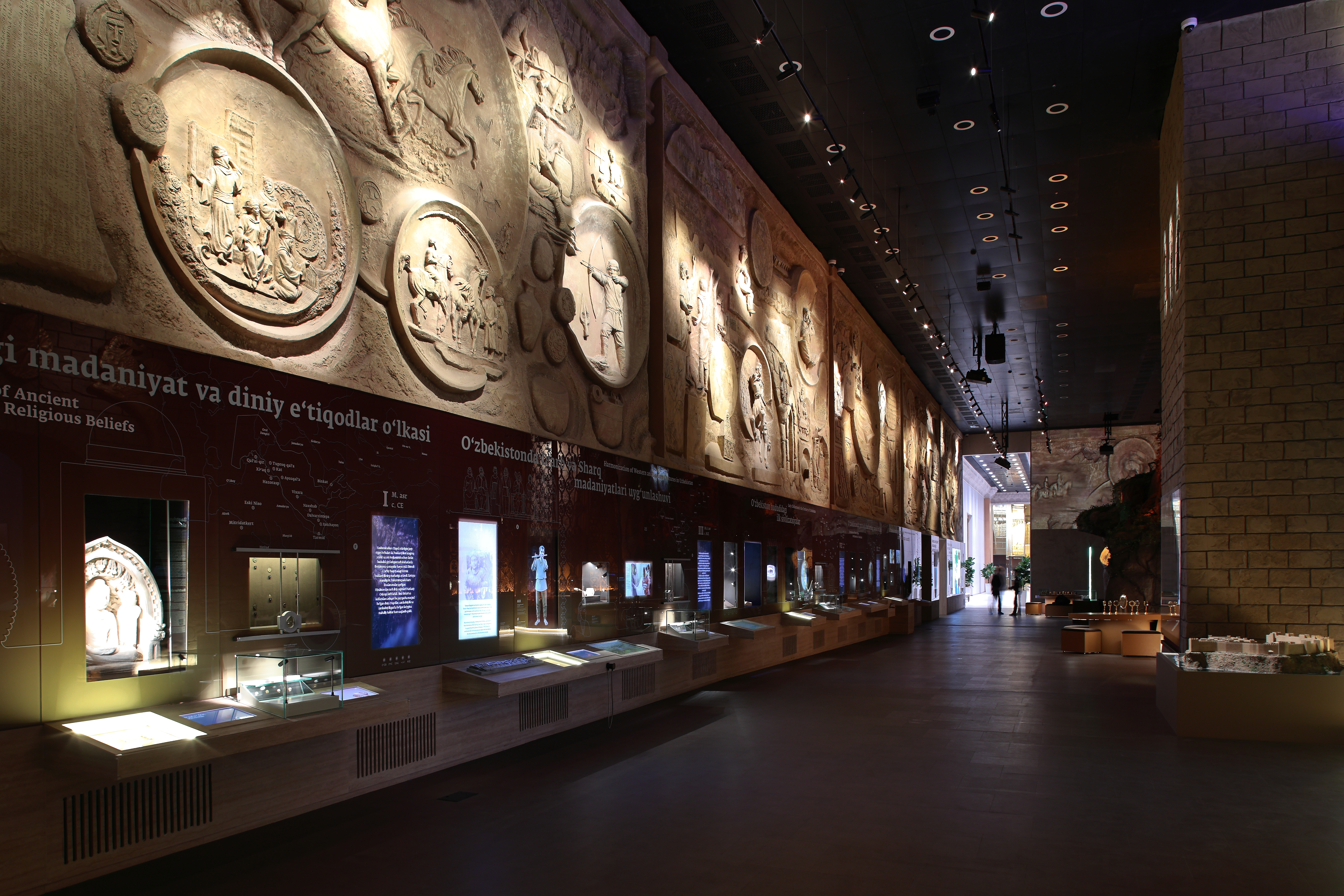
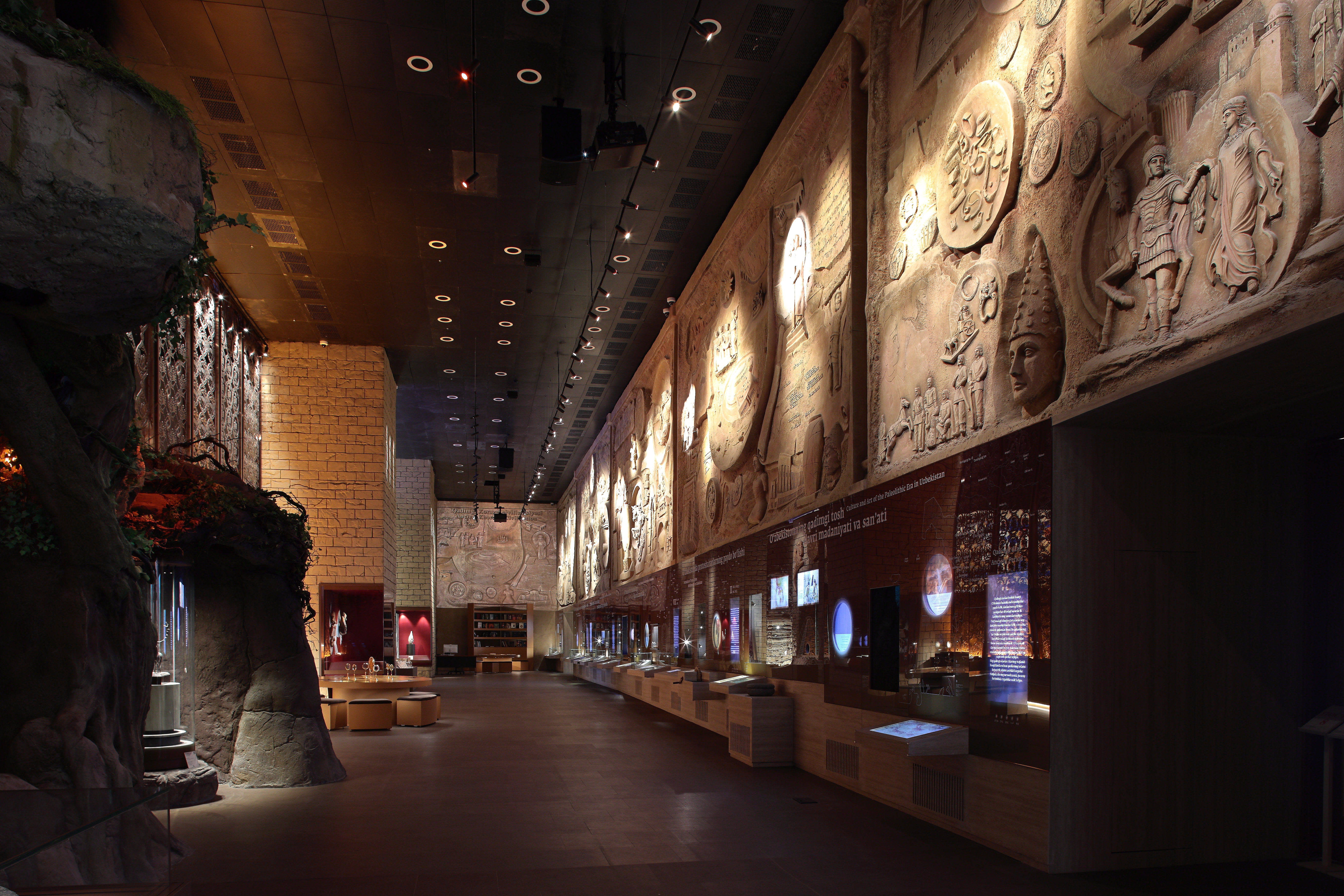 In the Center’s exposition, the section “Pre-Islamic Period Civilizations” features a 250-meter “Wall of Civilizations and Discoveries,” where the three-thousand-year history of statehood in our region is illustrated through bas-reliefs and miniatures. The role of women in family and social life in ancient society is also depicted separately. This demonstrates that the history of women and their contribution to the development of society have held significant importance since ancient times.
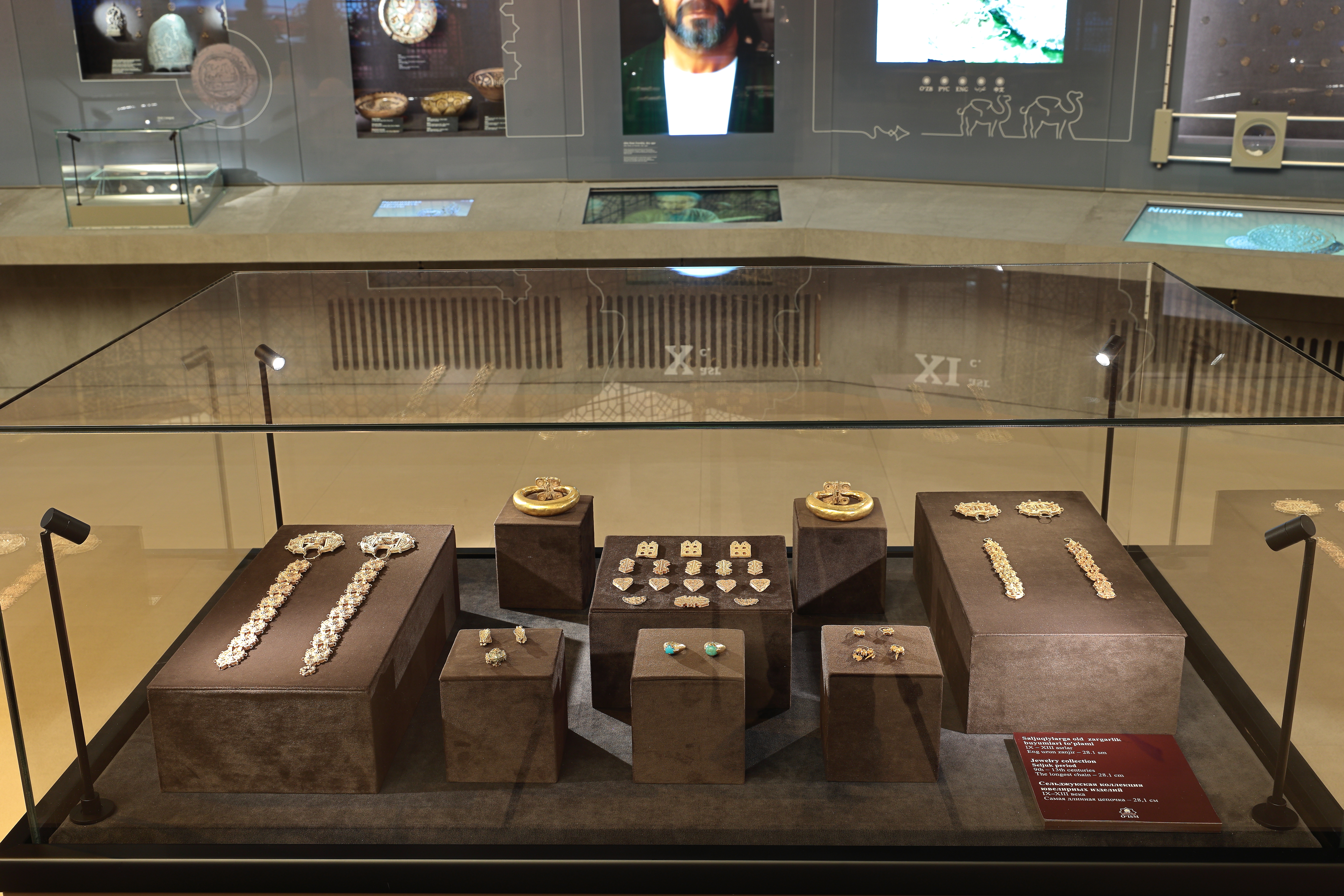 The First Renaissance exposition at the Center reflects the lives of great figures who lived and created during the Seljuk and Golden Horde periods, with particular emphasis on the role of women in the development of culture and art.
The Second Renaissance section is dedicated to the era of Amir Temur and the Timurid dynasty, where the flourishing of statehood, science, and cultural life is extensively presented. In this exposition, the images of women receive special attention: queens seated on thrones, women of the Timurid dynasty, and their influence on state affairs are demonstrated through interactive screen technologies.
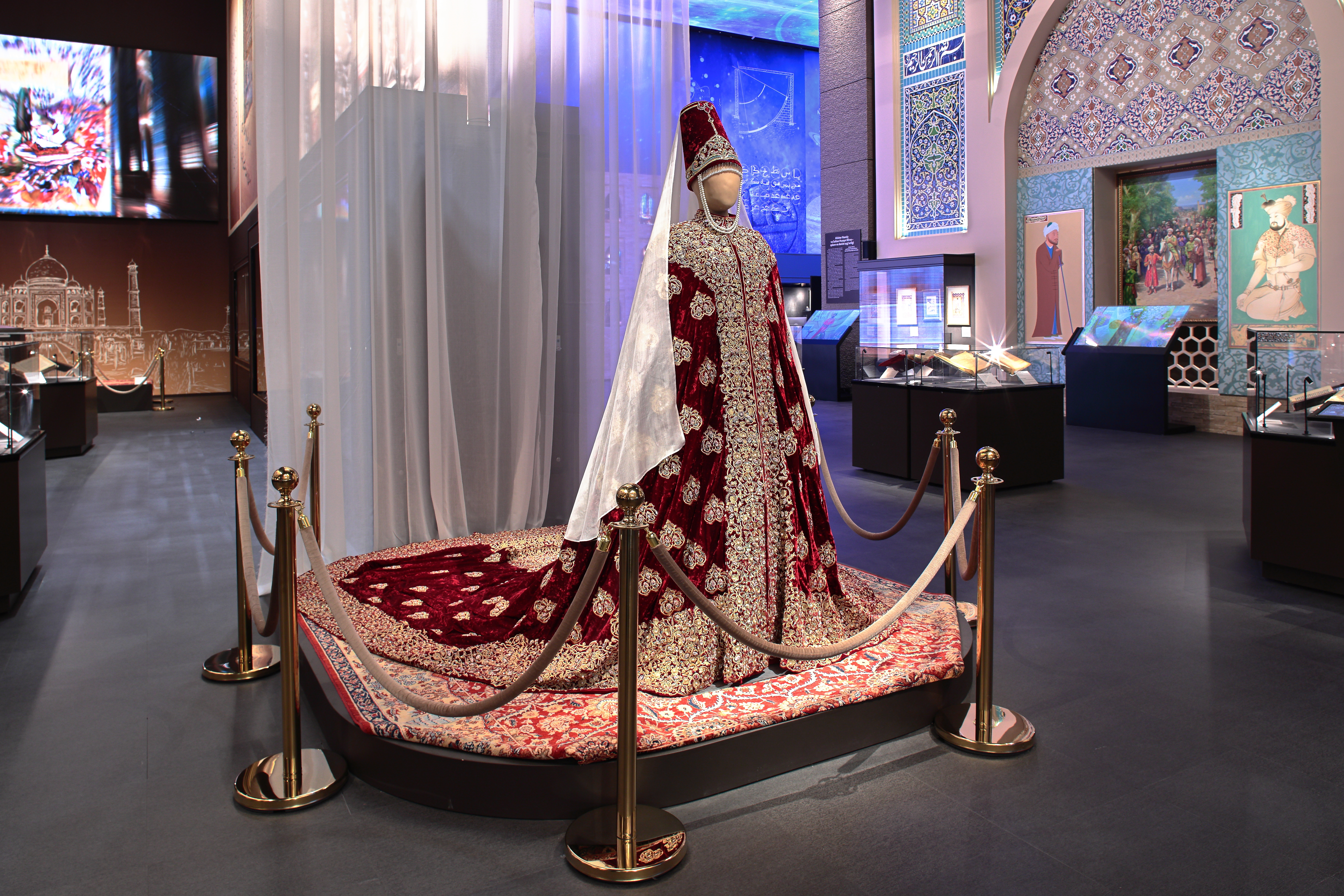 One of the important exhibits representing the cultural heritage of the Timurid period is the costume of Bibi-Khanum. This garment provides insight into the prestige of queens of that era and their role in state governance.
The lives of Timurid and Baburid queens such as Gawharshad Begum, Saraymulk Khanum, and Zeb-un-Nissa are also presented in a special interactive format. Through avatars — virtual representations of historical figures — and audio information, visitors can learn about their lives, activities, and creative heritage.
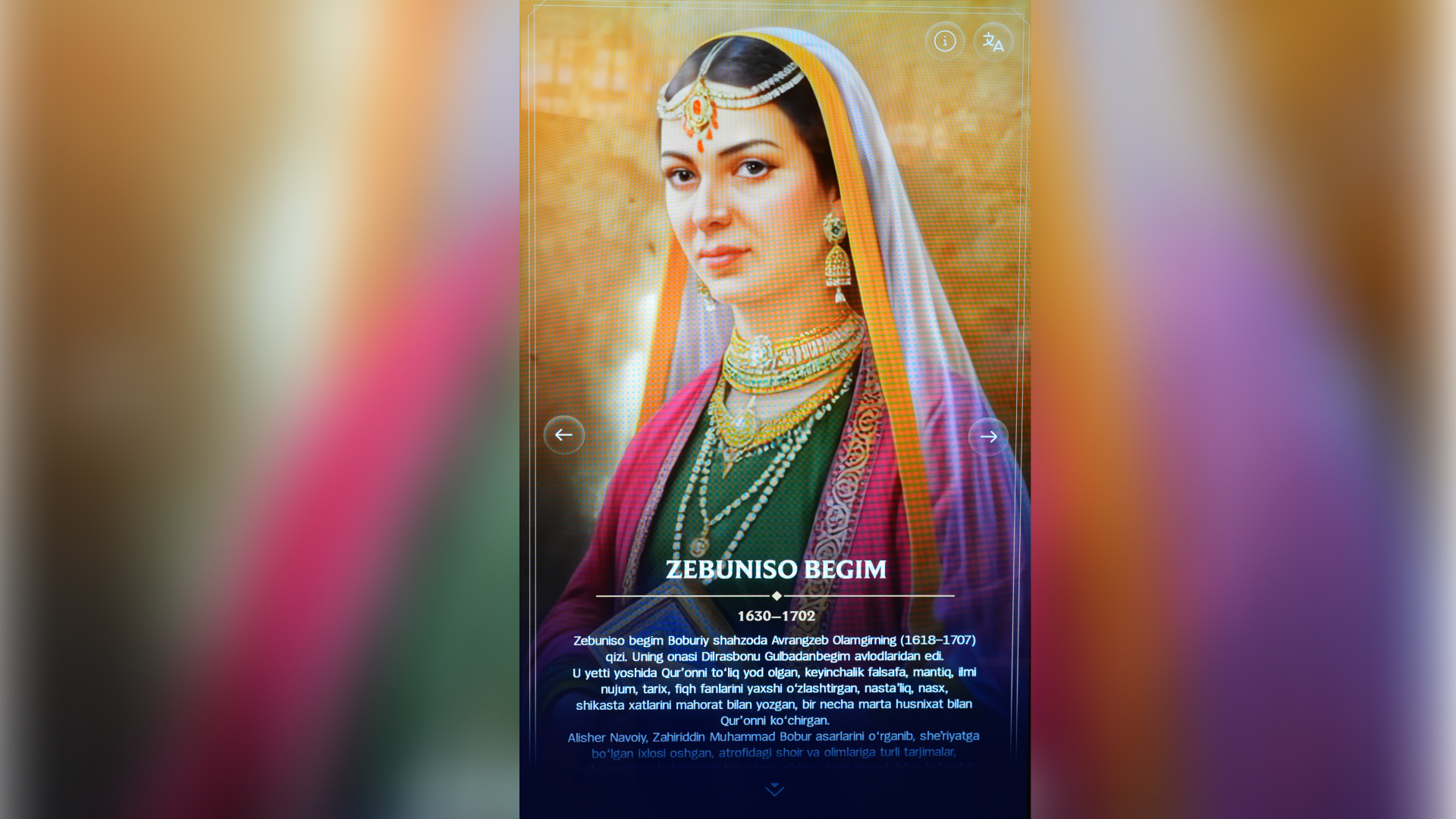
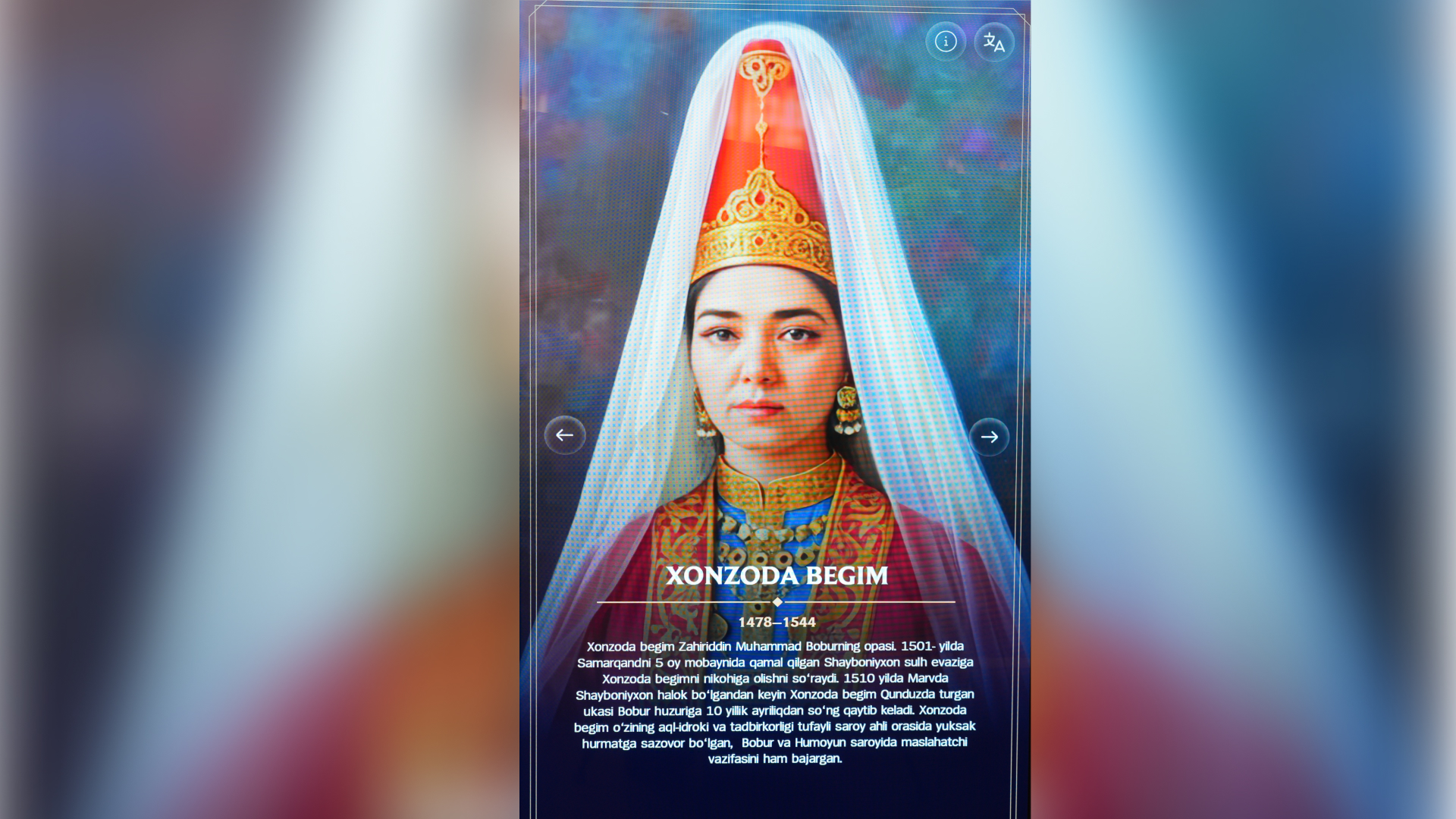 In the exposition, the women of the Timurid and Baburid dynasties are presented as living history. Among them, the image of Teginabegim, the mother of Amir Temur, expresses the role of mothers in raising children and their responsibility for the future of the nation.
In the image of Saraymulk Khanum, the determination of a queen who supported the ruler in state affairs and faced the trials of life with resilience is revealed.
Through the figure of Gawharshad Begum, the image of an enlightened woman who made a significant contribution to architecture and charitable works emerges, having commissioned the construction of mosques, madrasas, bridges, and hospitals.
Zeb-un-Nissa, a representative of the Baburid dynasty, is presented as a creative woman. Through her poetry she expressed her inner feelings and reflections on life, thereby leaving her name in the pages of history.
The Second Renaissance panel at the Center highlights the cultural revival processes that took place in the region between the fifteenth and twentieth centuries. Alongside architectural monuments, scientific works, and literary achievements, the panel depicts women and men playing musical instruments, showing that women also made a worthy contribution to the development of culture and art.
In the exposition, historical periods are presented through various artifacts, manuscripts, images, and multimedia tools. With the help of touch-sensitive screens, visitors can also become acquainted with the AI-generated representations of great scholars.
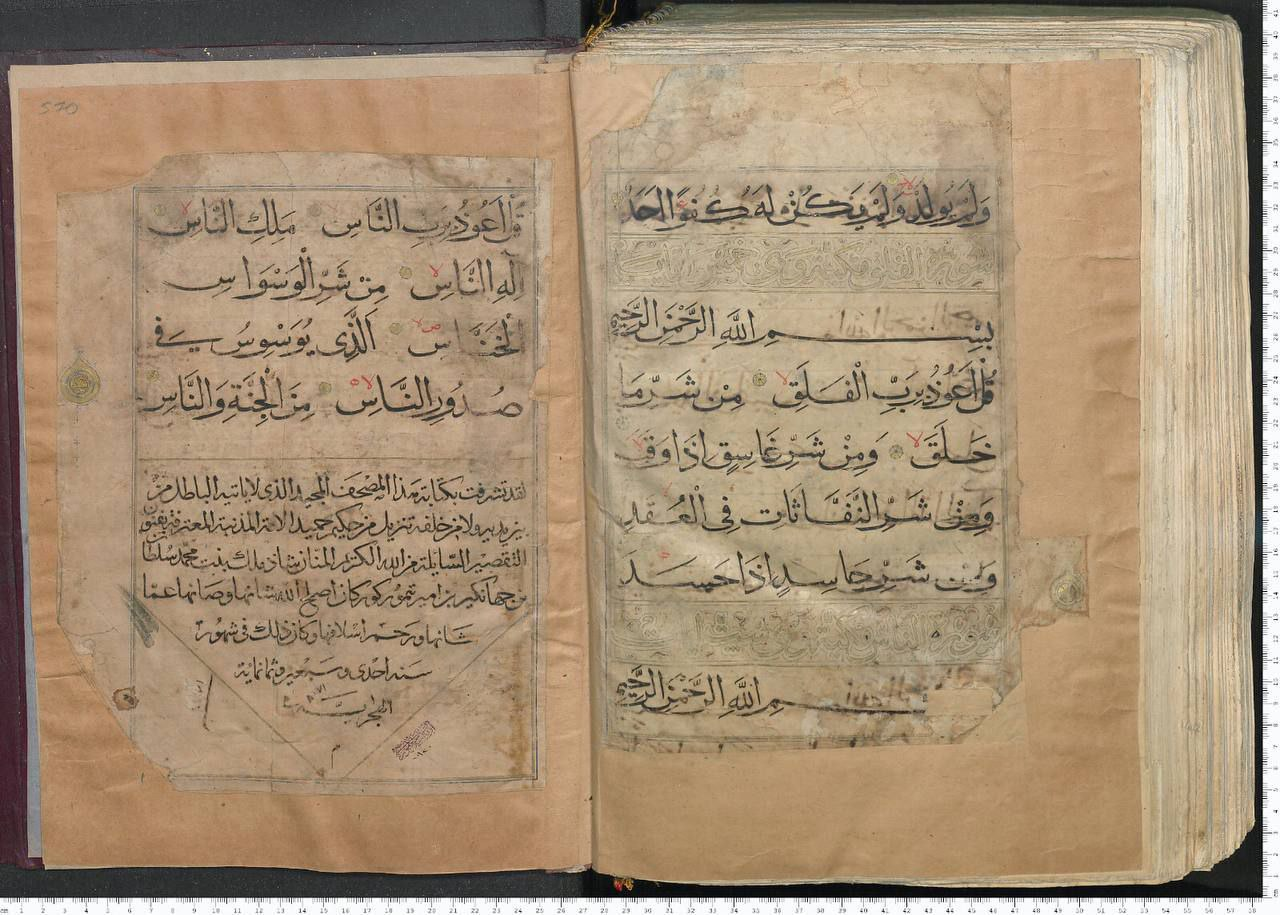 The Center also displays a model of a manuscript of the Holy Qur’an copied by the Timurid princess Shodmalik. This copy was transcribed in 871 AH (1467 CE) and is currently preserved in the Museum of Turkish and Islamic Arts in Istanbul. In the colophon of the manuscript, it is recorded that it was copied by Shodmalik, the daughter of Muhammad Sultan Mirza.
The Center also features an exposition dedicated to the Baburid period, where visitors can become acquainted with manuscripts, weapons, and personal items related to the era of Babur and his descendants. A model of the Taj Mahal mausoleum — considered one of the masterpieces of world architecture — is also displayed here.
The Taj Mahal was built in the seventeenth century by the Baburid ruler Shah Jahan in memory of his wife Arjumand Banu (Mumtaz Mahal). The mausoleum was constructed between 1632 and 1653 in the city of Agra, India, on the banks of the Yamuna River, and thousands of architects and craftsmen from Turkey, Iran, Transoxiana, and India took part in its construction. Today it is included in the UNESCO World Heritage List and is recognized as one of the finest examples of world architecture.
The Center’s exposition also covers the modern era. In the section “New Uzbekistan — New Renaissance,” the socio-economic and spiritual reforms implemented in recent years in our country are presented.
Here, women’s active participation in social life, gender equality, family values, as well as achievements in youth policy, sports, foreign policy, and tourism are demonstrated through interactive technologies.
Looking back at history through the exposition of the Islamic Civilization Center, we understand that the development of civilization is connected not only with the activities of great commanders or scholars, but also with the contribution of women who played an important role in society. From ancient times to the Timurid and Baburid periods, and up to the era of New Uzbekistan today, women have held an honorable place in the fields of enlightenment, culture, science, and governance.
The active participation of Timurid queens in state affairs, the contribution of enlightened women such as Gawharshad Begum to the construction of mosques, madrasas, and other charitable institutions, and the great literary and spiritual legacy of creative women such as Zeb-un-Nissa all clearly demonstrate that women played an active role in the development of civilization.
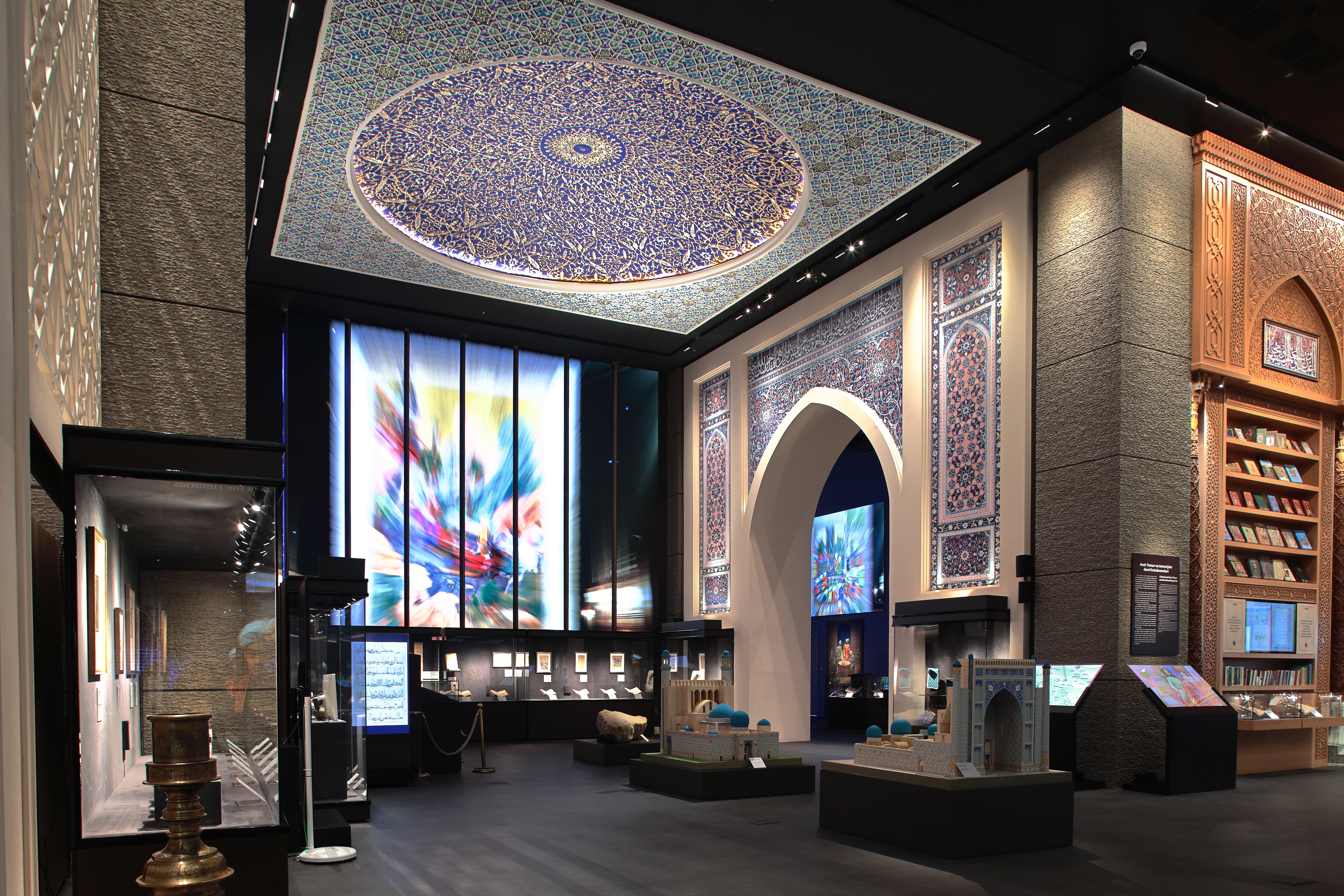 The expositions at the Islamic Civilization Center vividly and impressively reveal this truth. The images of women displayed here are interpreted not only as historical figures but also as spiritual symbols inspiring the development of society. Through them, an important truth is conveyed to future generations: the role of women in the progress of the nation and the rise of civilization is incomparable.
Durdona Rasulova
P.S. The article may be republished with a reference to the official website of the Center