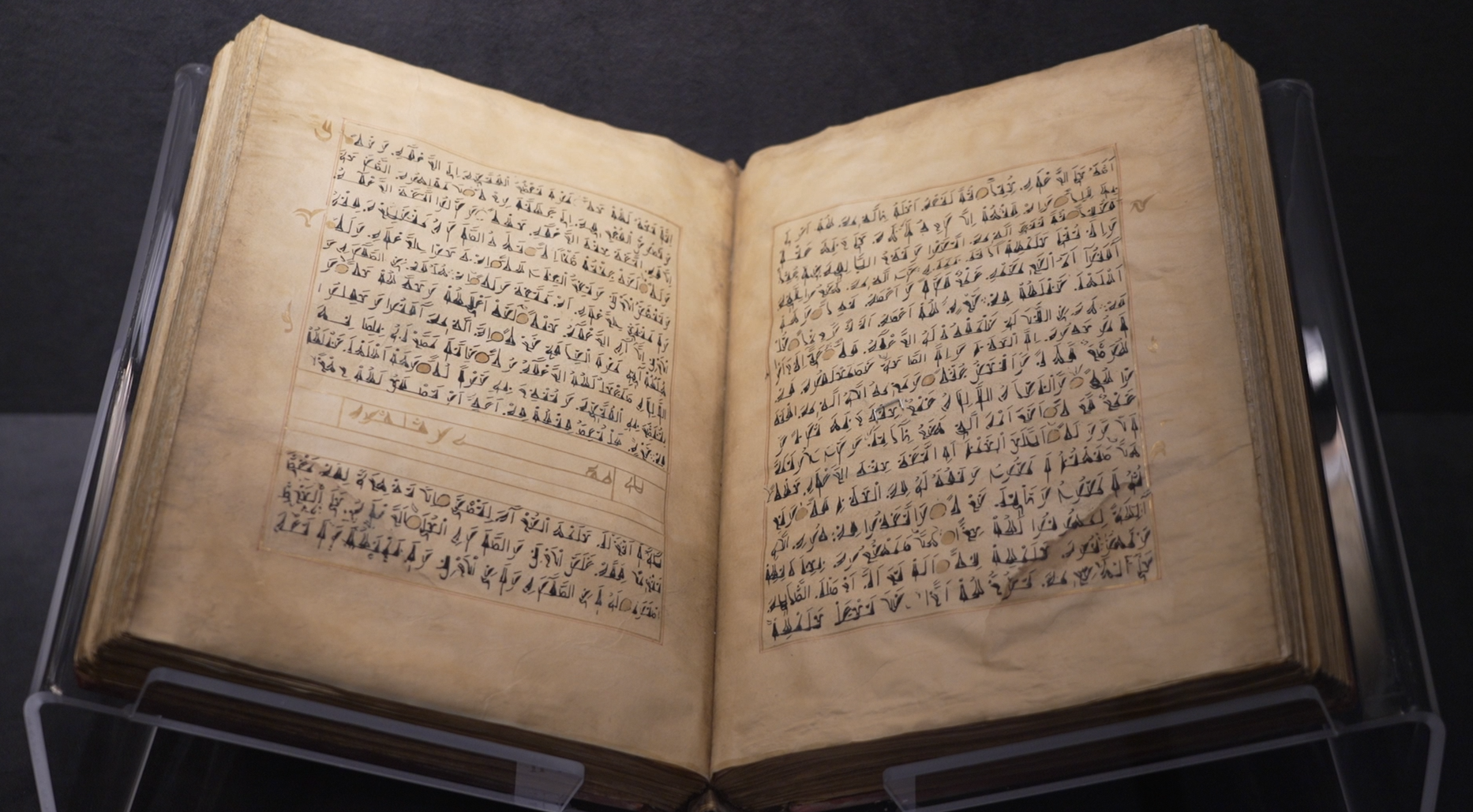
 In the history of Central Asia, the name of Zahiriddin Muhammad Babur is usually mentioned as a great commander, statesman, and the author of the work Baburnama. However, historical sources also show that Babur Mirza had a deep interest in Islamic sciences, calligraphy, and the culture of manuscript writing. In particular, his reverence for the Holy Qur’an and his efforts aimed at reforming the Arabic script reveal another dimension of this great figure — as an enlightened scholar.
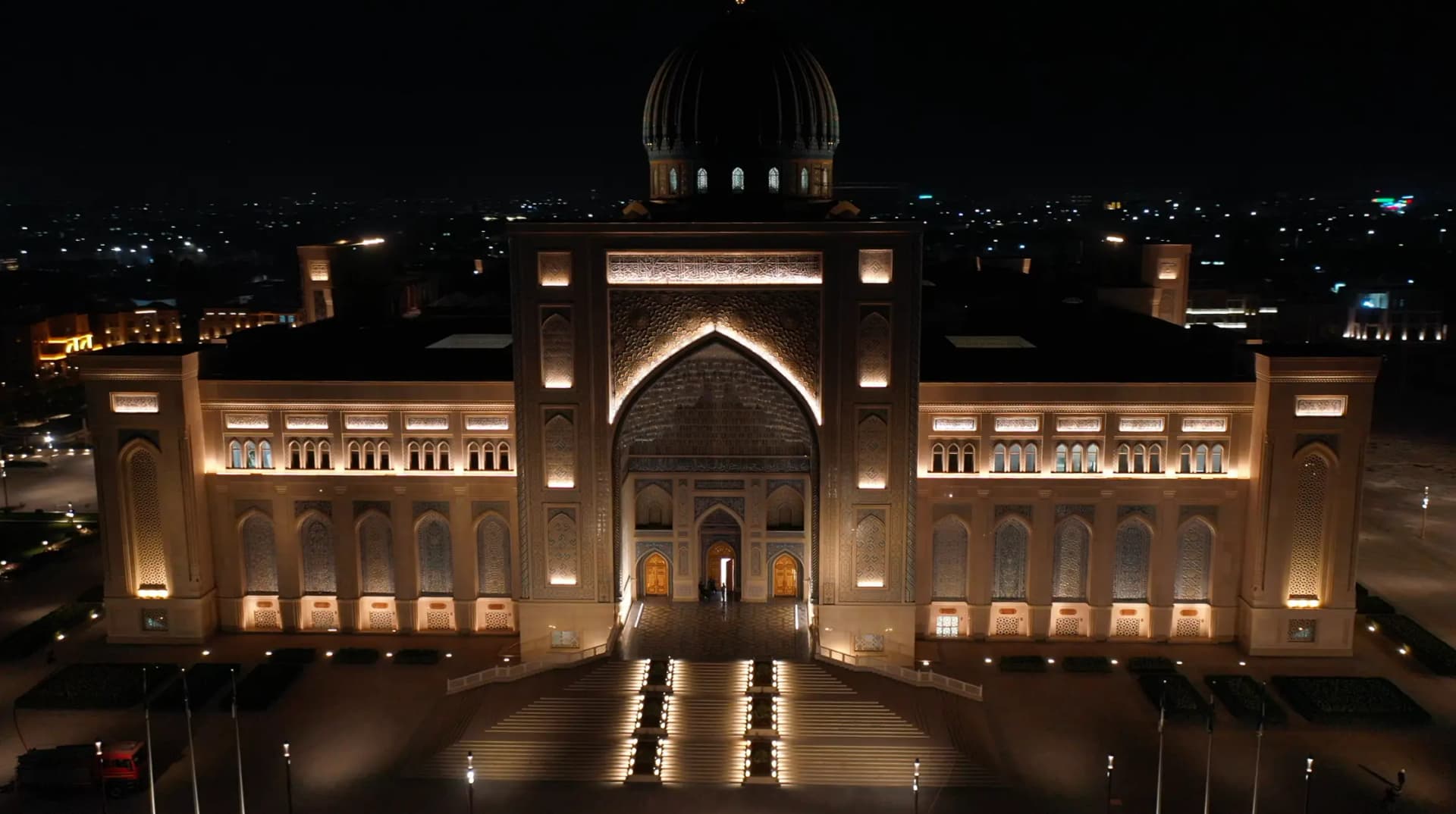
The exhibitions of the Center, established at the initiative of the President of the Republic of Uzbekistan, Shavkat Mirziyoyev, bring together authentic historical artefacts from various periods, demonstrating the rich cultural and scientific heritage of Central Asian civilization. The “Baburi Mushaf” holds special significance as one of the rarest examples of this heritage. At the same time, it serves as a unique historical source that provides valuable information about Islamic manuscript culture, the history of calligraphy, and the spiritual world of Babur himself.
According to sources, Babur treated the Holy Qur’an and Islamic scholarship with great reverence. In two of his decrees related to state governance, more than 50 Qur’anic verses are cited. This indicates that Babur possessed deep knowledge of religious sources and used them as a foundation even in matters of state administration. These decrees, originally written in Persian, were later translated and included in the six-volume collection of Babur’s works published with the support of the Islamic Civilization Center and the International Public Foundation named after Babur.
Babur Mirza also attempted to create a new graphic system aimed at simplifying writing by revising the Arabic alphabet. As a result, a script known in history as “Khatti Baburi” emerged. Although this alphabet was based on the Arabic script, it differed from it in several aspects. It consisted of 29 letters, and through this system Babur sought to simplify writing and adapt it to the phonetic norms of Turkic languages.
Abdumajid Madrahimov, Doctor of Historical Sciences, Professor:
Information about “Khatti Baburi” is presented in a special treatise written by Babur. In it, issues such as reforming the script, simplifying the shapes of letters, and making them easier to read are discussed. There are also reports that during his rule in India, Babur sent some of his poems written in this script to Movarounnahr and Afghanistan. He sent these manuscripts to his son Humayun Mirza, as well as to Khoja Kalon and Hindol Mirza.
According to historical records, the Holy Qur’an was also copied in the “Khatti Baburi” script, and this copy became known as the “Baburi Mushaf.” Sources note that Babur sent this Qur’an manuscript to the holy city of Mecca. This fact also demonstrates that Babur placed importance on strengthening cultural and spiritual ties with the sacred centers of the Islamic world.
Researchers also mention Babur Mirza when discussing the Fergana school of calligraphy and the manuscript traditions of Central Asia. In some academic works, it is even emphasized that Babur’s name stands at the head of the list of representatives of the Fergana calligraphy school. This indicates that he is recognized not only as a poet and commander but also as a figure who influenced calligraphic traditions.
The original copy of this unique manuscript known as the “Baburi Mushaf” is preserved today in the library of the Imam Reza shrine complex in the city of Mashhad, Iran. This manuscript is regarded as an important source for studying the writing culture and manuscript art of the Babur era.
Today, interest in this historical heritage continues to grow. In particular, this rare manuscript associated with the name of Babur is currently displayed in the exhibition of the Islamic Civilization Center, in the Babur sector of the Second Renaissance section.
Laylo Abdukakhkharova
P.S. The article may be republished with a link to the official website of the Center