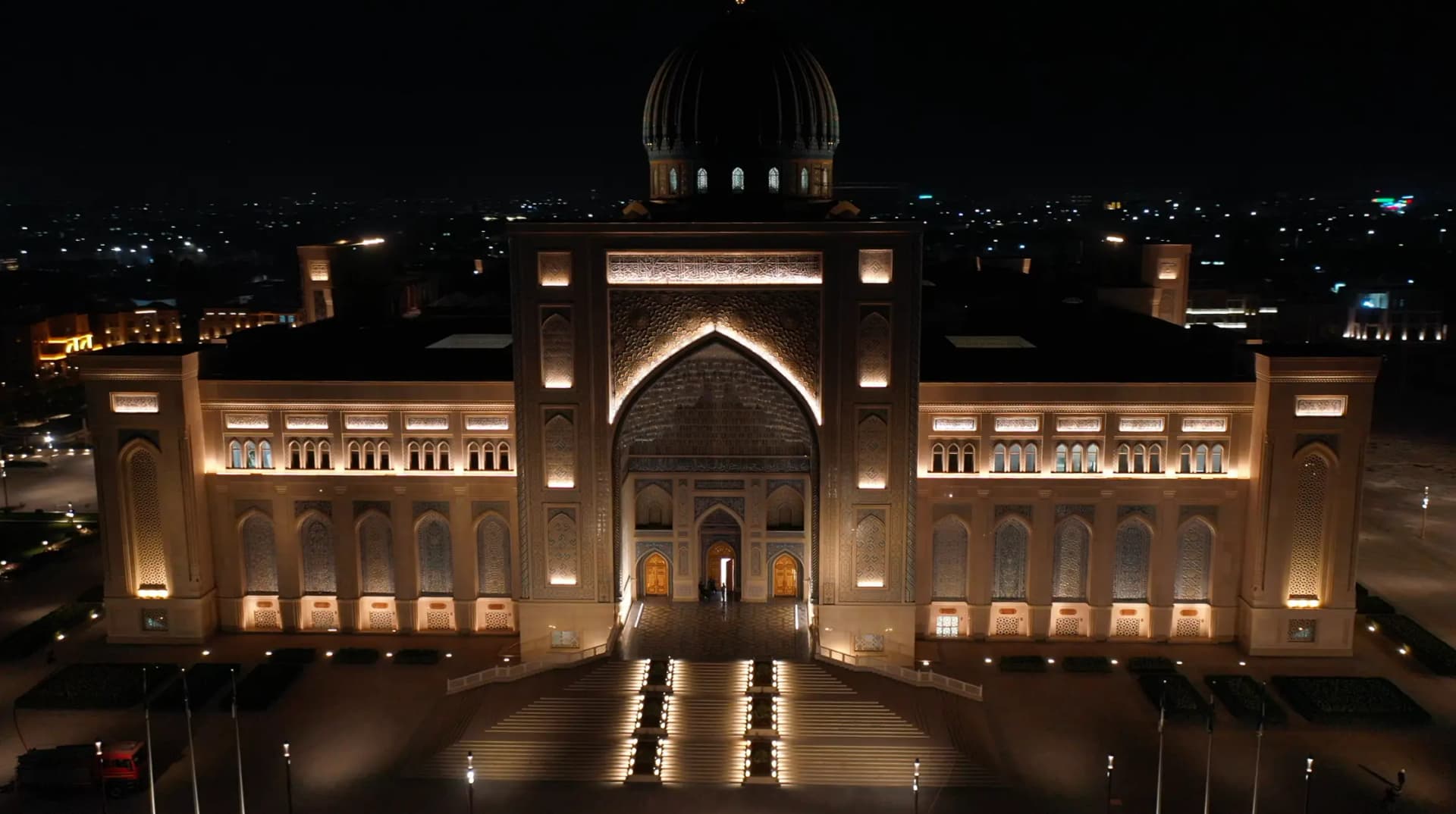
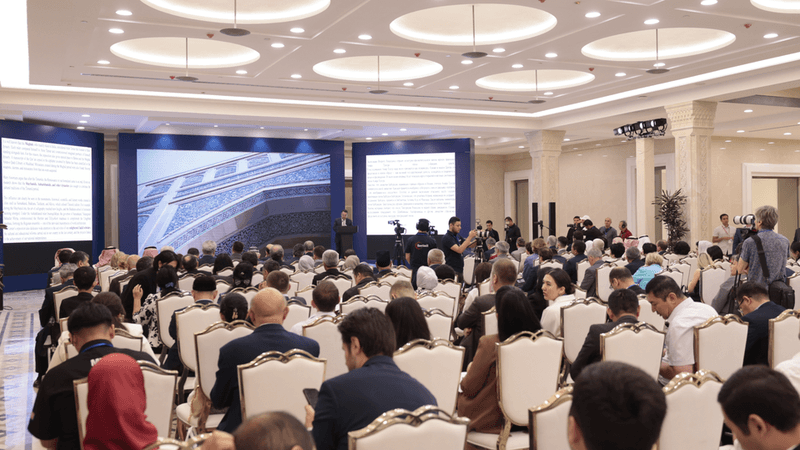
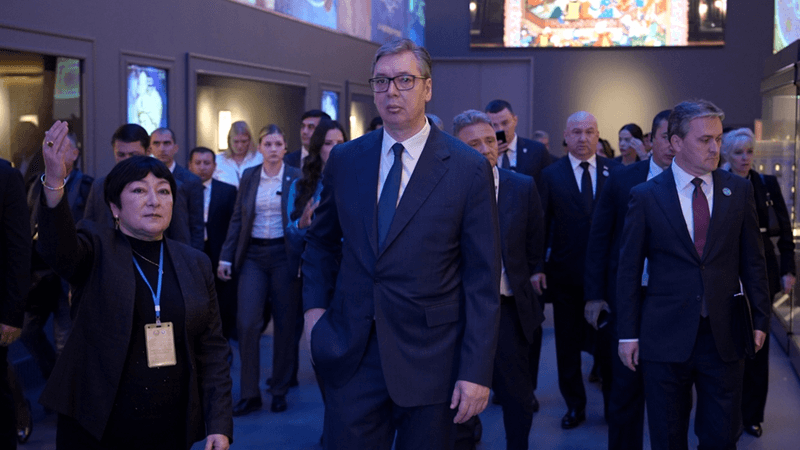
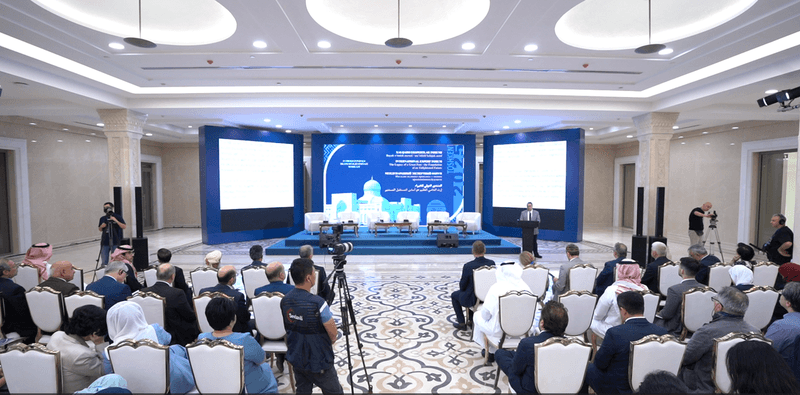
 At the exhibition of the Islamic Civilization Center in Uzbekistan, visitors can learn the ancient alphabet and try writing it themselves through interactive technologies. This script was widely used in Central Asia 2,000 years ago.
The territory of Central Asia has long been formed as a crossroads of major civilizations. Various peoples, cultures, and languages developed here in interaction with one another. One of the most ancient and significant cultural centers among them was Bactria. Ancient Bactria holds special importance not only for its political and economic life but also for its scientific and cultural heritage, particularly its traditions of writing and language. The Bactrian civilization occupies an important place in the history of Central Asia and created a solid foundation for cultural traditions that developed in later periods.
The territory of Bactria largely corresponds to the northern part of present-day Afghanistan, the southern regions of Tajikistan, and the southeastern part of Uzbekistan. Since ancient times, this region was one of the key points of trade routes, especially the Silk Road. As a result, Bactrian culture was enriched through the influence of various peoples and civilizations. Archaeological discoveries, monuments, and written samples demonstrate that a highly developed cultural life existed in this region.
One of the most significant aspects of the Bactrian civilization is its writing system. The Bactrian script was used in the ancient territory of Bactria and was mainly formed on the basis of the Greek alphabet. This reflects Bactria’s close connection with Hellenistic culture. During the Greco-Bactrian Kingdom, which ruled in the III–II centuries BCE, Greek served as the official language. As a result, the Greek alphabet was adapted to the local language, giving rise to the Bactrian script.
“The Bactrian language belongs to the Iranian language family and was in use approximately from the 1st to the 9th centuries CE. It holds an important place in history as one of the ancient languages of Central Asia. Although the Bactrian script was based on the Greek alphabet, additional characters were introduced to represent certain sounds that did not exist in Greek. For example, the letter ‘ϸ’ (sho) was specifically created to represent the /sh/ sound. The script was written from left to right and consisted of 24 letters: 23 Greek letters and one special letter ‘ϸ’,” said Anvar Matniyozov, Leading Researcher at the Islamic Civilization Center in Uzbekistan.
The widespread use of the Bactrian script is particularly associated with the Kushan period. The Kushan Empire, which ruled during the 1st–4th centuries CE, became a major political power across Central Asia and adjacent territories. During this time, the Bactrian language was recognized as a state language and began to be used in official documents and inscriptions. Inscriptions from the reign of the Kushan king Kanishka are among the most famous examples of the Bactrian language and script.
For example, the following inscription in Bactrian:
ϸαο κανηϸκι κοϸανο
This phrase means “Kushan King Kanishka.” Such inscriptions not only provide information about historical figures and political authority but also serve as important sources about the language, culture, and administrative systems of that era.
The Bactrian script holds special importance in the study of linguistic history. Unlike writing systems such as Aramaic, Pahlavi, or Sogdian, it is one of the rare scripts created on the basis of the Greek alphabet. This reflects the uniqueness of Bactrian culture and its interaction with the Hellenistic world.
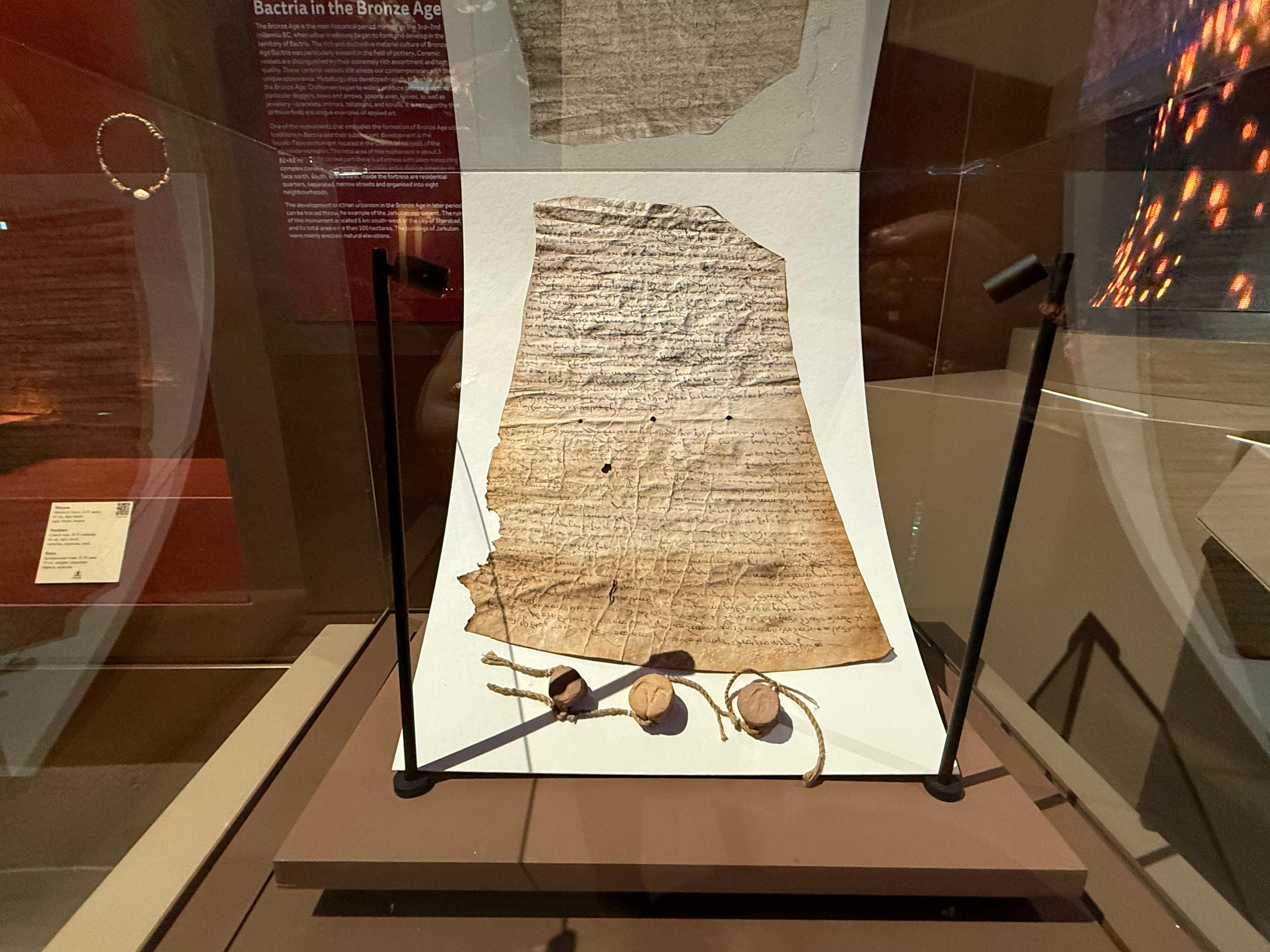
Today, a sample of this script is displayed as an important part of the exhibition at the Islamic Civilization Center in Uzbekistan. Information about the Bactrian script and its examples are presented in the “Pre-Islamic Period” section of the Center. Through this exhibition, visitors can understand that long before the arrival of Islam in our region, highly developed cultural and scientific traditions already existed here.
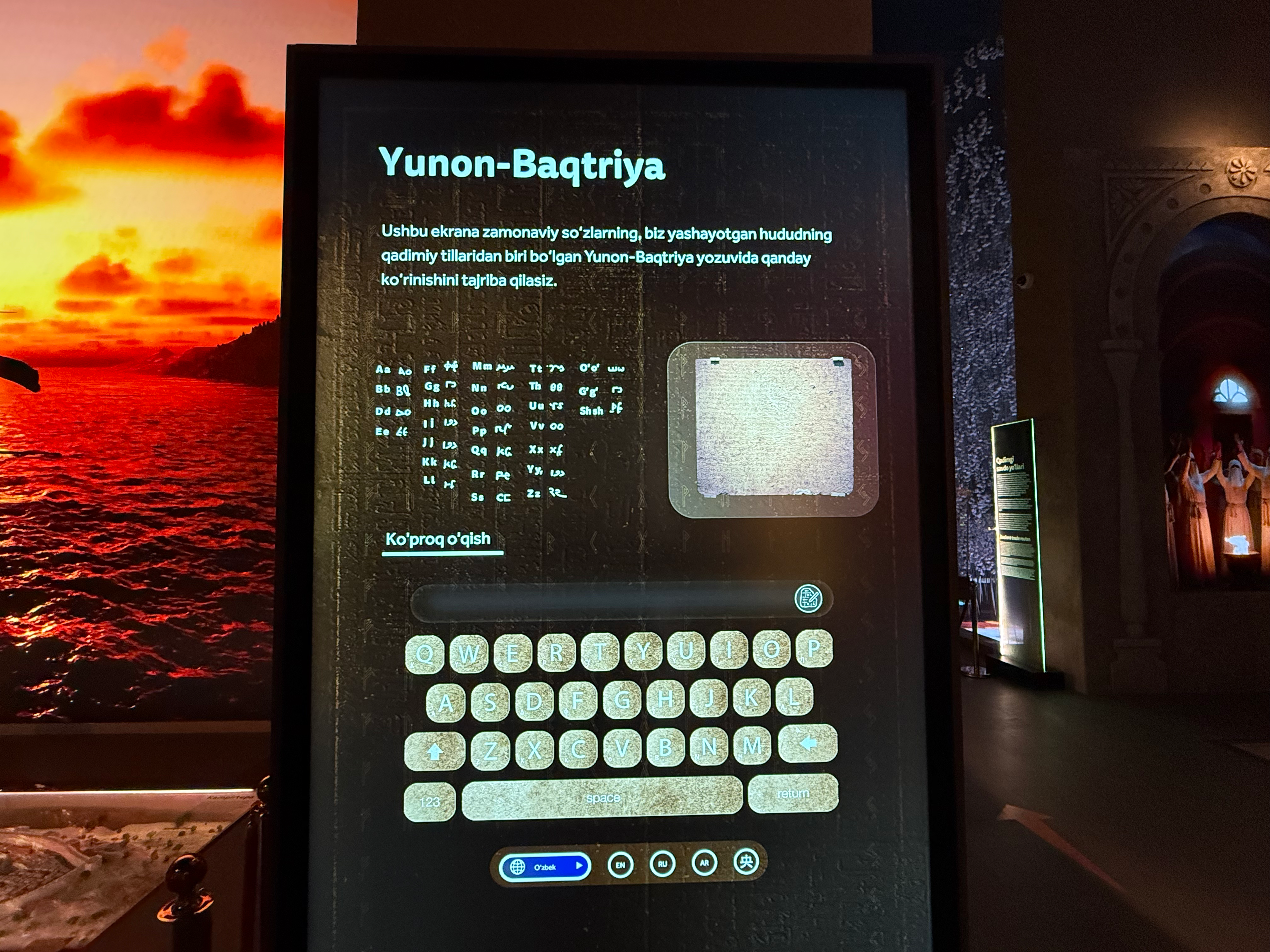 Particularly noteworthy is the use of modern interactive technologies in the exhibition. Large screens display Bactrian letters and words. Visitors can try writing the Bactrian alphabet themselves directly on the screen. This makes the museum exhibition more dynamic and engaging, allowing historical heritage to be understood through modern methods.
Thus, the Bactrian script is not only a rare monument of an ancient civilization but also an important tool today for understanding history, preserving cultural heritage, and presenting it to a wider audience. The Center’s exhibition showcases this rich heritage through modern technologies, enabling visitors to connect directly with the past.
Durdona Rasulova
P.S. The article may be republished with a reference link to the Center’s official website