 As the Head of our state has emphasized, one of the main objectives of the Islamic Civilization Center in Uzbekistan is to study in depth and widely promote the three-thousand-year-old rich history of our people, their creative potential, their immense contribution to world civilization, and the cultural and educational heritage left by our great ancestors.
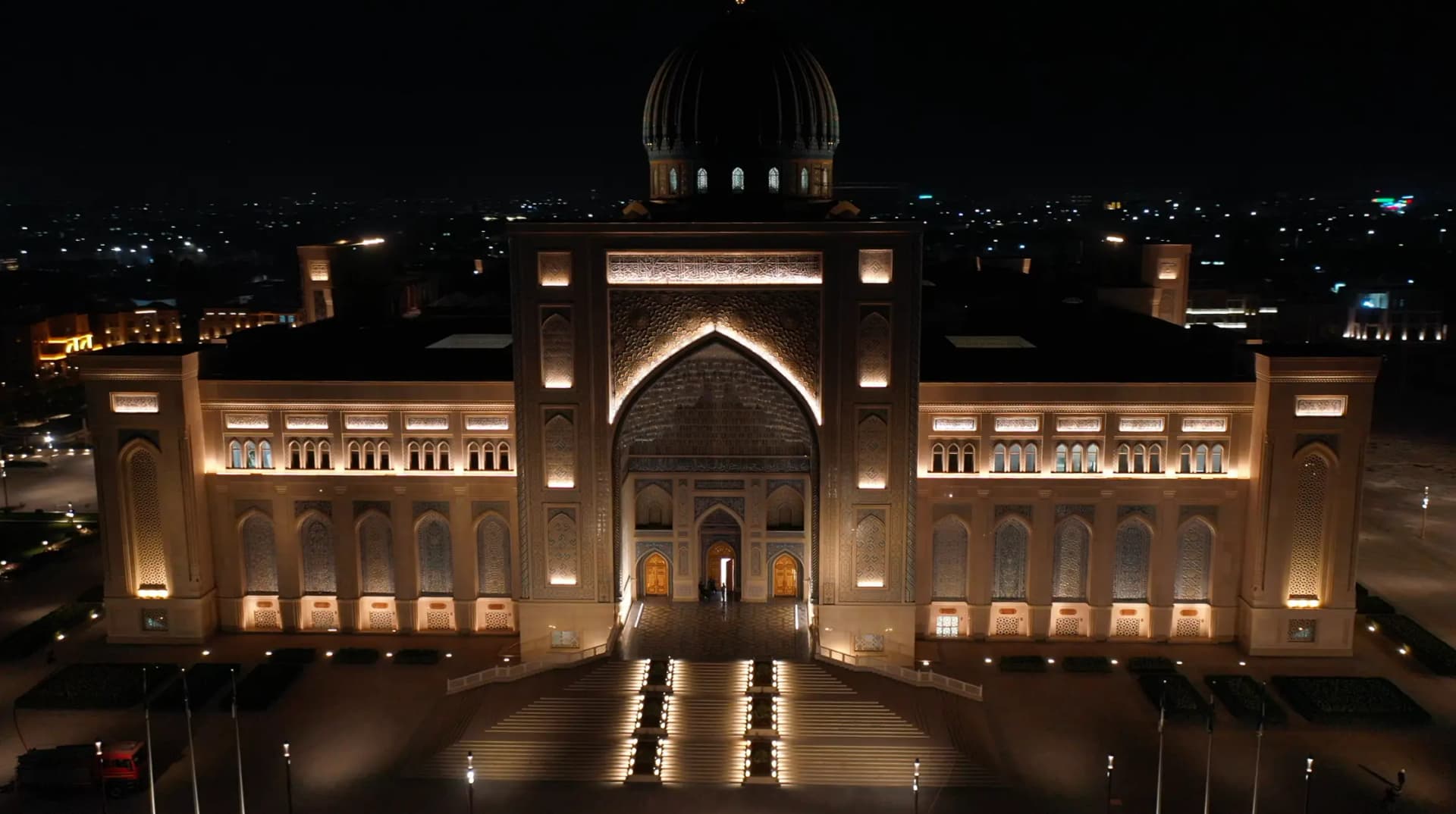
This grand complex was built as a result of nearly nine years of consistent effort and large-scale construction work. With its monumental appearance, vast territory, and rich content, the Islamic Civilization Center in Uzbekistan is considered one of the largest scientific and educational complexes in the world dedicated to the study and promotion of the history, culture, and civilization of Islam.
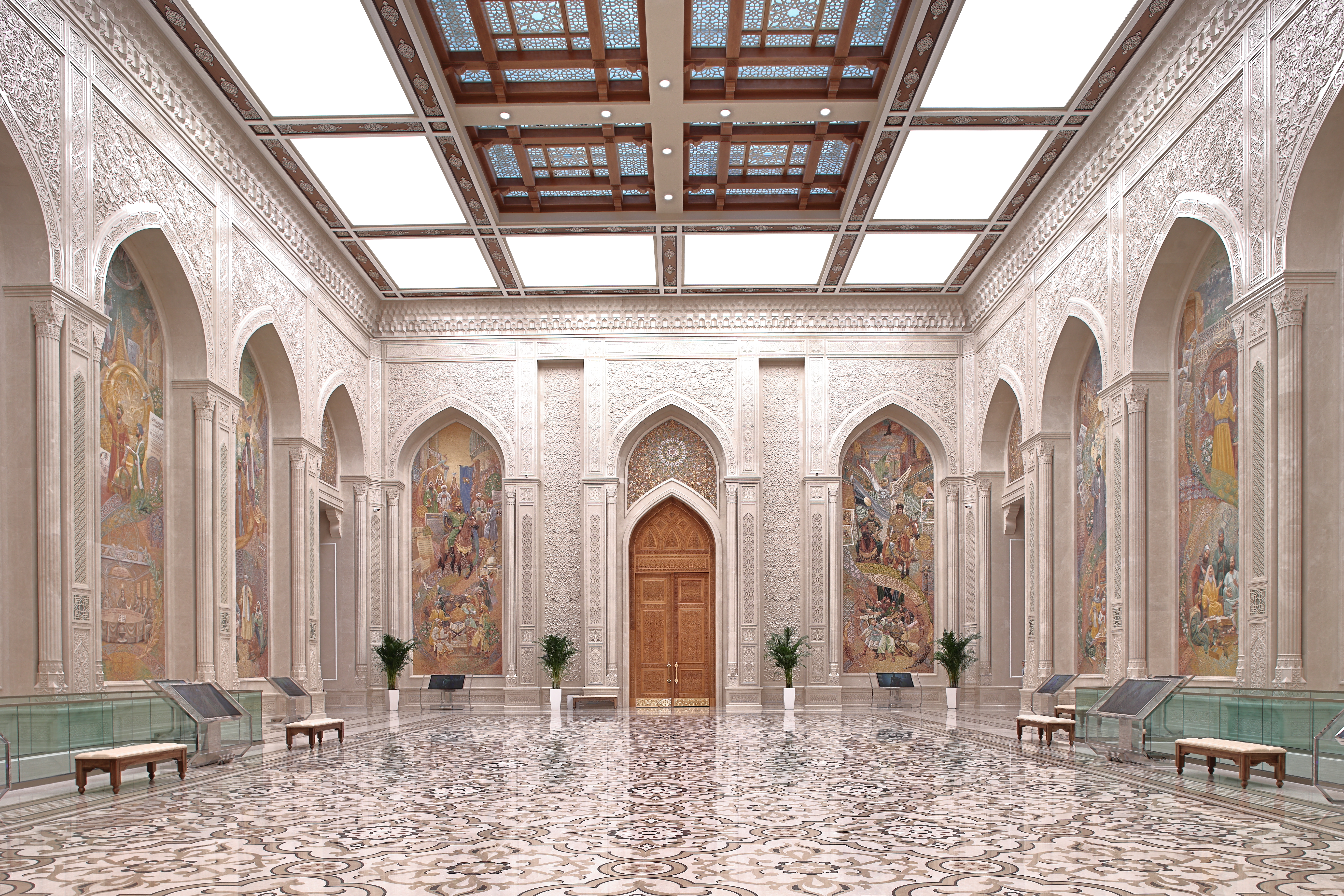
The “Gallery of Great Figures,” located at the entrance of the Center, can be accessed through three doors — one large and two medium-sized — crafted based on the traditions of Uzbek craftsmanship. These doors embody national traditions of ornamental painting and wood carving and harmoniously complement the overall architectural appearance of the building.
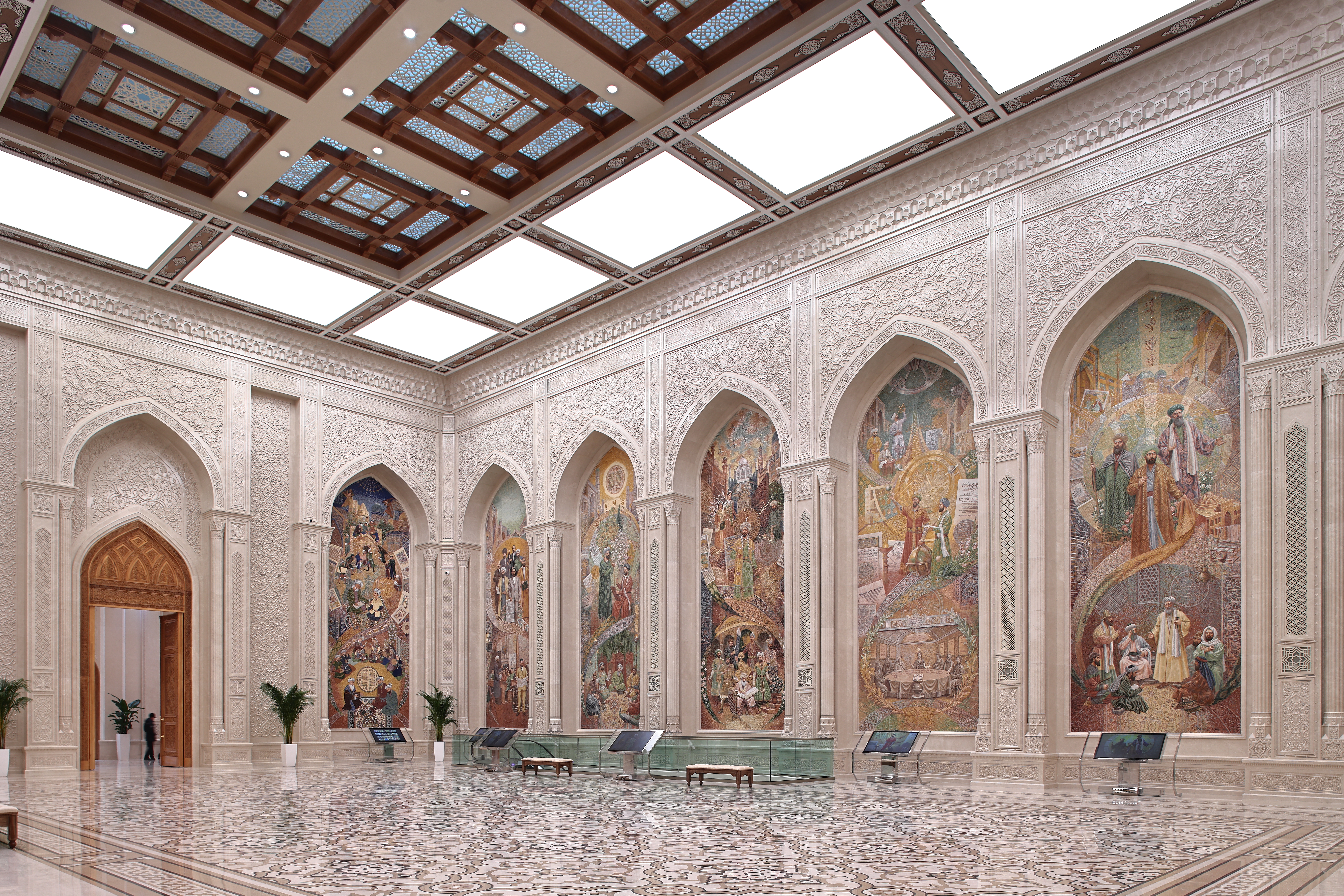
Along the perimeter of the foyer are fourteen semi-oval arches decorated with pictorial compositions that artistically depict the most significant stages in the history of Central Asia. These works portray the rich past of our land, as well as the lives and activities of great scholars and historical figures. The frescoes were created using micromosaic stones in 110 different colors, each tiny piece assembled by hand. These complex works of art were produced in cooperation with Chinese specialists.
The arches depict scenes from the First and Second Renaissance periods, as well as representations of great figures such as Muhammad al-Khwarizmi, Ahmad al-Fergani, Imam Bukhari, Imam Tirmidhi, Abu Ali ibn Sina, Abu Rayhan Beruni, Jalal al-Din Manguberdi, Amir Temur, Mirzo Ulugbek, Alisher Navoi, Zahiriddin Muhammad Babur, and the Jadid reformist intellectuals.
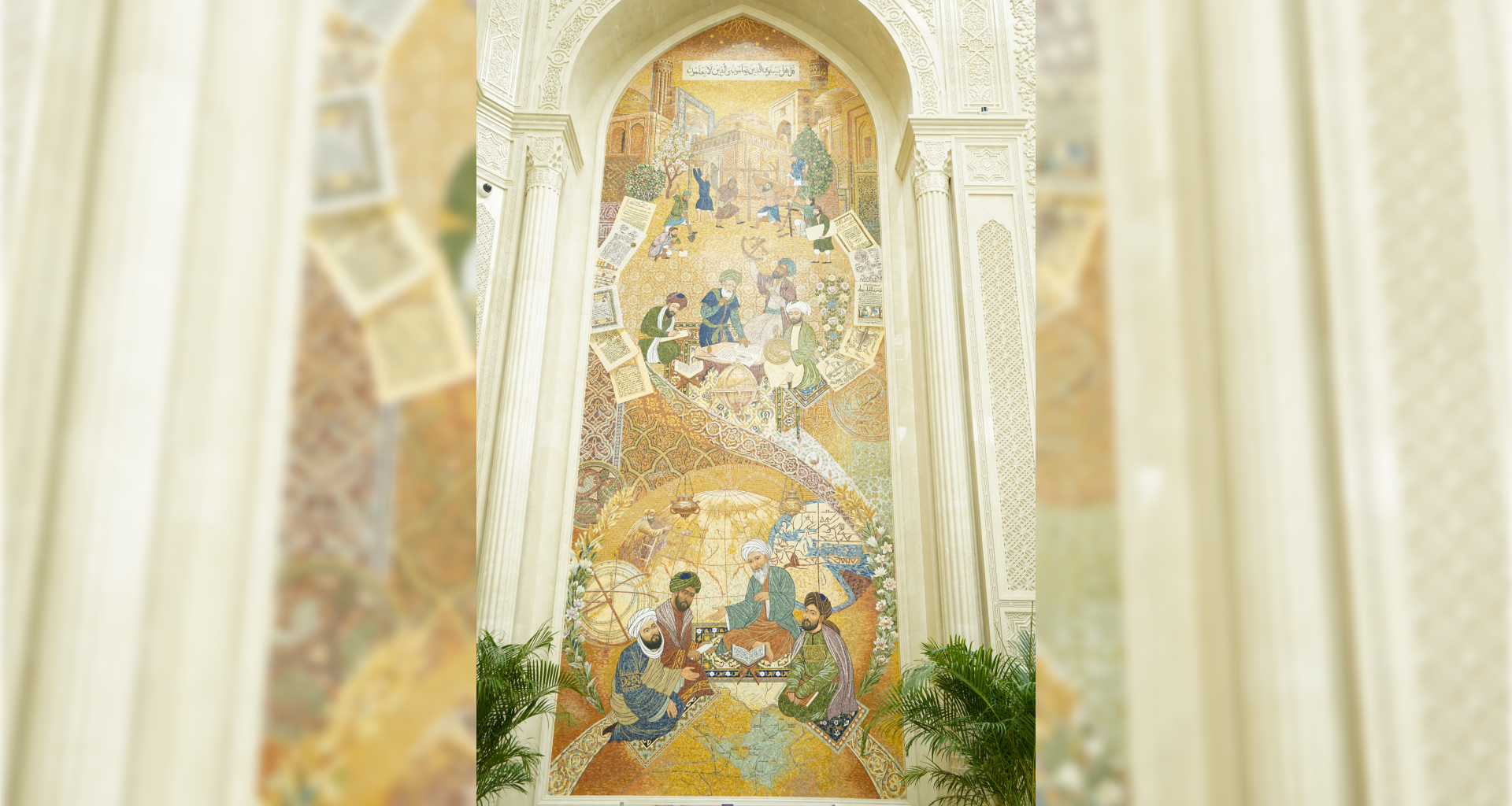
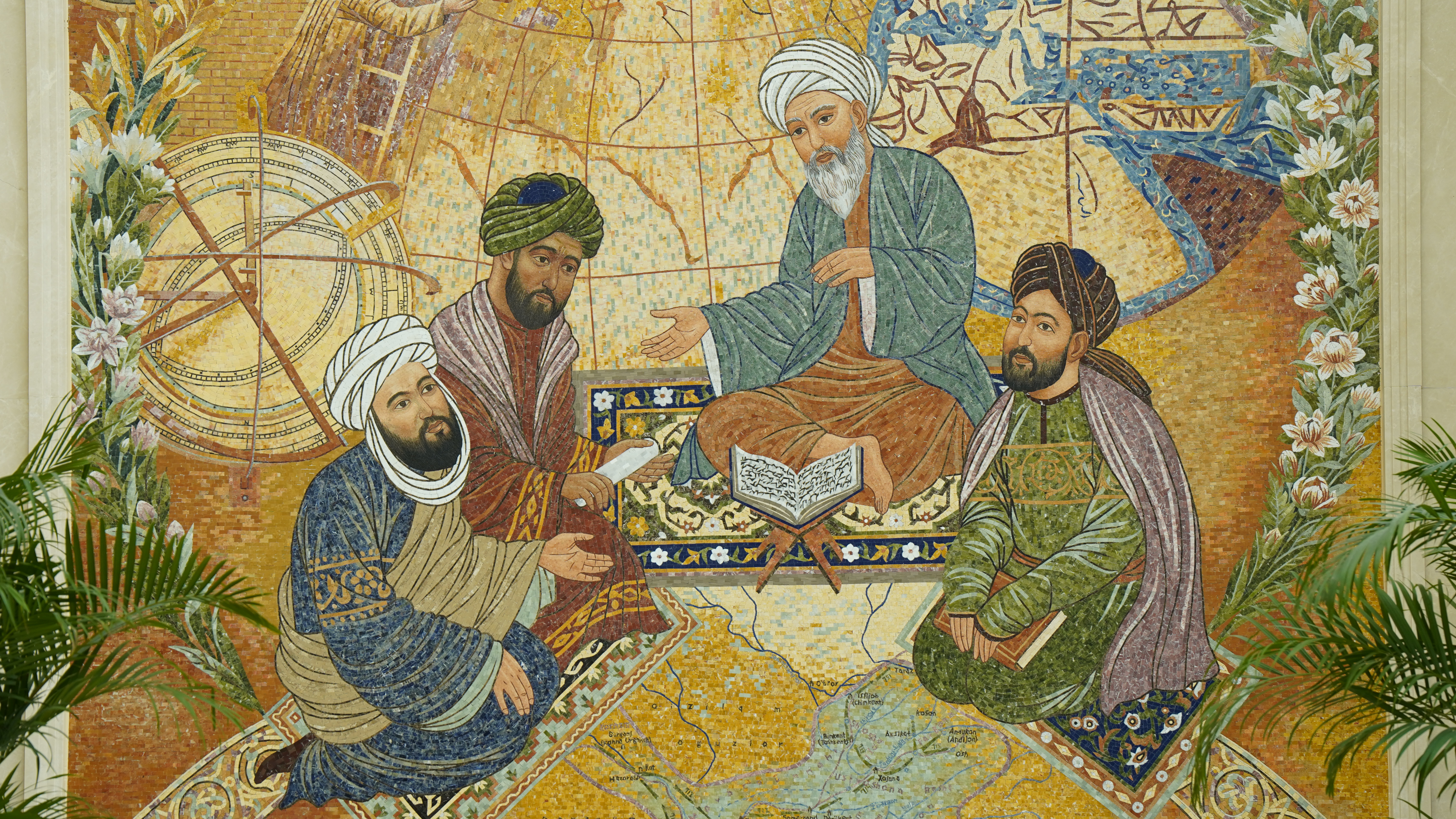
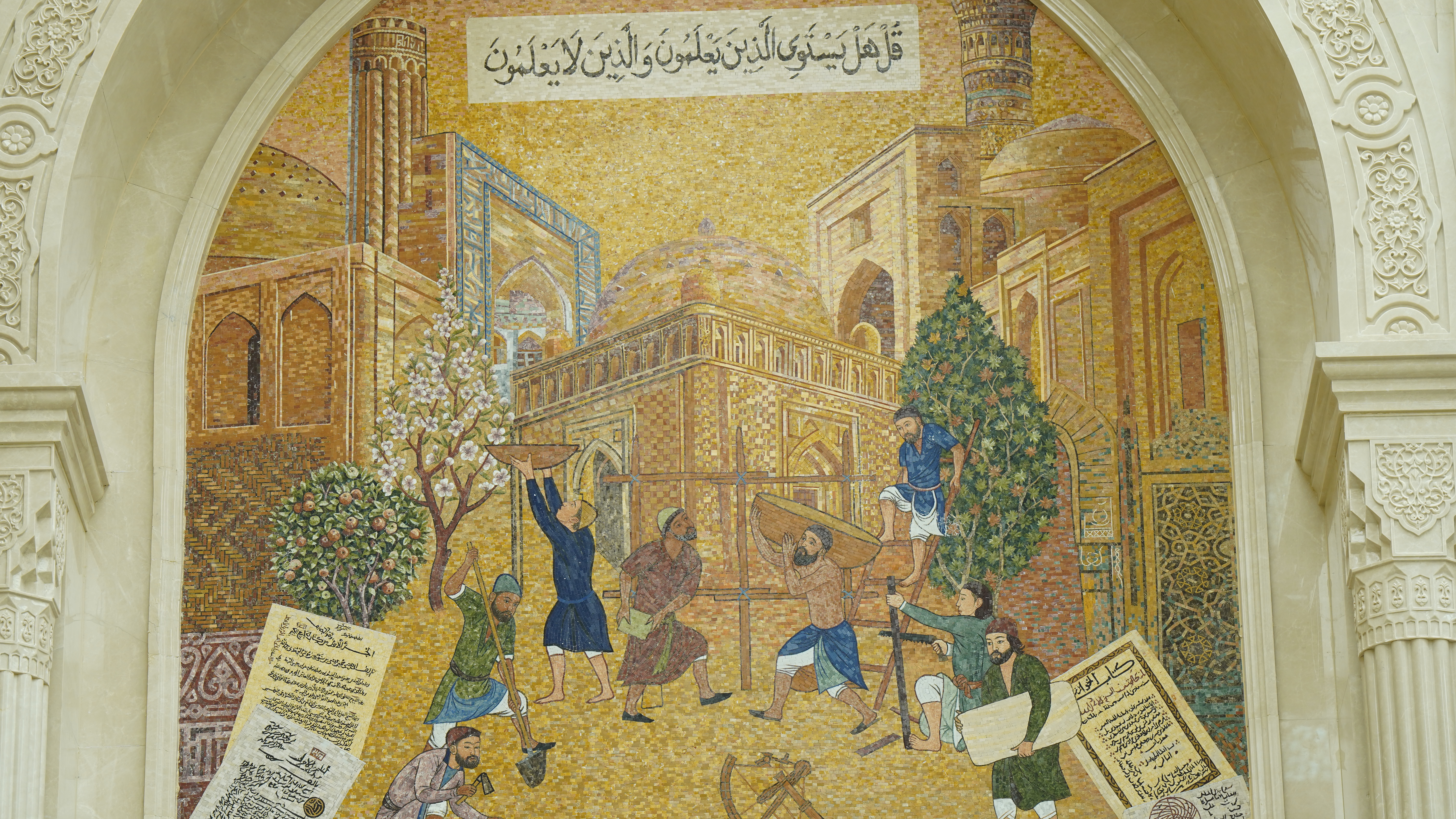
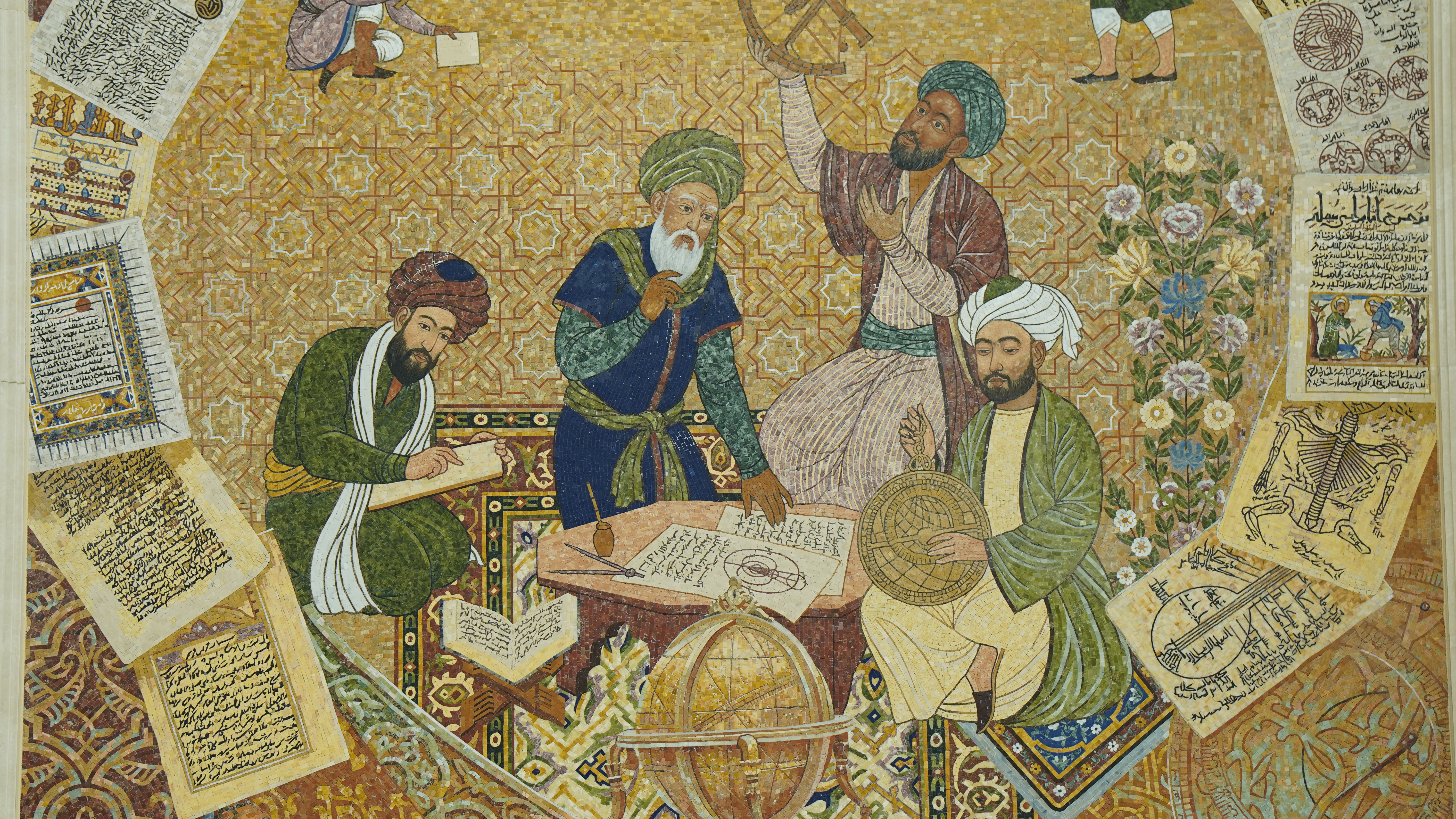 One of the arches presents, in a generalized artistic interpretation, the profound historical and cultural transformations that took place following the arrival of Islam in Central Asia. The call of Islamic teachings toward knowledge and enlightenment, its promotion of peace and harmony, its elevation of human dignity, and its encouragement of constructive ideas marked the beginning of a new era in the region’s history. During this period, schools established near mosques gradually developed into a comprehensive educational system. Elementary and secondary schools, higher institutions such as madrasas, and scholarly circles formed around prominent scholars transformed Mawarannahr into a major center of learning.
In Arab sources, this region — known as “Mawarannahr,” meaning “the land beyond the river” — quickly became one of the leading centers of Islamic scholarship. Hundreds of scholars, including Abu Hafs Kabir, Abdurahman Darimi, Imam Bukhari, Imam Tirmidhi, Imam Maturidi, Qaffal Shashi, and Burhaniddin Marghinani, elevated the sciences of hadith, tafsir, kalam, and fiqh to the highest levels. The well-known saying often mentioned in academic circles — “If the tree of Islamic teaching was planted in Arabia, its fruit ripened in Mawarannahr” — perfectly reflects this historical reality.
During this period, not only religious sciences but also exact, natural, and social sciences developed remarkably in Mawarannahr. Outstanding achievements were made in mathematics, astronomy, medicine, mineralogy, geography, philosophy, historiography, and literature. Muhammad al-Khwarizmi’s refinement of the decimal positional number system and his introduction of the concept of zero into mathematics created a revolutionary turning point in the history of the discipline. Ahmad al-Fergani’s work Foundations of Astronomy served for centuries as a principal textbook in European scientific institutions. Ibn Sina’s The Canon of Medicine established medicine on a systematic theoretical foundation and initiated the era of scientific medicine. The discoveries of Abu Rayhan Beruni made an invaluable contribution to the development of astronomy, geodesy, pharmacognosy, and geography.
The spread of Islamic civilization also gave a strong impetus to the development of architecture. New forms and decorative styles emerged in national architecture: mosques adorned with blue domes, majestic minarets, madrasas decorating city centers, and monumental mausoleums where renowned scholars and statesmen were buried.
Zohidulla Munavvarov, Chief Researcher of the Center:
“The main entrance foyer of the Islamic Civilization Center in Uzbekistan resembles a unique museum in itself. Here one can observe the remarkable development of two major directions in the history of Muslim scholarship — Islamic sciences and the exact and natural sciences. In addition, compositions depicting the activities of historical figures such as Amir Temur and Zahiriddin Muhammad Babur are also presented.”
During the development of the concepts behind these compositions, more than one thousand scholars from Uzbekistan and over six hundred scholars from abroad — representatives of both the Muslim world and Western academic communities — took part. The work on these projects continued consistently for more than three years.
This artistic composition in the “Gallery of Great Figures” symbolically and artistically reflects the process of scientific and cultural flourishing that followed the arrival of Islam in our land. It is a vivid expression reminding us of the place of Mawarannahr in the history of Central Asian civilization and its immense contribution to world civilization.
Shahnoza Rahmonova
P.S. The article may be republished with a link to the Center’s official website