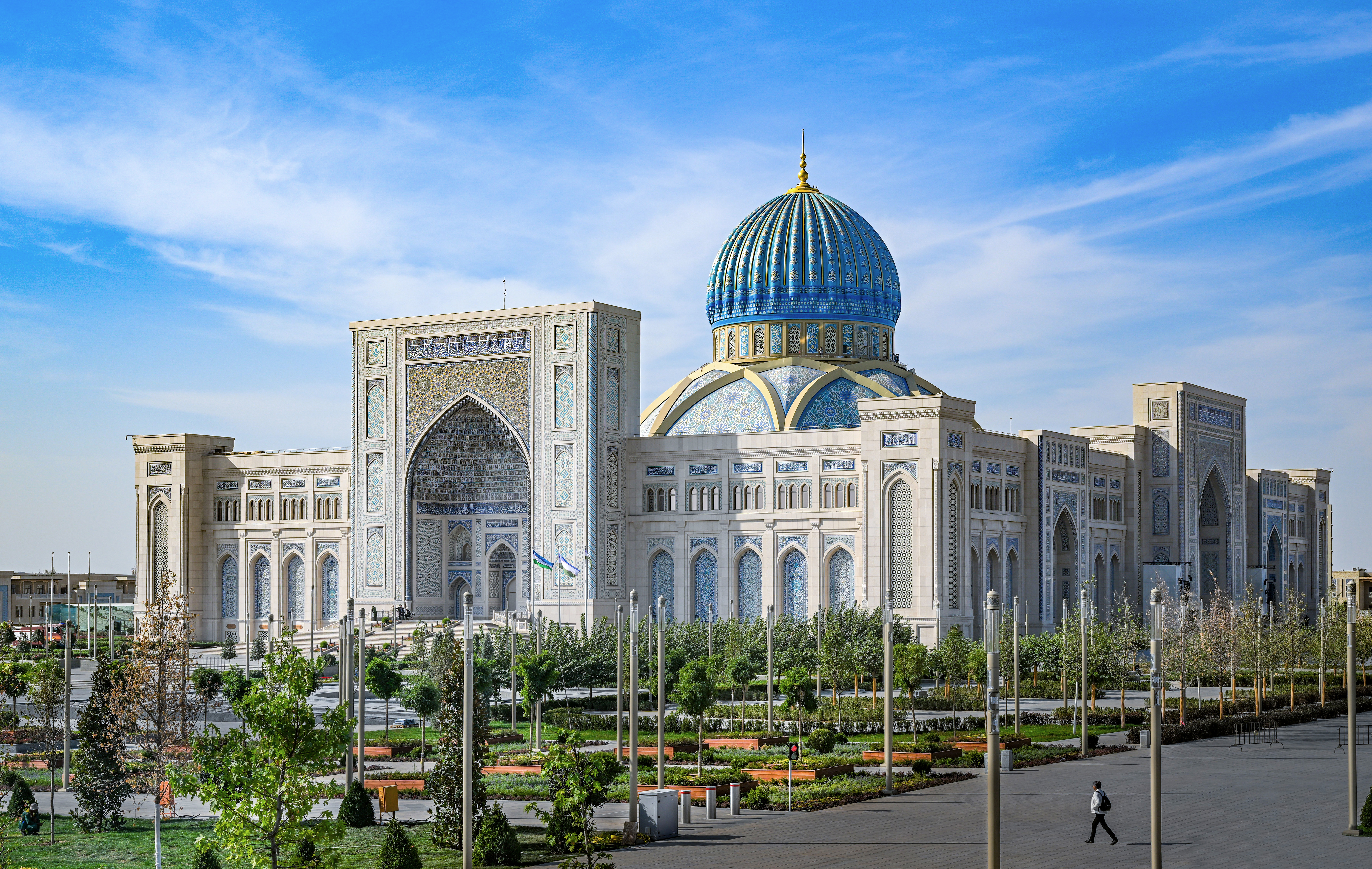
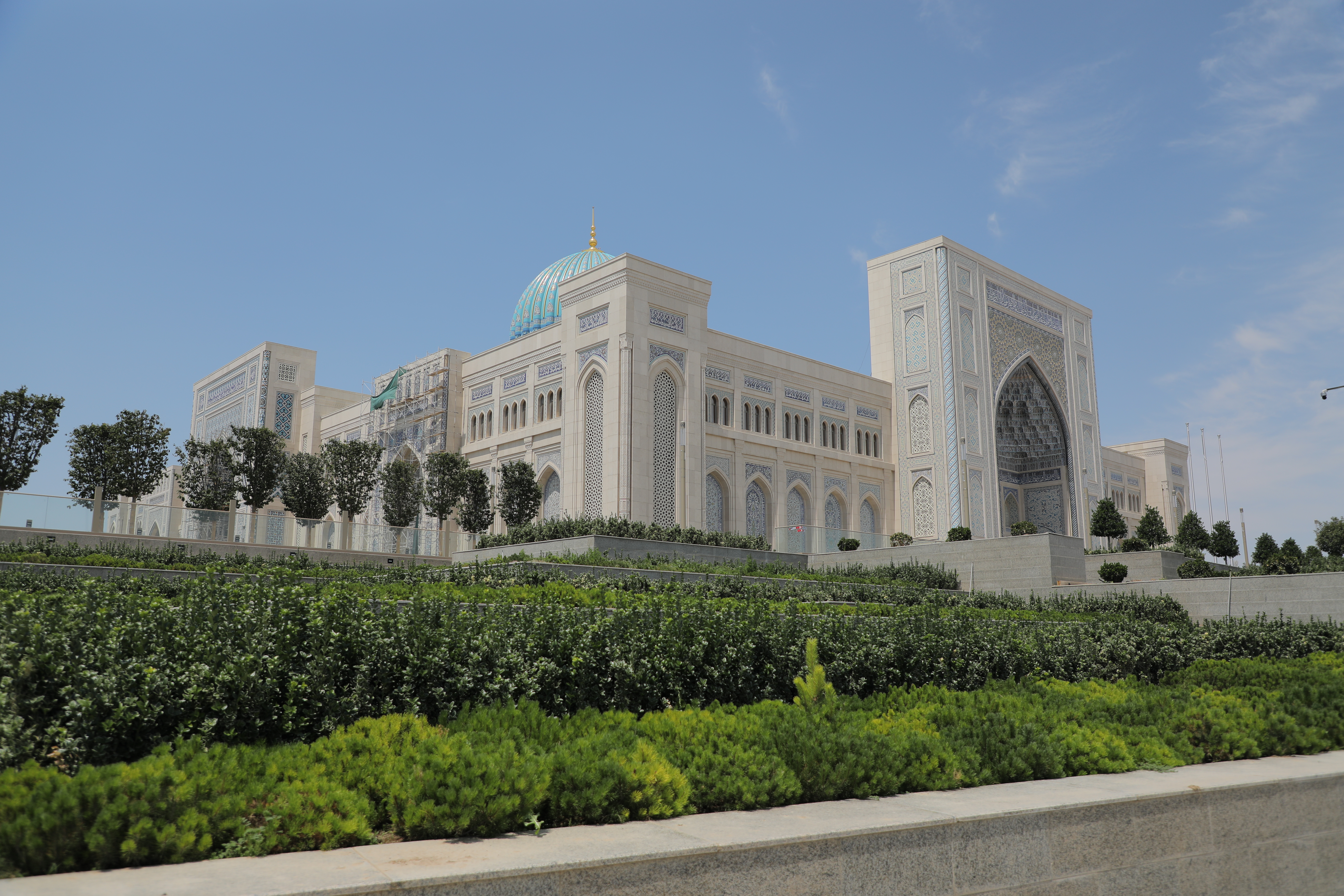
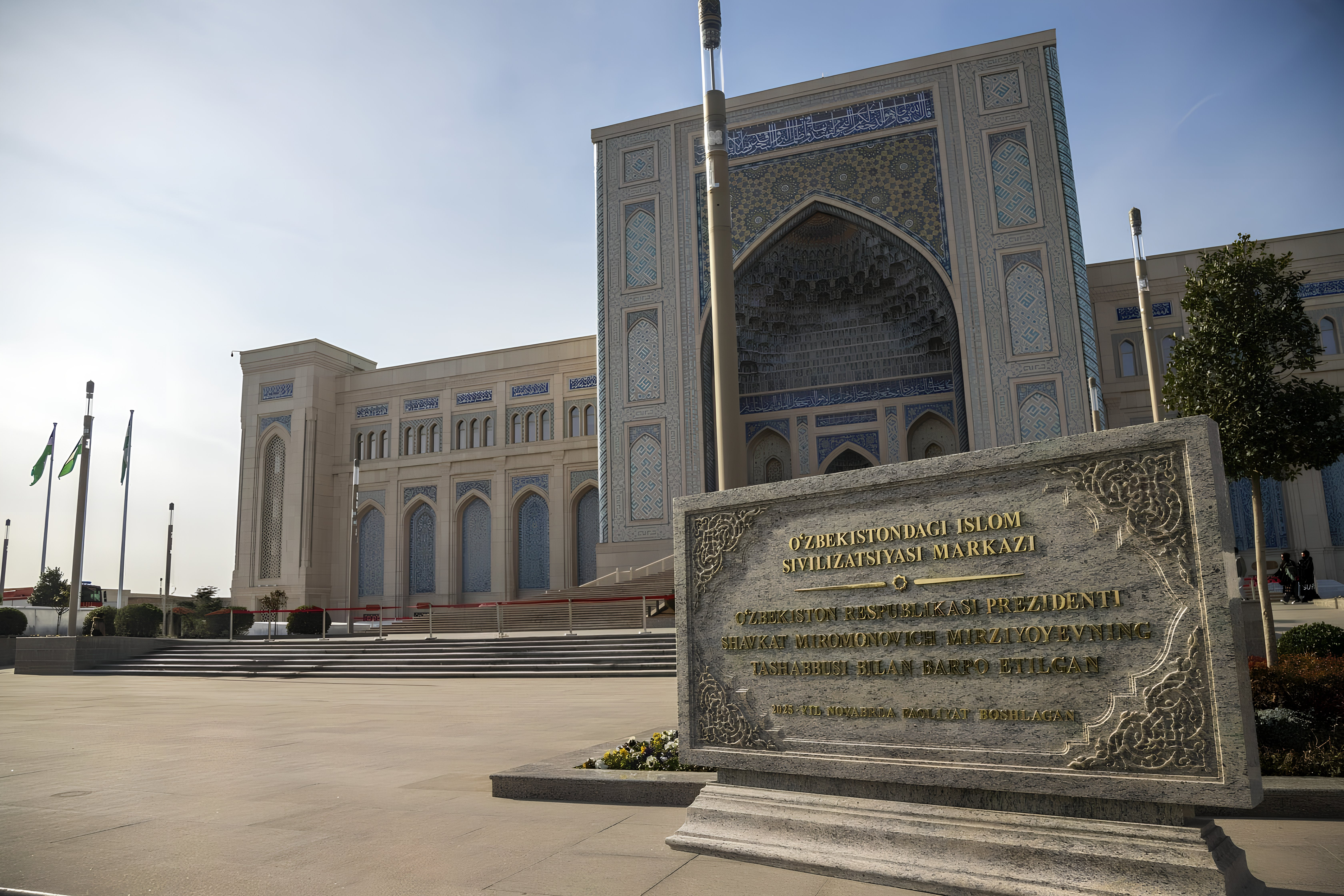
 The Islamic Civilization Center, established in 2017 at the initiative of the President of the Republic of Uzbekistan, Shavkat Mirziyoyev, is not an ordinary museum. It functions as an international center of science, culture, and education, combining Uzbekistan’s rich cultural heritage with modern technologies and scholarly research.
Visitors to the Center are welcomed by four unique portals: the Samarkand (Ulughbek), Khorezm, Bukhara, and Kokand portals. Each of them reveals a story of history, science, and spirituality through its distinctive design, colors, and symbolism.
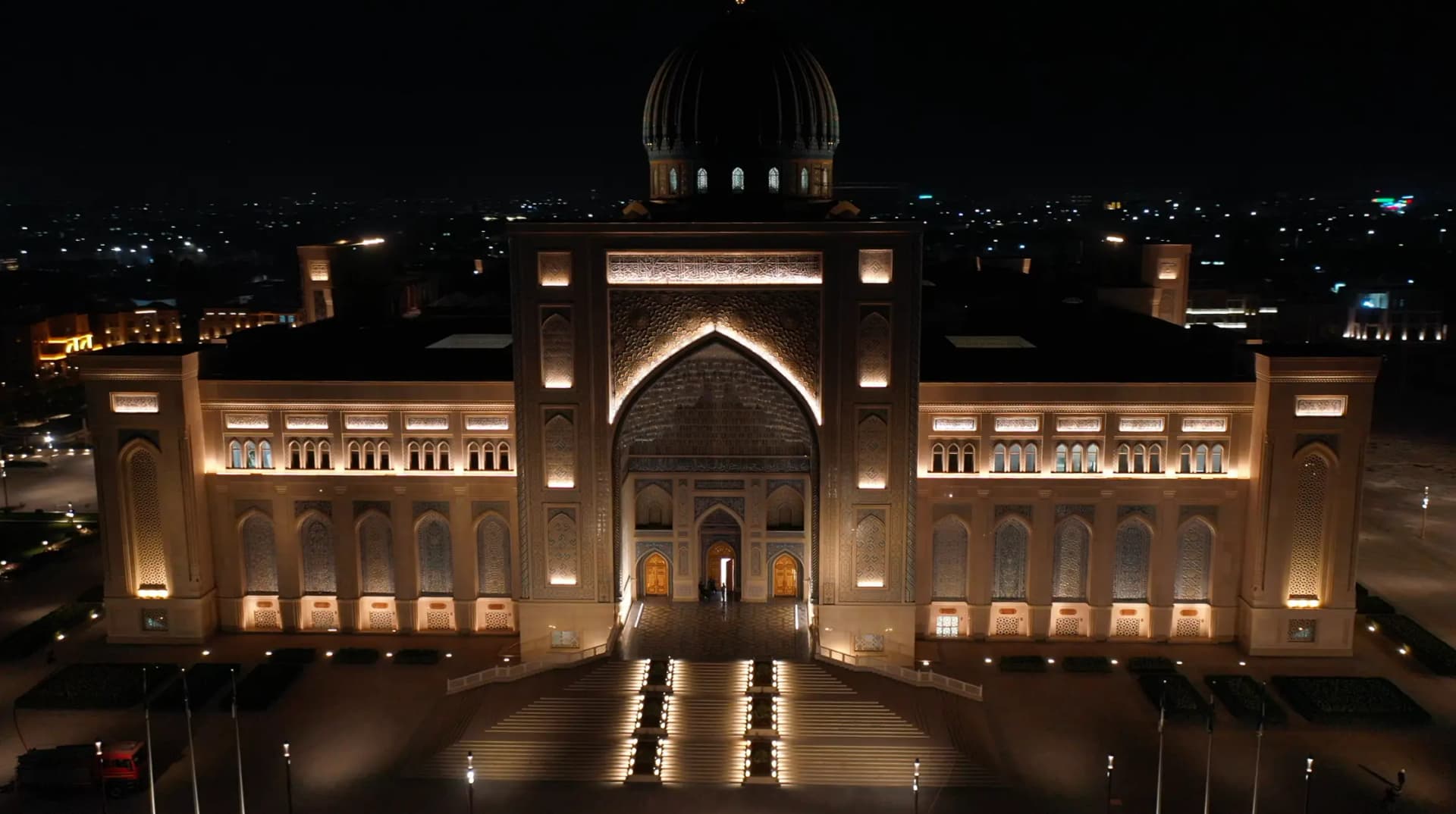
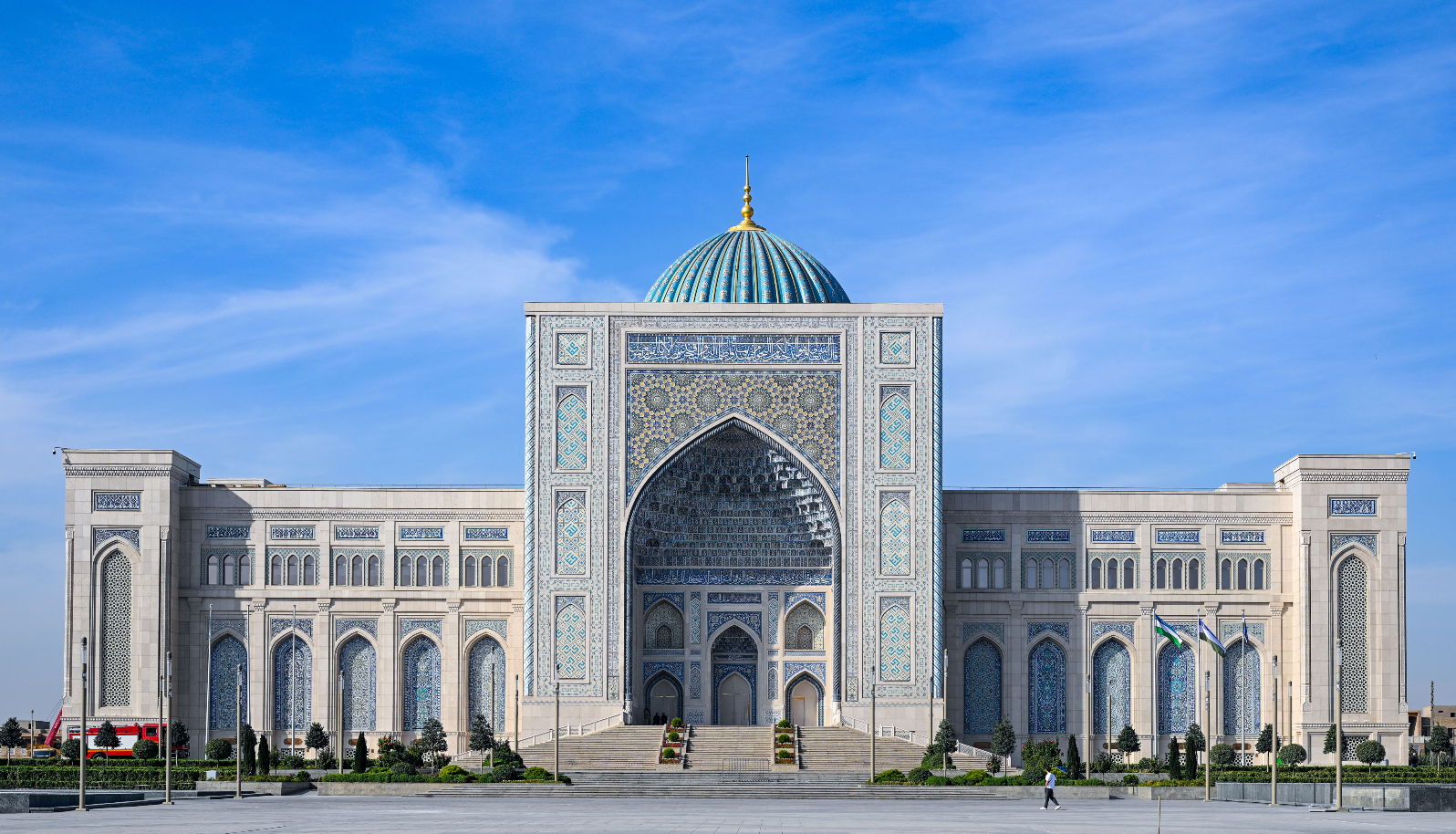 The eastern entrance of the Islamic Civilization Center in Uzbekistan is the Samarkand (Ulughbek) portal. Built in accordance with the traditions of national architecture, every ornament and every line of this structure expresses deep meaning and refined artistic thought.
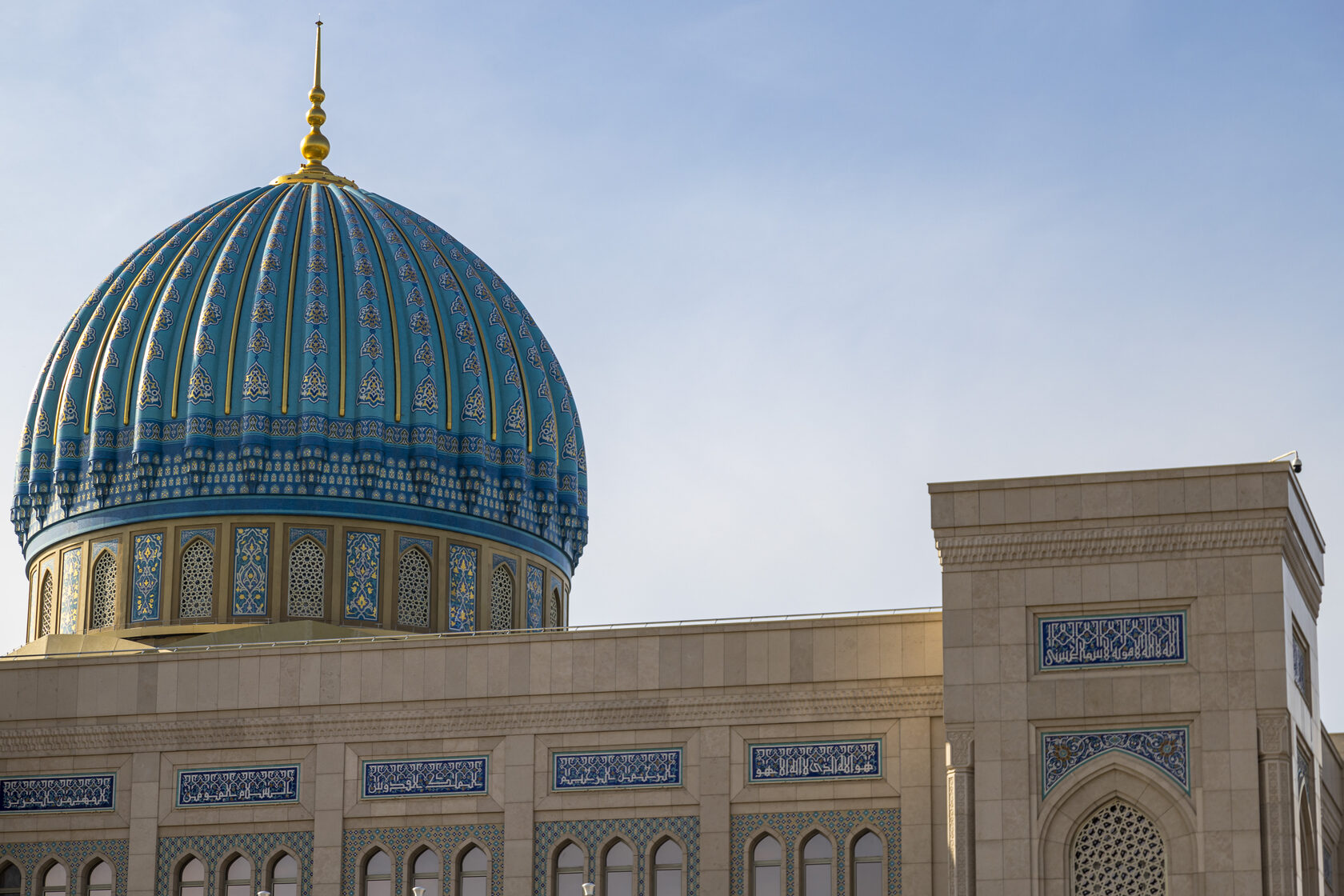 On both sides of the main portal, five arches are placed on each side — ten in total. The square-shaped towers located on the sides further strengthen its grandeur and architectural balance. With a height of 37.7 meters and a width of 33.7 meters, the portal stands out as one of the most impressive entrances of the complex.
Its artistic inspiration traces back to the portal of the Ulughbek Madrasa built in Samarkand in the 15th century. The symmetrical structure symbolizes harmony and order, while turquoise tiles crafted in the traditions of the Samarkand ornamental school are enriched with geometric, vegetal, and epigraphic patterns.
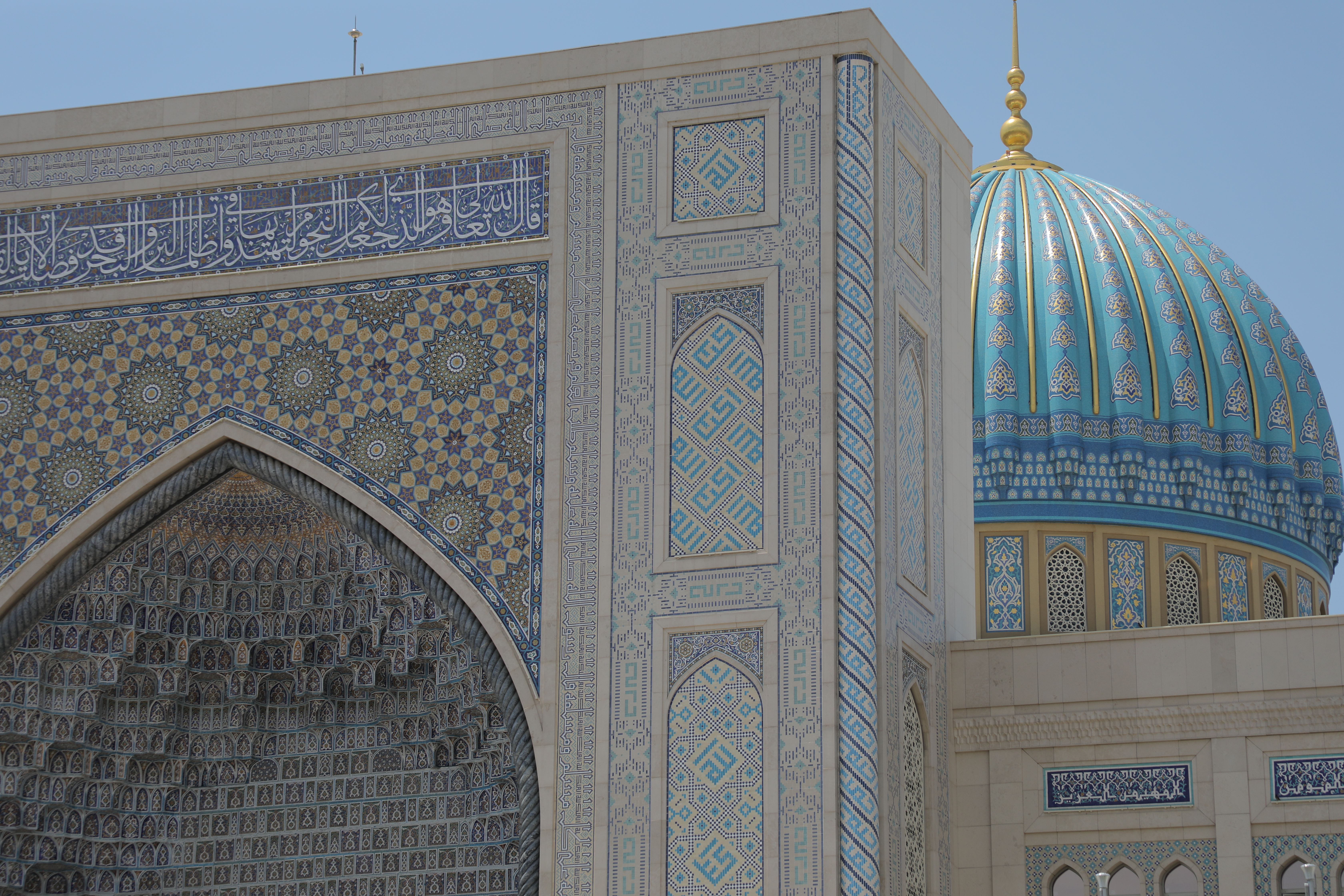
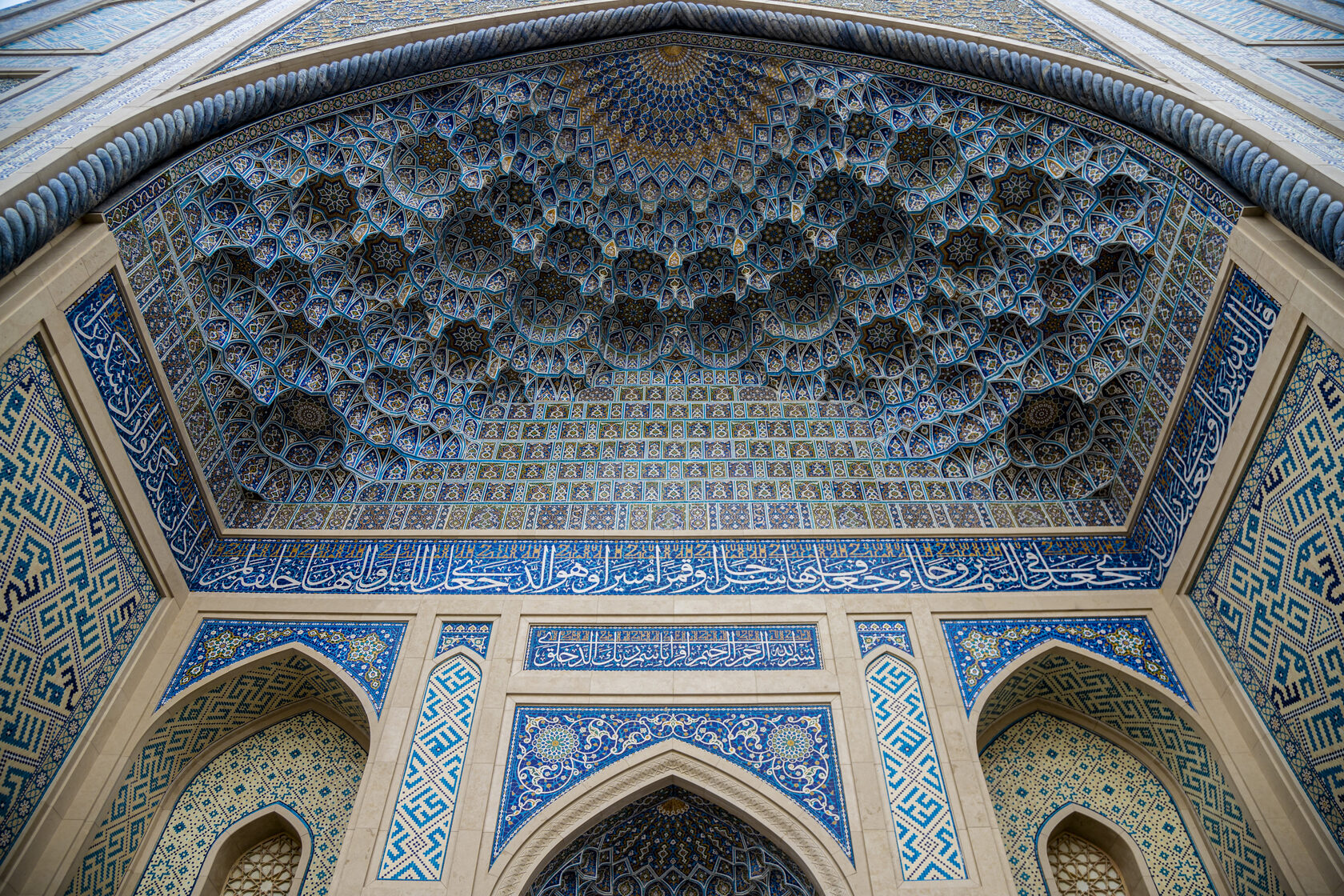 The colors used on the portal also carry symbolic meaning: turquoise represents the sky and peace, while light gray symbolizes the earth and humility. At the upper part of the portal, a geometric composition in the form of a metagalaxy recalls the astronomical legacy of Mirzo Ulughbek. Here, architecture, science, and the vision of the cosmos are united within a single artistic concept.
On the left and right sides of the Samarkand (Ulughbek) portal there are five arches on each side — ten in total. Each of them is decorated with geometric, vegetal, and epigraphic patterns. The five arches symbolize the Five Pillars of Islam — faith, prayer, fasting, almsgiving, and pilgrimage. The number ten, meanwhile, alludes to the stages of spiritual perfection in Sufism. Above the arches are triple-arched windows and inscriptions, where the 99 names of Allah are written in decorative calligraphy.
The epigraphic inscriptions written in Kufic and Thuluth styles on the portal walls and façades attract particular attention. Among them, in the Kufic-bannai calligraphic style, the following hadith is presented:
قال رسول الله صلى الله عليه وسلم: طلب العلم فريضة على كل مسلم
“Seeking knowledge is obligatory for every Muslim” (Narrated by Ibn Majah).
This hadith reveals the central idea of the portal: the force that leads a person from darkness to light is knowledge.
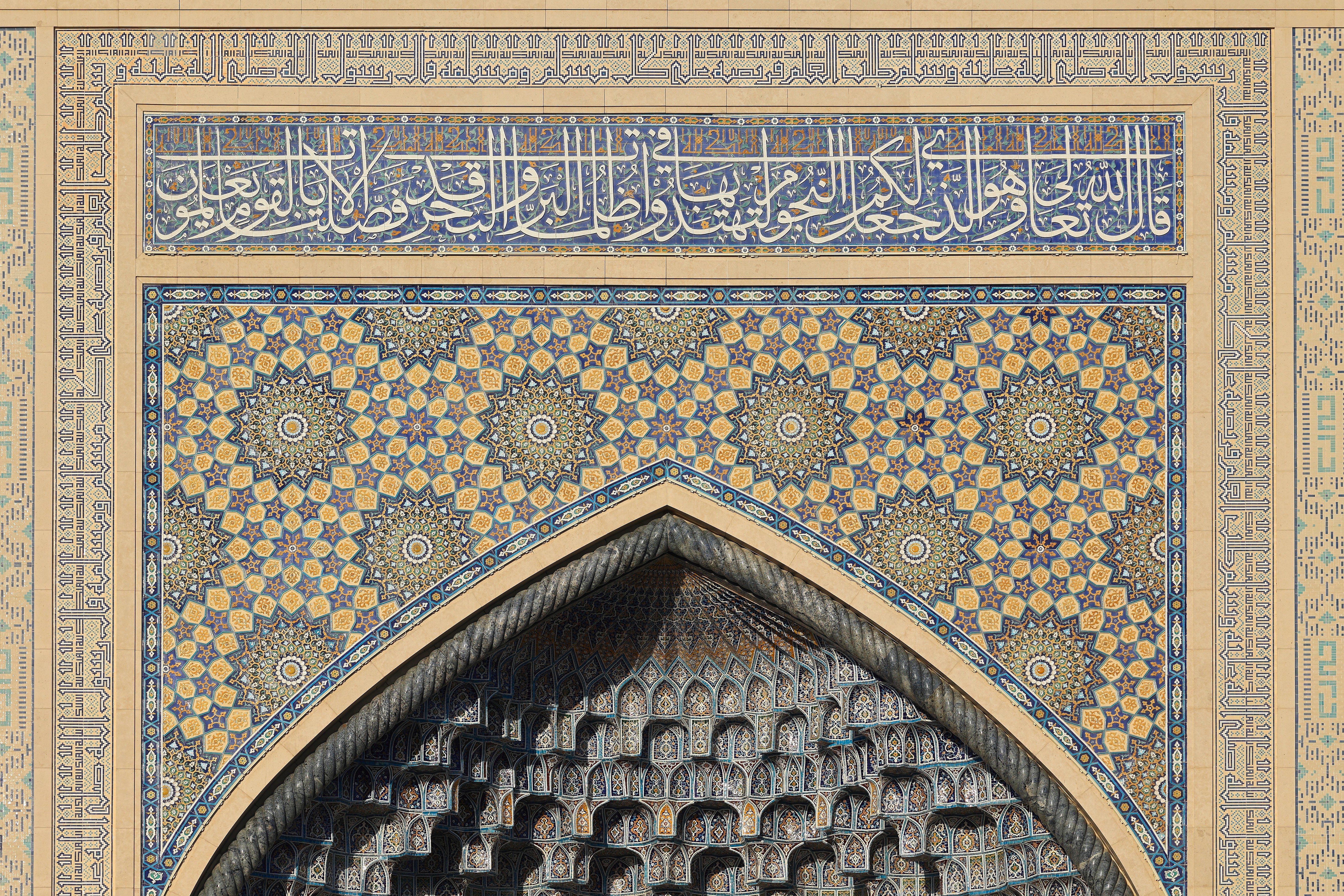 Verses from the Holy Qur’an are also placed on the portal facades. For example:
﴿وَهُوَ الَّذي جَعَلَ لَكُمُ النُّجومَ لِتَهتَدوا بِها في ظُلُماتِ البَرِّ وَالبَحرِ﴾
“He is the One who created the stars for you so that you may find your way through the darkness of land and sea” (Surah Al-An‘am, verse 97).
Also:
﴿اللَّهُ لا إِلهَ إِلّا هُوَ لَهُ الأَسماءُ الحُسنى﴾
“Allah — there is no deity except Him. To Him belong the most beautiful names” (Surah Taha, verse 8).
At the corners of the portal, the blessed names of Allah and Muhammad (peace be upon him), written in the Kufic-bannai calligraphic style, give the entire architectural composition grandeur and spiritual depth.
The Samarkand (Ulughbek) portal is not merely an architectural entrance. It is a symbolic space embodying the harmony of knowledge, enlightenment, and spirituality. The geometric ornaments, epigraphic inscriptions, and Qur’anic verses in the portal decorations merge together to reflect the high regard that Islamic civilization holds for knowledge, beauty, and order.
Here, the art of architecture converges with the astronomical legacy of Mirzo Ulughbek, the spiritual values of Islam, and the traditions of national ornamentation. In this sense, the Samarkand (Ulughbek) portal stands as not only an architectural feature but also one of the ideological and educational symbols of the Islamic Civilization Center in Uzbekistan.