


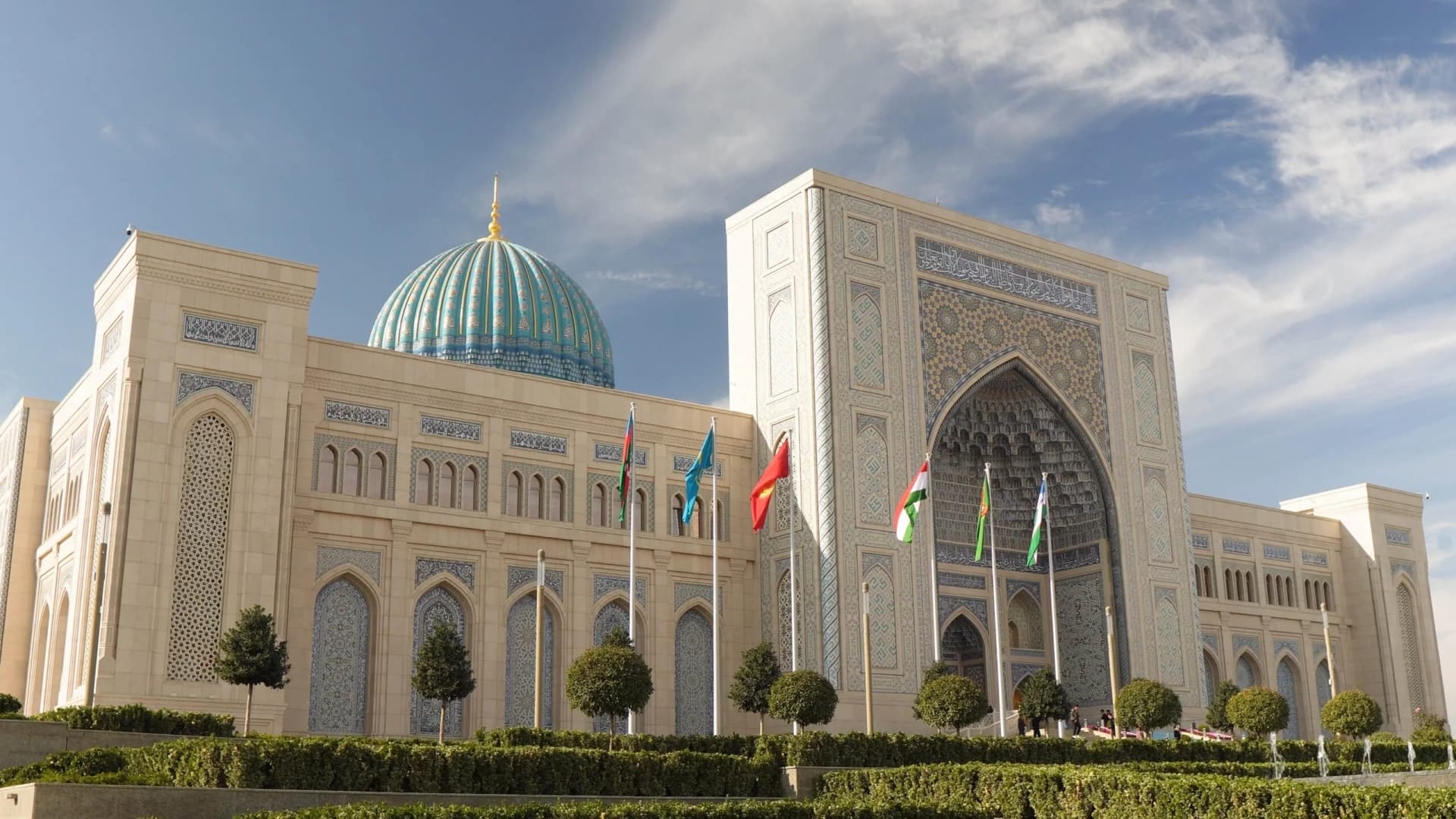

Rare 1300-year-old artefacts preserved in European museums prepared for exhibition
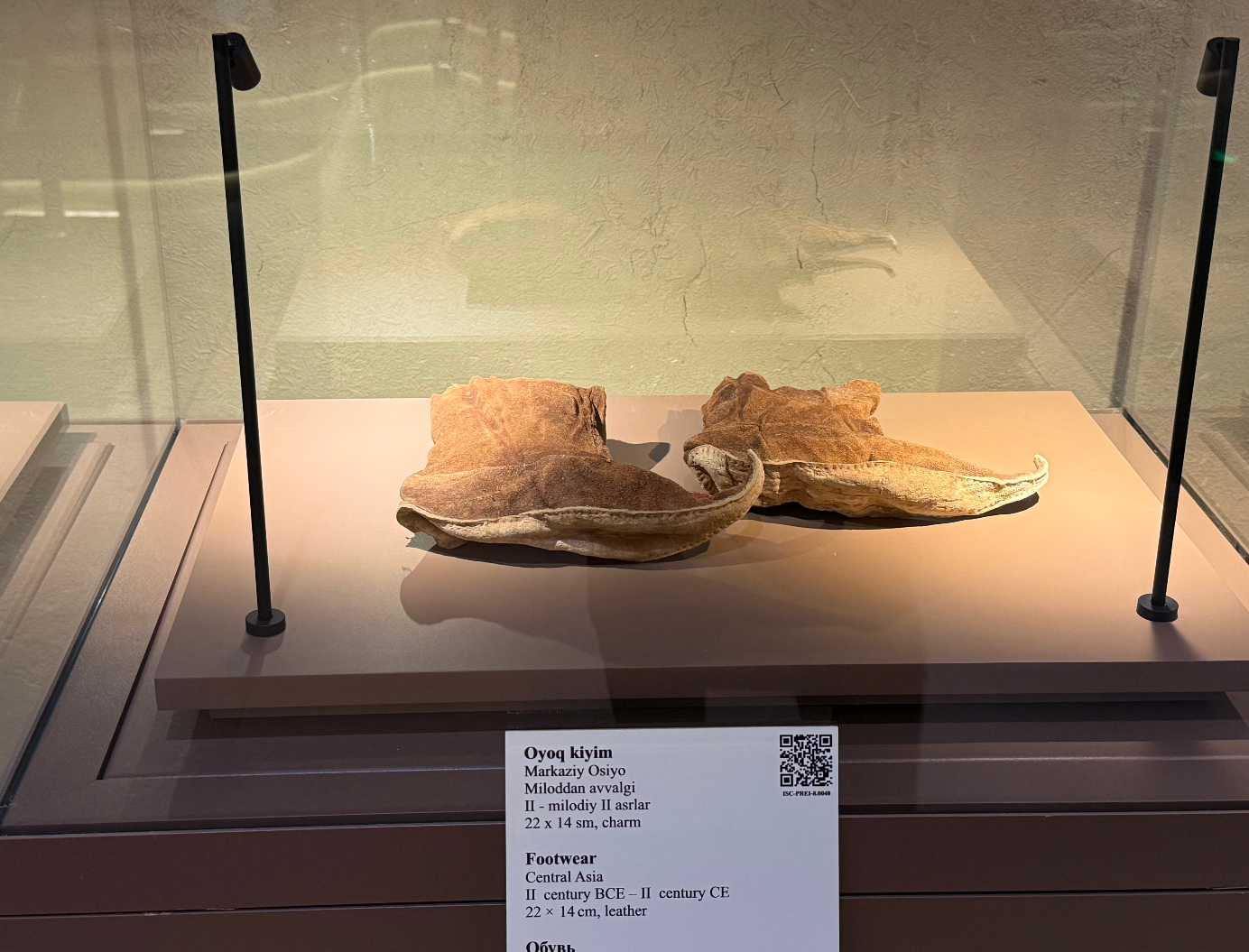 Among the rare artefacts displayed in the exhibition of the Islamic Civilization Center in Uzbekistan, visitors can also see leather footwear and gloves dating back to the civilizations of Central Asia, including Ancient Fergana and Chach.
One of the notable artefacts in the Center’s exhibition is a leather shoe dating from the period between the 2nd century BCE and the 2nd century CE. This small boot, produced in the territory of Central Asia, stands out for its delicate and refined craftsmanship. According to researchers, based on its size and shape, the footwear may have been intended for women or children. The tip of the boot is slightly raised on three sides, a feature characteristic of traditional footwear of Central Asian peoples. Its form and manufacturing style resemble footwear traditions widely found in historical regions such as Sogd, Chach, Fergana, Khorezm and Tokharistan.
This artefact is not only a practical object but also closely connected with examples of visual art. A clear similarity can be observed between this boot and the footwear depicted on figures in the famous mural paintings of Central Asia, particularly those found in Afrosiyob, Varakhsha, Panjikent and Shahristan. This indicates that clothing culture and craftsmanship of that period were shared across different cities of the region. Archaeological excavations have also uncovered similar footwear samples, confirming that these cultural traditions were widespread.
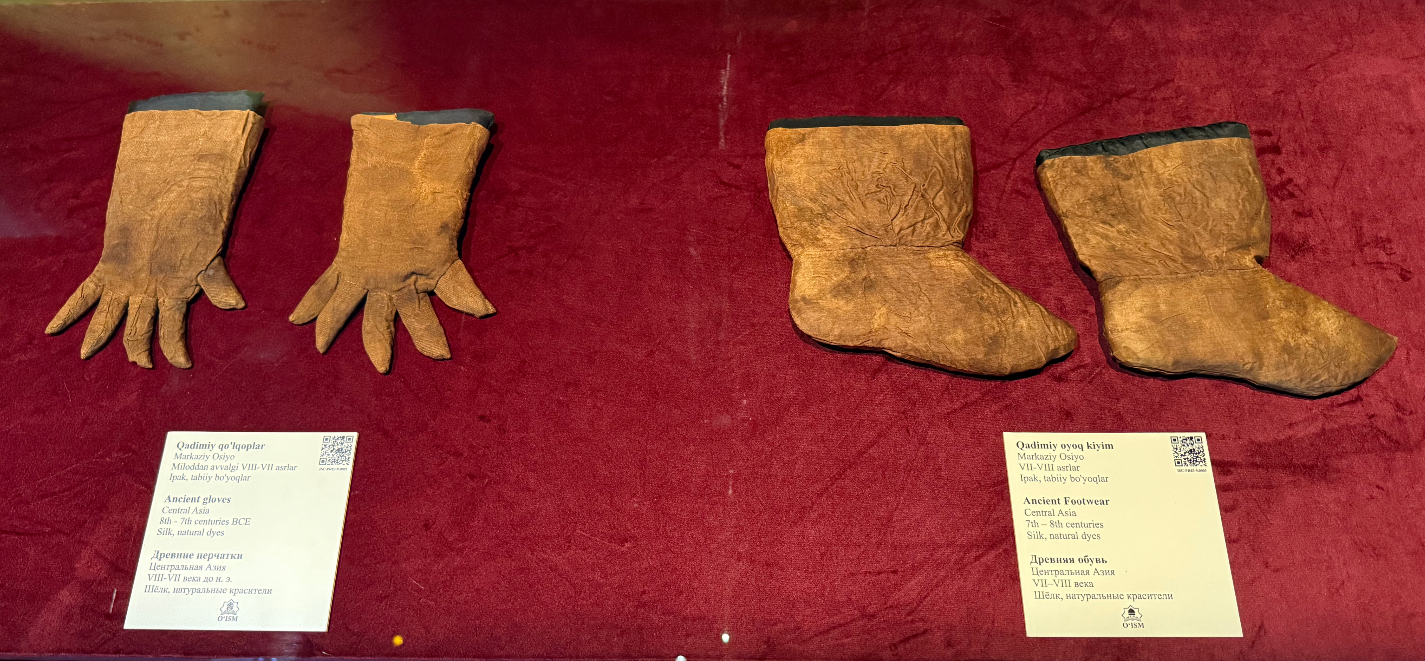 Exhibits related to the ancient Chach civilization, displayed in the museum’s section titled “Civilizations of the Pre-Islamic Period,” also hold special significance within the exhibition. Among them, ancient gloves and footwear believed to date back to the 7th–8th centuries BCE attract particular attention. These artefacts had long been preserved in renowned European museums and private collections. Among hundreds of items related to the culture of Central Asia, these clothing samples stood out for their uniqueness and historical value.
In the summer of 2025, following the initiative of Shavkat Mirziyoyev, a working group consisting of the Center’s staff and specialists carried out scientific visits, as a result of which these artefacts were brought to Uzbekistan and transferred to the collection of the Islamic Civilization Center in Uzbekistan. This became one of the important steps toward restoring national cultural heritage and presenting it to the wider public.
“These artefacts, made by combining wool and silk fabrics, belong to the early medieval period, and their sewing and weaving styles reflect traditions characteristic of the major cultural centers of Central Asia — Sogd, Chach, Fergana and the Tokharistan–Bactria region. Their ornaments and structural design stand out for their elegance. This shows that craftsmen of that era paid great attention not only to producing practical objects but also to creating aesthetically refined works,” explained Doctor of Historical Sciences, Professor Gaybulla Boboyorov.
The harmony between these garments and the mural paintings created in Central Asia about 1,300–1,400 years ago is particularly striking. Archaeological discoveries and monuments of visual art complement one another, allowing for a more accurate understanding of the cultural life of that period.
Such artefacts from the civilizations of Ancient Fergana and Chach displayed in the exhibition of the Islamic Civilization Center in Uzbekistan have great scientific and educational significance not only for studying our historical heritage but also for transmitting it to future generations.
Durdona Rasulova
P/S: The article may be republished with a link to the official website of the Center