



A page of the “Blue Qur’an” written in gold and silver in Tashkent!
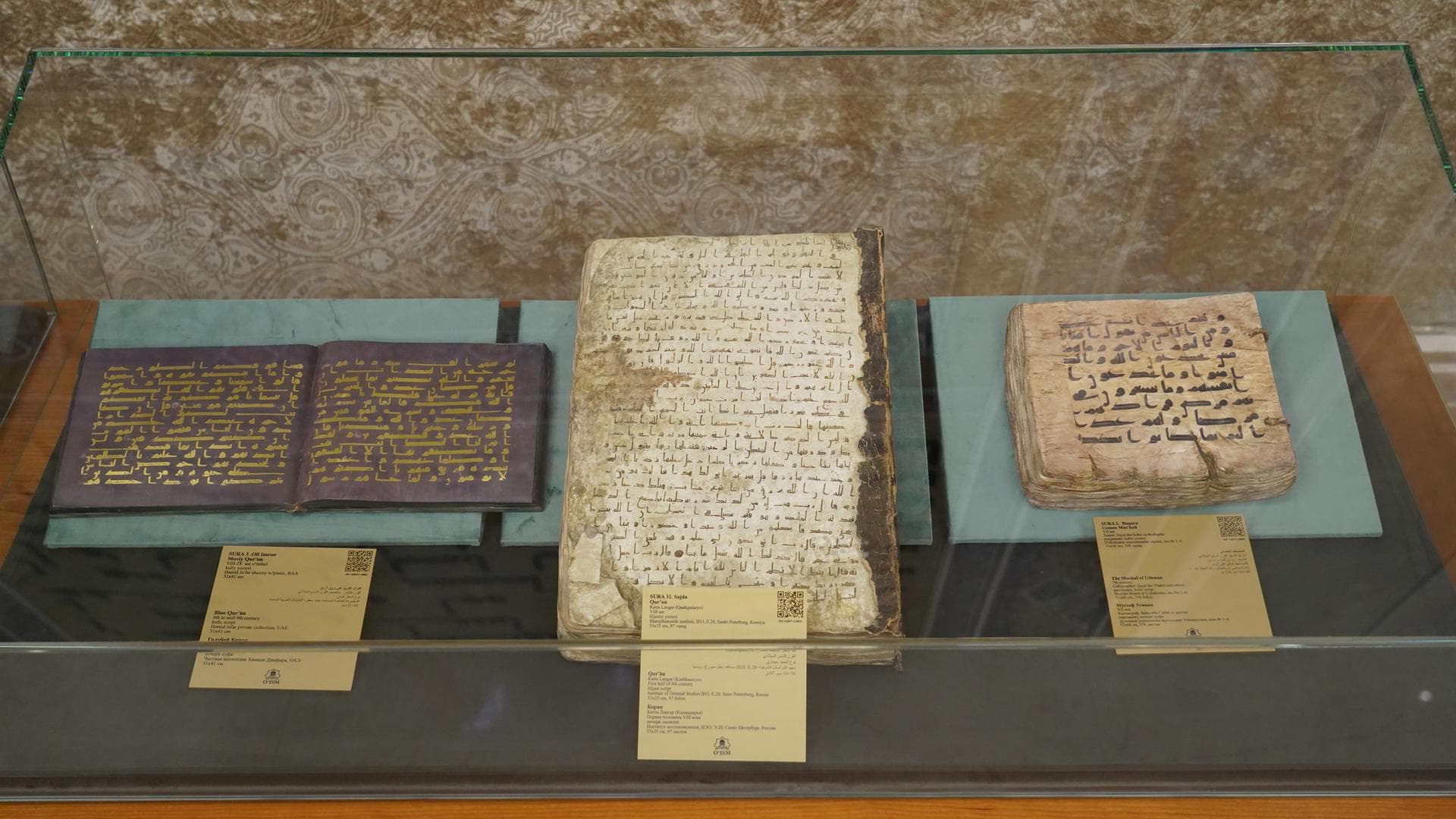
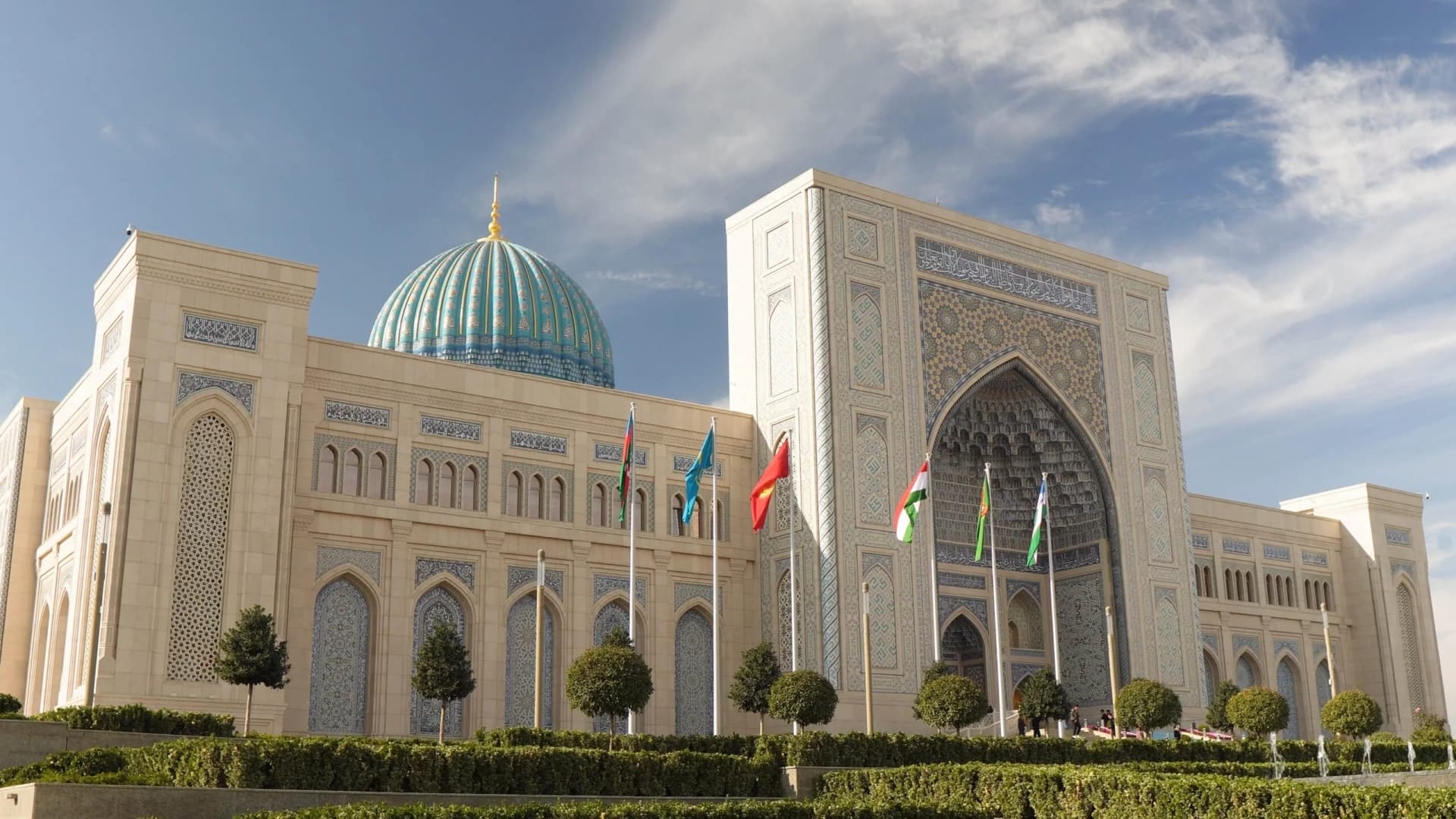
The Qur’an Hall at the Islamic Civilization Center in Uzbekistan is one of the important exhibitions presenting rare Qur’an manuscripts created across the Islamic world and highlighting their artistic features. Within the framework of the “114 Qur’ans” project initiated by President Shavkat Mirziyoyev, copies of the Qur’an created in different periods and regions have been brought together at the Center. Through these manuscripts, the stages of development of book culture, calligraphy, and decorative arts in Islamic civilization are demonstrated. Among these unique examples is also a page from the Blue Qur’an, which holds a special place in the world of Islamic art.
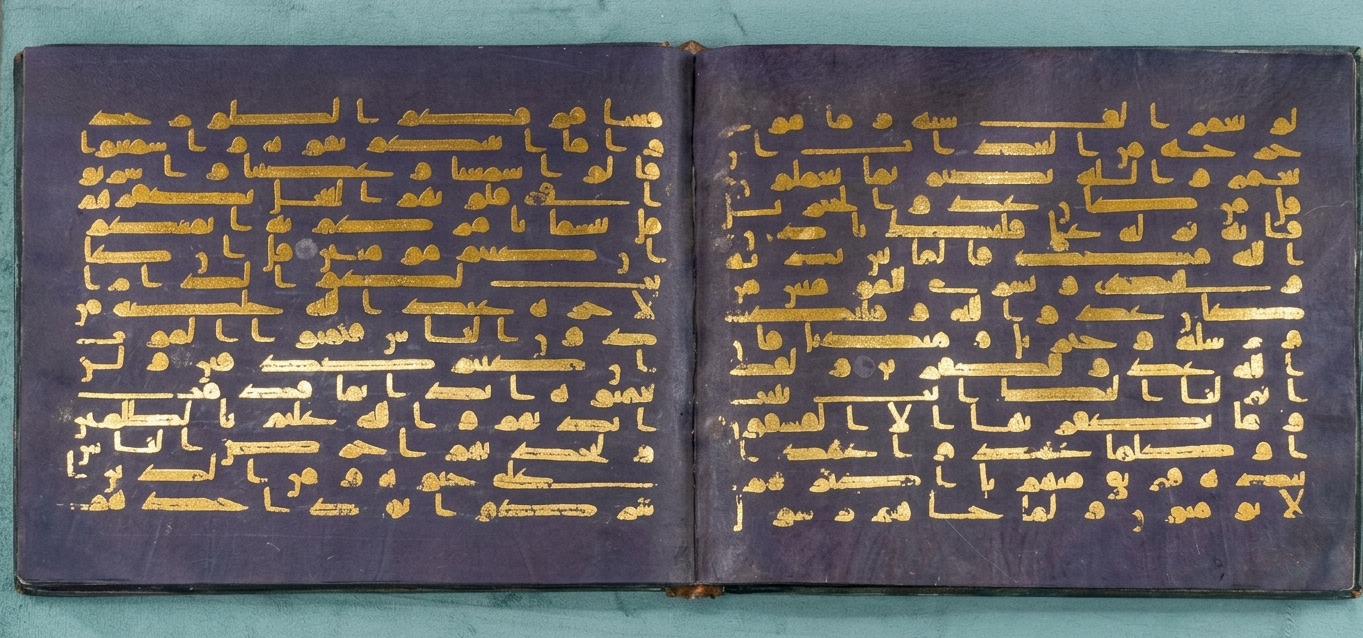 The Blue Qur’an is recognized as one of the rarest and most artistically refined manuscripts in the history of Islamic art. It is not only a unique example of Qur’anic manuscript production but also an important historical monument reflecting the cultural environment, aesthetic perspectives, and religious reverence of its time.
The page displayed in the Center’s exhibition contains verses 7–10 and 11–13 from Surah Al-Imran. It dates from the late 8th century to the mid-9th century, and researchers associate its place of origin with the city of Kairouan in Tunisia or with Córdoba in Umayyad Spain. This indicates that during that period Islamic culture and the art of manuscript production developed across a wide region stretching from North Africa to Andalus.
The manuscript is written in Kufic script, although no precise information about the calligrapher who copied it has been preserved. Today, a copy of this rare page is displayed in the exhibition of the Islamic Civilization Center in Uzbekistan.
The most remarkable feature of the Blue Qur’an is its parchment pages dyed in indigo. Indigo is a deep blue color obtained from natural plants and was historically used for dyeing textiles and parchment. Because the process of producing this color was complex and expensive, it was used not for ordinary manuscripts but for luxurious and prestigious works. For this reason, indigo-colored pages symbolized wealth, splendor, and a high level of artistic craftsmanship. In the Blue Qur’an, the text written on this deep blue background gives the manuscript a particularly striking visual effect.
“The text on the page is written in gold and silver letters. The shining golden script against the deep indigo background further emphasizes the sacred nature of the Qur’anic word. This artistic technique reflects not only aesthetic beauty but also deep reverence and respect for the text of the Qur’an. In some places, silver marks or lines were used to separate sections of the text. Over the centuries, these silver elements naturally oxidized, leaving distinctive historical traces on the pages,” said Rustam Jabborov, Scientific Secretary of the Center.
The manuscript is written in the Kufic style. Kufic script is distinguished by its geometric forms, sharp angles, and carefully structured lines. It is considered one of the oldest forms of Islamic calligraphy.
Today, pages of the Blue Qur’an are preserved in various museums and private collections around the world. Some of them are displayed within the “114 Qur’ans” project in the Qur’an Hall of the Islamic Civilization Center in Uzbekistan. The presentation of this page in the Center’s exhibition allows visitors to closely explore the refined artistic traditions of Islamic manuscript culture.
Durdona Rasulova
P.S. The article may be republished with a link to the official website of the Center