
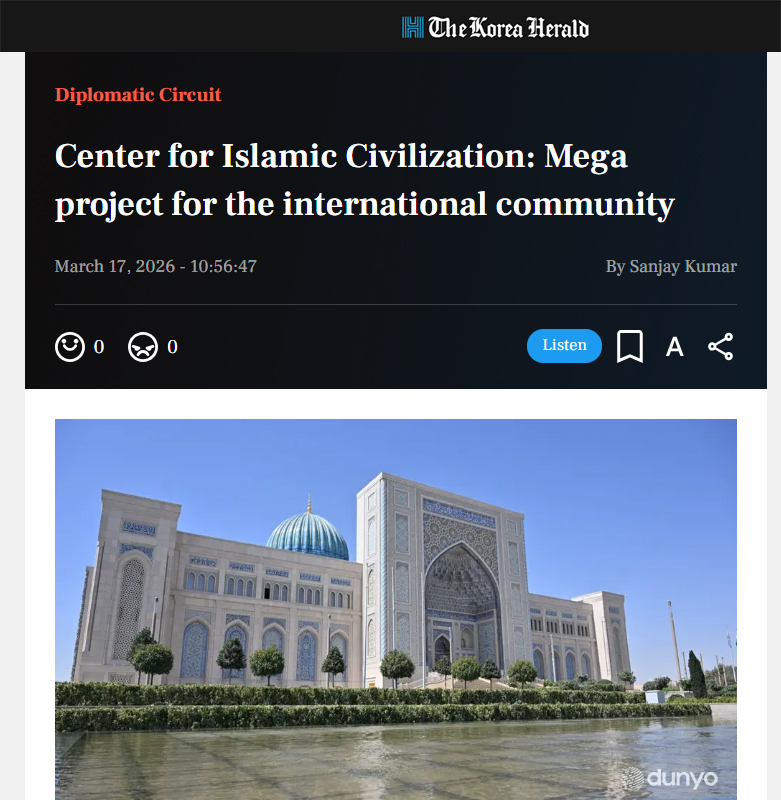
The Korea Herald: “Islamic Civilization Center — Mega project for the international community”
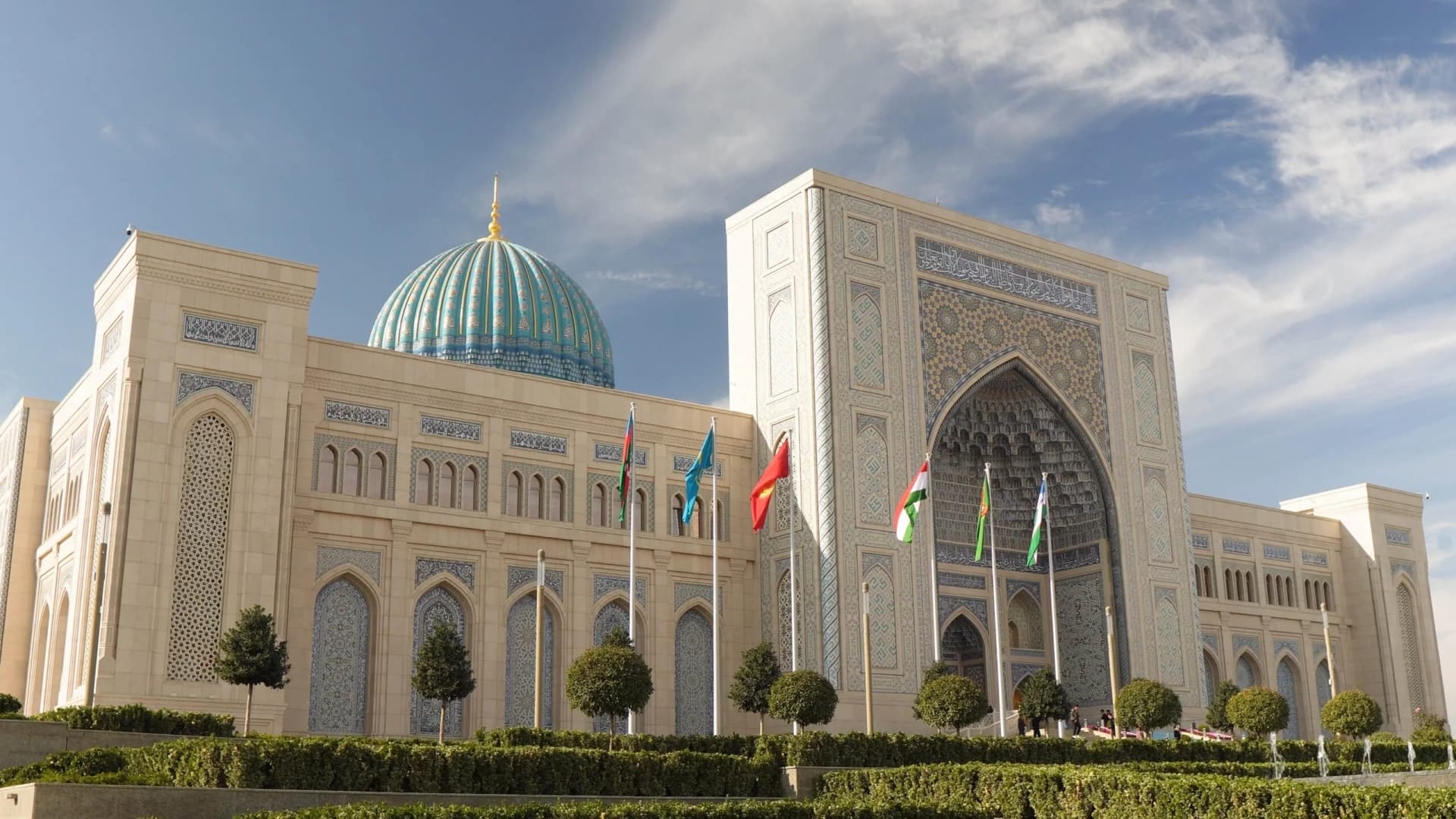
 In an article published on The Korea Herald website, the Islamic Civilization Center in Uzbekistan is described as an important intellectual and cultural initiative for Central Asia and the global community. It emphasizes that this project, implemented under the leadership of President Shavkat Mirziyoyev, serves to revive the scholarly and educational heritage of Islamic civilization, present its contributions to human progress to a wide audience, and strengthen intercivilizational dialogue.
On January 29, 2025, President Shavkat Mirziyoyev visited the Islamic Civilization Center in Uzbekistan, offering detailed recommendations to integrate scientific and innovative projects developed by more than 2,000 researchers into its exhibitions.
That visit served as a pivotal moment. Today, the center stands completed — an ambitious undertaking shaped by contributions from specialists and designers across more than 40 countries, united under a single vision.
From the podium of the United Nations in September 2025, President Mirziyoyev announced the center's completion and imminent opening.
Since then, its exhibitions have evolved into a comprehensive intellectual and cultural experience, drawing global attention.
Leaders of states, international organizations, and visitors from around the world have engaged with its work, acknowledging its growing significance.
This comes at a time of profound civilizational transition.
Technological progress is advancing faster than moral reflection, while geopolitical tensions and cultural fragmentation are raising urgent questions about dialogue and coexistence.
Religion is too often misused as a tool of division, and culture becomes a fault line rather than a bridge. In such a context, platforms that restore meaningful intercivilizational dialogue are no longer optional — they are essential.
It is therefore no coincidence that this center has emerged in the heart of Eurasia, a region historically shaped by the convergence of civilizations, trade routes, religions and intellectual traditions.
Its establishment reflects a deliberate and long-term strategic vision.
As early as 2017, addressing the United Nations, President Mirziyoyev called for restoring the true place of Islamic civilization in world history, highlighting its foundations in enlightenment, science and humanistic values.
This vision has received strong international recognition. During a visit to the center while it was still under construction, Antonio Guterres praised the initiative, noting that President Mirziyoyev consistently promotes dialogue, enlightenment and mutual respect on the global stage.
Such acknowledgment underscores Uzbekistan’s growing role as an active contributor to shaping contemporary global discourse.
The center itself is more than an architectural landmark. It represents a new humanitarian model of global importance.
Here, Islamic civilization is presented through its intellectual and scientific legacy — an era when universities and academies flourished, libraries and laboratories advanced knowledge, and foundational contributions were made to medicine, philosophy, mathematics and the arts.
Built through strong political will and strategic leadership, the center integrates a next-generation museum, advanced research infrastructure, a modern library, extensive archives and digital humanities technologies.
It also fosters global scientific and cultural cooperation, positioning itself as a dynamic international platform.
Regional leaders have also recognized its importance.
Kazakhstan President Kassym-Jomart Tokayev described it as a unique scientific, tourist and ethnocultural project that could serve as a shared platform for research.
Similarly, Azerbaijan President Ilham Aliyev highlighted its role in countering Islamophobia, emphasizing that it demonstrates Islam’s true values of humanism, tolerance and coexistence.
Experts increasingly view the center as a civilizational response to modern challenges — a knowledge-based counterweight to extremism and distorted narratives.
In this sense, Uzbekistan has assumed a historic role, not through declarations but by creating a tangible intellectual space of global relevance.
One of the center’s most significant achievements lies in the repatriation of cultural heritage. Through coordinated state and diplomatic efforts involving leading auction houses such as Sotheby’s, Christie’s and Bonhams, as well as major museums and private collectors, nearly 2,000 rare artifacts have been returned.
These include manuscripts of Ibn Sina, works by Al-Biruni, Timurid miniatures, and other masterpieces of Islamic art — restoring both cultural memory and historical justice.
International visitors have been equally impressed.
Paraguayan President Santiago Peña noted that many foundational achievements in science and culture originated in this region, expressing renewed confidence in Uzbekistan’s potential.
Finnish President Alexander Stubb described the center as an unparalleled experience where three millennia of history are presented in a compelling modern form.
In many ways, the center echoes historic institutions such as the House of Wisdom in Baghdad, the Academy of Al-Ma’mun in Khwarazm, and the Ulugh Beg madrasa in Samarkand.
Yet it is distinctly a 21st-century institution — where historical knowledge meets digital innovation, manuscripts become global resources, and museums function as living research environments.
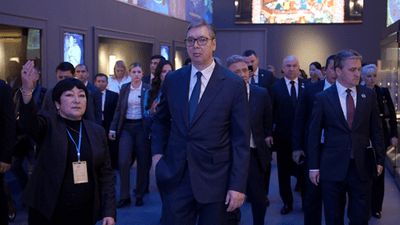
As Serbian President Aleksandar Vucic observed after his visit, the center is unlike anything he had seen before — both architecturally striking and intellectually enriching.
Ultimately, the Islamic Civilization Center represents more than a national achievement.
It is a global intellectual hub and a powerful symbol of dialogue in an increasingly divided world — an enduring reminder that knowledge, culture and shared history remain humanity’s strongest bridges.