



After 690 years: studying the legacy of Amir Temur at a new stage
 The great statesman, brilliant commander, and Sahibqiran Amir Temur is one of the most outstanding figures who left an indelible mark on world history. The centralized state he established, the large-scale political and military reforms he implemented, and his unparalleled patronage of science, culture, and the arts led to an unprecedented cultural and spiritual flourishing across Movarounnahr and the entire Central Asian region.
This period of flourishing during the Timurid era was later recognized in history as the “Timurid Renaissance.” It is regarded not only as a stage of regional development but also as an important milestone in the advancement of world civilization.
Today, the comprehensive study and wide promotion of Amir Temur’s legacy have become one of the priority directions of state policy in Uzbekistan. In accordance with Resolution No. PQ-46 of the President of the Republic of Uzbekistan, adopted on February 5, 2026, the 690th anniversary of the birth of Sahibqiran is being widely celebrated this year.
 The resolution outlines a number of important tasks aimed at researching the rich historical and spiritual heritage of our great ancestor and conveying his traditions of statehood and cultural values to the broader public.
On this basis, April has been designated as “Amir Temur Month” in the country. In addition, a special “roadmap” extending to 2030 has been adopted, encompassing key objectives such as the scholarly study of Timurid-era sources, the publication of rare manuscripts, and their presentation to the international academic community.
In particular, the Islamic Civilization Center in Uzbekistan is planning to host an international scientific conference titled “The Role and Significance of Amir Temur and the Timurid Civilization in World History and Culture.” Historians, orientalists, and Timurid studies scholars from various countries are expected to participate.
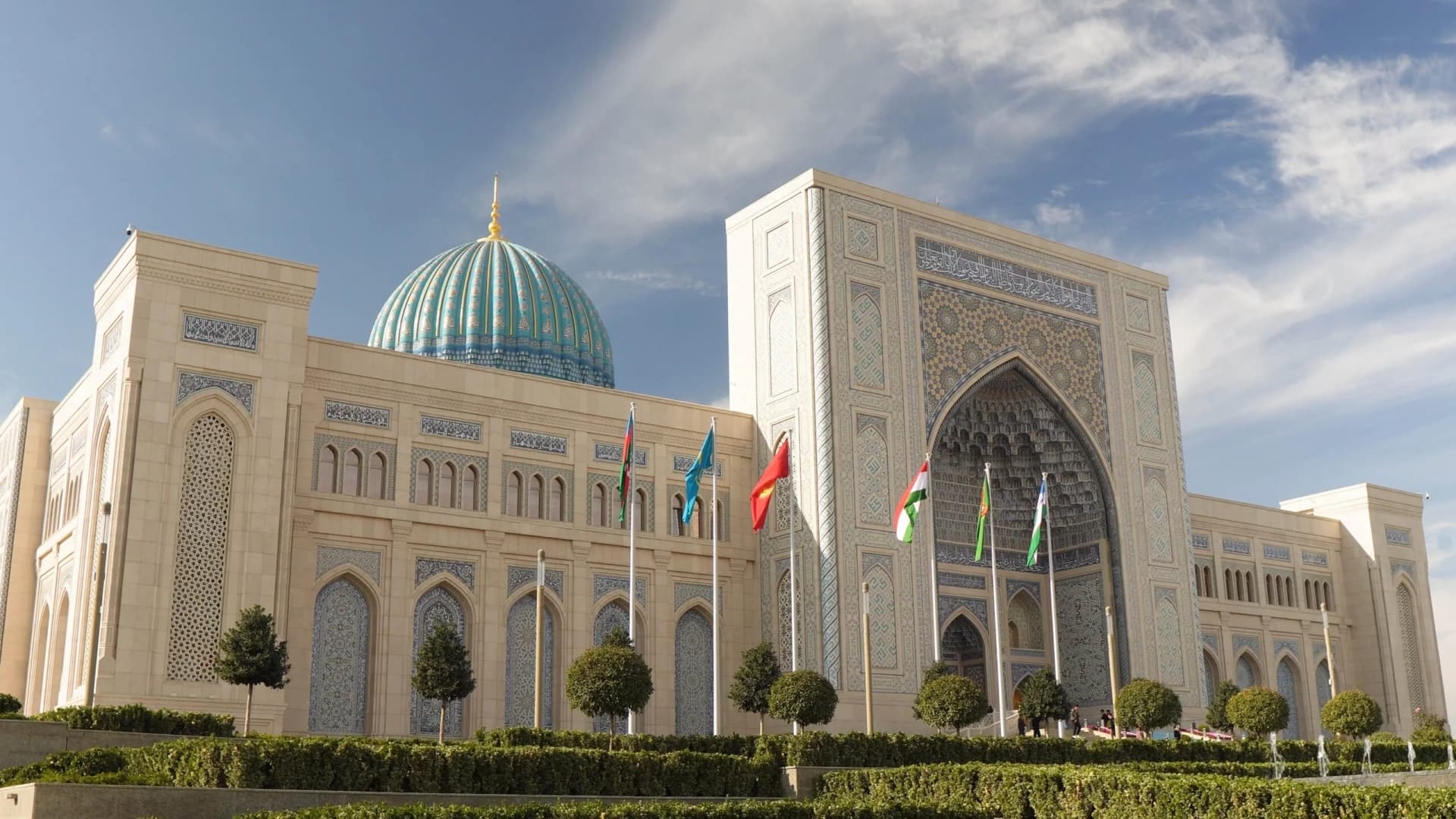
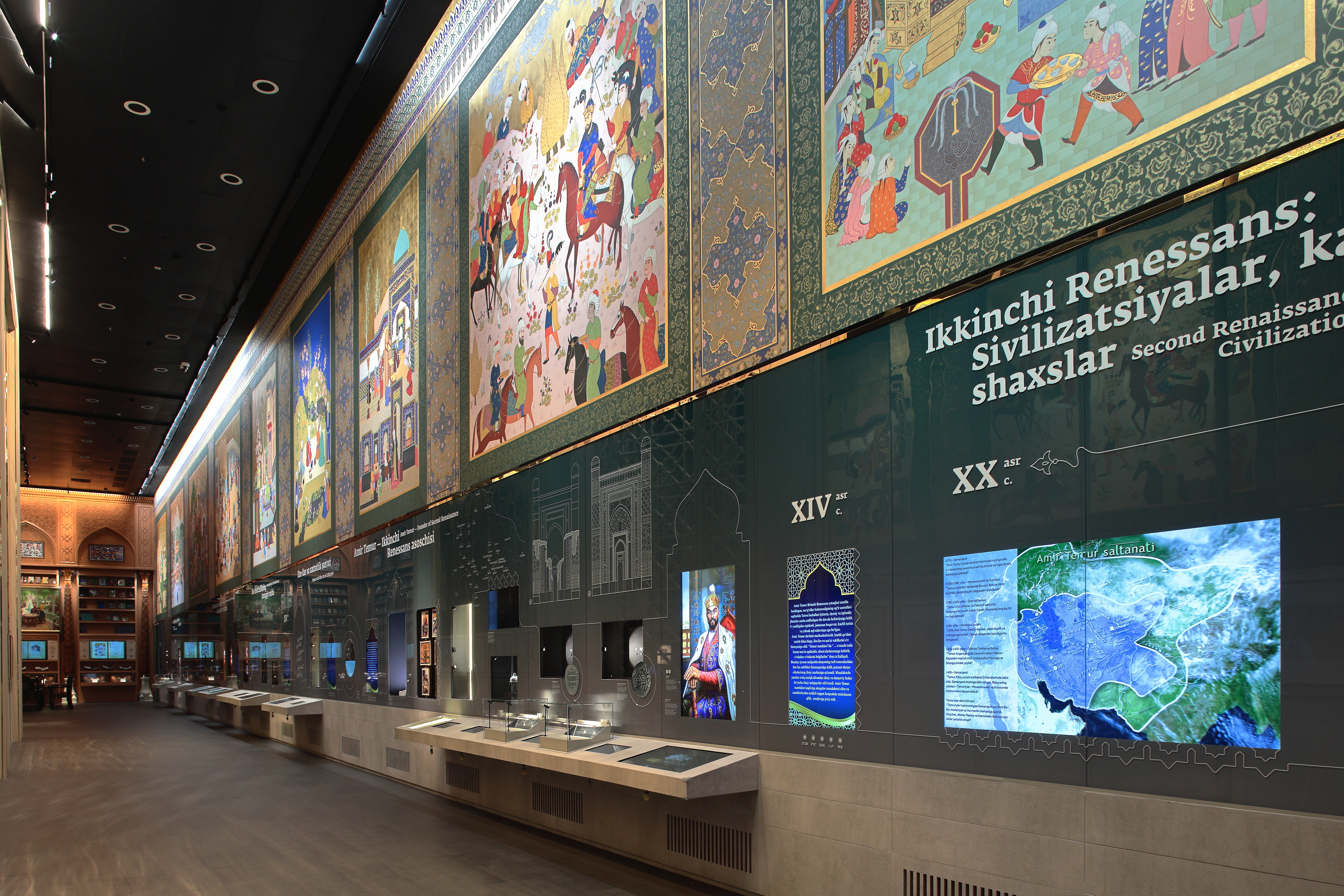
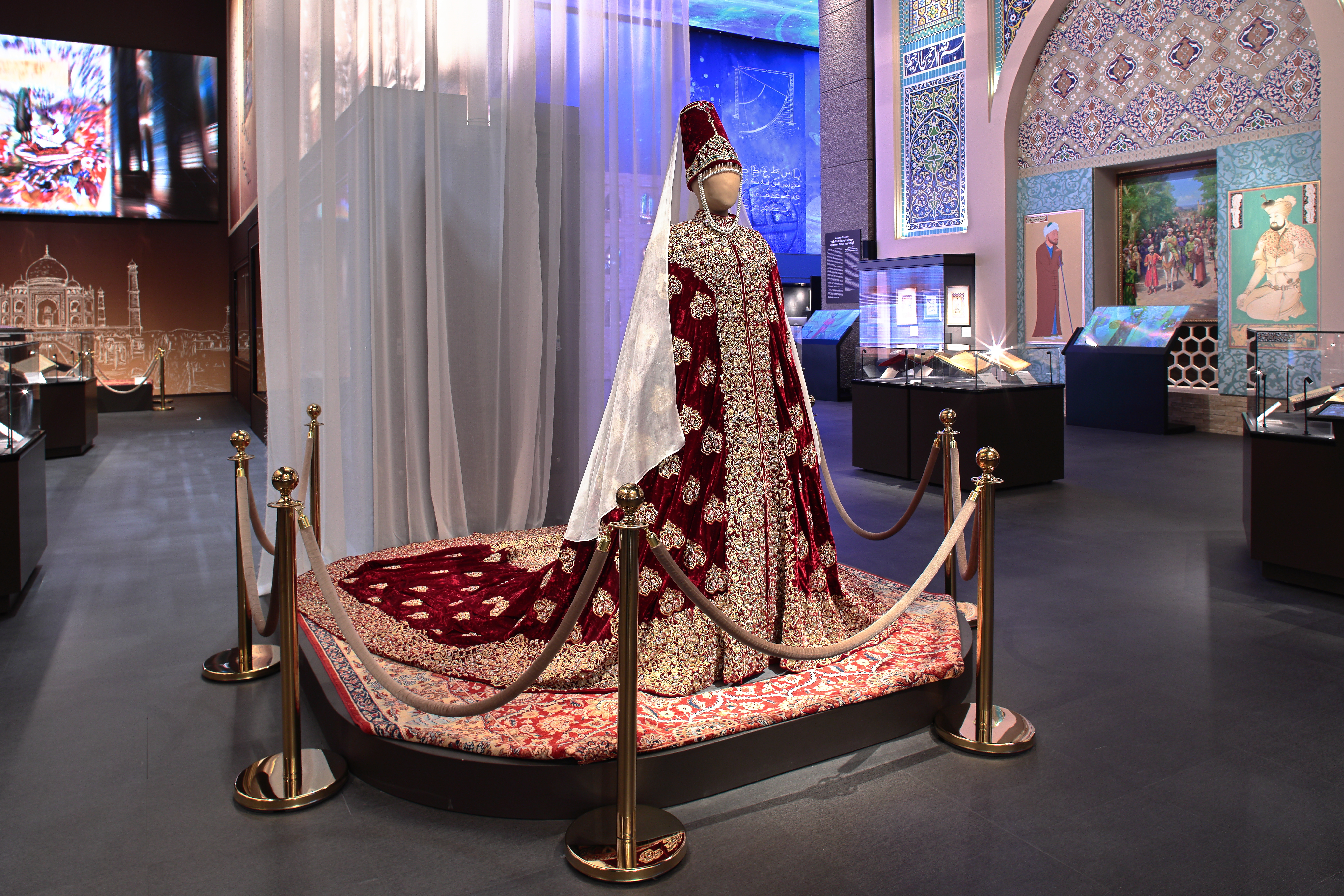
It should be noted that at the Islamic Civilization Center in Uzbekistan — established on the initiative and vision of President Shavkat Mirziyoyev — a special exhibition dedicated to the Second Renaissance period has been organized. This exhibition vividly demonstrates not only Amir Temur’s leadership and status as Sahibqiran, but also his enlightenment-oriented approach and his support for science and culture. It immerses visitors in the atmosphere of the era in which he lived.
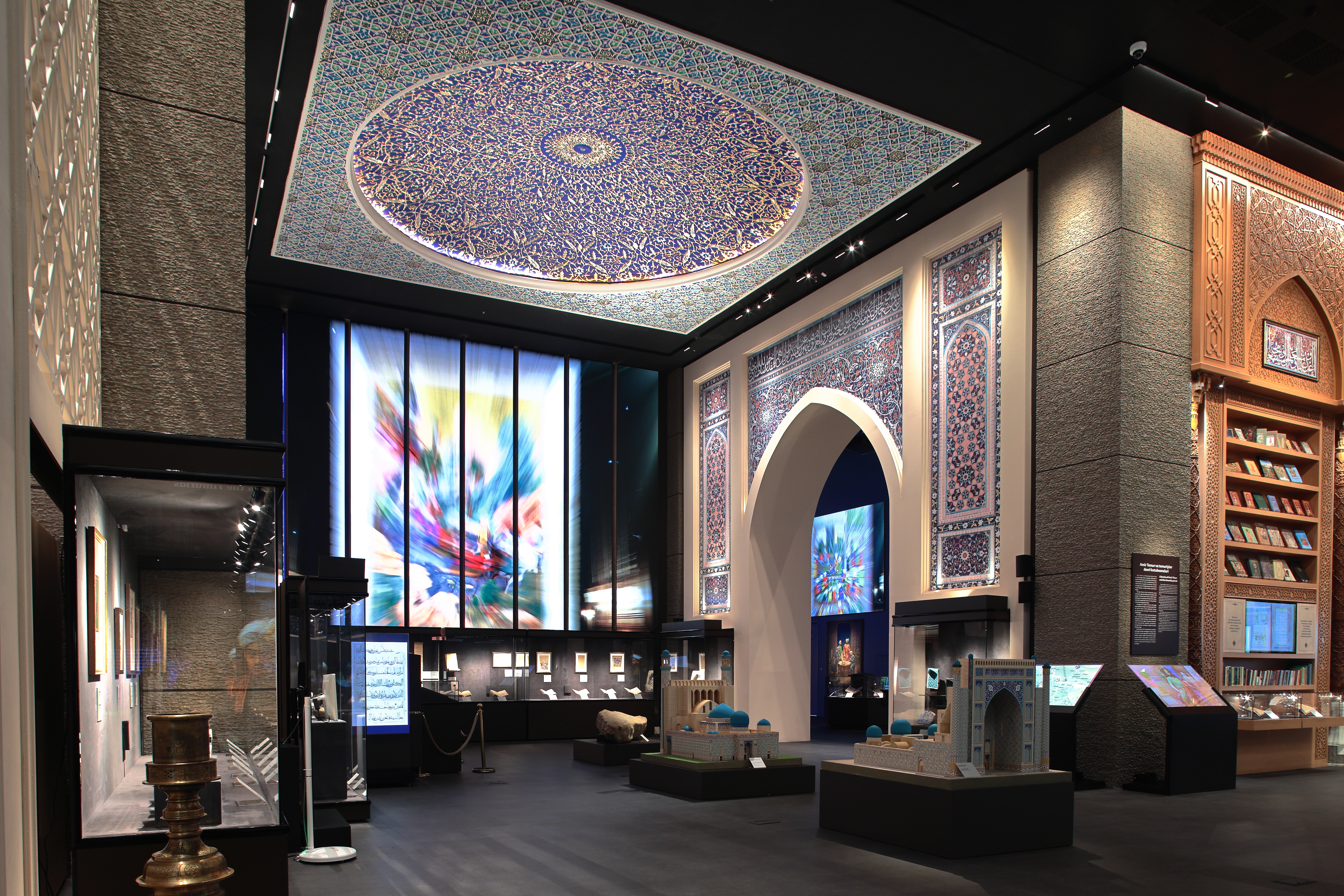
The integration of modern museum technologies, interactive exhibitions, and rare historical artifacts has made this section one of the most engaging and remarkable parts of the Center.
Within the exhibition, Amir Temur’s life, his statecraft, military campaigns, and the cultural heritage of the Timurid period are presented on a scientific basis using modern exhibition methods. Interactive maps, rare manuscripts, architectural models, historical documents, and AI-generated avatars make the exhibition more vivid and impactful.
At the center of the exhibition, a special touch panel displays an interactive map of Amir Temur’s empire, illustrating the key stages of the development of the Timurid state starting from his accession to the throne in 1370.
Through this map, visitors can explore:
• major cities,
• strategic territories,
• trade routes,
• cultural centers in detail.
This allows not only for viewing historical events but also for understanding and analyzing them.
 The exhibition also features scientific and literary works about Amir Temur created in Europe. Among them is the “Diary of a Journey to the Court of Amir Temur” by the Spanish ambassador Ruy González de Clavijo. During his journey to Samarkand, Clavijo recorded valuable information about the city’s magnificent architecture, court life, cultural environment, and the governance of Sahibqiran. This work is considered one of the earliest sources that introduced Amir Temur to the European public.
In addition, works by European authors such as Marcel Brion, Edgar Allan Poe, and Johann Schiltberger are also presented. These publications demonstrate the high level of interest in Amir Temur’s personality in Europe.
Special attention is also given to the work “Temur Tuzuklari” (Code of Temur). This work contains important information on governance, justice, discipline, and military regulations. At the Center, visitors can ознакомиться with facsimile copies, translations in various languages, and electronic versions of this work.
In accordance with the presidential resolution on celebrating the 690th anniversary of Sahibqiran, it is also planned to publish a scholarly annotated edition of “Temur Tuzuklari” (Code of Temur) in Persian, Arabic, Chinese, English, French, Spanish, and Russian.
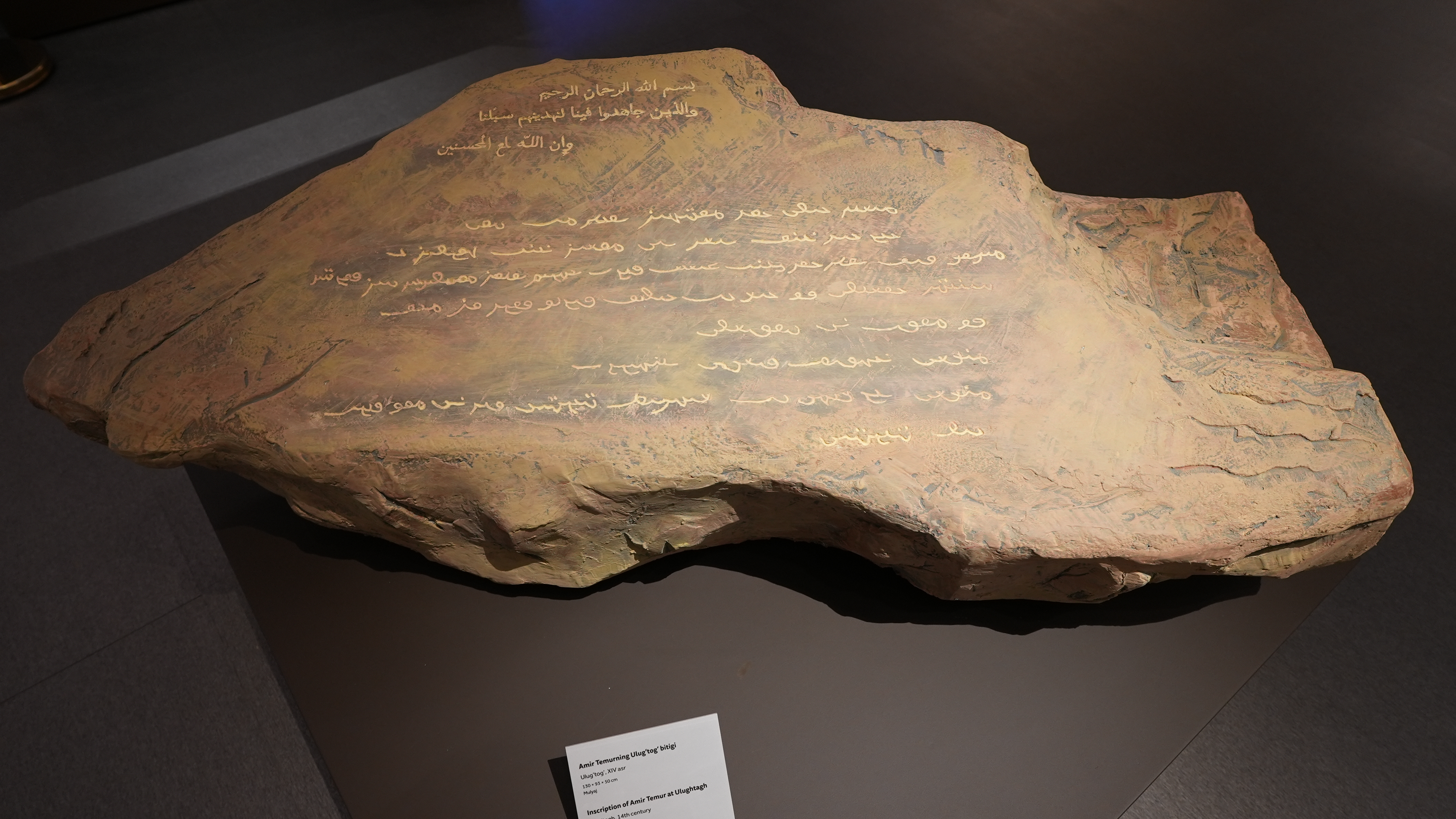 One of the rarest exhibits in the collection is the “Ulugtag Inscription.” This monumental artifact, commissioned in 1391, reflects Sahibqiran’s ideas of statehood and military power.
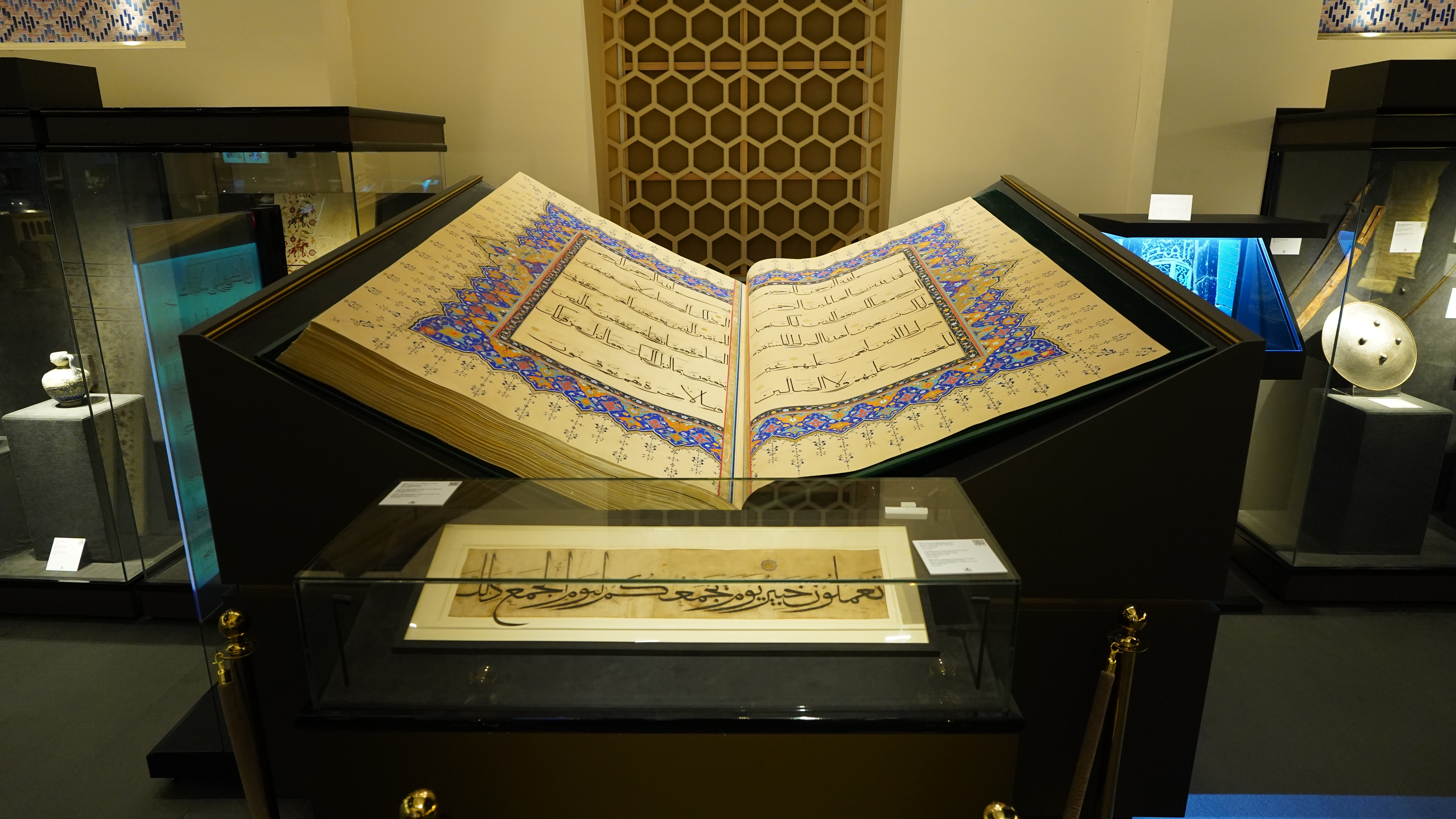
Also on display is a page from the Holy Qur’an copied by the calligrapher Umar Aqta. Such rare works demonstrate the immense richness of our spiritual heritage.
 At the Center, visitors can also “interact” with Amir Temur through a special AI-based avatar. It answers questions in Uzbek, Russian, English, and Arabic, making the museum even more attractive and interactive for the new generation.
Overall, the exhibition organized at the Islamic Civilization Center in Uzbekistan presents the history, science, and culture of Amir Temur and the Timurid period through a modern approach. Most importantly, this exhibition serves as an important source for further promoting the personality and legacy of Amir Temur on a broader scale.