



“It cannot be seen in a single day”: Moscow University delegation amazed by the center in Tashkent
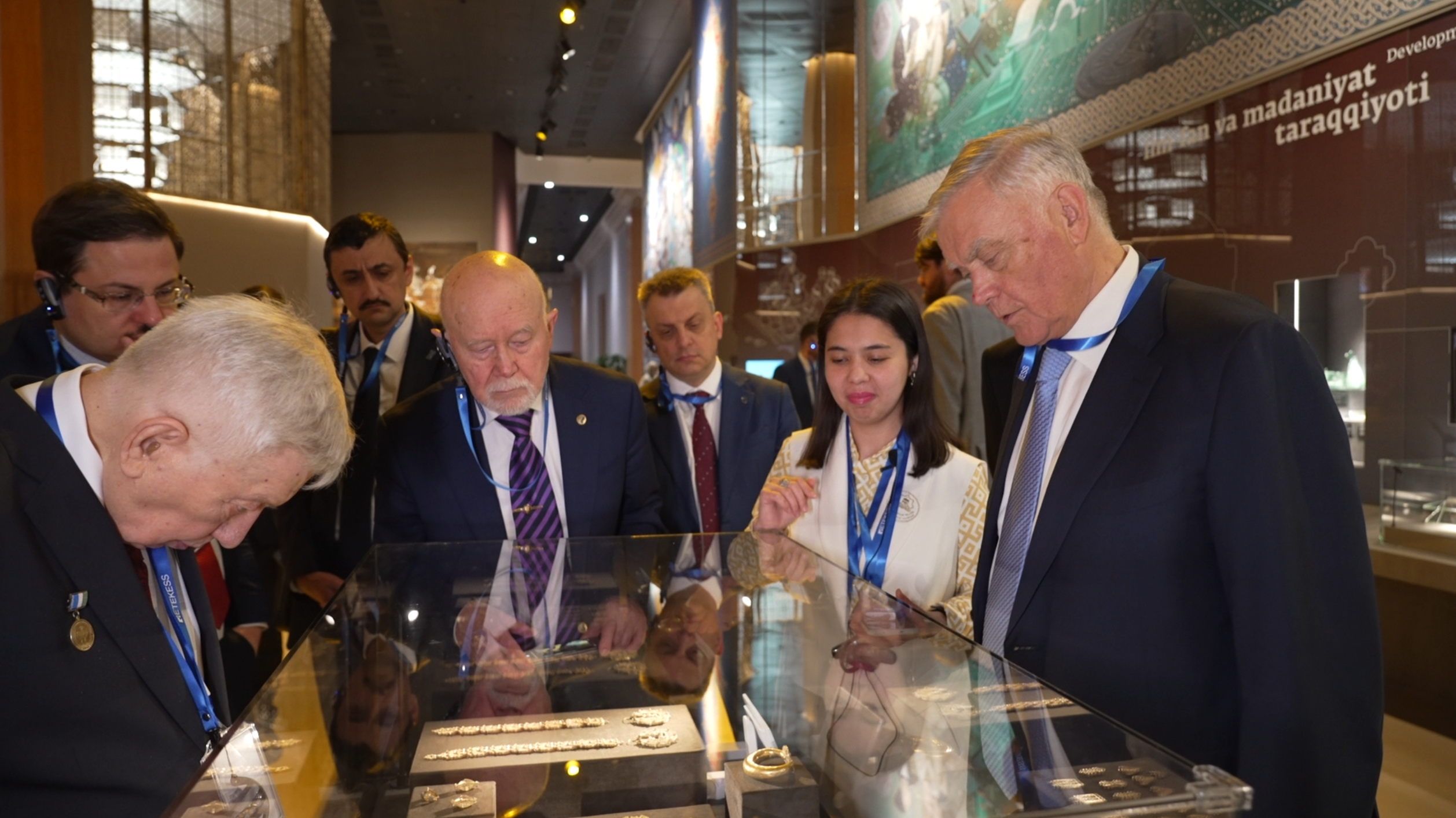 Members of the delegation led by Vladimir Yakunin, Head of the Department of State Policy at Lomonosov Moscow State University, visited the Islamic Civilization Center in Uzbekistan, designed based on the idea of President Shavkat Mirziyoyev, and highly praised its scale and richly meaningful exhibitions. In particular, Ahmad al-Fergani’s nilometer and the heritage of the Second Renaissance period left a strong impression on the guests.
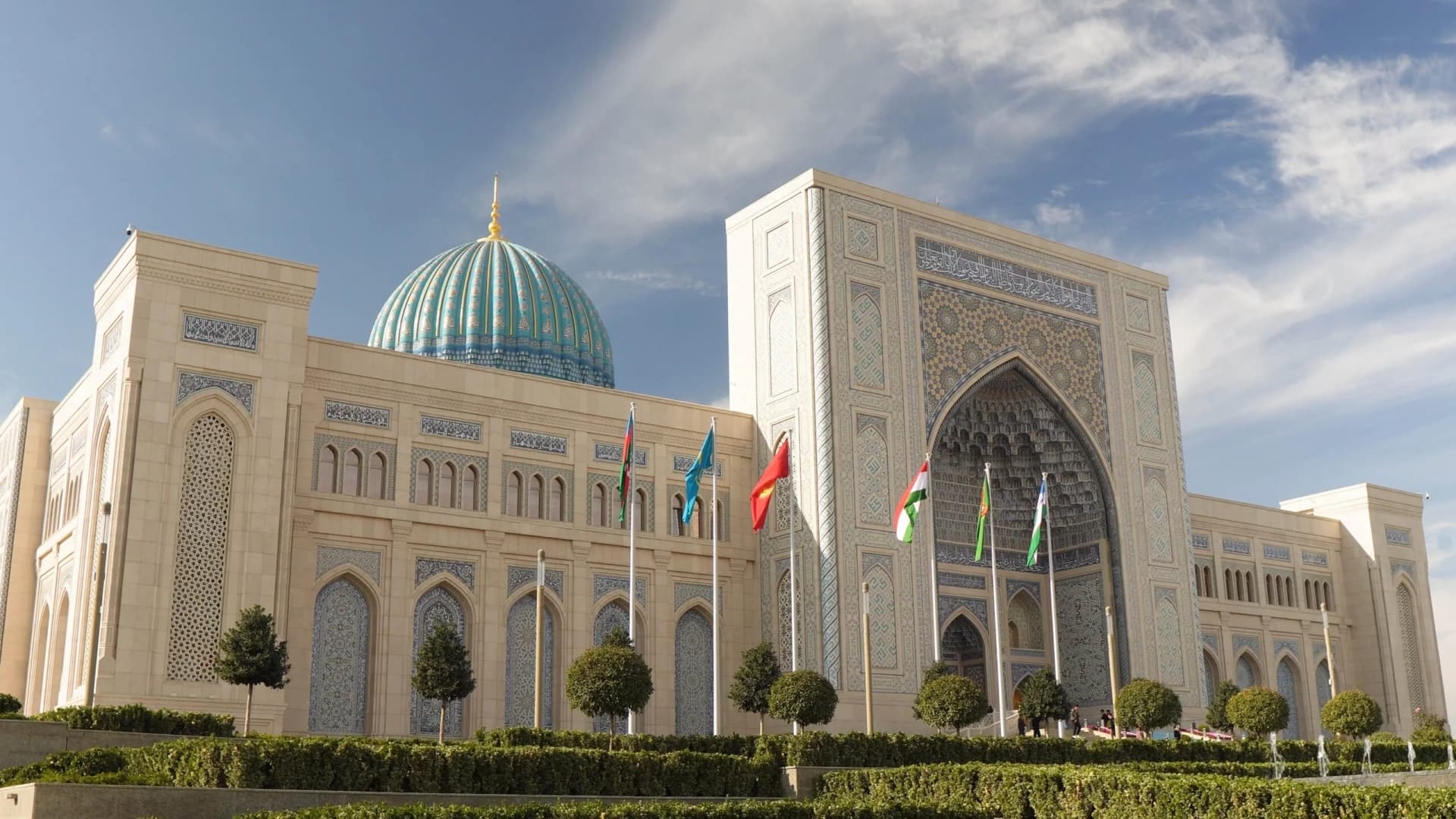
The Islamic Civilization Center in Uzbekistan, designed on the initiative of President Shavkat Mirziyoyev and constructed over the past eight years, is emerging as a major scientific and educational hub for the international community.
Members of the delegation, led by Vladimir Yakunin, Head of the Department of State Policy at Lomonosov Moscow State University, noted that they were impressed not only by the Center’s internal exhibitions, but also by its external architectural design — four grand portals, their intricate ornaments and inscriptions, and the meticulous attention to every detail.
The First Renaissance exhibition of the museum particularly attracted the guests’ interest. Here, the scientific legacy of great scholars, especially the nilometer improved by Ahmad al-Fergani, became the focus of attention. This device was historically used to measure the water level of the Nile River and was based on the principles of hydrostatics. With the help of the nilometer, the annual water volume of the river was determined, allowing predictions of droughts or floods. It also played a role in determining agricultural productivity and shaping tax policies based on these measurements. This scientific approach made a strong impression on the delegation members.
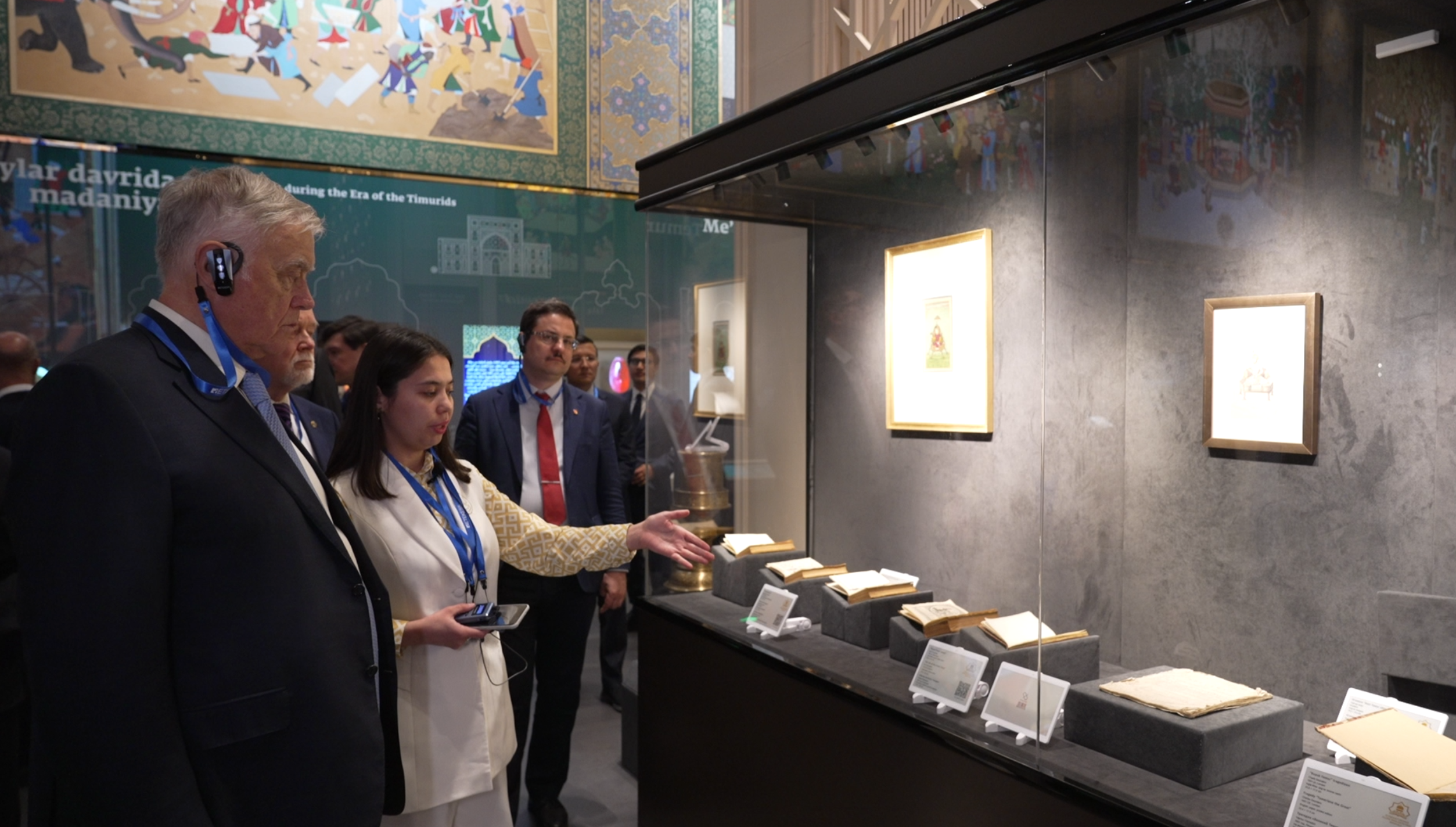
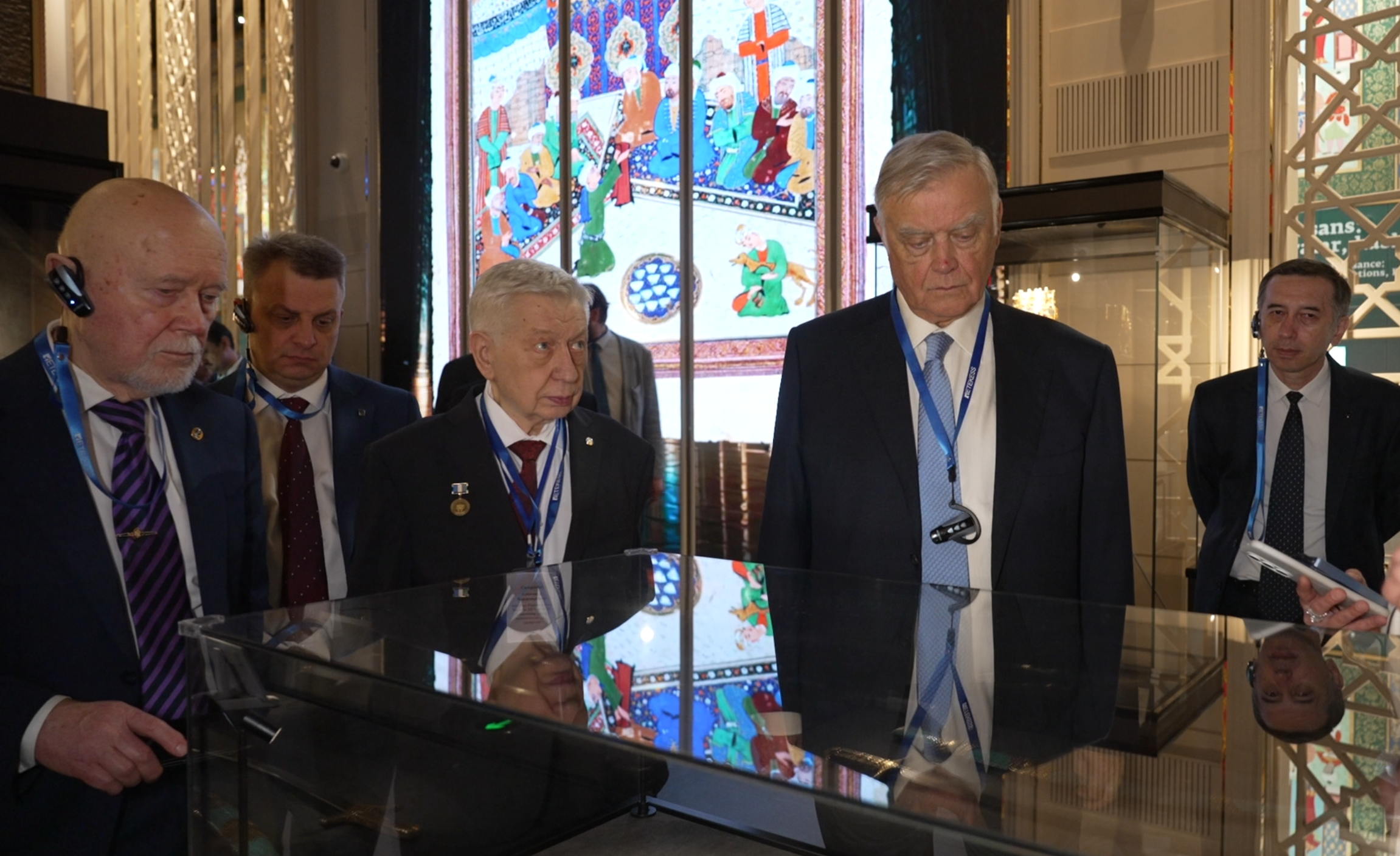 In the Second Renaissance section, the guests were especially interested in the exhibitions related to the era of Shahrukh Mirza. The development of science and culture, as well as Shahrukh Mirza’s enlightened activities, are widely presented here. In particular, the information that more than 50 manuscripts from his library have been identified attracted great interest among the delegation. Among them, the work “Mi’rajnama,” written in 1434 in the Uyghur script in Old Uzbek, along with its miniatures, received special recognition.
The delegation members also closely familiarized themselves with the exhibitions in the “New Uzbekistan” and “Qur’an” halls.
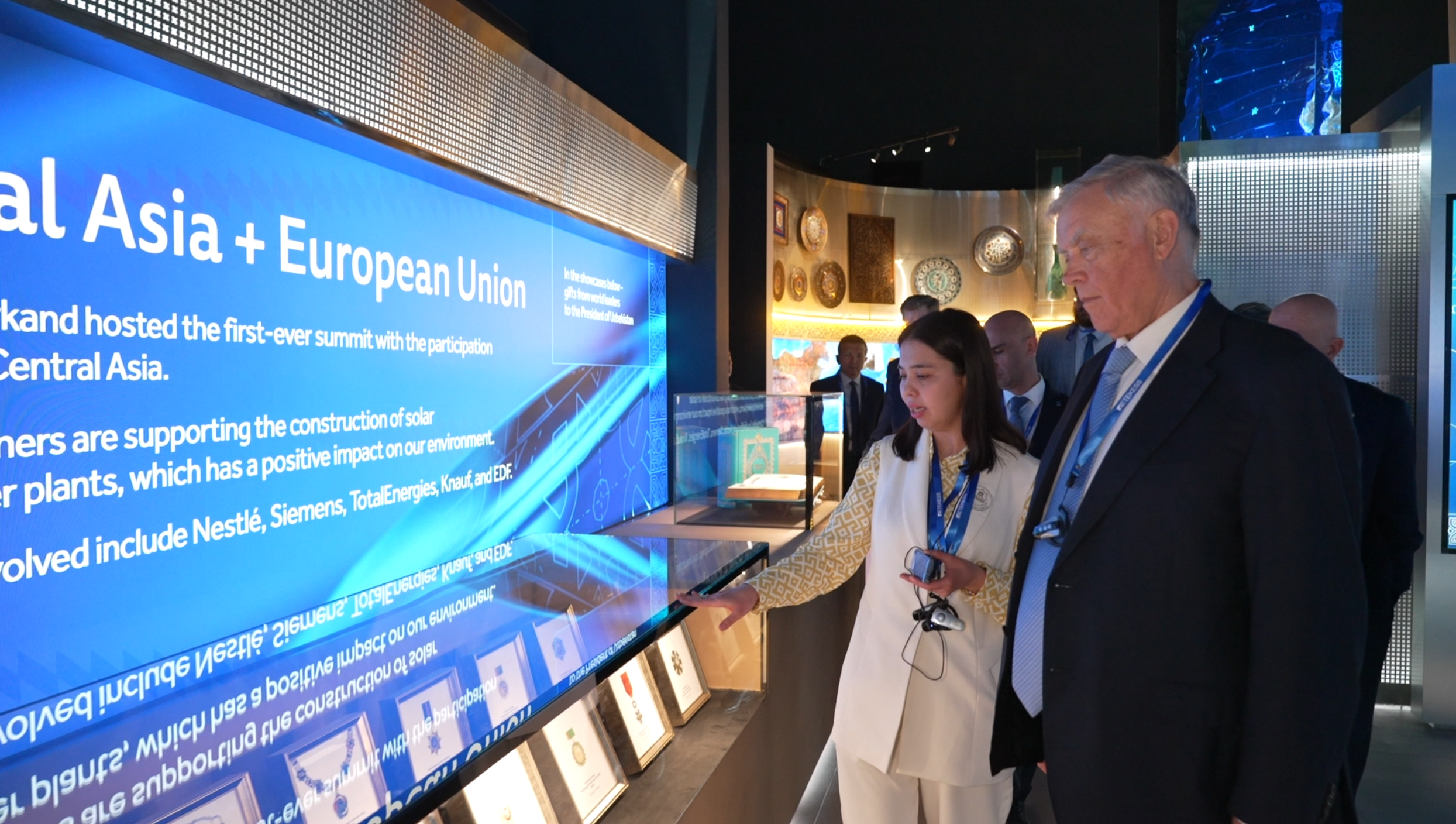 Vladimir Yakunin, Head of the Department of State Policy at Lomonosov Moscow State University:
The greatness of the idea realized here, the beauty of its execution, and the rich content of the exhibitions are truly commendable. This Center is, above all, a source of knowledge and a means of educating society. The exhibition is so extensive that it cannot be fully explored in a short time. This, in itself, creates a reason to return again.
He also emphasized the importance of developing international cooperation on the basis of friendship and mutual respect, noting that historical knowledge plays a special role in educating the younger generation.