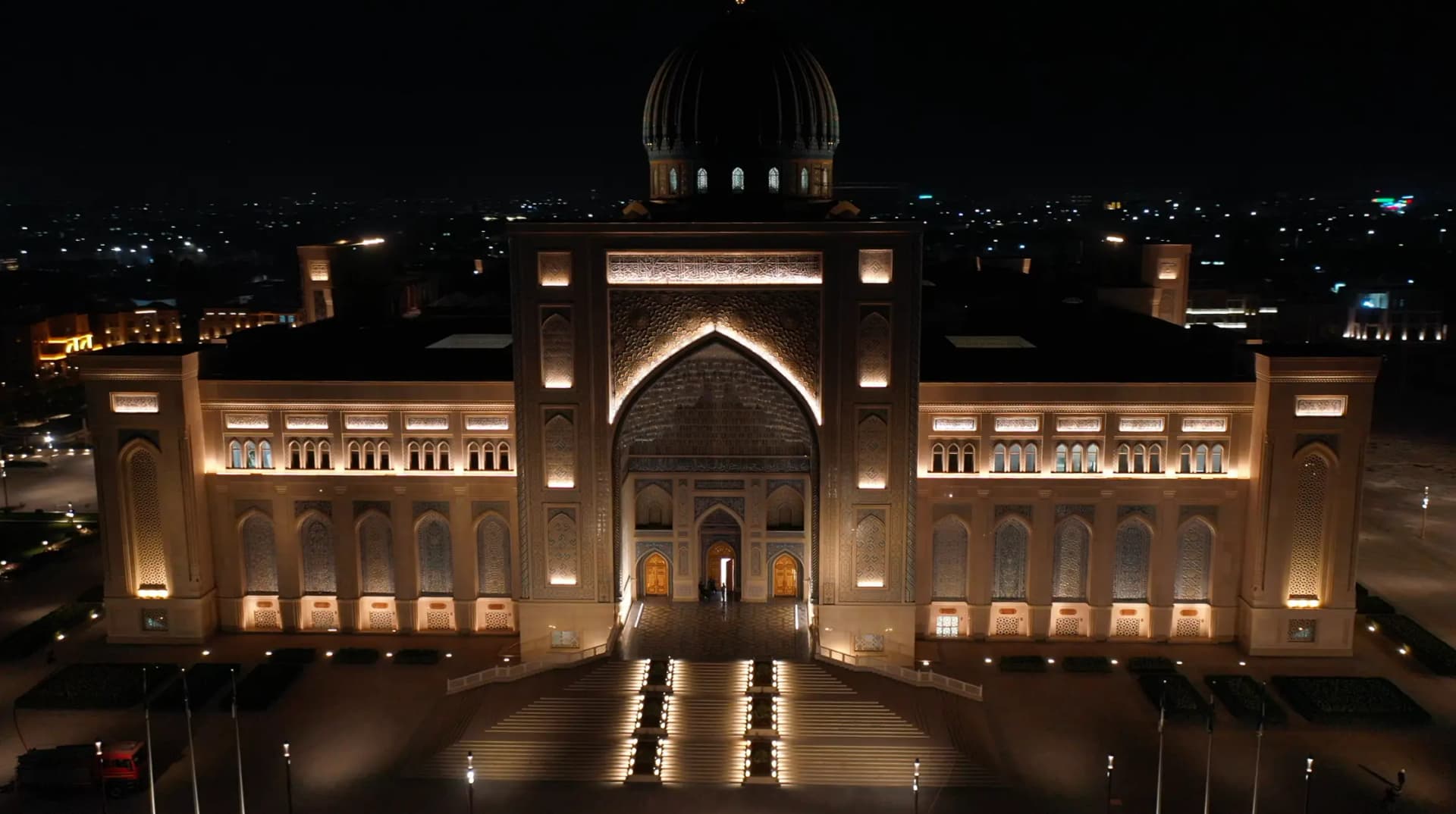
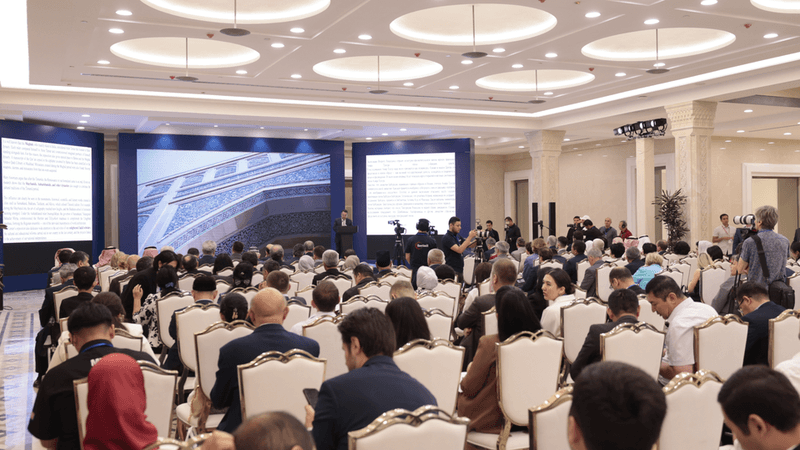
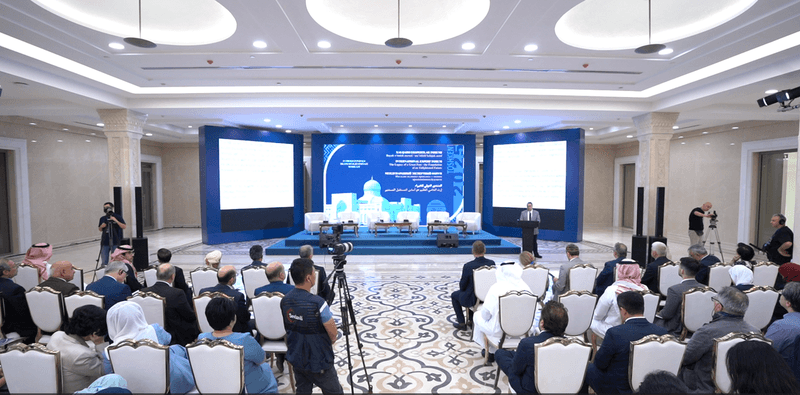
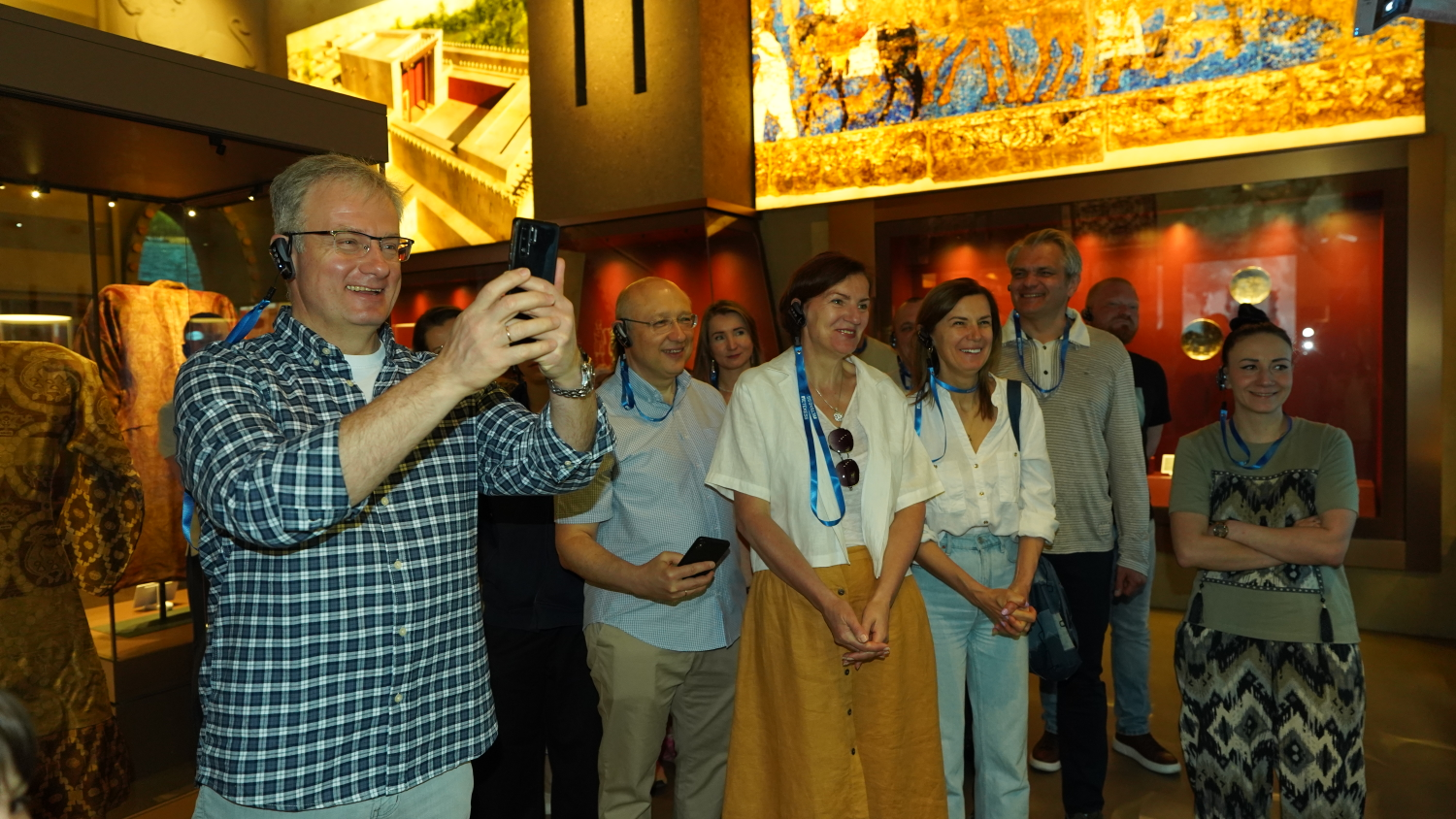
 The Islamic Civilization Center in Uzbekistan was constructed over nearly nine years and opened its doors to the general public on the eve of Ramadan Eid this year. In a short period of time, this magnificent complex has already received high recognition.
As President Shavkat Mirziyoyev has emphasized, the main goal of the Center is to deeply study and widely promote the three-thousand-year rich history of our people, their creative potential, their significant contribution to world civilization, and the invaluable cultural and educational heritage of our ancestors.
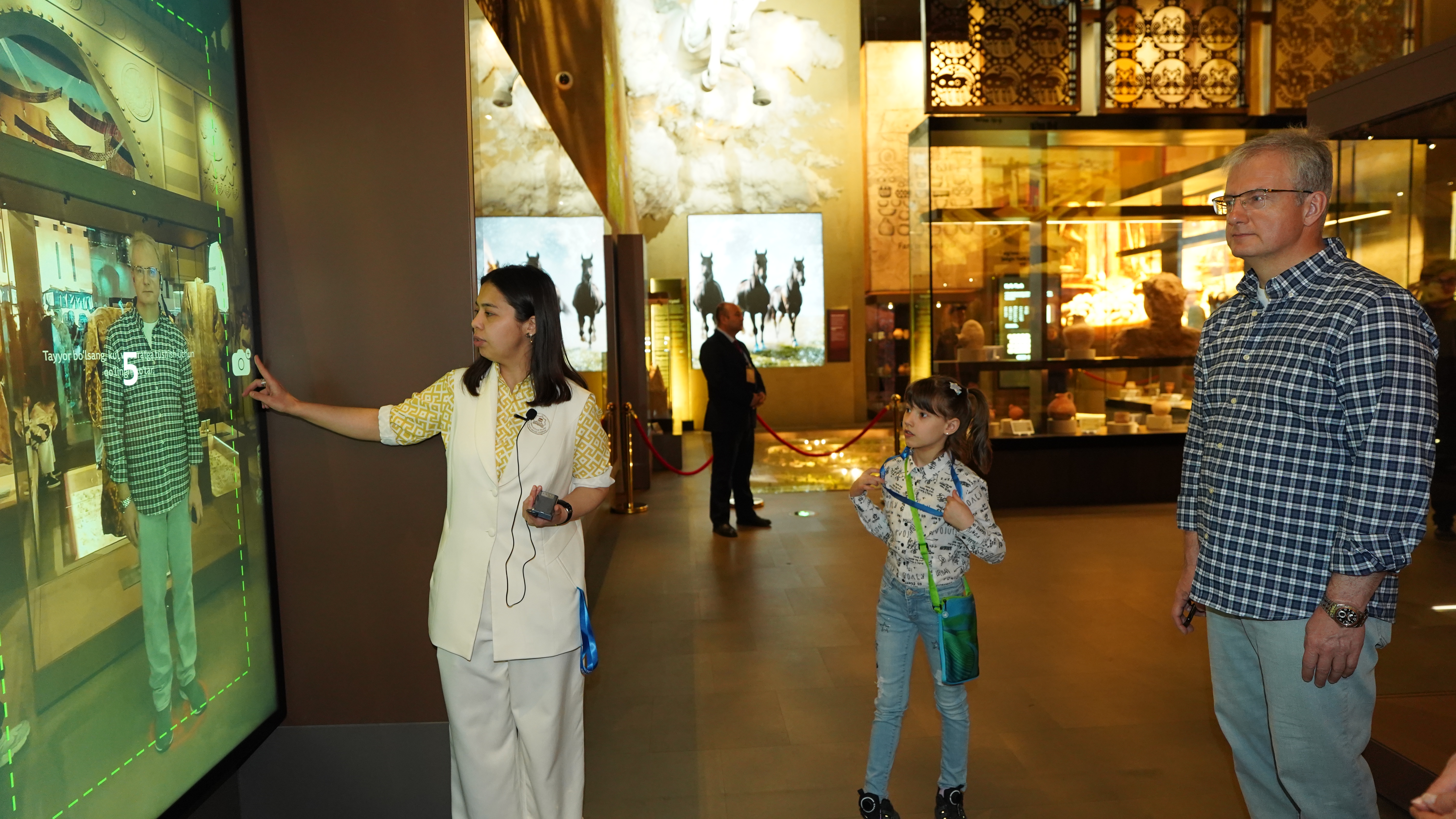
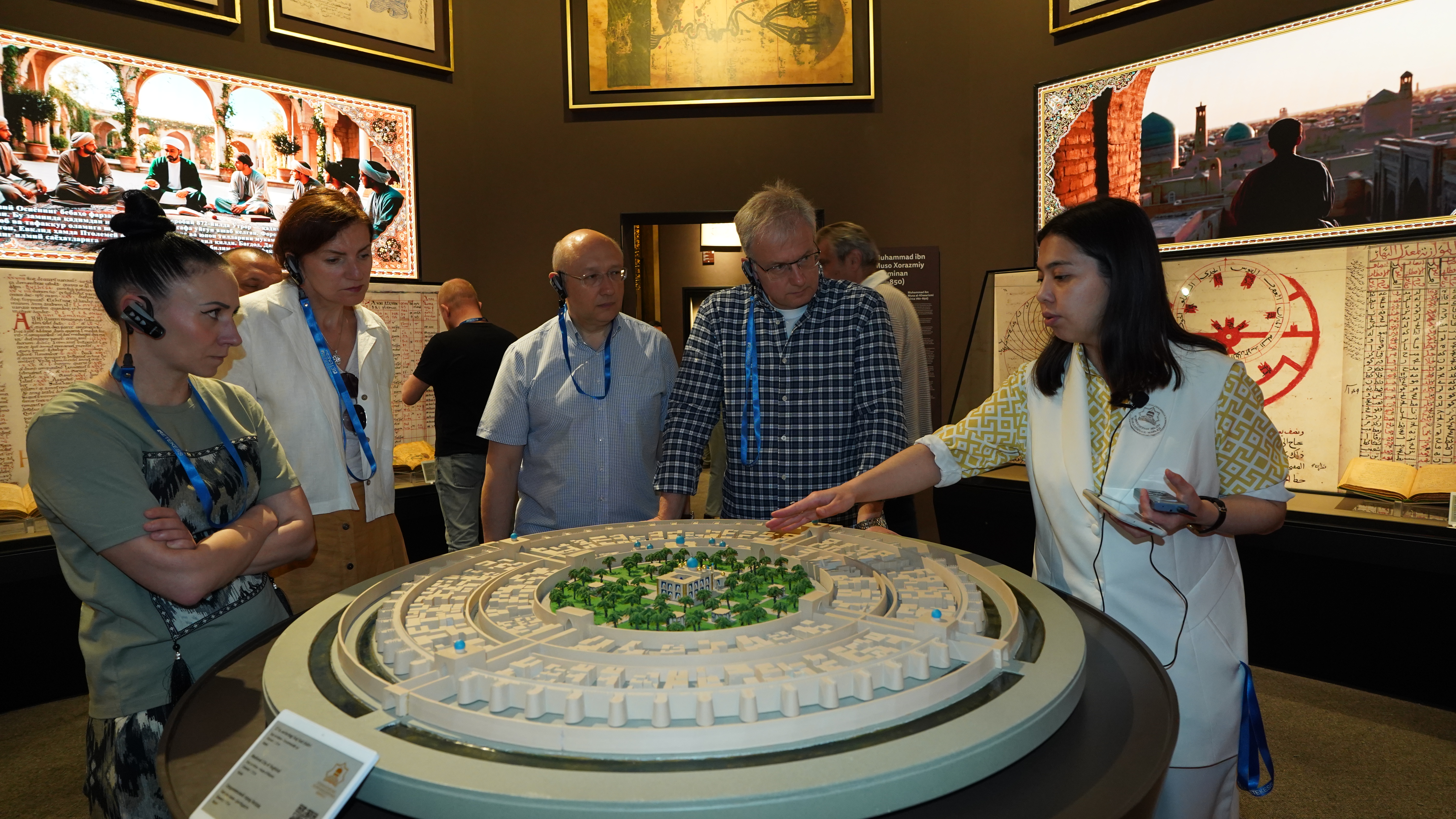
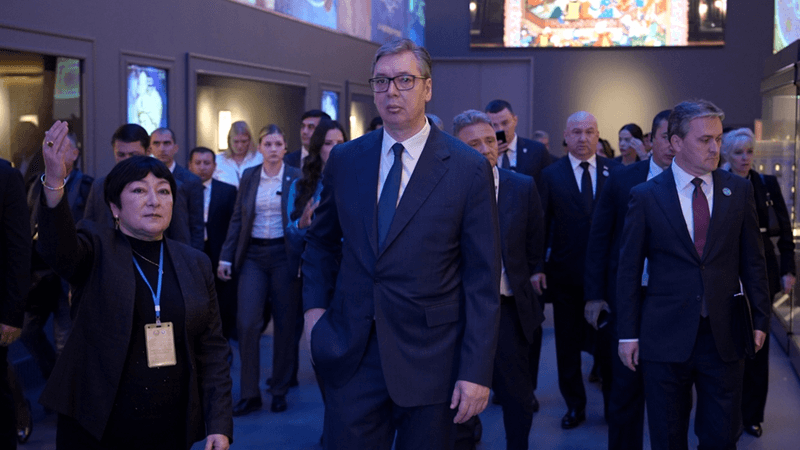
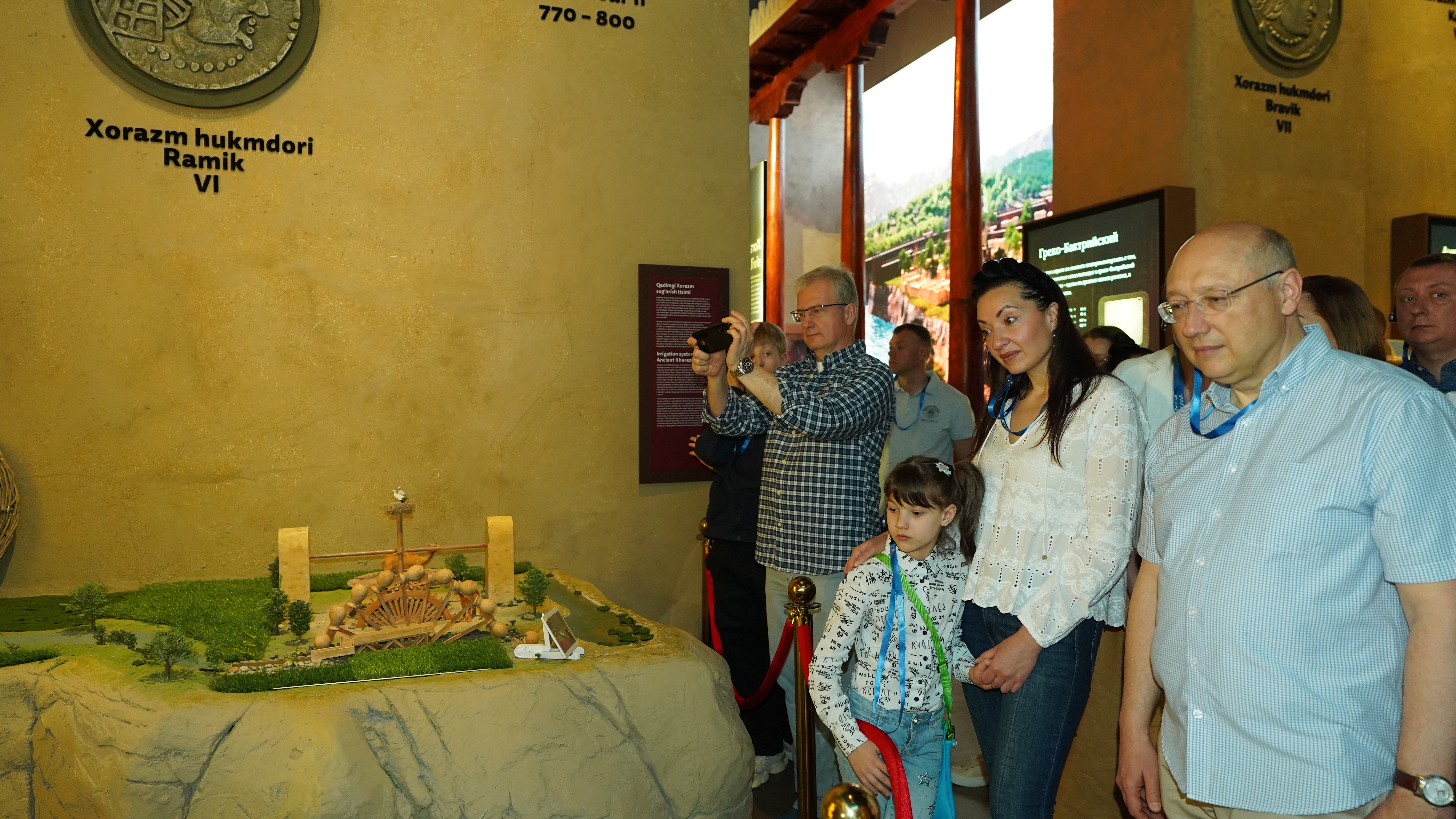
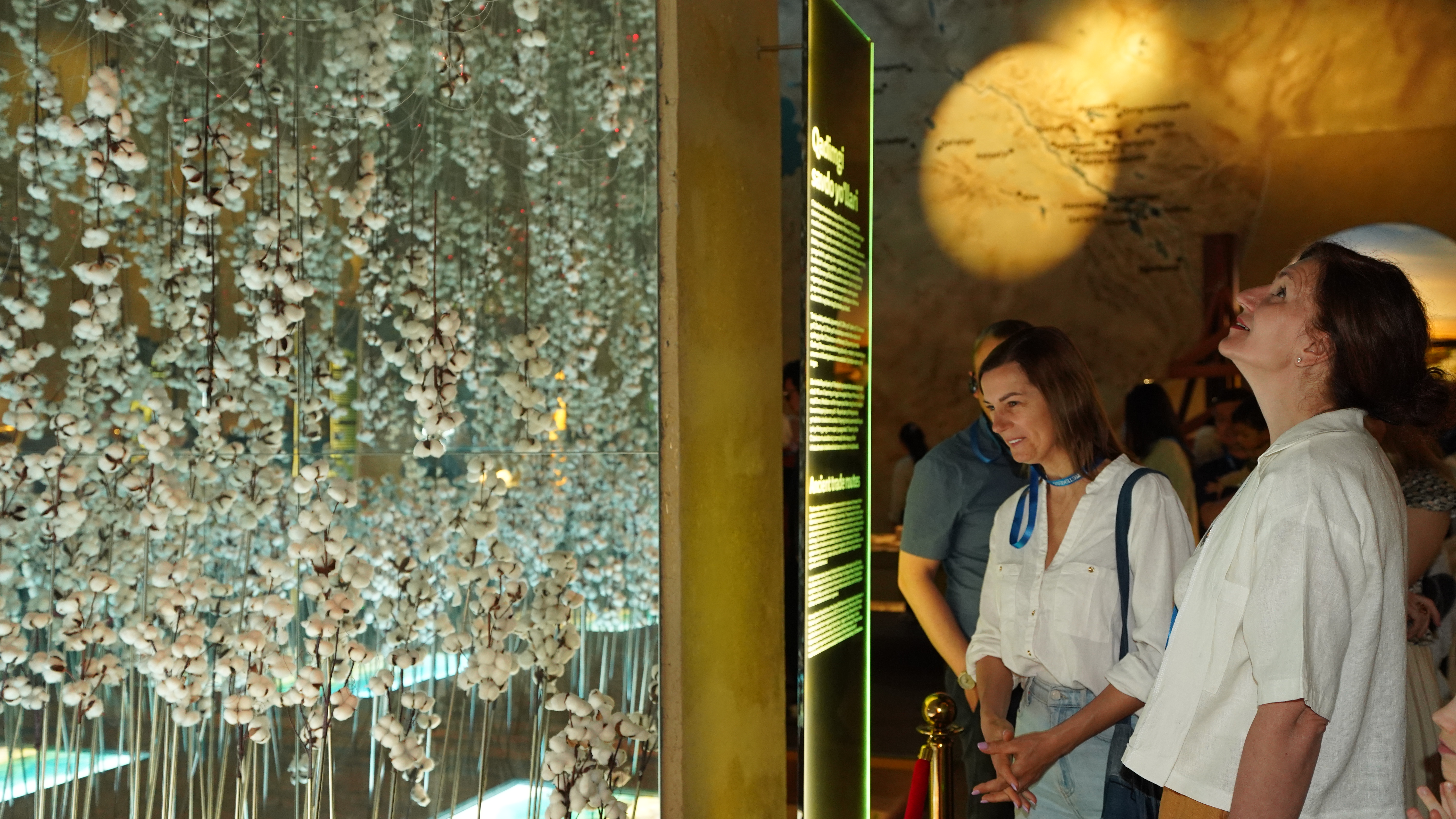 Within this framework, a delegation led by the Ambassador Extraordinary and Plenipotentiary of the Republic of Belarus to Uzbekistan, Alexander Ogorodnikov, visited the Center and familiarized themselves in detail with its exhibitions. As the guests explored each hall with great interest, they paid particular attention to the maps.
It is well known that the Great Silk Road holds a unique place in the history of Uzbekistan. Formed in the 2nd century BCE, this trade route connected East and West for nearly 18 centuries. Its key routes passed through major cities located in present-day Uzbekistan. The interactive maps of trade routes presented in the pre-Islamic civilization exhibition vividly illustrated these historical processes using a modern approach, leaving a strong impression on the delegation members.
In addition, the model of the Samanid Mausoleum at the center of the First Renaissance section, the exquisite jewelry from the Seljuk period, and royal symbols featuring the image of a double-headed eagle attracted significant attention. Notably, these rare exhibits were repatriated to Uzbekistan from foreign countries on the initiative of the President.
The suzanis — masterpieces of national applied art — also drew particular interest from the delegation. The unique suzani patterns displayed in the khanates section of the Second Renaissance exhibition especially captured their attention.
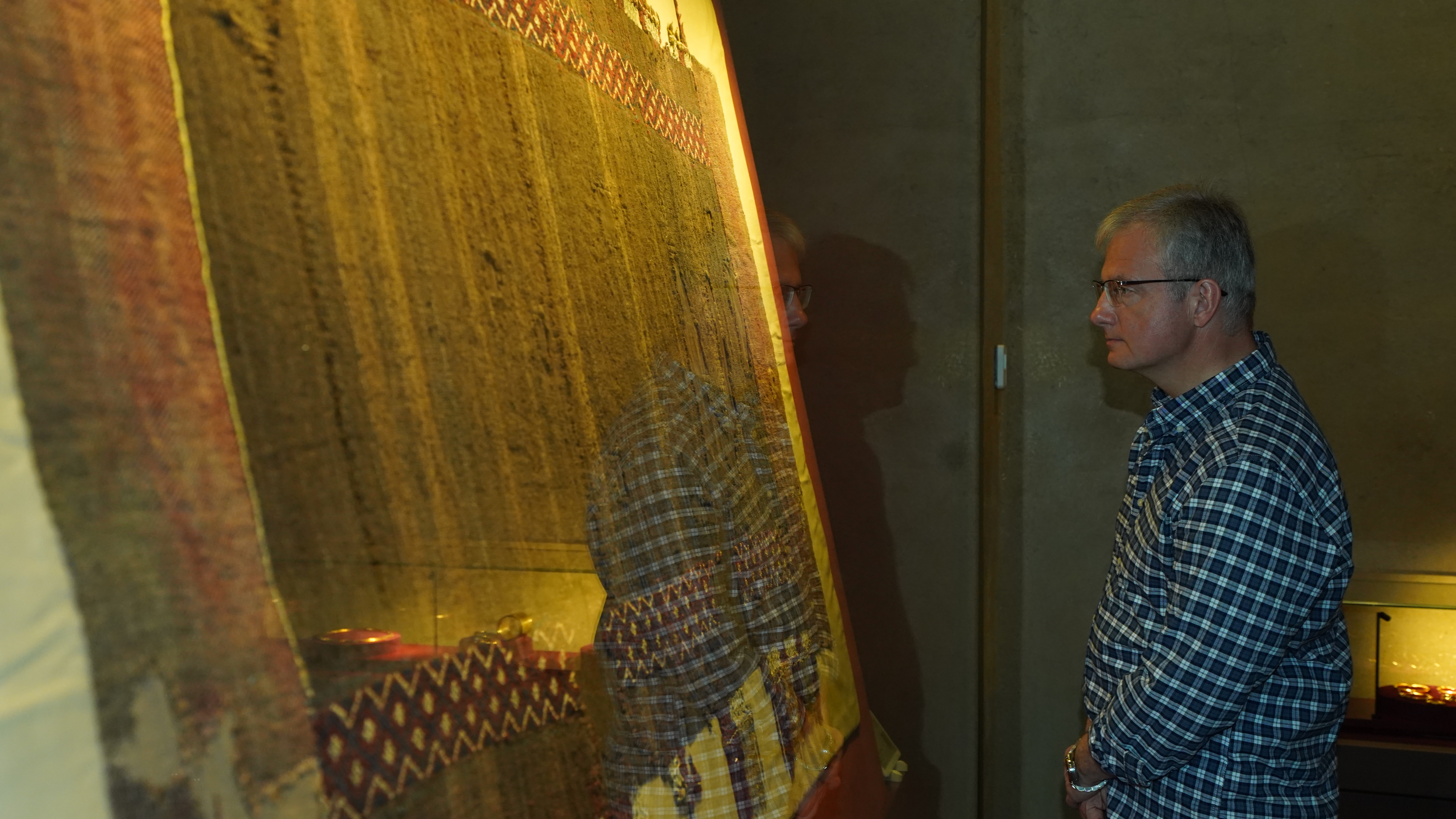 Alexander Ogorodnikov, Ambassador Extraordinary and Plenipotentiary of the Republic of Belarus to Uzbekistan:
Here, history spanning centuries and even millennia is presented. All periods are of interest to me, because in each one you can find many fascinating aspects and compare them with the present day.
I have no doubt that for the younger generation, this center is primarily educational in nature. The impact of seeing everything with your own eyes is completely different — no history lesson or classroom setting can fully convey it.
It is impossible to present such beauty, the depth of art, the capabilities of humanity, as well as politics, military aspects, art, and sports all together in a classroom. But here, everything is brought together. That is why, in my opinion, this is not a place to visit just once; each visit allows you to discover a new historical aspect or a new museum element you have not seen before. I believe this is the greatest value of the Islamic Civilization Center.
The Islamic Civilization Center that has been created truly reveals the essence of Islam and presents its history — from its emergence to the present day — in great depth. Therefore, I am confident that this center is interesting for all citizens, regardless of their beliefs, origin, financial status, or religion. It is a place that teaches us to understand history, to value peace on Earth, and to realize how important it is for future generations to know the past.
Alexander Opimakh, Counselor of the Embassy of the Republic of Belarus in Uzbekistan:
The Islamic Civilization Center is undoubtedly a very large-scale project in both concept and implementation. From the very first step, as soon as you enter, it makes a strong impression and amazes visitors with the depth of its content. It is rich in information and offers visual solutions that truly encourage reflection and allow one to understand more deeply how Uzbekistan has developed over thousands of years.
By education, I am a historian, so I particularly appreciated the presentation of the pre-Islamic period, as well as the First and Second Renaissance eras. I must say that the specialists who worked and continue to work on the exhibition have carried out truly extensive and profound research. Therefore, I would like to express my sincere gratitude and respect to everyone who contributed to its creation.
The presented exhibition demonstrates how deeply Islam has been embedded in the philosophical views of great thinkers across different periods. Most importantly, it shows that it was on the foundation of Islam that people created great works of culture and art. Therefore, the contribution of Islamic civilization to human development is undeniable — it has never been denied in world culture and civilization.
According to the delegation members, scholars from this region achieved remarkable scientific accomplishments in their time and even put forward scientific hypotheses long before the discovery of America by Christopher Columbus.
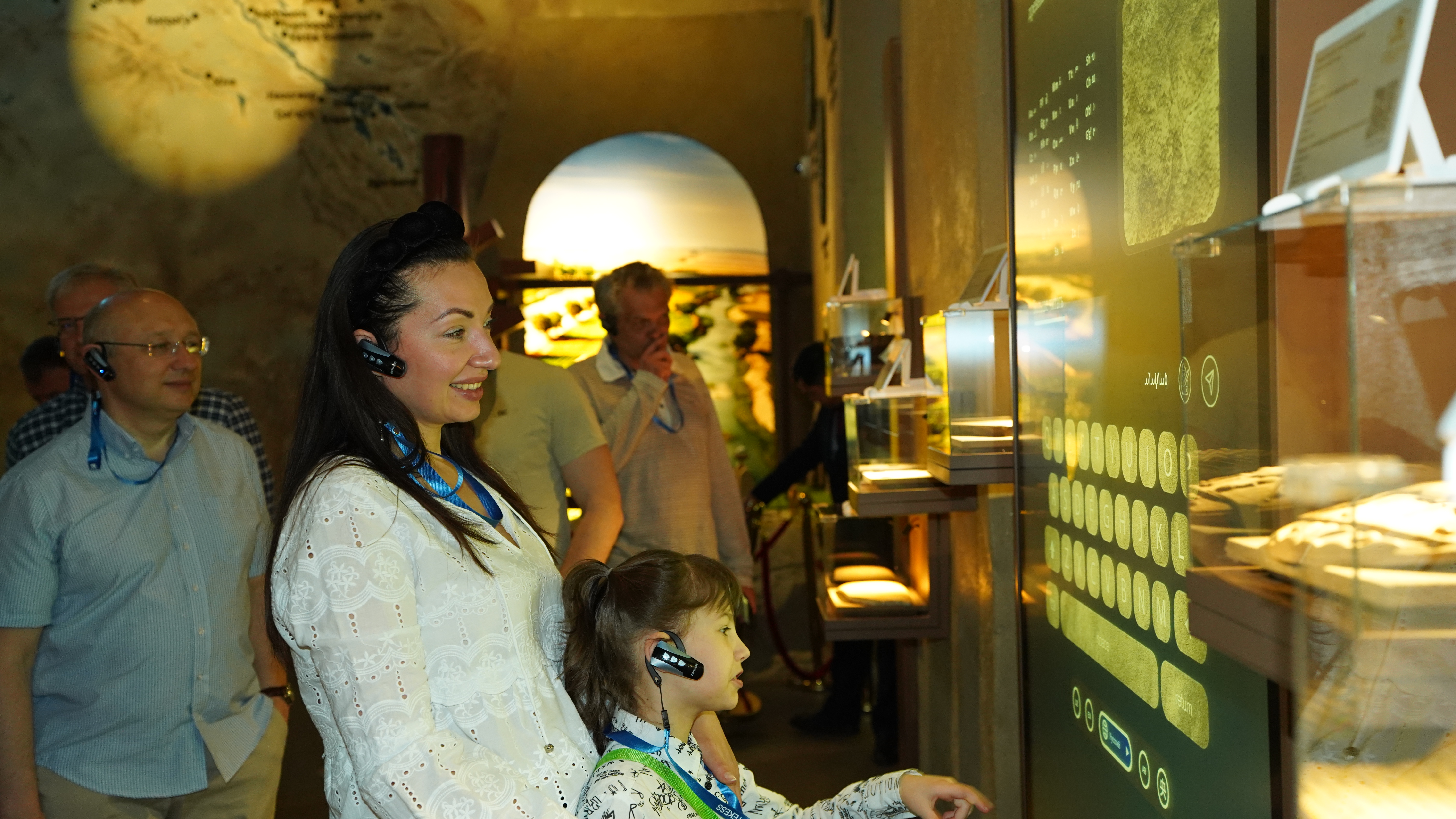 It was emphasized that the development of sciences such as algebra, astronomy, and geometry is closely connected with this land, while Europe had not yet reached such a level of progress at that time. It was also noted that during the era of Amir Temur, the conditions created for science and the policy of supporting scholars played a crucial role.