



A mysterious gallery concealing the traces of Amir Temur
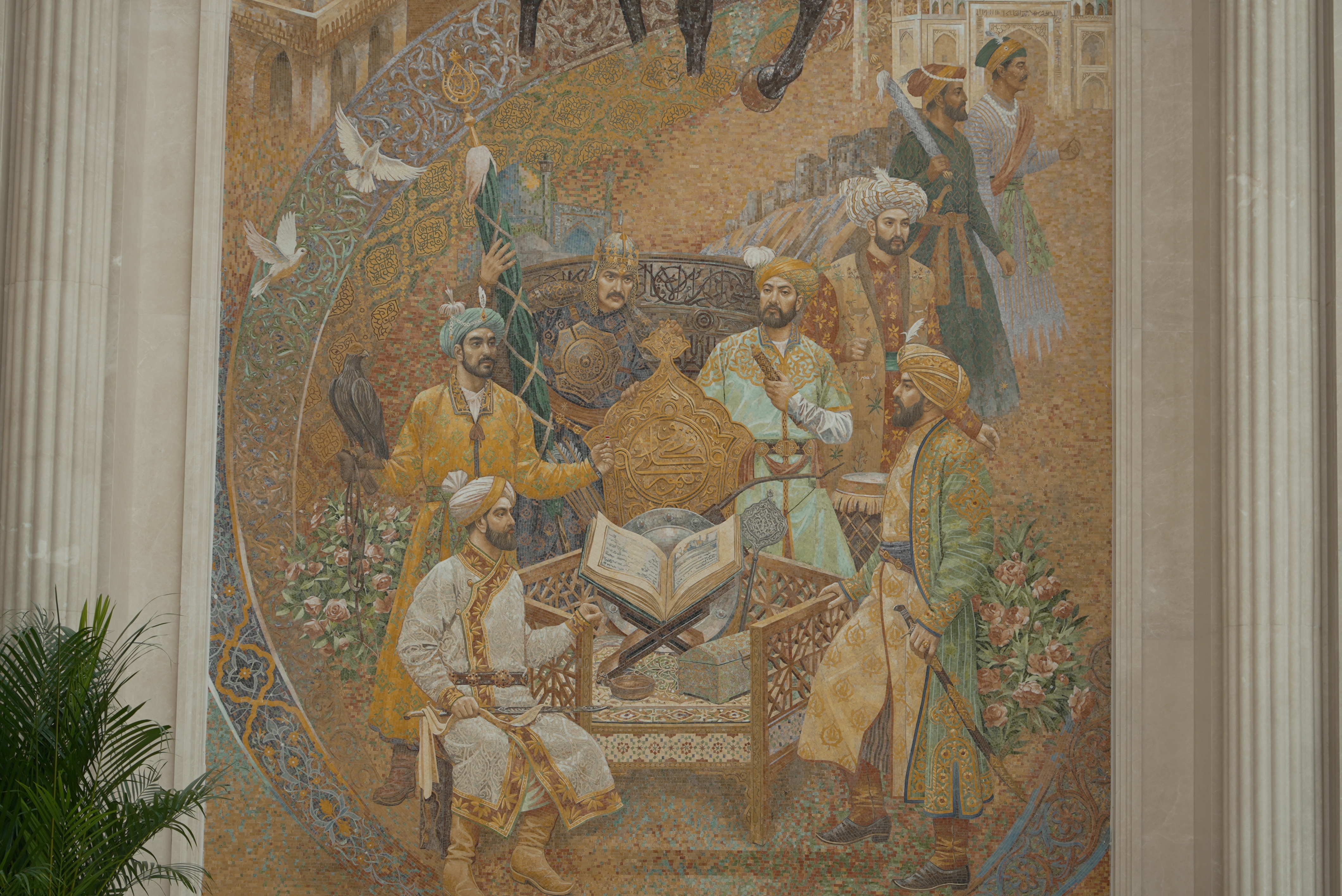
Upon entering the Center through the Samarkand portal, guests are greeted by the “Gallery of Great Figures.” This hall holds special significance due to its exceptional artistic and architectural solutions. Each of the 14 arches here is intricately composed of 110 shades of micromosaic stones, crafted with remarkable skill. The works were created by a creative team led by artist Alisher Alikulov and further refined based on the recommendations of the head of state.
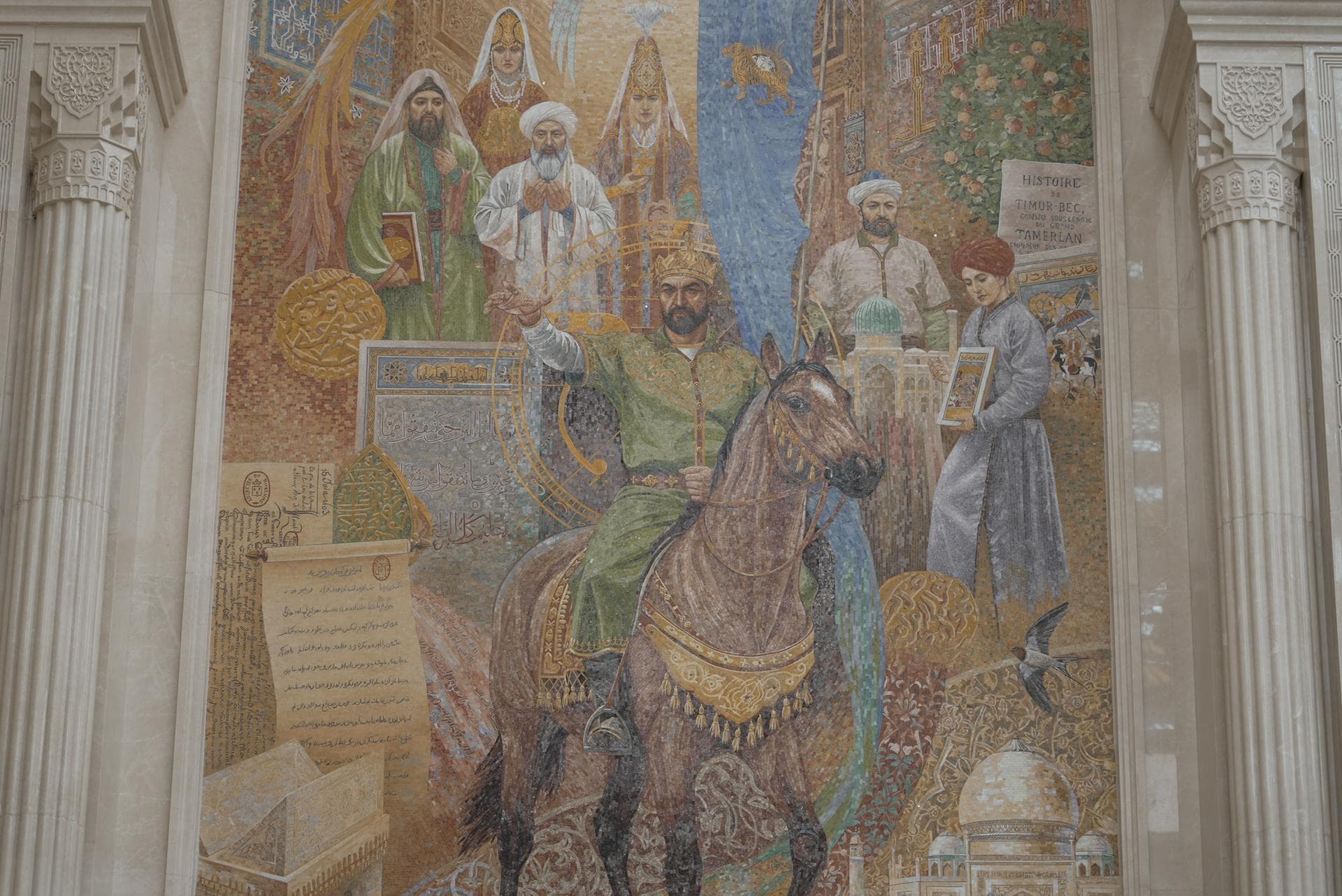
At a time when the 690th anniversary of the birth of the great commander and statesman Amir Temur is being widely celebrated in our country, the eighth panel of the gallery draws particular attention. This artwork profoundly reveals the image of Sahibqiran, who became a symbol of Uzbek statehood, through artistic and symbolic expression.
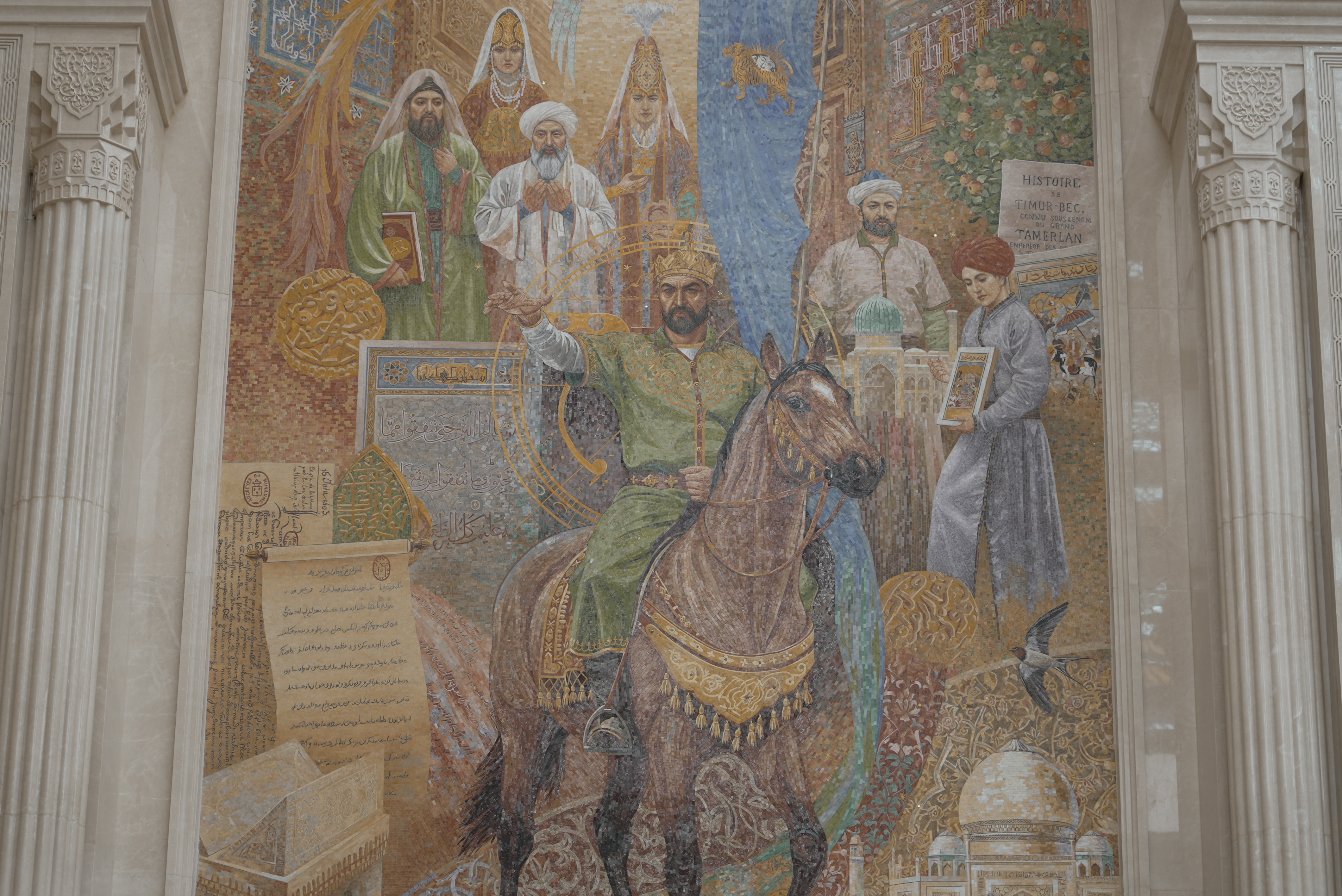 At the center of the panel is the majestic figure of Amir Temur — depicted as a commander on a dark bay horse. Surrounding him are key historical symbols reflecting his role as the founder of a great state. Among them are a flag bearing the image of a tiger-lion, gold coins minted in his name, the Timurid seal, a map drawn during the reign of Shahrukh Mirza, as well as excerpts from correspondence with King Charles VI of France.
The artwork also artistically conveys the idea attributed to Sahibqiran: “If they doubt our power, let them look at the buildings we have constructed.” Accordingly, the panel features depictions of architectural masterpieces of the Timurid era, such as the Ak-Saray in Shahrisabz and the Gur-e Amir in Samarkand.
 Another important aspect of the work is the revelation of the meaning of the title “Sahibqiran,” associated with Amir Temur. This term is explained by a rare celestial event linked to his birth — the conjunction of planets, known as “qironi sa’dayn.” This phenomenon was interpreted by astrologers of that time as a sign of the birth of a great figure and is symbolically represented in the artwork through the planets Jupiter (Mushtariy) and Venus (Zuhra).
The panel also depicts figures who played significant roles in Sahibqiran’s life, including his spiritual mentor Said Baraka, Ahmad Yassavi, Bibi Khanim, and Gawharshad Begim. The apple tree in the background symbolizes prosperity and blessing, while the dove in flight represents the idea of peace and stability.
According to the Center’s chief researcher Zohidulla Munavvarov:
In the lower part of the artwork, the continuity of the Timurid dynasty and its vast territorial reach are illustrated through a visual genealogy. At the same time, the contribution of Timurid culture to world civilization is vividly expressed through examples such as the Taj Mahal monument and the architectural traditions of Herat and Isfahan.
The composition of the panel also includes symbolic representations of Amir Temur’s governance, such as his throne and references to the “Temur’s Code.” Surrounding objects — such as a water vessel, a chest of knowledge, and a mirror — are interpreted as symbols of purity, knowledge, and spirituality. The shield and bow represent military strength, while flowers symbolize progress and creativity.