



Participants of the international conference on Amir Temur’s legacy addressed the President of Uzbekistan and adopted a “roadmap” for further studying the Great Timurid heritage
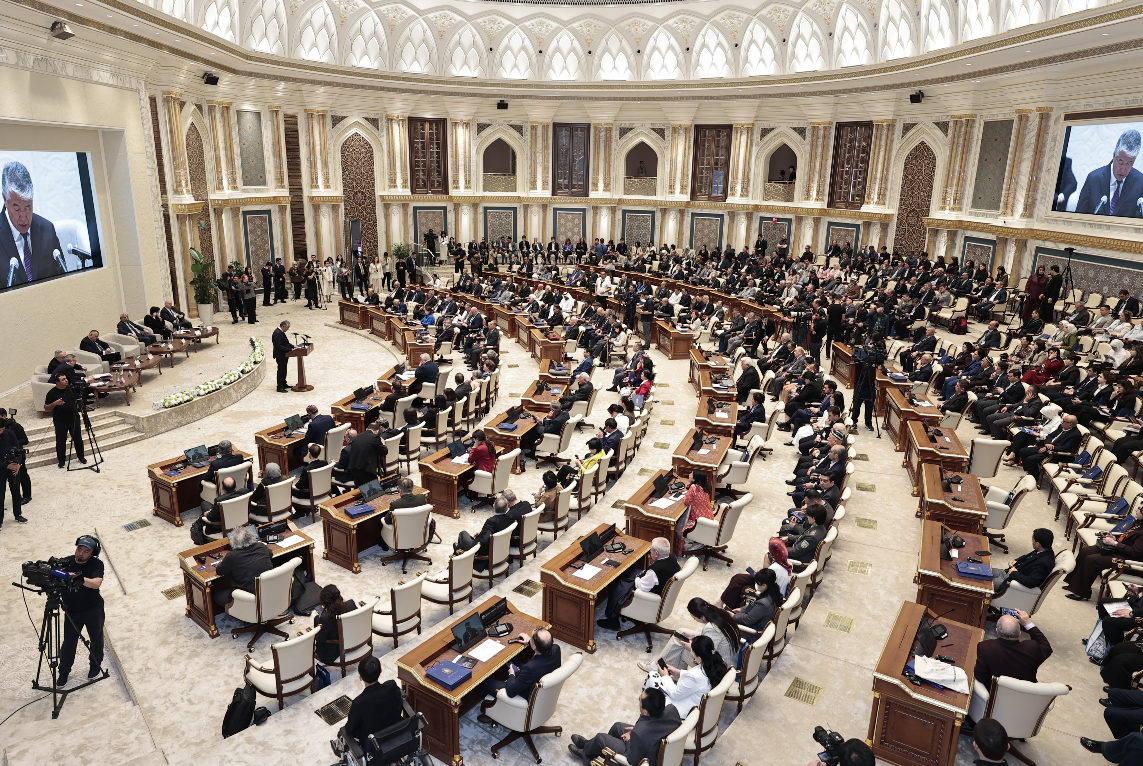 Uzbekistan’s emergence as a global center for the study of Amir Temur’s legacy was once again confirmed by the outcomes of the international conference dedicated to the 690th anniversary of the birth of the great commander and statesman Amir Temur. More than 300 experts from 25 countries addressed a collective appeal to the President of the Republic of Uzbekistan, Shavkat Mirziyoyev. In it, they expressed deep respect and sincere gratitude to the head of state for organizing the prestigious forum at a high international level. The participants particularly emphasized that the conference has become an important global platform for the comprehensive study, understanding, and promotion of the heritage of the Great Timurid era.
The forum, held in the cities of Tashkent and Samarkand, brought together representatives of the scientific community, international organizations, and cultural institutions. Within the framework of plenary and sectional sessions, more than 200 academic papers were presented, covering a wide range of topics — from governance and diplomacy in the Timurid period to science, art, architecture, and cultural policy.
Participants noted that the ideas put forward in the President’s address to the conference would serve as an important guideline for future research. In particular, attention was drawn to the study of the Second Renaissance during the Timurid era and to a deeper analysis of its contribution to the development of world civilization.
The appeal addressed to the President emphasized that the legacy of Amir Temur and the Great Timurid dynasty constitutes an integral part of world history. It was also noted that the Sahibqiran’s vision of statehood, his attention to science, culture, urban planning, and diplomacy, as well as his principles of just governance, remain relevant today.
As a result of the conference, international participants presented a package of practical initiatives aimed at a new stage in studying the Timurid heritage. The most significant outcome was the adoption of an international “roadmap,” which outlines comprehensive study of the period, expansion of scientific programs, development of interdisciplinary approaches, as well as strengthening efforts in the preservation, restoration, and digitization of manuscript, archival, and museum heritage. At the same time, priority tasks were defined, including the modernization of educational programs aimed at fostering respect for historical heritage among youth, the promotion of cultural sites of the Great Timurid era on the international stage, and the systematic support of young researchers through grants, scientific projects, and academic initiatives.
Special attention was also given to the need to further strengthen international cooperation. In particular, expanding joint projects with the participation of the World Society for the Study, Preservation and Popularization of the Cultural Legacy of Uzbekistan in the study, preservation, and promotion of Uzbekistan’s cultural heritage was identified as an important task.
In their speeches, foreign guests highlighted the results of large-scale reforms being implemented in New Uzbekistan in the field of preserving and promoting historical and cultural heritage.
The Director of the Oxford Centre for Islamic Studies, Farhan Ahmad Nizami, noted:
“Visiting the recently renovated Timurid Museum left a profound impression on us. The high level of the exhibition design, its depth of content, and the attention to historical authenticity demonstrate a serious and systematic approach to heritage preservation. I express my sincere gratitude to President Shavkat Mirziyoyev for this important project.”
The Islamic Civilization Center in Uzbekistan was also highly praised internationally and recognized as a prestigious global scientific and educational platform.
According to Dr. Miljana Radivojević, project leader at the Institute of Archaeology of University College London, the Center has undergone significant transformation in a short period and has become a vivid example of a modern museum and scientific space:
“When I visited here in May last year, it was still in the stage of formation. Today, we see a fully realized project that amazes with its scale, depth of content, and visual appeal. Most importantly, the Center is not limited to exhibition activities, but is forming an integrated scientific and educational ecosystem that combines research, education, and knowledge dissemination.”
As part of the cultural program, participants visited Samarkand, where they explored the new large-scale complex and innovative museum dedicated to Imam Bukhari. This site was highly appreciated by international experts as an example of presenting spiritual heritage in a modern interpretation, combining scientific accuracy, architectural expression, and advanced museum technologies. It was noted that this project in Samarkand is setting new global standards in the preservation, study, and promotion of Islamic civilization.
The Director of the Al-Furqan Foundation, Sali Shakhsivari, stated:
“Today, in Uzbekistan, issues of preserving and developing Islamic heritage are being given priority at the state level. Modern and well-conceived complexes such as that dedicated to Imam Bukhari, established at the initiative of the President, demonstrate deep respect for the great spiritual heritage and open new opportunities for its scholarly study and transmission to future generations. This is an important step toward integrating national cultural heritage into the global academic and educational space.”
The conference was organized as part of large-scale international events dedicated to the 690th anniversary of Amir Temur’s birth and brought together specialists to discuss the place of his legacy in the modern scientific and cultural landscape. Participants emphasized that the initiatives being implemented in Uzbekistan in the fields of science, culture, and heritage preservation are attracting increasing interest and recognition from the international community, creating new opportunities for academic exchange and cooperation.
As noted by the head of the International Turkic Culture and Heritage Foundation, Aktoty Raimkulova:
“The Islamic Civilization Center, established at the initiative of President Shavkat Mirziyoyev, has today become one of the key scientific and spiritual centers. The exhibitions dedicated to Amir Temur and the Second Renaissance of the Timurid era stand out for their depth of content and high artistic quality.”
The Secretary General of TURKSOY, Sultan Raev, also highly praised the reforms being carried out in the country, stating:
“Today, at the initiative of the President of Uzbekistan, scientific research is intensifying, new works are being published, and modern cultural and scientific infrastructure is being formed. The institutions and projects being established in the country are already unique, and the scale of these processes can be regarded as evidence of the Third Renaissance.”
In conclusion, the participants expressed firm confidence that the systematic work being carried out to study and promote the legacy of Amir Temur and the Great Timurid dynasty will reach a new qualitative level, further strengthen international scientific cooperation, and make a significant contribution to the development of world science and culture.