



A place where the legacy of Imam Bukhari and Imam Tirmidhi comes to life: A center astonishing the world
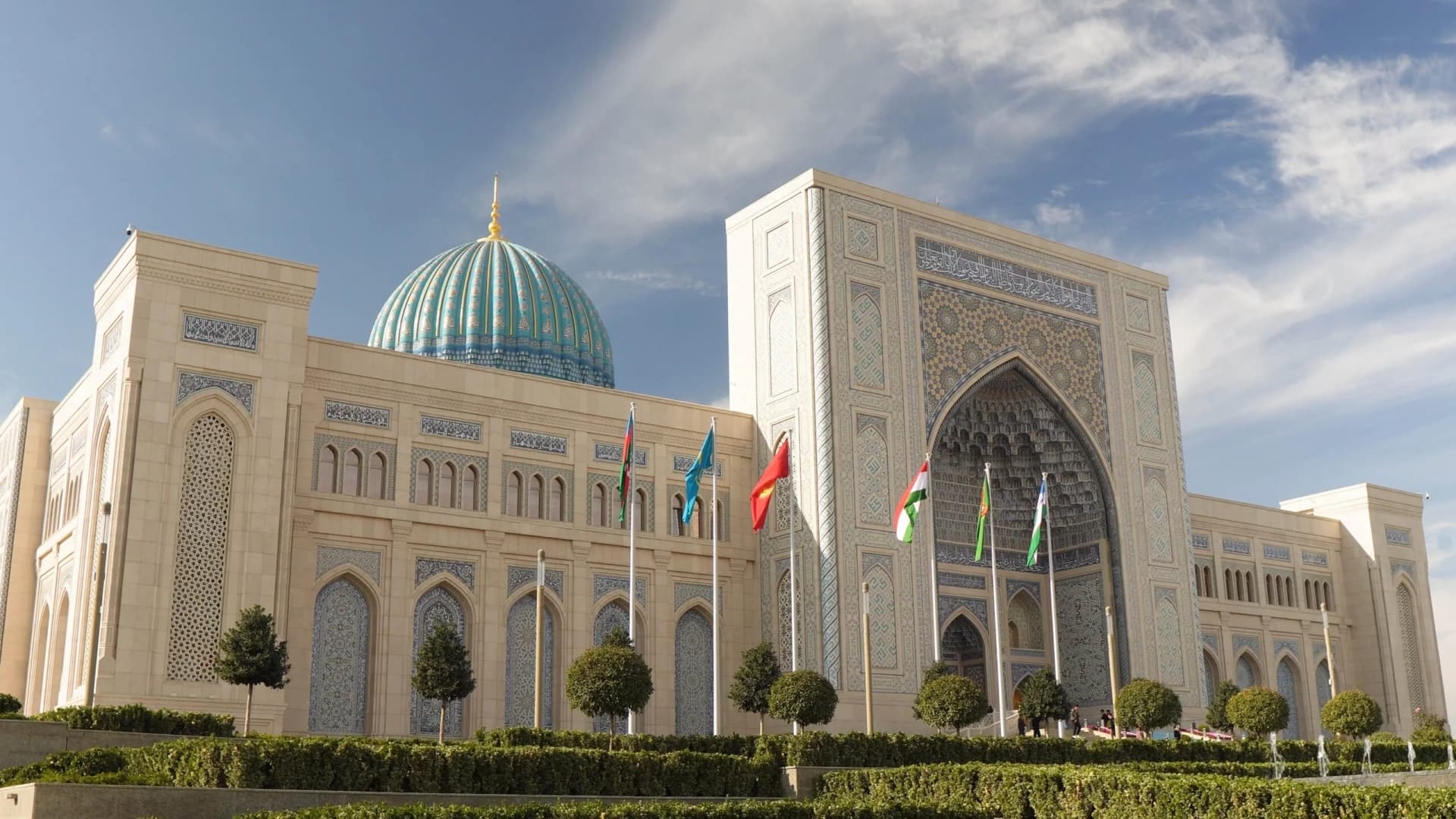
 The Islamic Civilization Center in Uzbekistan, recognized in the Guinness World Records as the largest Islamic civilization museum in the world, quickly attracted the attention of the international community shortly after its opening.
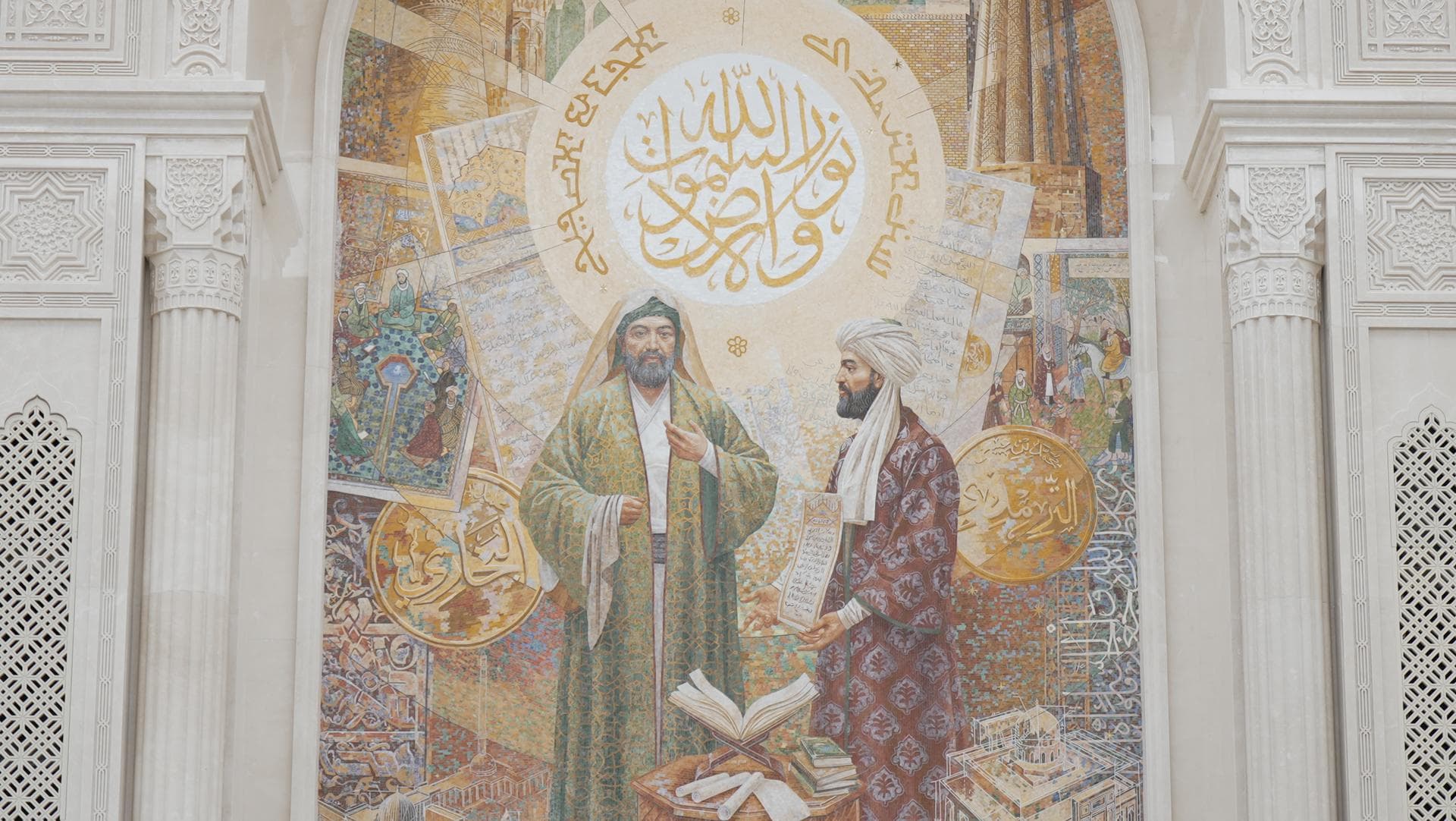
Visitors to the Center are first welcomed by the “Gallery of Great Figures,” consisting of 14 arches crafted using the micromosaic technique. The fourth composition of this gallery is dedicated to the lives and scholarly legacy of the great hadith scholars who emerged from the territory of present-day Uzbekistan — Imam al-Bukhari and Imam at-Tirmidhi.
It should be noted that the science of hadith — the study of collecting, verifying, classifying, and interpreting hadiths — is one of the oldest and most fundamental branches of Islamic sciences. Many religious disciplines that developed later were built upon this very foundation.
Historical sources confirm that the region of Movarounnahr played a special role in the development of hadith scholarship. In particular, during the 9th–12th centuries, this region became a major scientific center, where more than 3,000 hadith scholars were active. They conducted fruitful scholarly work in cities such as Samarkand, Bukhara, Qarshi (Nasaf), Shahrisabz (Kesh), Termez, Khiva, and Tashkent (Shash), as well as in the regions of Ustrushana and the Fergana Valley.
The scholarly environment formed in these places played a crucial role in the systematization and advancement of hadith science.
Imam al-Bukhari’s work “Al-Jami‘ as-Sahih” is recognized in the Islamic world as one of the most authentic collections of hadith. Strict scientific criteria were applied in selecting the hadiths, with thorough analysis of the chains of narration, and only authentic hadiths were included. For centuries, this work has served as a key source in the development of Islamic sciences.
Imam at-Tirmidhi, through his work “Al-Jami‘ as-Sunan,” systematized hadiths according to their level of authenticity and practical significance. In this collection, hadiths are categorized into “sahih,” “hasan,” and “da‘if,” and are presented on a scientific basis. This approach played an important role in the further development of hadith studies.
The hadith collections compiled by these two scholars are included among “Al-Kutub as-Sitta” (“The Six Books”), the six most authentic collections of hadith related to the Prophet Muhammad (peace be upon him). Traditionally, the sequence of these collections begins with Imam al-Bukhari’s “Al-Jami‘ as-Sahih.” The authors of the other collections — Imam Muslim (821–875), Imam Abu Dawud (817–889), Imam Ibn Majah (824–886), Imam al-Nasa’i (d. 915), and Imam at-Tirmidhi — also acknowledged this order and recognized “Al-Jami‘ as-Sahih” as the most superior collection. Accordingly, this work is regarded as the primary written source of Islam after the Holy Qur’an. The collection “Sunan at-Tirmidhi,” authored by Imam at-Tirmidhi, who considered Imam al-Bukhari his teacher, is also one of the “Six Books.”
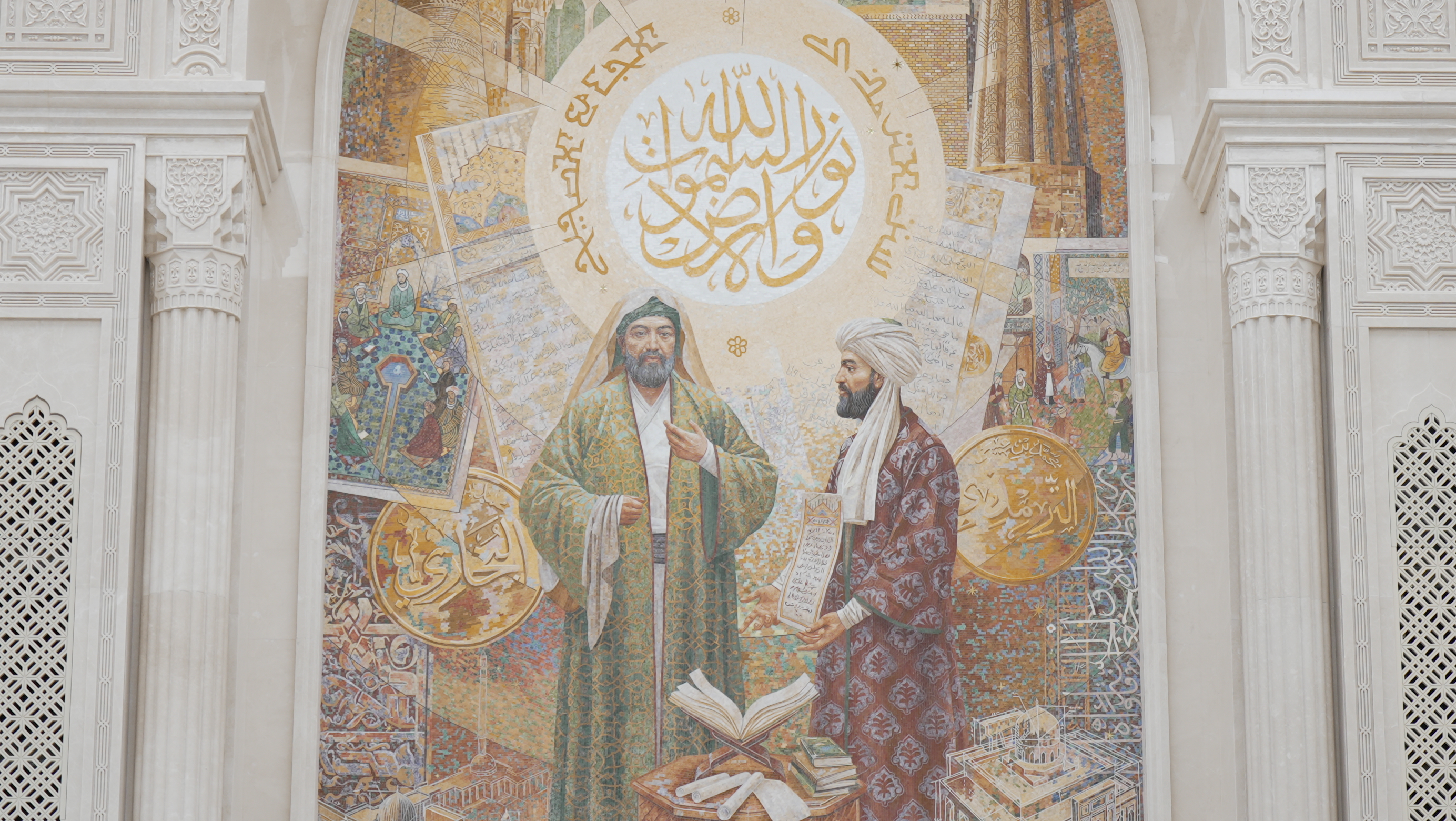
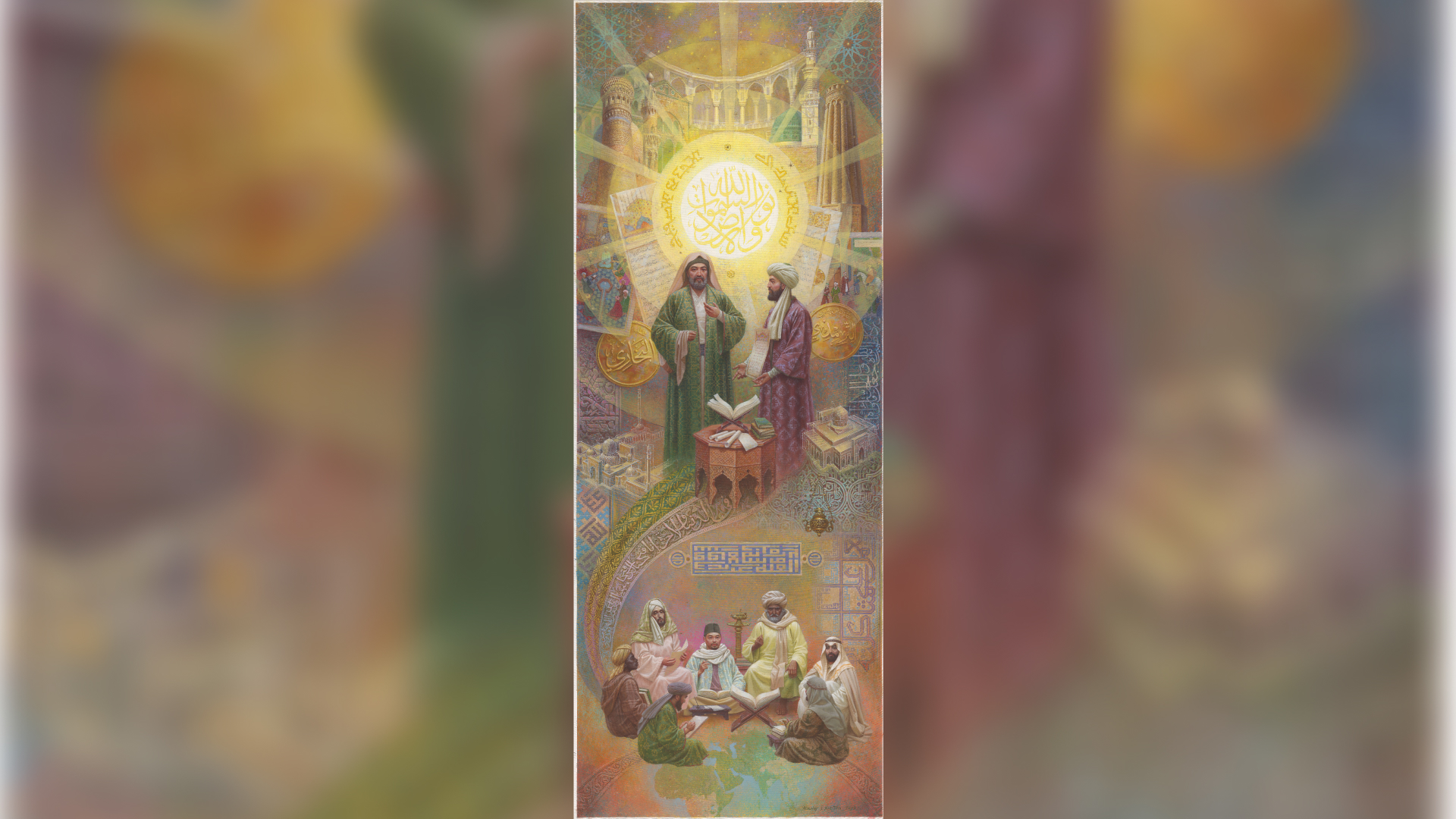
The main subject lines of the composition are classified into the following directions: a depiction of a galaxy expressing the medieval Muslim scholars’ understanding of the universe, and an image of the Sun emphasizing that Islam is a religion of knowledge and enlightenment, with the verse “Allah is the Light of the heavens and the Earth” inscribed at its center.
The work also features the Arabic titles of the hadith collections compiled by the main figures, pages reproduced from their ancient manuscripts, and medieval miniatures reflecting historical events. Among them are scenes illustrating the testing of Imam al-Bukhari by the scholars of Baghdad and the recognition of Imam at-Tirmidhi by the people.
In addition, epigraphic inscriptions characteristic of the 9th–10th centuries, colorful ceramic tile decorations (majolica), and other visual elements are harmoniously integrated, enriching the overall artistic composition of the work.
Zohidulla Munavvarov, Chief Researcher at the Islamic Civilization Center in Uzbekistan, states:
“In the central part of the work, the images of the two muhaddiths are depicted in the form of a scholarly dialogue between teacher and student. Around them, the major centers of learning associated with their lives and activities — Mecca, Medina, Baghdad, Cairo, and cities of Khorasan — are vividly illustrated. As symbolic references to their birthplaces, the Kalan Minaret in Bukhara and the historic minaret in Jarqo‘rg‘on are also depicted.”
The hadith “Knowledge is honor in this world and dignity in the Hereafter,” which embodies the overall concept of the work, is placed in the upper section of the lower tier (bottom exhibition part), forming the key spiritual core of the composition dedicated to representatives of medieval hadith scholarship centers.
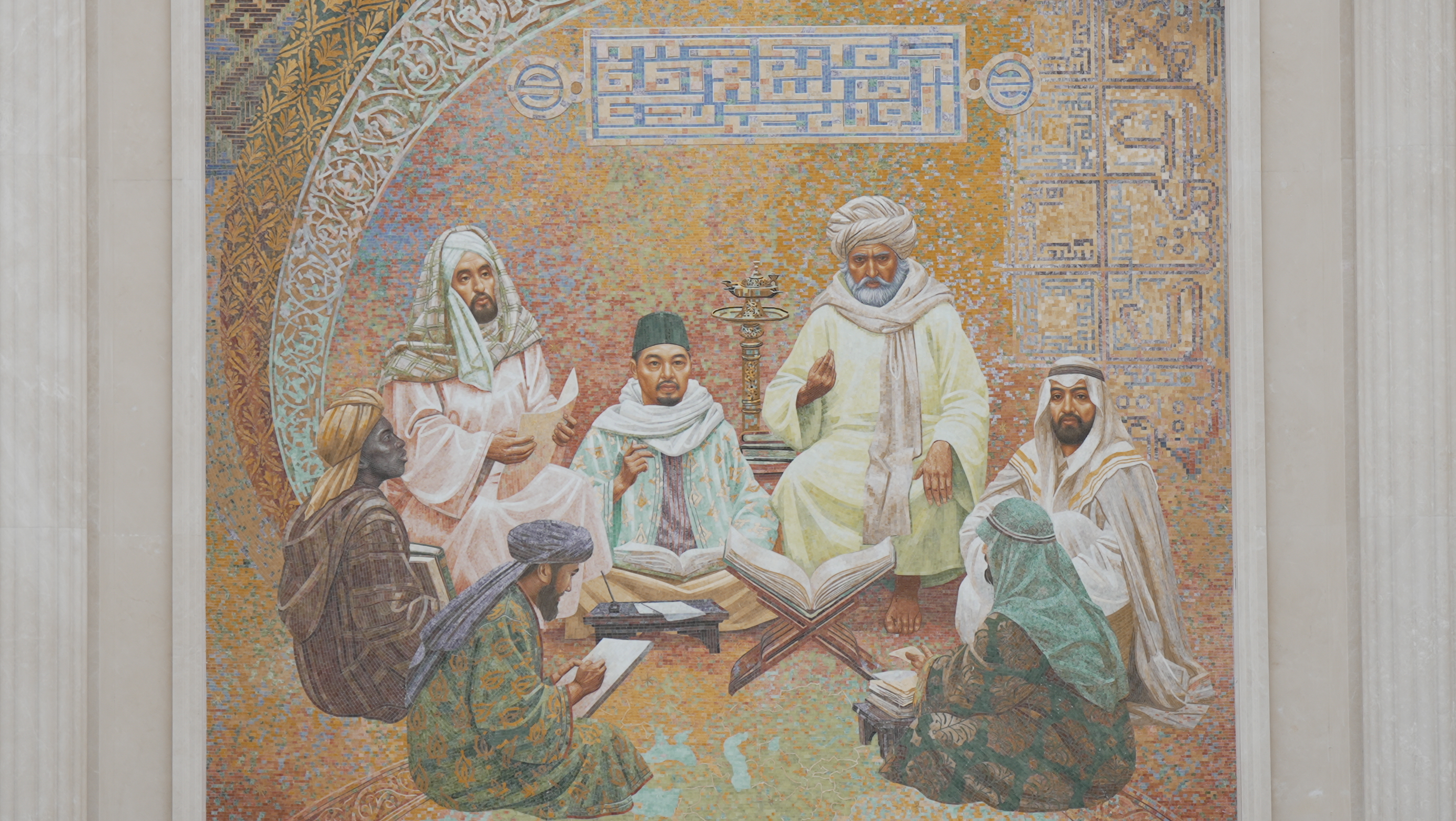
In this layer, representations of scholars from various regions and peoples are presented, symbolically depicted as successors of the hadith scholarship traditions formed in the Muslim world. These scholarly schools reflect the continuity of the scientific legacy established by great muhaddiths such as Imam al-Bukhari and Imam at-Tirmidhi.
The work also features the Imam Bukhari Scientific and Educational Memorial Complex, built in the Chelak district of the Samarkand region under the initiative and leadership of the President of the Republic of Uzbekistan, Shavkat Mirziyoyev.
For reference, it should be noted that in the section dedicated to the First Renaissance period of the Museum of the Islamic Civilization Center in Uzbekistan, separate capsules devoted to Imam al-Bukhari and Imam at-Tirmidhi have been established. These exhibitions present the scholars’ life paths, scholarly journeys, and rich legacy based on modern museum approaches.
The Imam Bukhari capsule contains rare manuscripts, maps reflecting his travel routes, scholarly sources, and various artifacts. In particular, the manuscripts of “Al-Jami‘ as-Sahih” and “Sulosiyat al-Bukhari,” recognized as among the most authentic hadith collections in the Islamic world, occupy a central place in the exhibition. Through this section, the high level of hadith scholarship and the scholar’s unparalleled role in world civilization are clearly demonstrated.
A separate capsule is dedicated to the scholarly legacy of Imam at-Tirmidhi, where a replica of his famous work “Sunan at-Tirmidhi,” as well as “Ash-Shama’il al-Muhammadiyya,” devoted to the noble qualities of the Prophet Muhammad (peace be upon him), hold an important place.
The exposition also features manuscripts of Hakim at-Tirmidhi’s works, including “Tafsir of Surah al-Fatiha and al-Baqara,” dedicated to Qur’anic exegesis, and “Navadir al-Usul,” which elaborates on hadith scholarship.
Shahnoza Rahmonova
P/S: The article may be republished on the Center’s official website with a reference link