


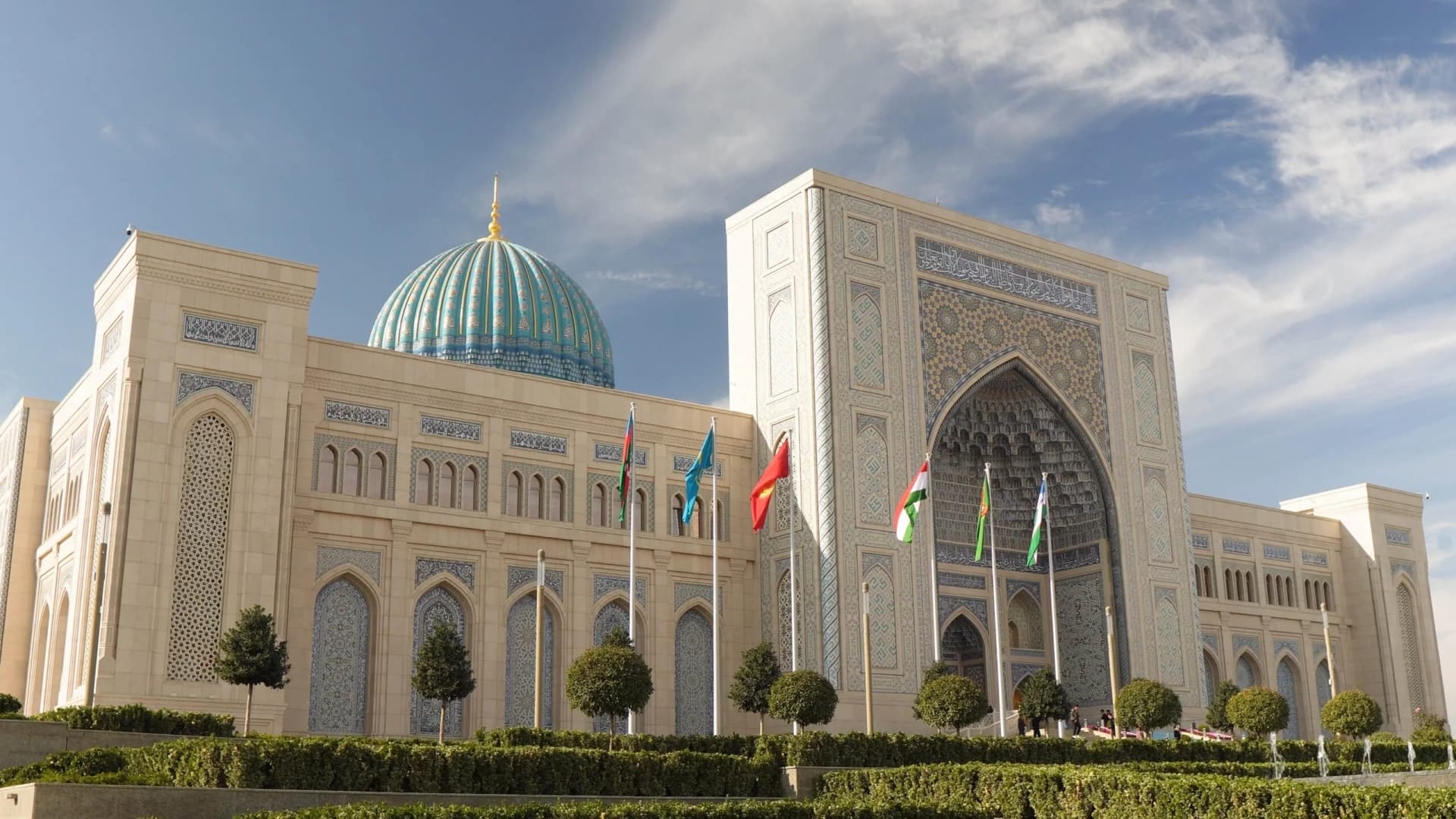

The Islamic Civilization Center captivated the Norwegian ambassador with its harmony of history and modernity
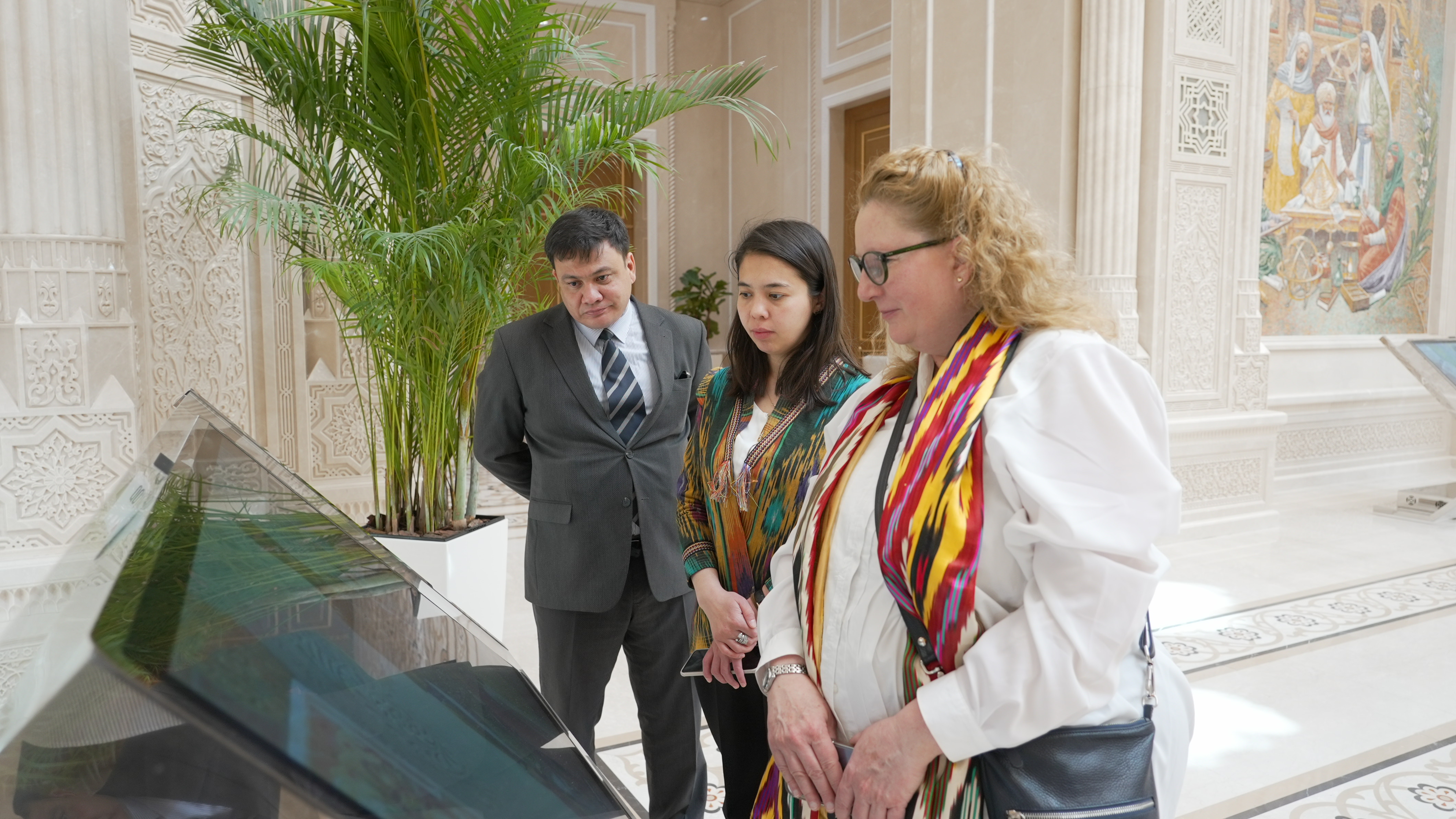 The Ambassador of Norway to Uzbekistan, Helene Sand Andresen, visited the Islamic Civilization Center in Uzbekistan — established on the initiative and based on the vision of President Shavkat Mirziyoyev — and became closely acquainted with its activities.
The guest was provided with detailed information throughout all the museum’s exhibition halls. One of the aspects that left a particular impression on the ambassador was the “Wall of Time,” the central compositional element of the Center, stretching nearly 250 meters in length. This unique exhibition presents three thousand years of our nation’s statehood history through bas-reliefs, miniature artworks, and monumental paintings, all unified within a cohesive artistic concept.
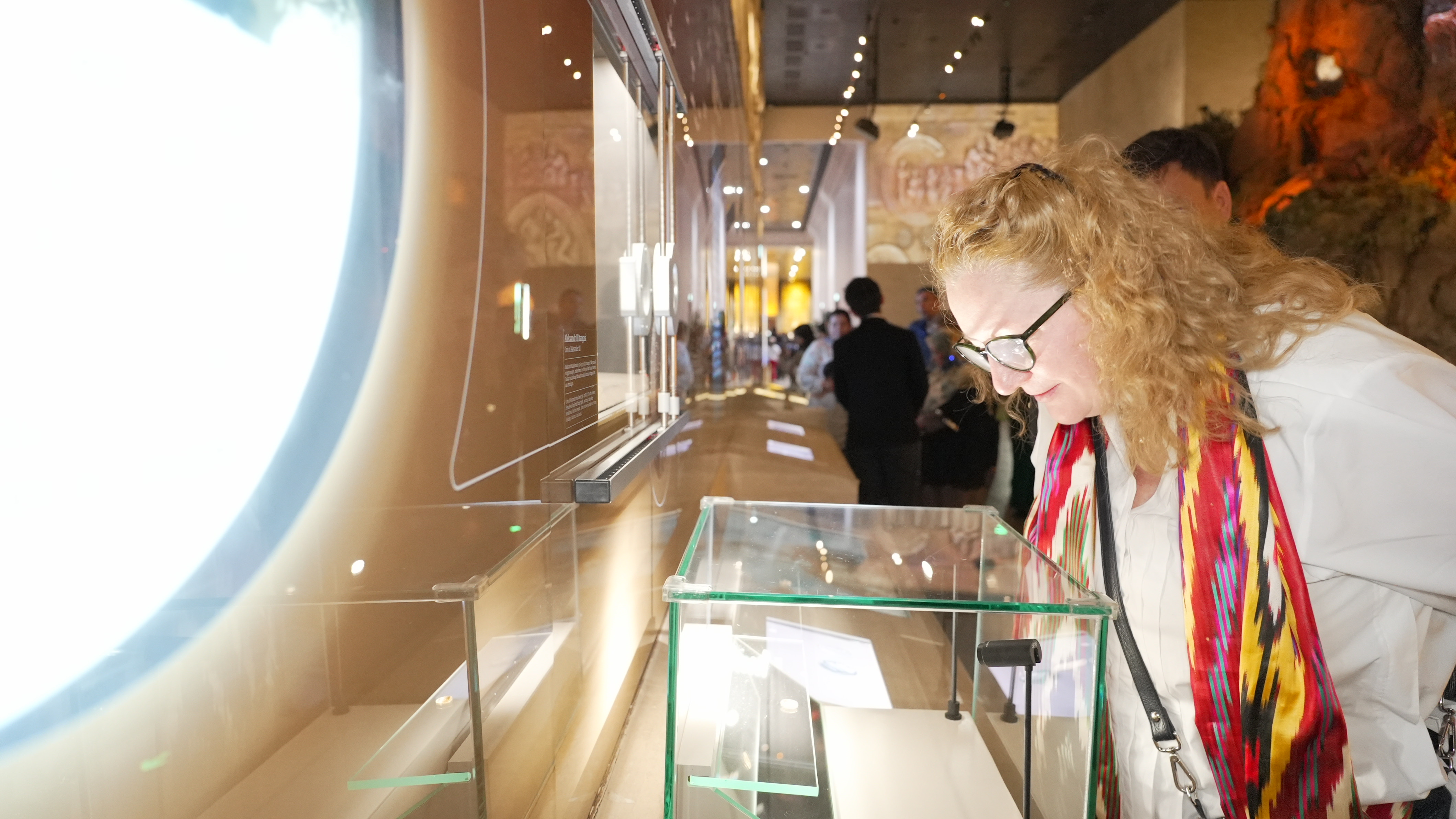
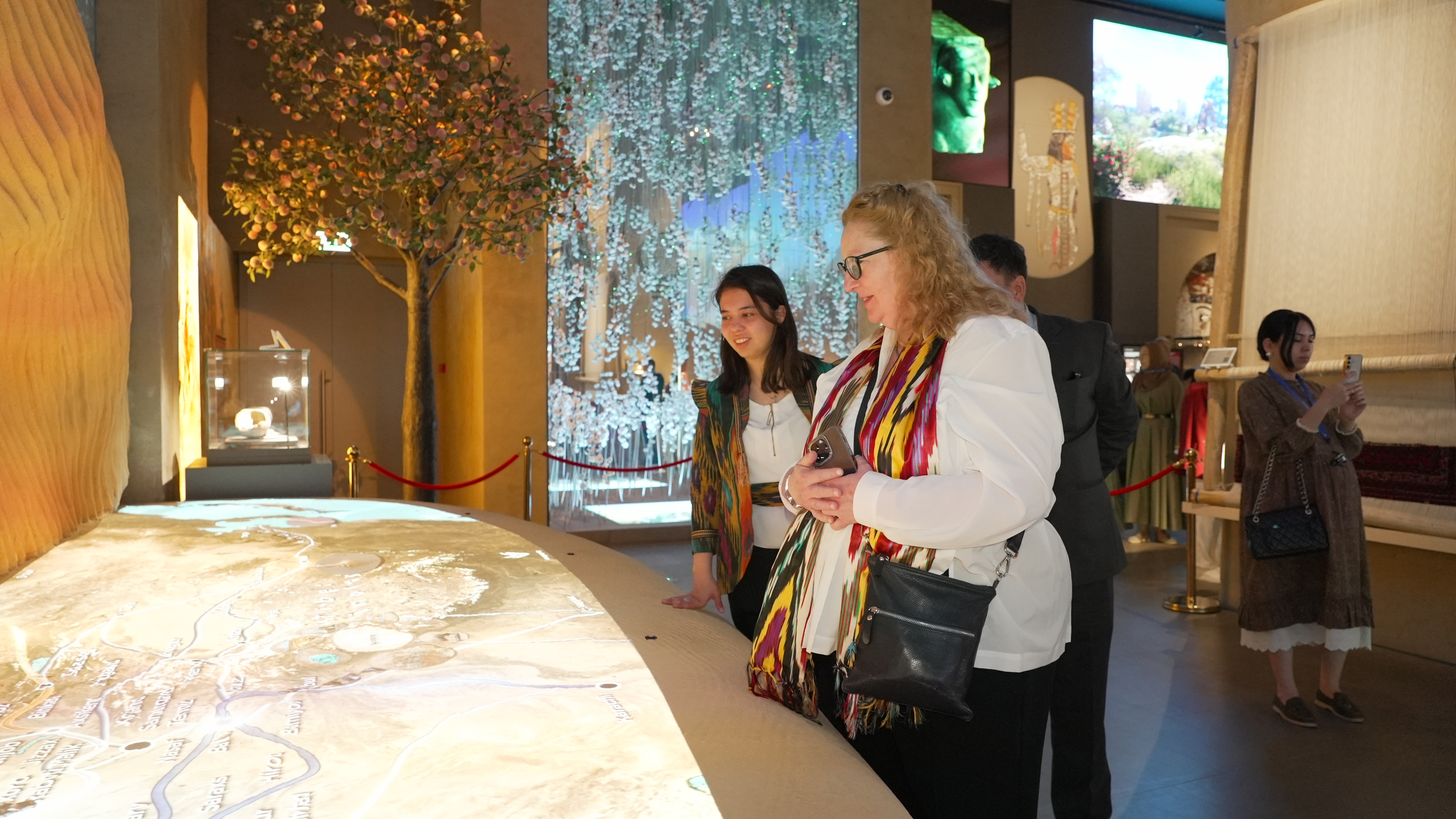 The exhibits placed along the “Wall of Time,” including artifacts from various historical periods, numismatic samples, historical maps, video materials, and interactive games, offer an opportunity to understand history through a modern interpretation. In particular, the masterfully crafted bas-relief compositions drew the ambassador’s attention.
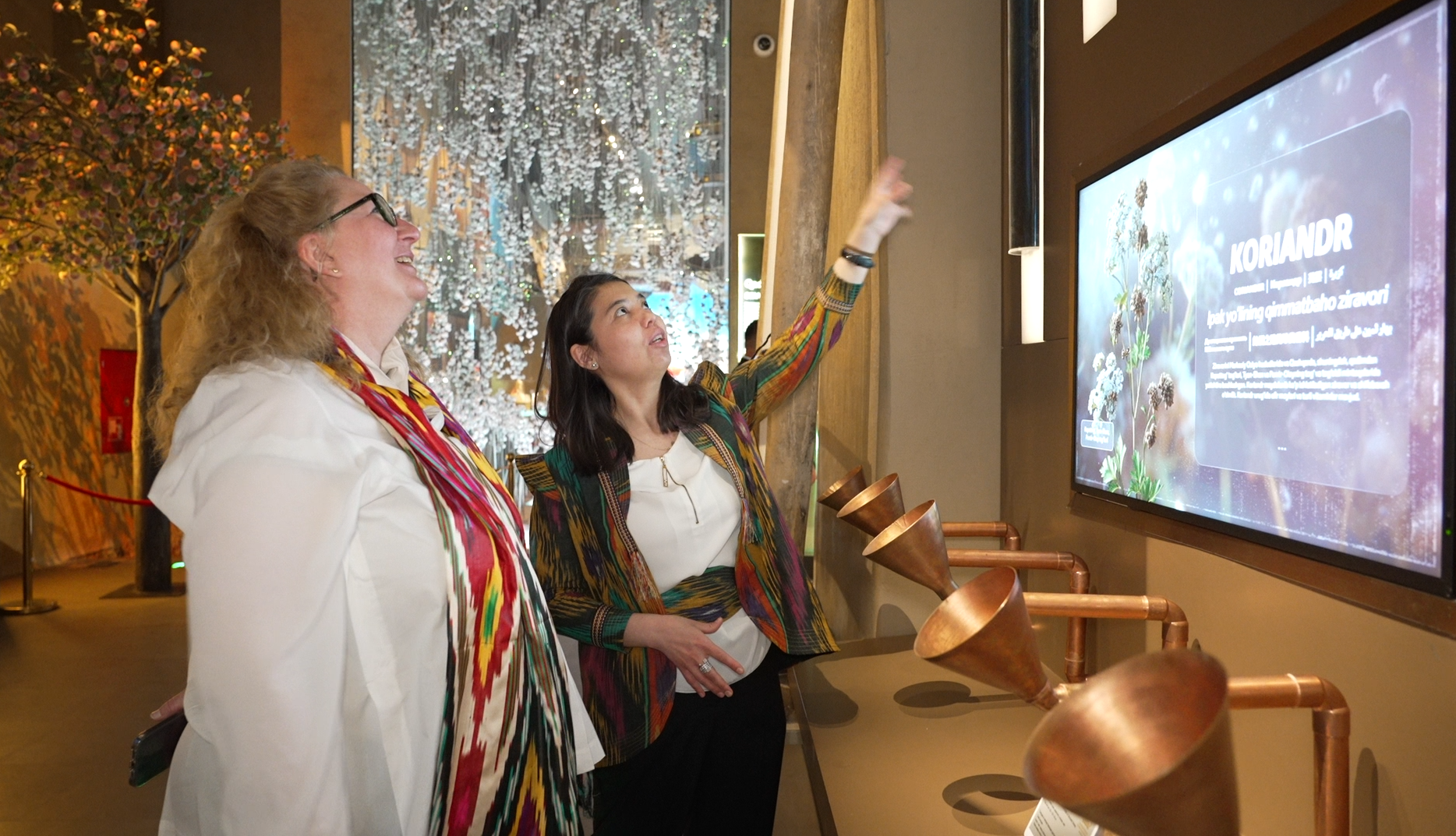
During the visit, the ambassador also explored the section titled “New Uzbekistan – the Foundation of a New Renaissance.” This exhibition showcases the country’s rich tourism potential, historical and architectural monuments across regions, examples of national craftsmanship, and traditional Uzbek musical instruments. This section further increased the guest’s interest in Uzbekistan’s contemporary development and cultural heritage.
She also became acquainted with video materials and other interactive content reflecting the daily life, traditions, and modern lifestyle of our people.
 Helene Sand Andresen, Ambassador of Norway to Uzbekistan:
“The Islamic Civilization Center in Uzbekistan left a very strong impression on me. Frankly, it exceeded my expectations by far. The complex has been created with exceptional taste and careful planning. Most importantly, it is able to attract all age groups, from children to older generations. Everyone can find something engaging and meaningful here. In particular, the interactive approach encourages visitors to actively explore.
I have previously lived in this region for several years and believed I had a sufficient understanding of Central Asian history. However, during today’s visit, I gained a great deal of new knowledge. This center is a vivid example of how to preserve historical heritage and convey it to future generations in a modern way.
In my view, this place clearly demonstrates an important truth: development, science, and knowledge cannot exist without peace. Society must ensure stability and create proper conditions for people — from ordinary workers to scholars.
It is precisely in such an environment that humanity progresses: through cooperation, by preserving history without forgetting the past, and by moving forward together.
During the First and Second Renaissance periods, this region held a leading position in the world as a center of science and culture.
Interestingly, in the history of my country, those same periods correspond to the Viking Age, which is more remembered for military campaigns. In this sense, the high level of development demonstrated here is also an important lesson for us — showing how societies can develop, how relations with neighbors should be built, and the importance of the rule of law and respect for international norms.
It is precisely on the basis of these values that we can strive together toward peace and sustainable development.”