



The mystery of the bird depiction on ancient Sogdian silver vessels

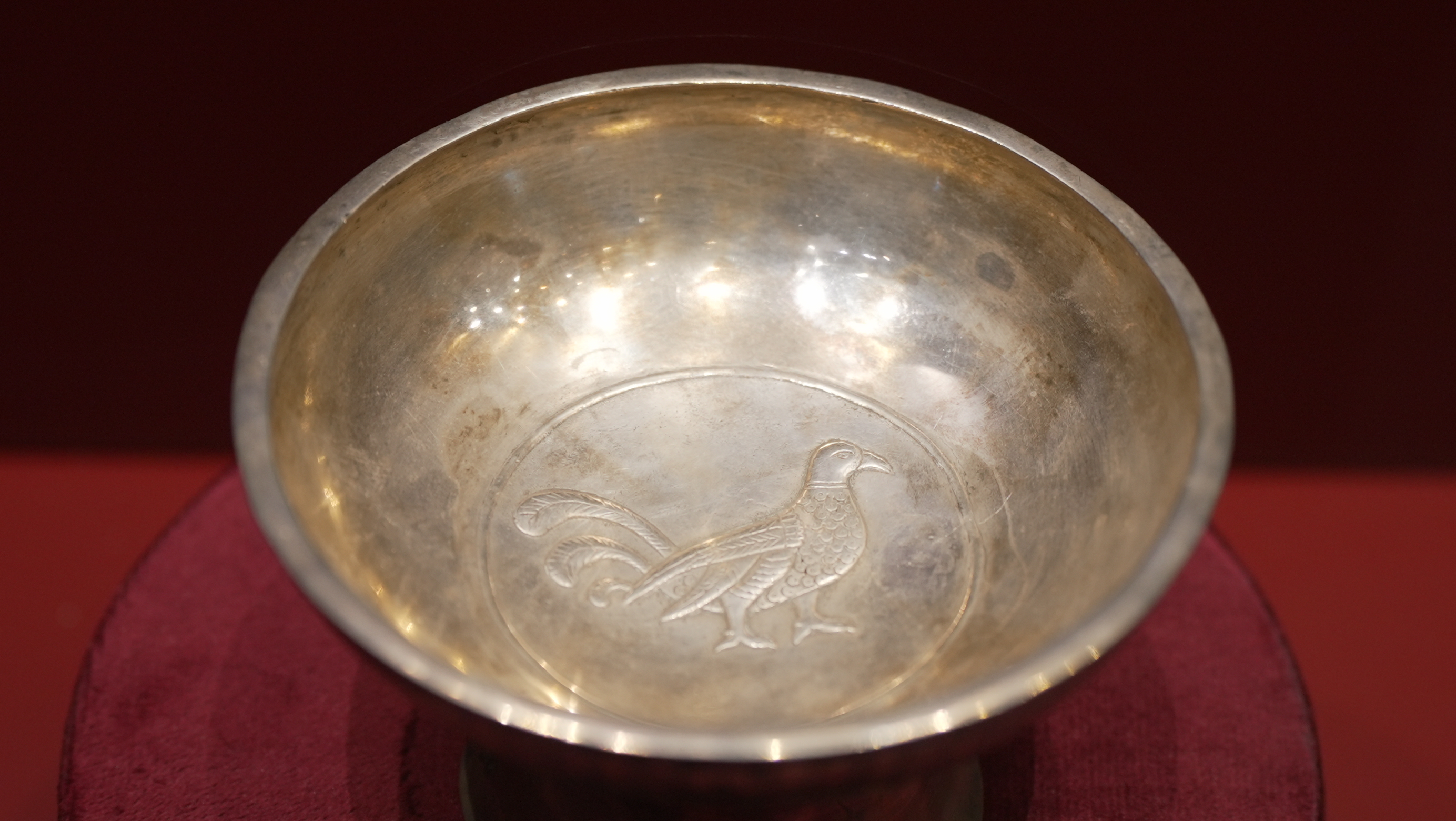 The first artifact is a silver plate dating back to the 6th–7th centuries. Its tall foot and the medallion composition at the center immediately stand out. Inside the medallion, a long-tailed bird is rendered in delicate relief. There are no excessive decorations in this depiction, yet the form itself creates a strong aesthetic impact. The bird’s body is light, and its silhouette is clear — demonstrating the high craftsmanship of the artisans.
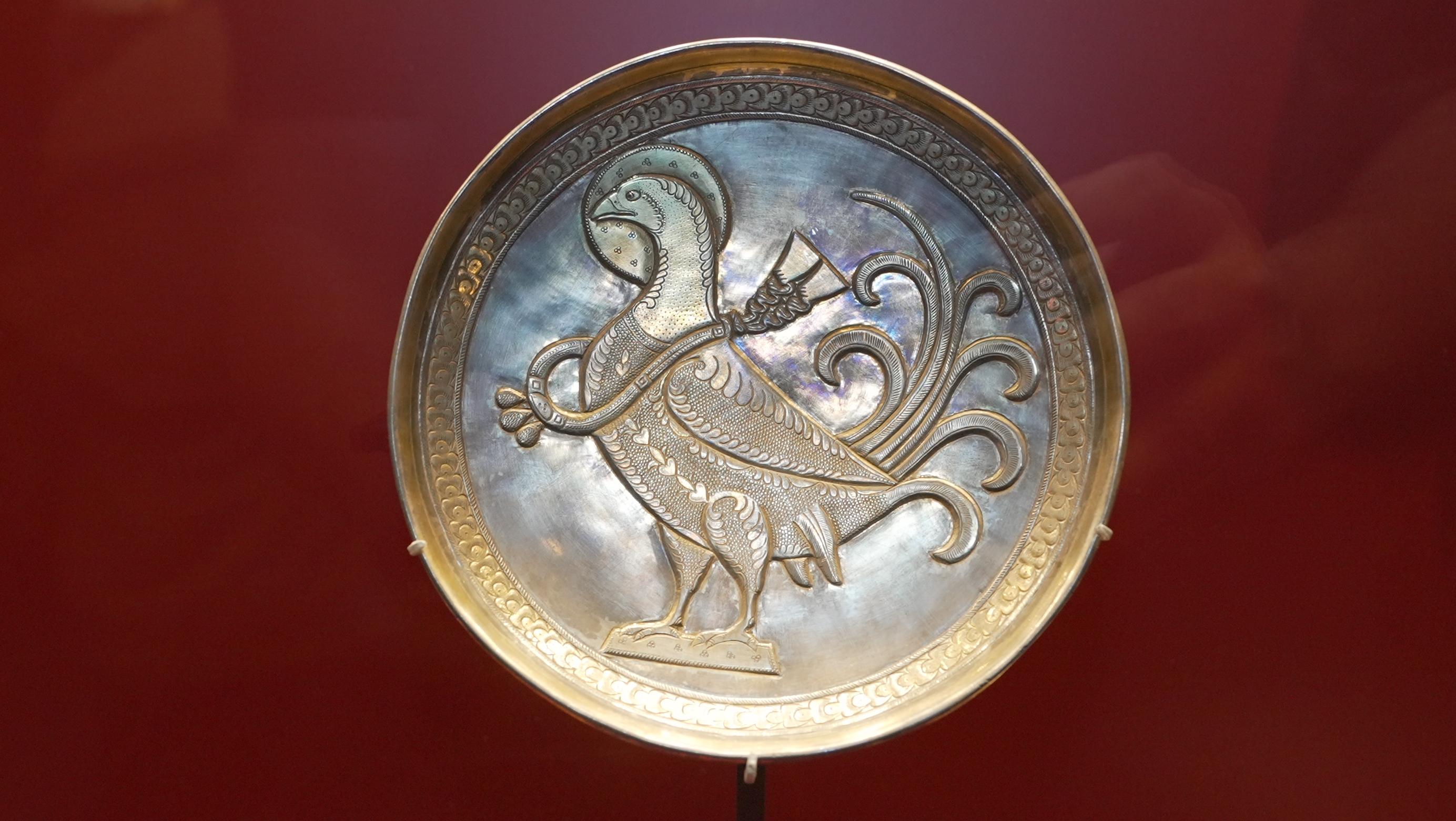 The second artifact is a gilded silver plate dating from the 6th–8th centuries, distinguished by its complex and ceremonial composition. At the center is a majestic bird depicted with a nimbus and a diadem on its head. This particular detail — the nimbus — is one of the most important symbolic elements of the artifact.
So, what is a nimbus? A nimbus is a radiant halo depicted around the head, traditionally used as a symbol of sanctity and divinity. Across different cultures, it has been interpreted in various ways, but its core meaning remains nearly the same: it elevates an ordinary being to a divine level. In Sogdian art, the nimbus carries precisely this meaning — it indicates that the depicted figure is associated with a celestial force. Thus, the bird on the plate is not an ordinary creature, but a symbol of divine blessing and elevated status.
In addition, the diadem around the bird’s neck — a decorative ornament — symbolizes authority and grandeur. When these two elements are combined, the image gains deeper meaning: the bird becomes a symbol of both sacred and sovereign power. The leaf-like patterns on its body represent a connection with nature and life, while the curved lines in the tail signify movement and continuity. The background, adorned with swirling motifs, reinforces the idea of eternal life and renewal.
Dilorom Choriyeva, Senior Research Fellow at the Islamic Civilization Center in Uzbekistan:
“In ancient Sogdian art, the image of the bird was not chosen by chance. According to historical sources, the bird has long been regarded as a mediator between heaven and earth. It symbolizes freedom, spiritual elevation, and divine light. For this reason, bird imagery was widely used on ceremonial vessels. These were not ordinary household items, but objects used in court rituals and important ceremonies.”
These artifacts demonstrate that in Sogdian art, visual imagery was not merely decorative, but an essential part of a complex spiritual and ideological system. Through the image of the bird, ideas of divine light, spiritual ascent, authority, and eternity are harmoniously combined. This indicates that the worldview of ancient society was not only aesthetic but also grounded in deep cosmological and philosophical foundations. Through these artifacts, the connection between humanity, nature, and the divine world is clearly expressed.
According to Professor Aleksandr Naymark, such works represent some of the finest examples of Sogdian metalwork. Researcher Julian Raby also emphasizes that objects like these demonstrate the continuity of Central Asian artistic traditions. Academician Akbar Hakimov notes that these artifacts are invaluable heritage directly linked to the territory of present-day Uzbekistan.
Stylistically, these vessels are comparable to examples found in the collections of the British Museum, the Louvre Museum, and the Metropolitan Museum of Art. However, their greatest advantage lies in their excellent state of preservation and the purity of their composition.
These two artifacts are not merely silver vessels. Through them, we gain insight into the beliefs, artistic values, and worldview of ancient Sogdian society. The image of the bird stands at the center of these ideas: it is a symbol of divine light, freedom, and eternity. Therefore, these objects are not only historical monuments but also vivid expressions of the spiritual heritage of our ancestors.
Laylo Abdukakhkharova
P.S. The article may be republished with a link to the Center’s official website