



History transferred onto silk — a panel reviving the spirit of the Baburids
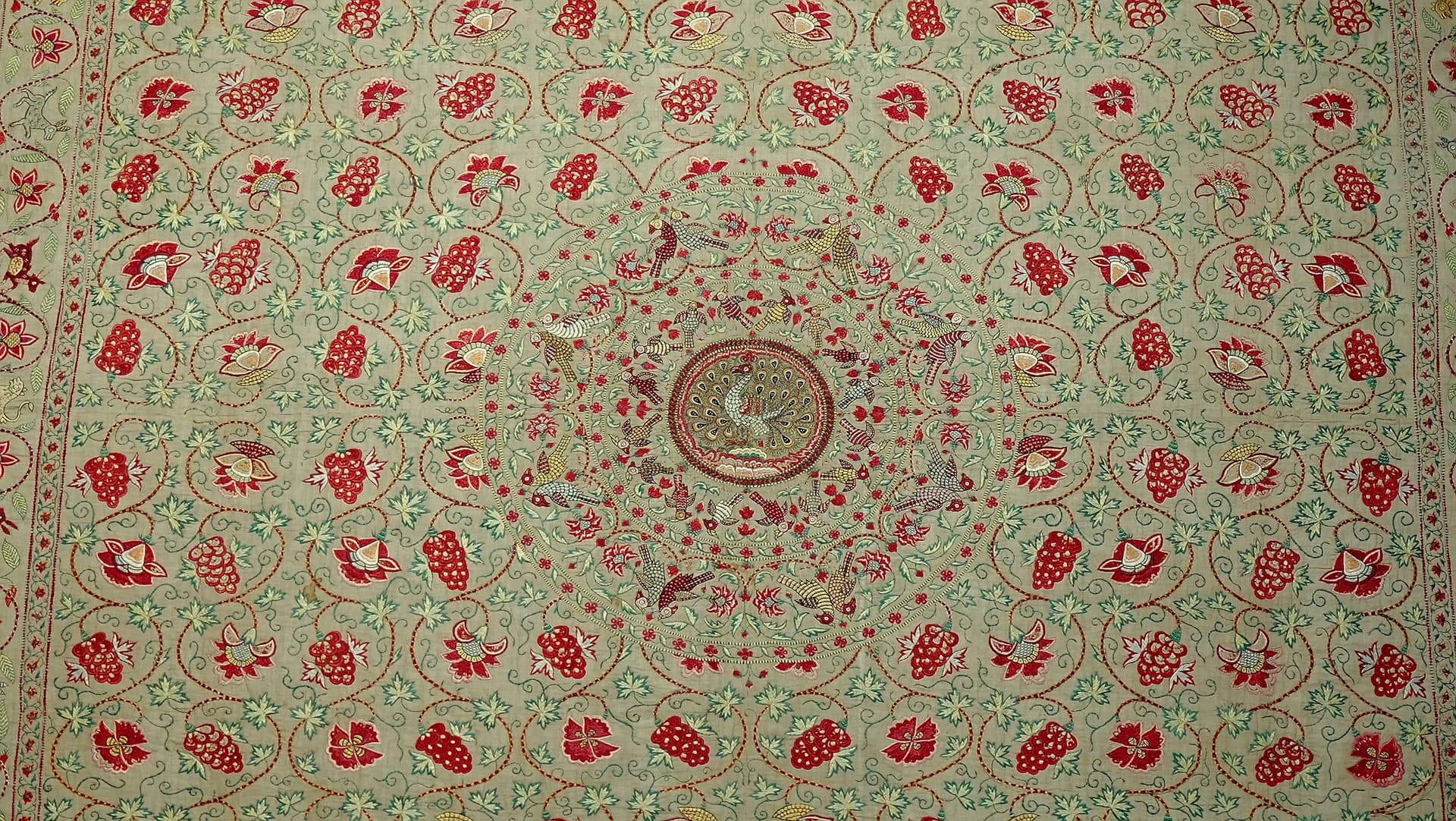
The art of embroidery has very ancient roots in human history. According to research, the earliest elements of embroidery appeared as early as before common era times in the regions of the East and China. Later, this art spread widely to Central Asia, Iran, and India through the Silk Road. Especially during the spread of Islam, embroidery evolved not only as a means of decorating everyday items but also as a form of aesthetic and symbolic expression. Each pattern, each flower, or animal depiction carried a specific meaning.
During the Baburids period, embroidery reached one of its highest peaks. Works created in royal workshops during this time stood out for their complex compositions, harmonious colors, and delicate craftsmanship. In particular, images of flowers, trees, birds, and animals were widely used. These motifs were not random — they were interpreted as symbols of the garden of paradise, eternal life, and divine beauty.
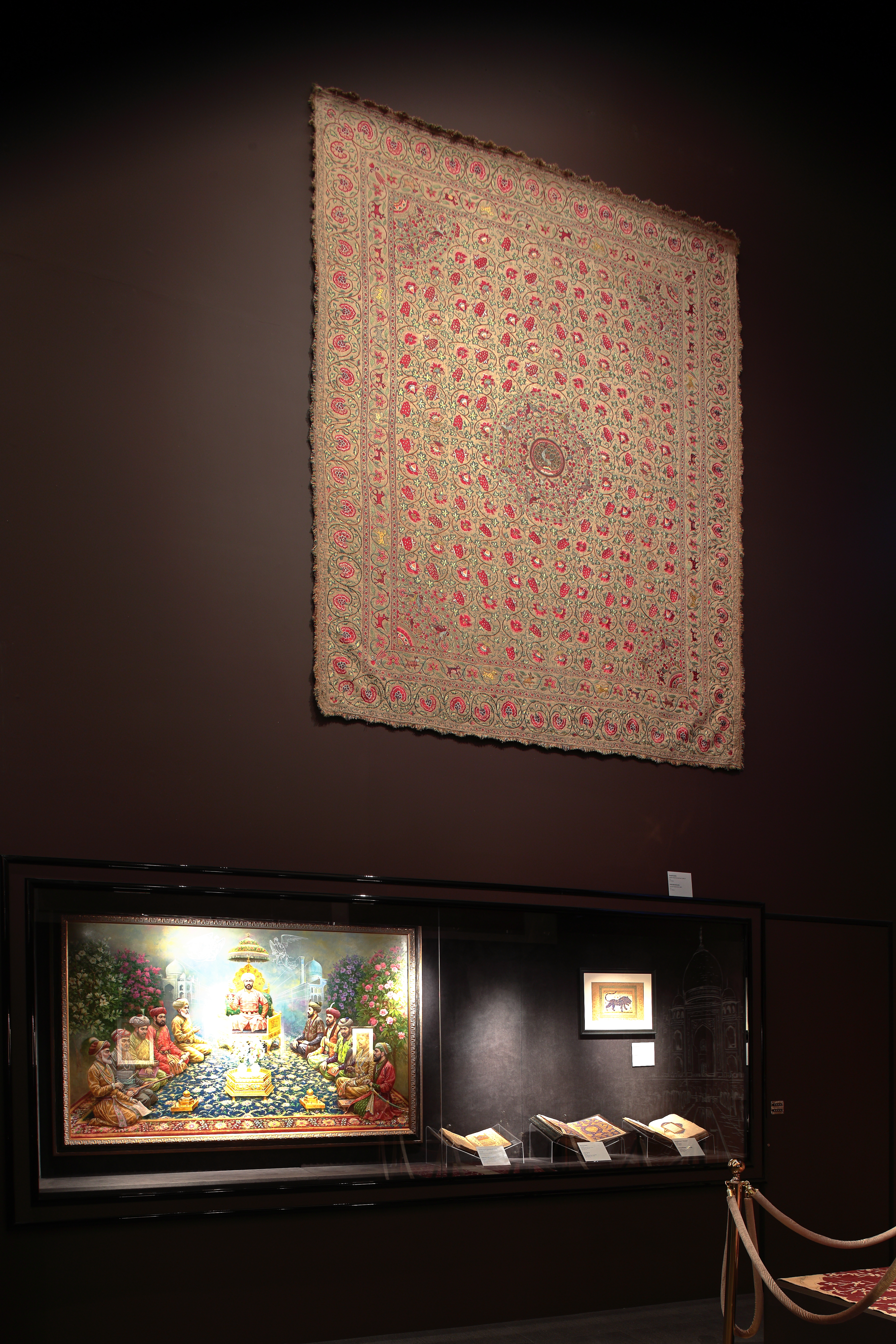 These very ideas are embodied in this panel. At the center of the composition is a medallion featuring a peacock. In Eastern culture, the peacock is regarded as a symbol of beauty, eternity, and paradise. Surrounding it are parrots, representing joy, vitality, and harmony with nature. All of this is enveloped by blossoming branches, creating the concept of a “flourishing garden” — an image of a perfect, harmonious, and eternal space envisioned by humanity.
The presence of lions and deer in the panel further enriches the composition. The lion symbolizes strength and power, while the deer represents grace and spiritual purity. Depicted in harmony, these animals express the idea of balance in nature. Thus, the work is not merely decorative but a visual system embodying complex philosophical meaning.
What makes this panel even more intriguing is its close affinity with Central Asian embroidery traditions. In particular, similarities with suzanis produced in regions such as Shahrisabz, Tashkent, and Piskent are clearly noticeable. This resemblance is evident in the rhythm of ornamentation, compositional centralization, and motifs close to the “tree of life.” It demonstrates the existence of strong cultural connections between Baburids art and Central Asian traditions.
Academician Akbar Hakimov notes:
“Such works clearly demonstrate the closeness between the embroidery traditions of the Uzbek khanates and the late stage of the Baburids period. Here, ornament is not merely decoration — it becomes a unique language of intercultural dialogue. Each pattern and symbol reflects interaction, inspiration, and historical memory.”
The technical aspect of the work also deserves special attention. The embroidery, executed with silk threads on a cotton base, is extremely fine and meticulously crafted. Its large size indicates that it was created for a palace or ceremonial setting. Such panels were typically used as wall decorations, adding grandeur and aesthetic perfection to the environment.
The uniqueness of this artifact is defined by several factors. First, it is a rare example from the late stage of the Baburids period. Second, its state of preservation is exceptionally good. Third, it vividly reflects artistic connections between two major cultural regions — India and Central Asia.
This silk embroidered panel is not merely a decorative object. It is a complex cultural layer that embodies history, art, and philosophy. Each pattern and symbol within it expresses meanings and values passed down from the past.
Therefore, this work is not only a museum exhibit but also an invaluable source that allows us to understand the aesthetic thinking of an entire era.
Laylo Abdukakhkharova
P/S: The article may be republished on the Center’s official website with a reference link