
Serbian Minister in Tashkent: “In this place, one can feel the roots of civilization”
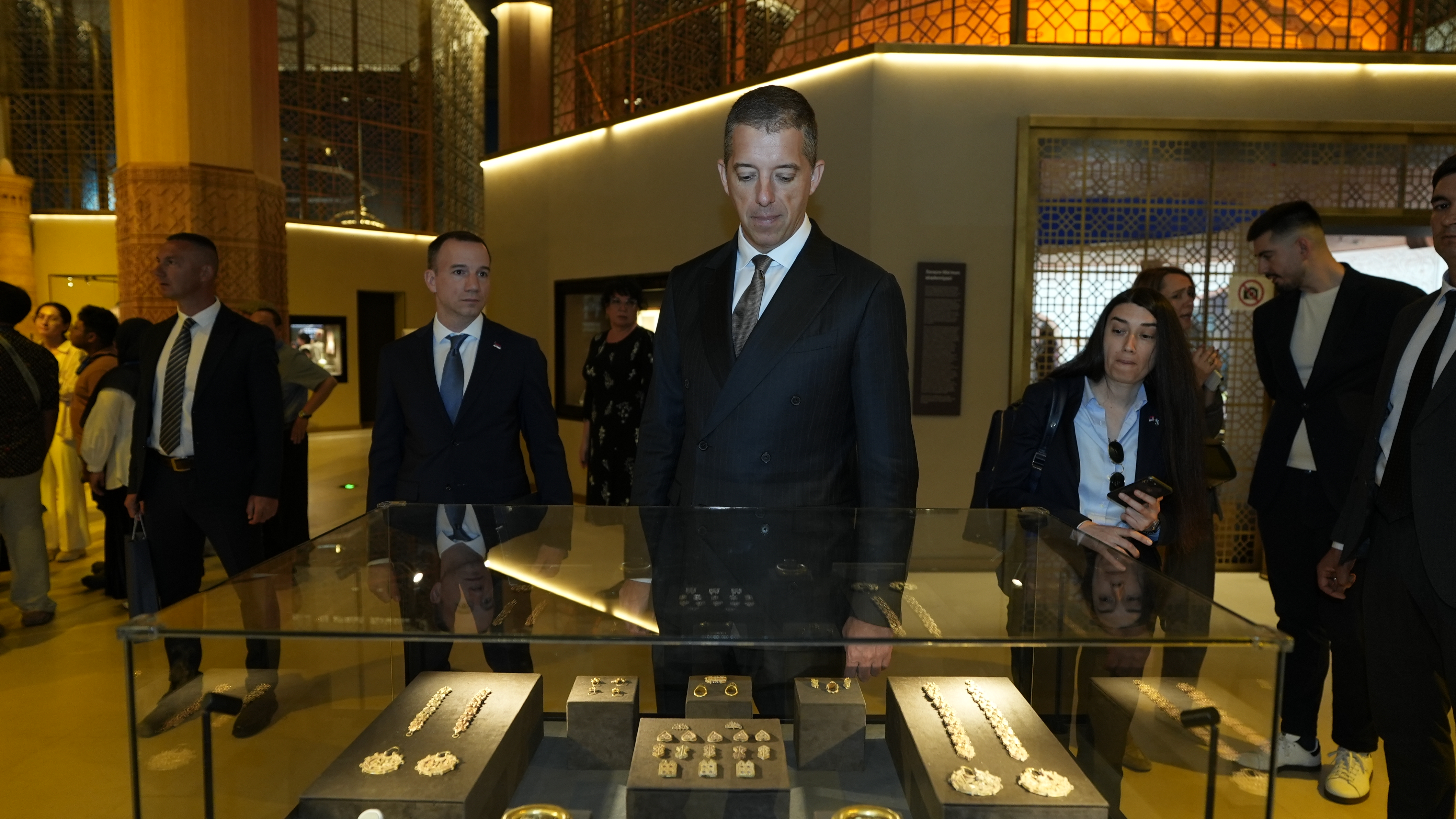
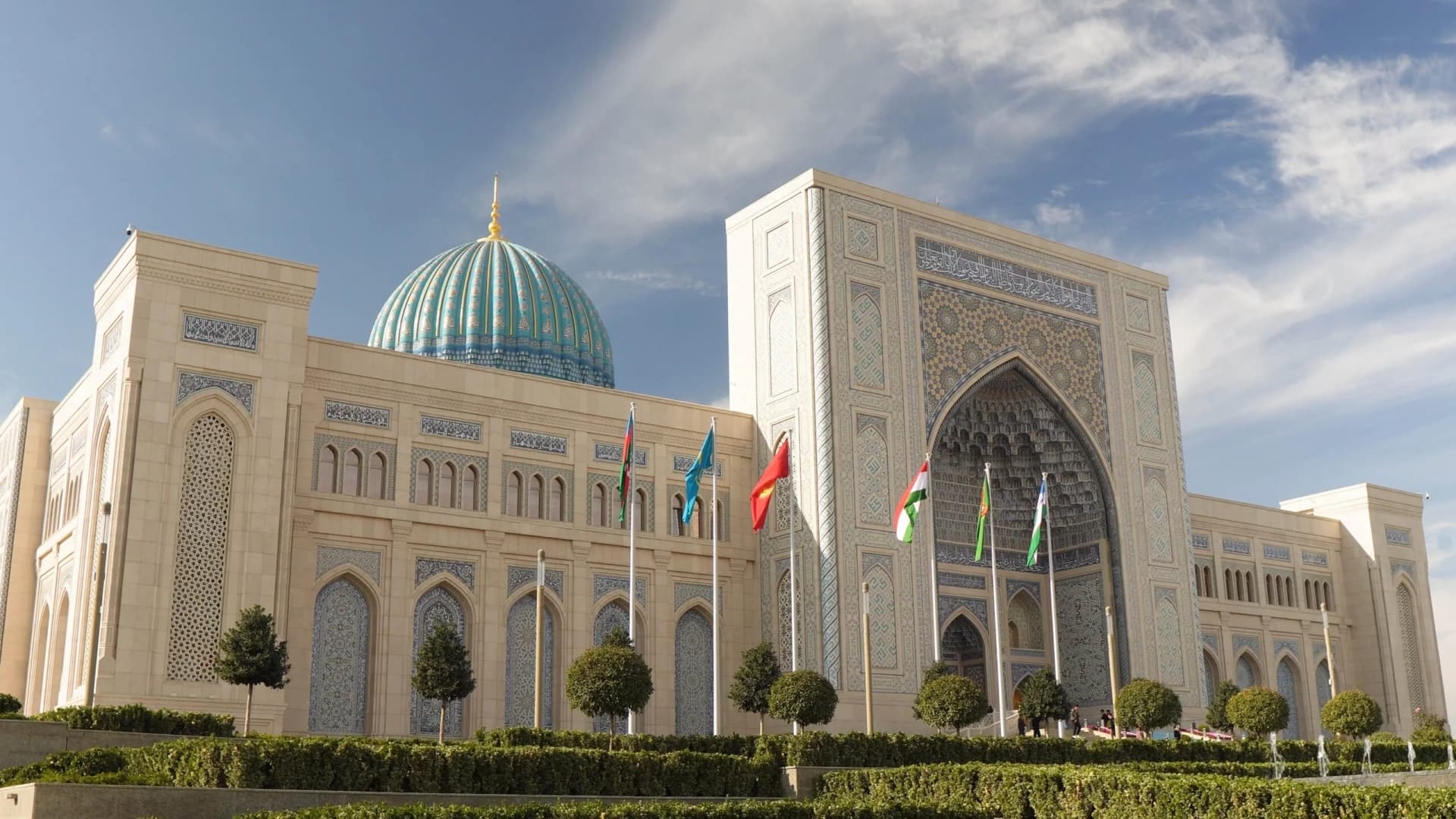
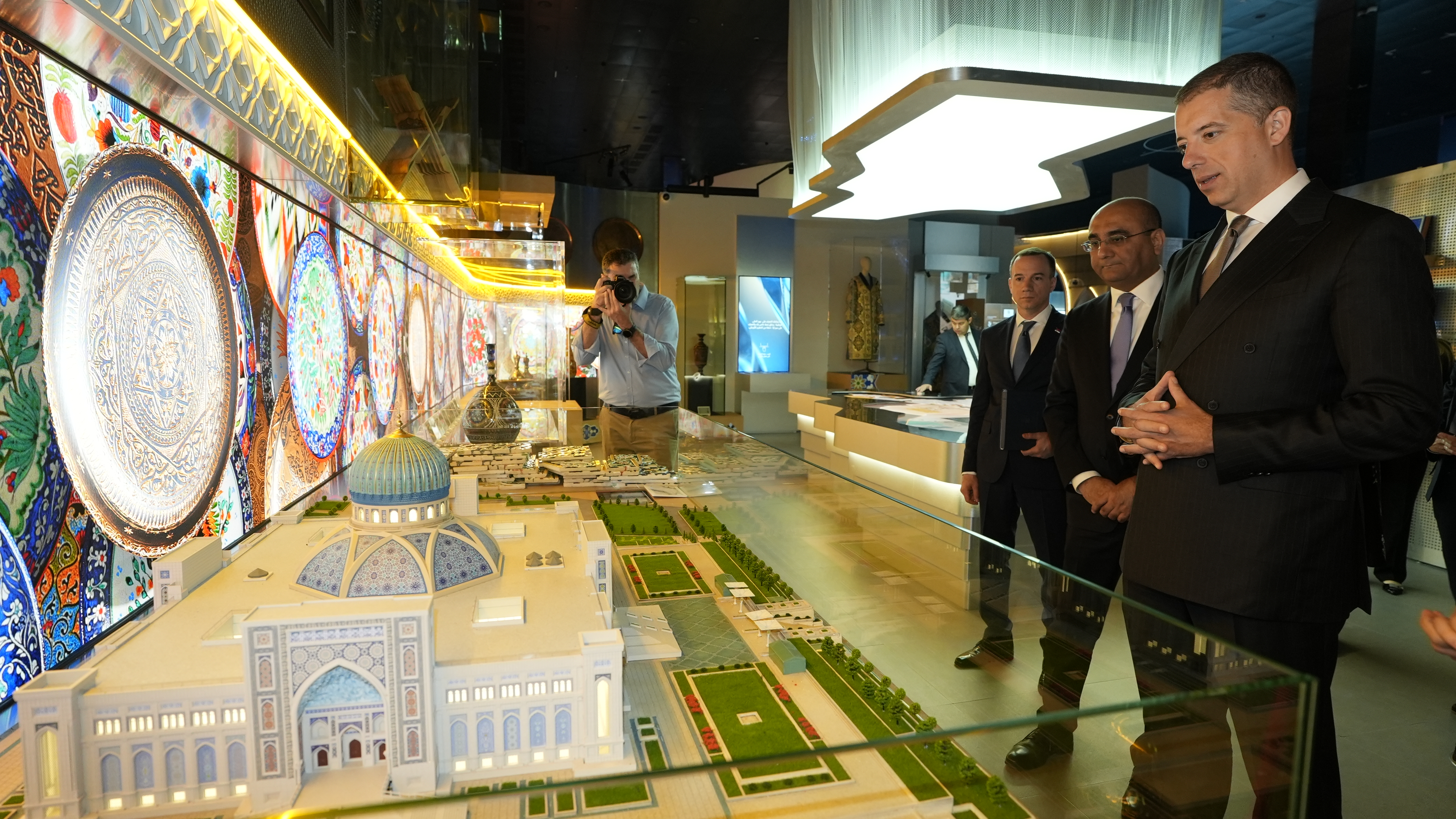
 Visiting the Islamic Civilization Center in Uzbekistan — a place that embodies the historical stages of development from ancient rock carvings to the scientific legacy that laid the foundation for algorithms — Serbian Foreign Minister Marko Đurić witnessed not merely a museum tour, but a space for rediscovering civilization itself.
The Serbian Foreign Minister thoroughly explored all exhibitions of the Islamic Civilization Center in Uzbekistan. He first visited the “Gallery of Great Figures,” where he viewed 14 panels reflecting the rich history of our nation and the legacy of great scholars and historical personalities. Created by hand in the micro-mosaic technique using more than 110 shades of tiny stones, these artworks left a deep impression on the guest. The gallery features depictions of such prominent figures as Muhammad al-Khwarizmi, Ahmad al-Farghani, Imam al-Bukhari, Amir Temur, Mirzo Ulugbek, and Alisher Navoi.
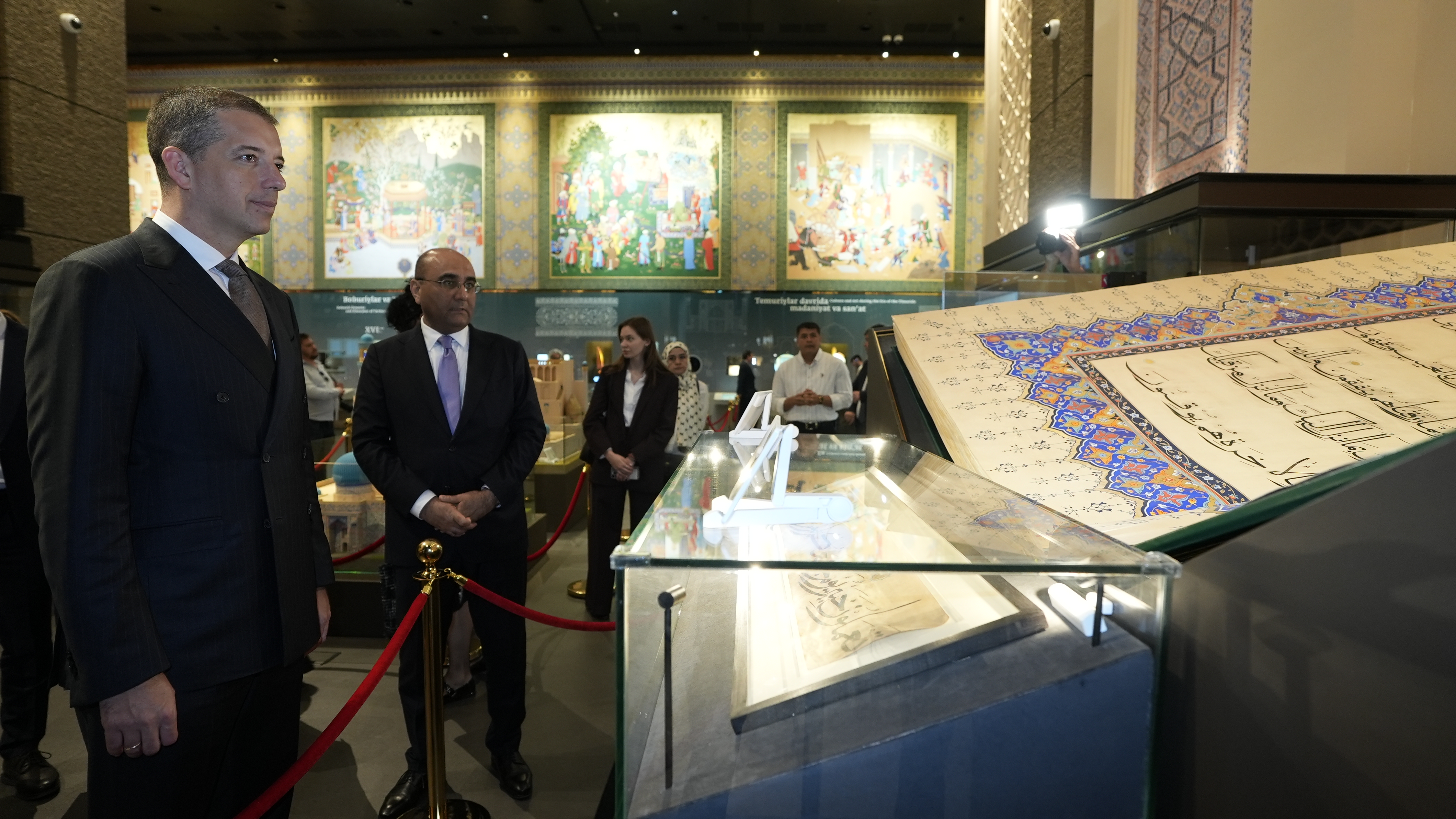
The Minister paid particular attention to the legacy of Muhammad al-Khwarizmi. He was especially impressed by the information explaining how al-Khwarizmi’s work Al-Jabr wa’l-Muqabala laid the foundations of algebra, contributed to the widespread use of the decimal numeral system, and paved the way for the development of the concept of algorithms.
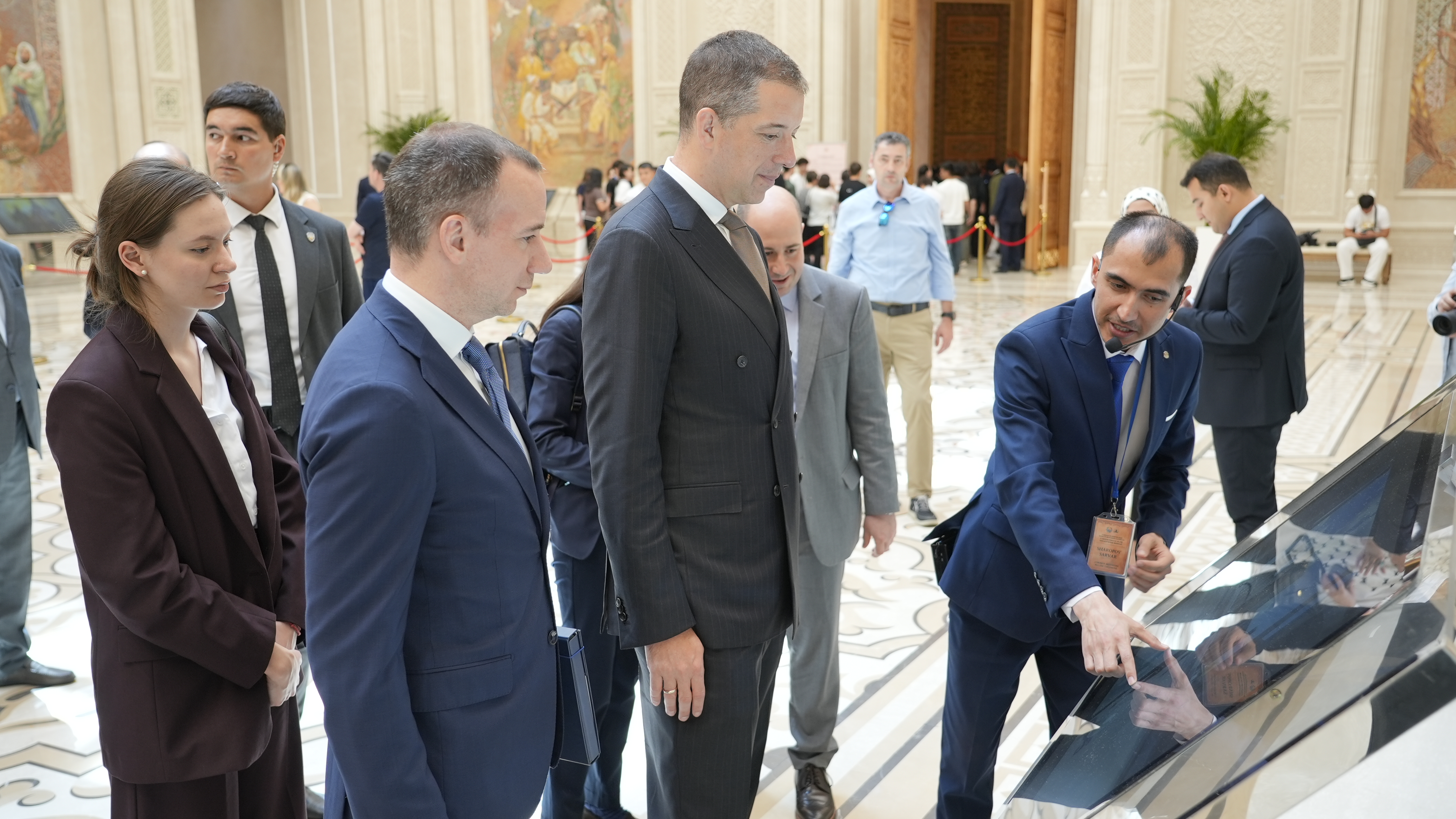
 During the visit, special interest was also shown in the interactive screens offering virtual tours across Uzbekistan’s historic cities. Through this platform, created using modern technologies, visitors can virtually explore ancient destinations such as Samarkand and Bukhara, which was noted as an inspiring experience even for future real-life journeys.
In the section dedicated to “Pre-Islamic Civilizations,” ancient artifacts — particularly the Sarmishsay Petroglyphs — drew the distinguished guest’s attention. These millennia-old images were highly praised as unique examples of primitive art.
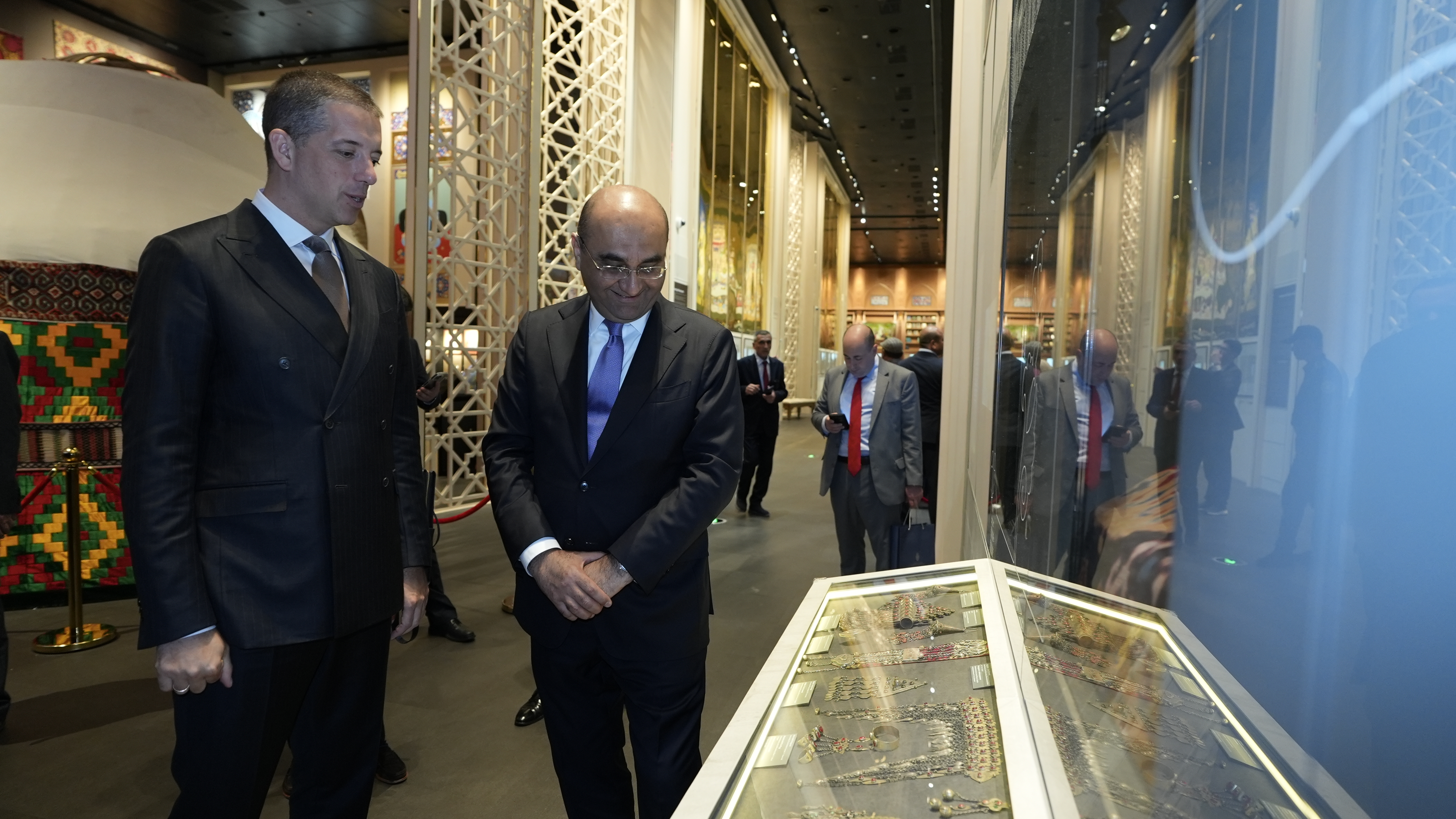
Craftsmanship samples from the era of the Great Silk Road, especially the art of carpet weaving, also left warm impressions on the guest. The Minister noted similarities between this tradition in Uzbekistan and Serbia, emphasizing that historical trade ties may have contributed to cultural closeness between the two regions.
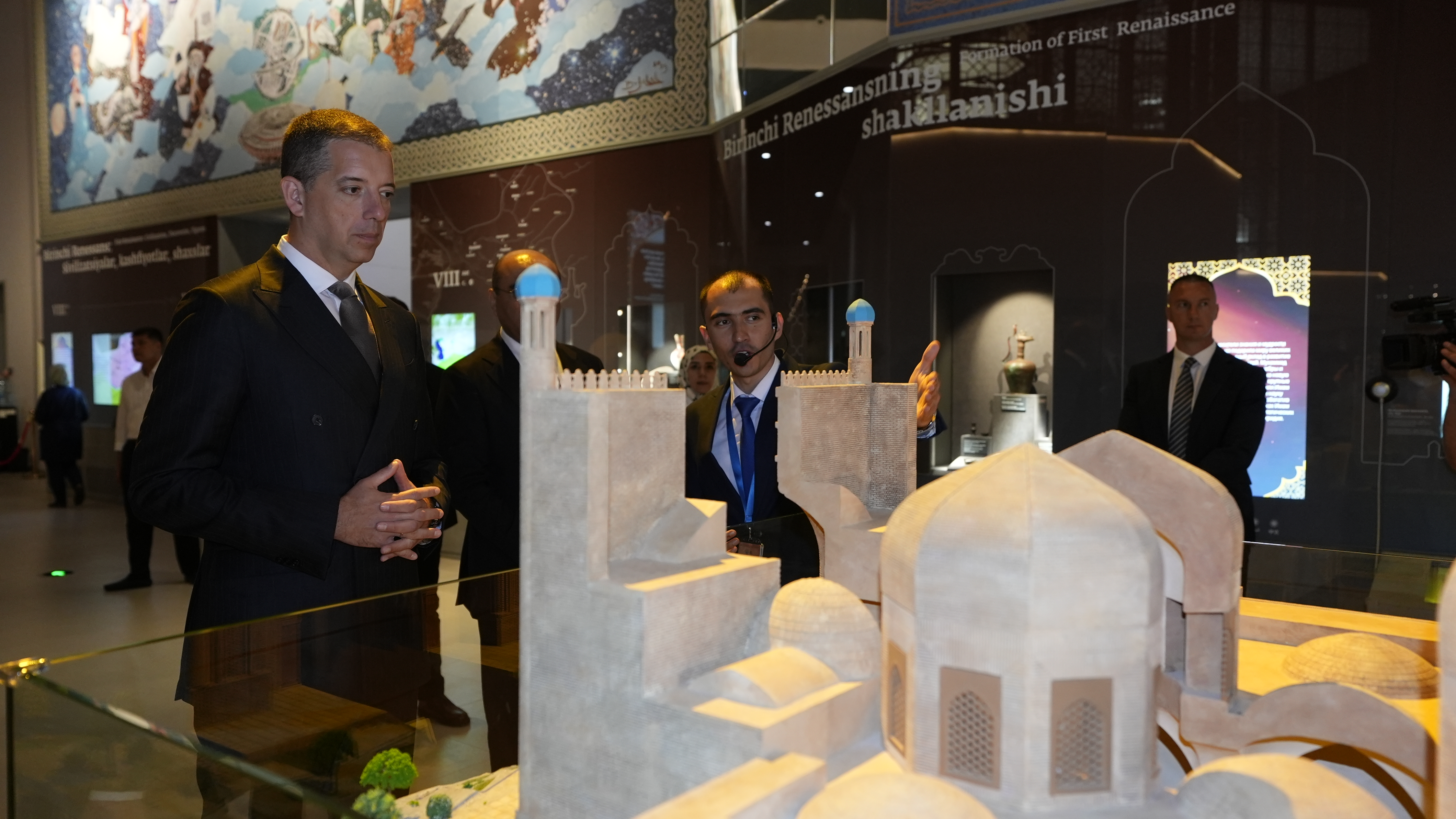 Among the architectural heritage exhibits, the Samanid Mausoleum and the Magoki Attori Mosque received particular recognition. Their preservation over centuries, distinctive architectural solutions, and historical significance were highly appreciated by the guest.
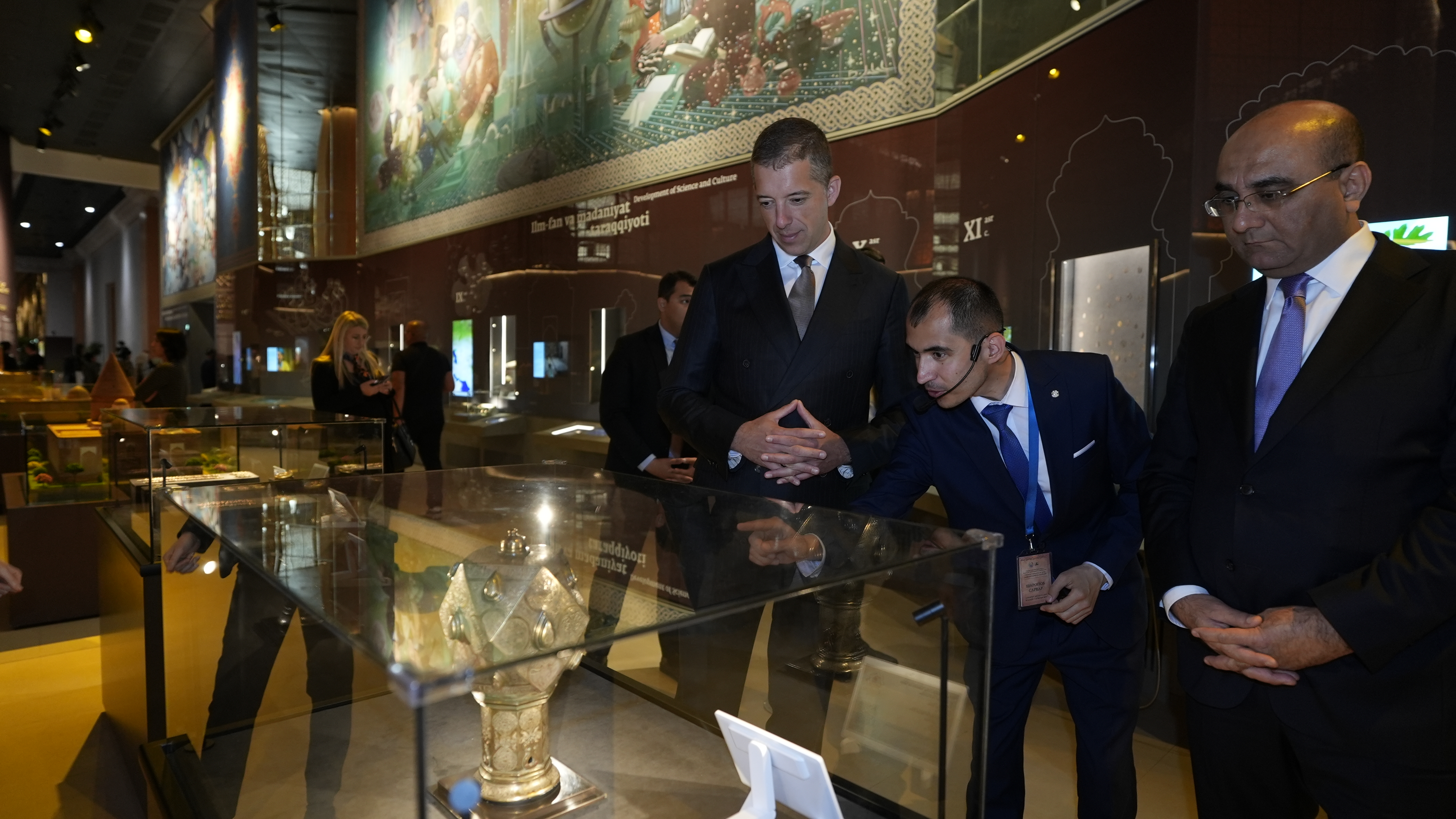
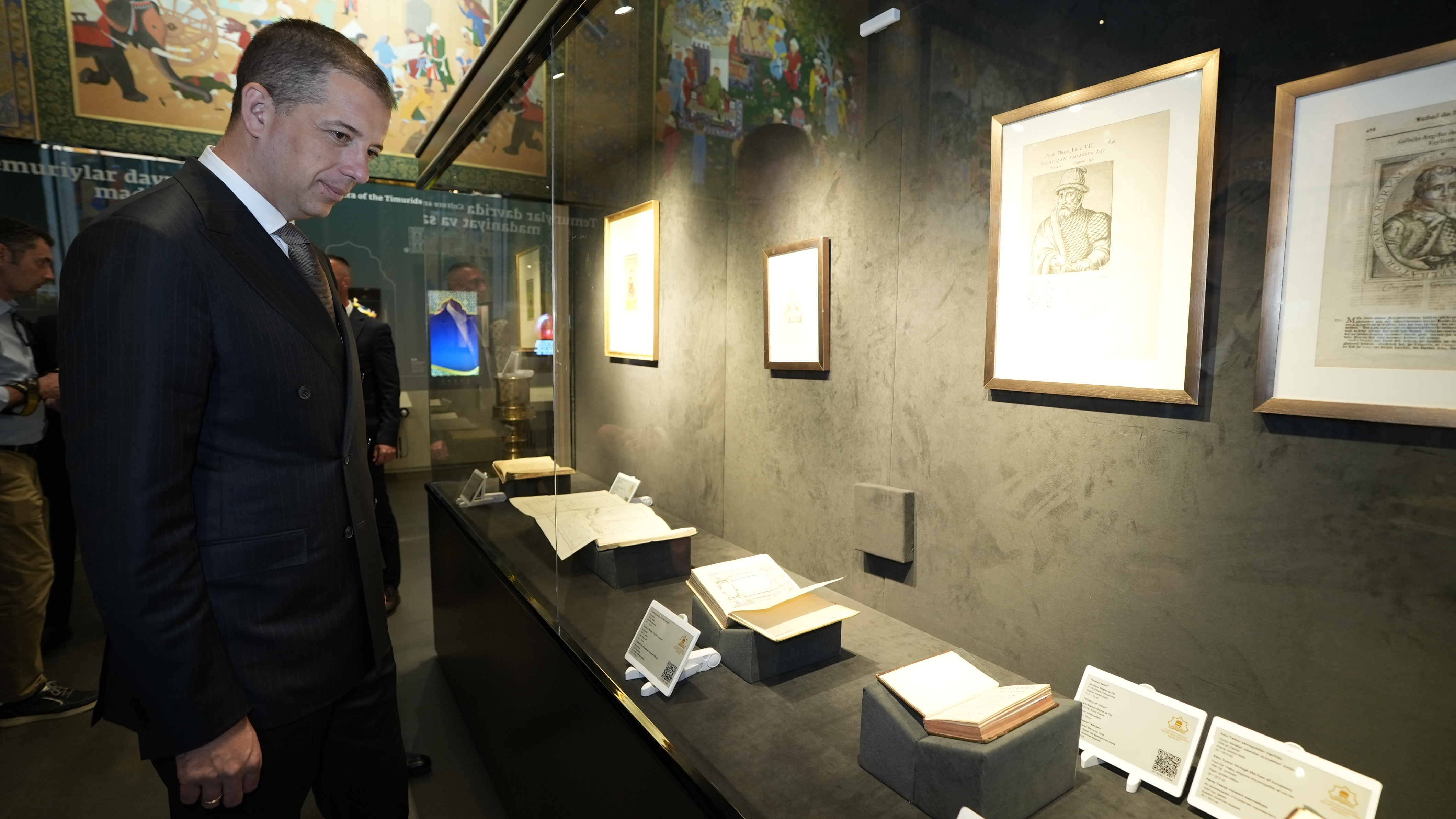 In the section devoted to the Second Renaissance period, European sources related to Amir Temur — particularly works written in Latin — generated considerable interest. Special attention was given to Amir Temur’s 1402 letter to Charles VI of France and the French king’s reply, which were recognized as vivid examples of historical diplomatic relations.
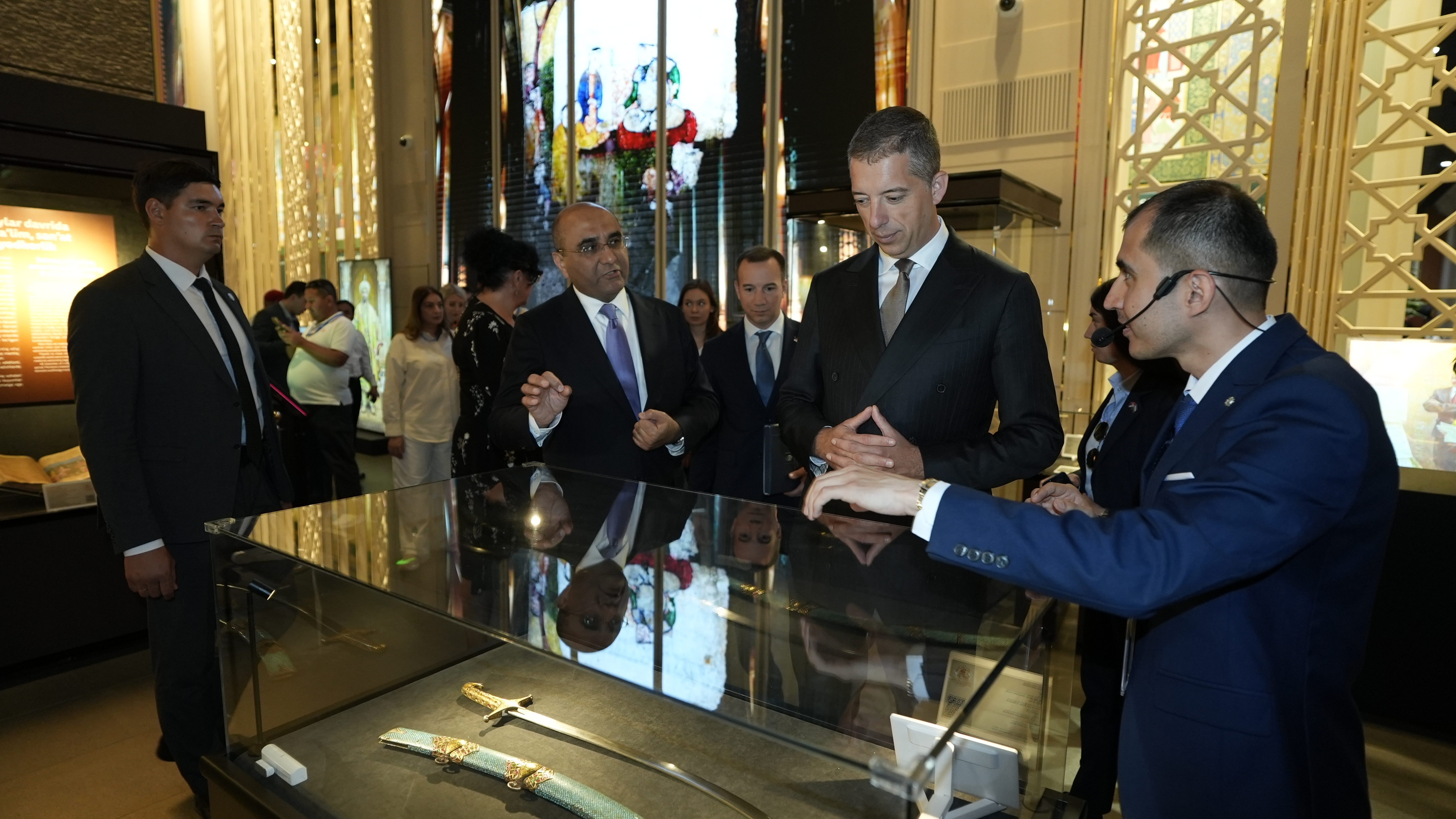 Among the exhibits from the Khanate era, the 19th-century sword of the Kokand Khan also attracted the Minister’s attention.
In addition, the Minister explored the modern exhibitions in the “New Uzbekistan” section, emphasizing that the Center uniquely brings together in one space the journey from several thousand years of history to present-day development and future aspirations.
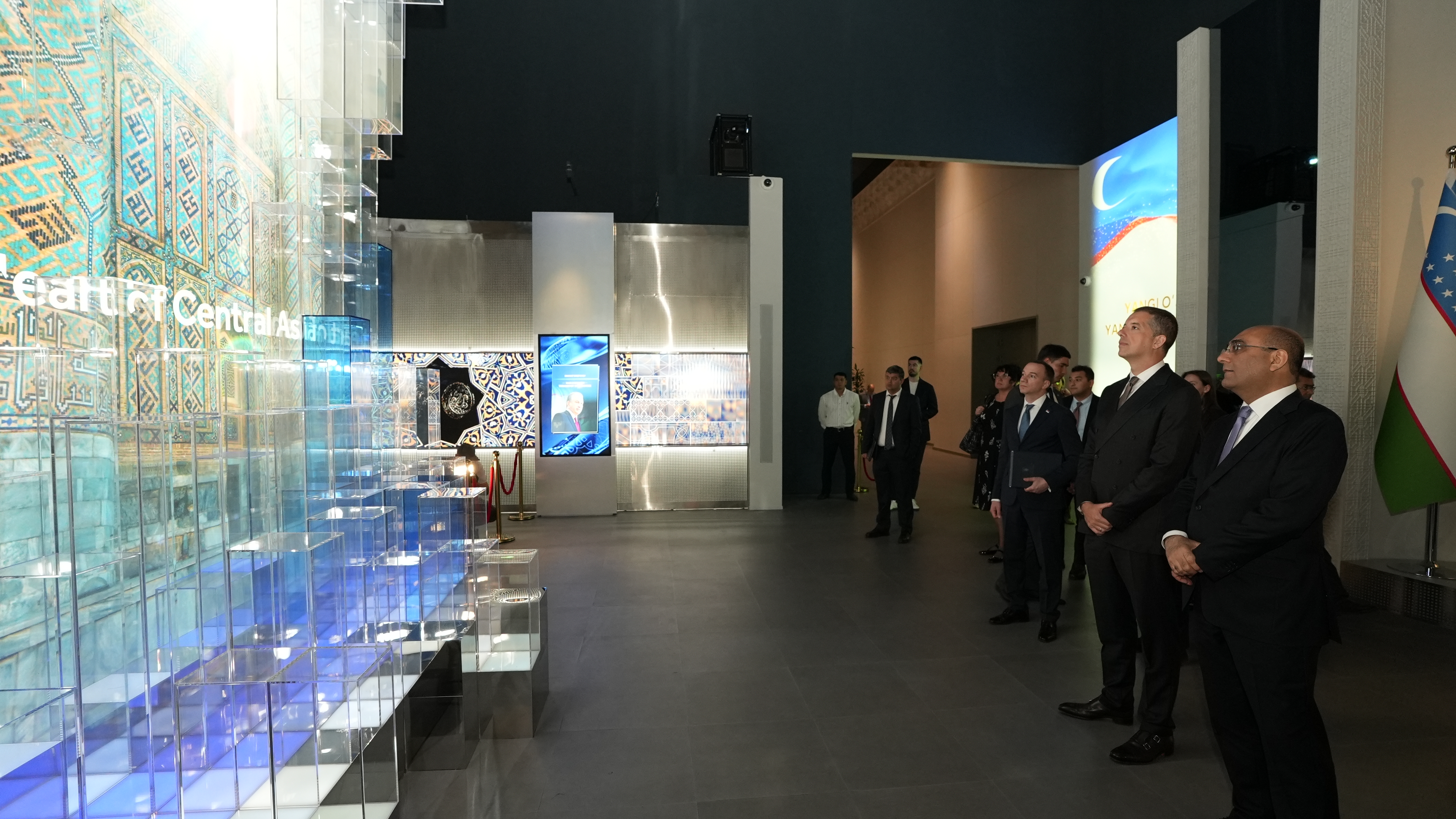
 Marko Đurić, Serbian Foreign Minister:
I have visited many museums around the world, but this place stands out for its uniqueness and originality. Here, one can truly feel the roots of civilization.
This visit has been extremely educational and inspiring for me. I must say that many people from different parts of the world should come here and witness this rich heritage with their own eyes. Uzbekistan is one of the important sources of scientific, spiritual, religious, cultural, and civilizational values, and we need to learn much more about it.
I would also like to especially congratulate you from the perspective of museology. This is truly a high standard — a new level altogether. I am deeply pleased to have had such an opportunity.
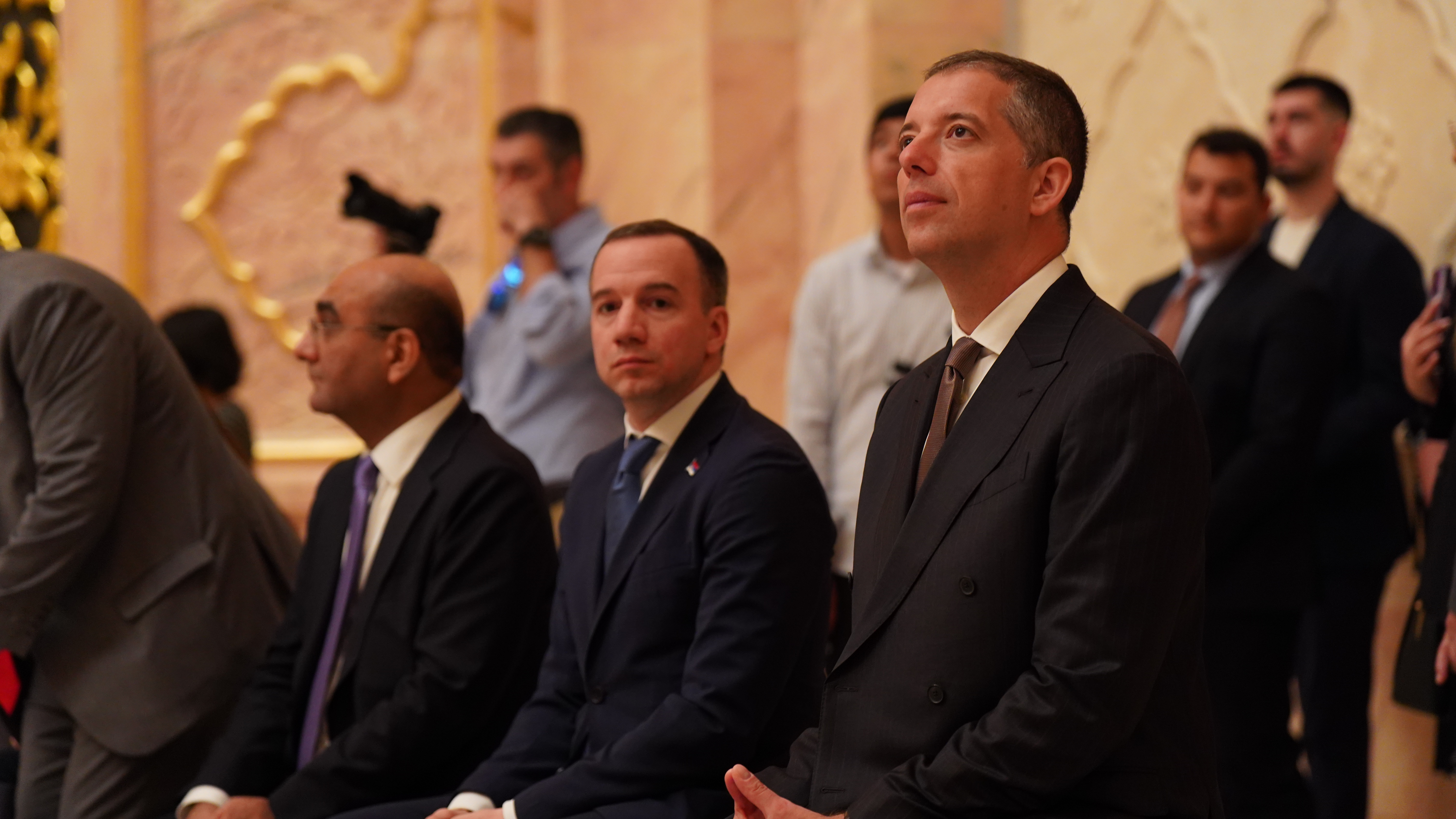
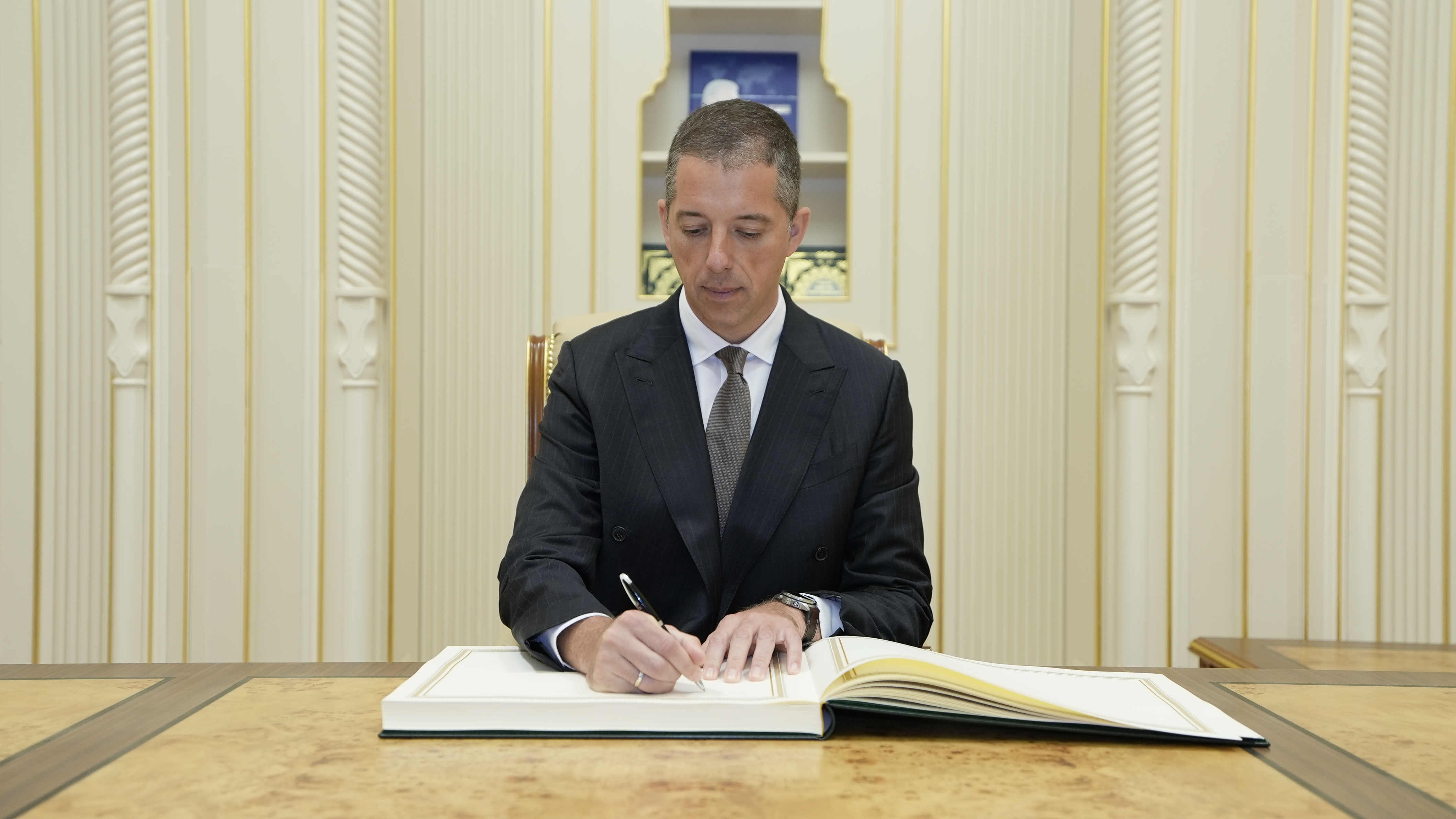 At the conclusion of the visit, Marko Đurić left a message in the Book of Honored Guests.